A still photograph is one moment, picked from however many got taken, with everything else quietly discarded. Video keeps all of it. That difference is why a jacket that photographed beautifully at ten in the morning can become the thing everyone notices by the time the camera has been rolling for an hour. Treating the two like one styling job is where a lot of good instincts start going wrong.
Styling for a still photo and styling for video differ because a photo is one frame chosen from hundreds, so anything imperfect gets quietly discarded. Video keeps everything it records, so wardrobe has to hold up continuously: in motion, in sound, and across a whole shoot, not just for one click.
What's the Real Difference Between Styling for a Still Photoshoot and Styling for Video?
A still photograph is one instant selected from hundreds, chosen precisely because it's the frame where everything worked. Video keeps every instant that gets recorded, including every reach, turn, and moment nobody planned to keep. That single fact, more than taste or camera gear, is what actually decides how a wardrobe gets built for each format.
On a still shoot, a photographer might fire off two hundred frames of one setup and keep three. Everything that didn't work along the way, a wrinkle catching light wrong, a strap slipping, a hand caught mid-adjustment, simply never gets seen. Nobody has to fix it, because nobody has to look at it. The final image only has to be right once.
Video doesn't offer that mercy. The camera rolls for the length of a take, and whatever happens inside that take exists in the footage whether or not it was the intended moment. An editor can trim around a bad beat, but only if there's somewhere else to cut to, and a continuous piece to camera or a single unbroken shot doesn't always leave that option.
So a still shoot can absorb a wardrobe problem that shows up once and quietly disappears into the discard pile. A video shoot can't. Everything the outfit does across the whole take is visible, which means the wardrobe has to hold up continuously instead of surviving one chosen instant, and that's the root idea the rest of the differences trace back to.
Why Can an Outfit That Looks Perfect in a Photo Fail the Moment Video Starts Rolling?
A jacket can sit perfectly the moment a photographer clicks the shutter and still ride up the instant someone reaches for a brush, turns to grab a tool, or leans into their own work. A photo only has to hold that one shape once. Video has to hold it through every ordinary movement a person actually makes across a whole day.
A still session is mostly a series of held positions. The subject settles into a pose, the photographer checks the frame, and the shutter clicks during a moment of relative stillness that both people are actively managing together. Video rarely offers that kind of cooperation. Someone talking through their process, working at a bench, or walking across a room moves the way they actually move, not the way a pose is arranged to look good.
That's where a lot of wardrobe choices that photograph beautifully start to fail. A blazer cut close through the shoulders can bind the moment an arm lifts above chest height. A skirt with a high slit can shift further than intended with a few steps. A jacket that was tailored to sit exactly right in a static frame has no obligation to keep sitting that way once its wearer starts actually working.
The practical fix isn't avoiding structure altogether. It's testing the range of motion the shoot actually needs before committing to a piece, having the subject reach, turn, and sit the way the day will require, and watching what the garment does under that movement rather than only how it looks standing still.
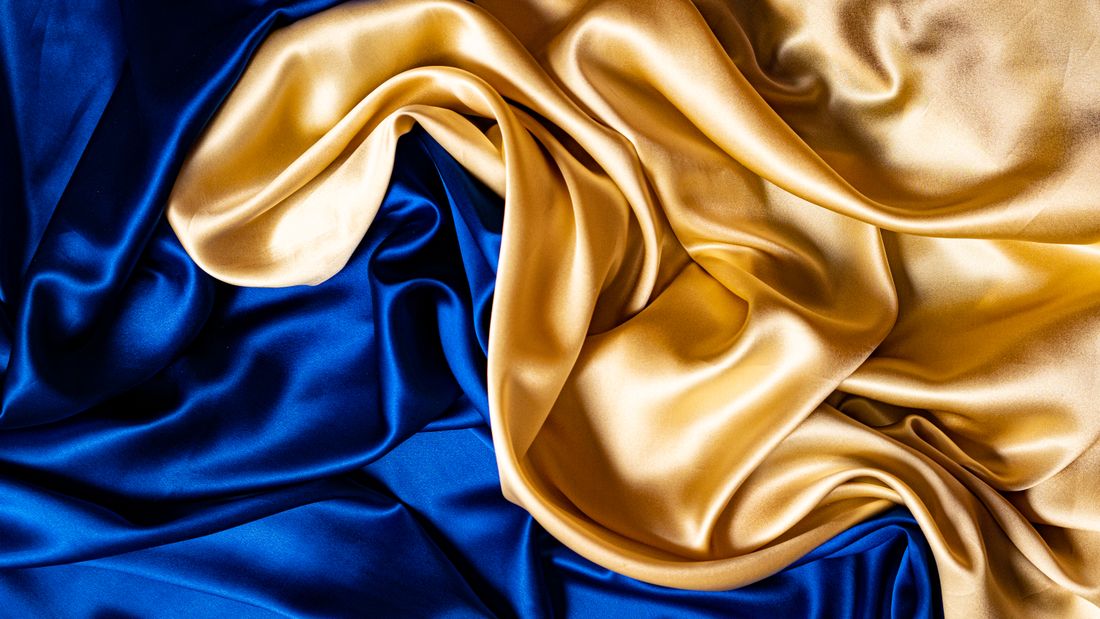
Which Fabrics Only Make Sense Once They're Actually Moving?
Some fabrics have a drape that's the entire reason to choose them, and that drape barely registers in a still frame. A sweep of silk, a bias-cut skirt, a scarf that swings, these pieces are built around what happens between one instant and the next, which a photograph, by definition, never actually shows.
In a still photograph, a soft, fluid fabric has to be caught at exactly the right moment, mid-movement, mid-fall, or it can read as a shapeless heap of material instead of the intentional piece it is. A photographer chasing that one hero moment across dozens of frames can usually find it. But it's a real gamble, and the fabric's whole appeal rides on catching a split second that might not repeat cleanly twice.
Video removes that gamble almost entirely. The camera is already rolling, so the fabric gets to actually move, catch light as it shifts, and settle the way it's supposed to, in real time and without needing to be caught. A piece that looked flat and uneventful in test stills can become the most compelling thing in the frame the moment its wearer takes a single step on camera.
The reverse also holds. A structured, stiff piece that holds a crisp shape in a still photo can look inert on video, sitting the same in frame one hundred as it did in frame one. Knowing which effect a fabric is built to deliver, a held shape or a moving one, decides whether it belongs in stills, in video, or in both.
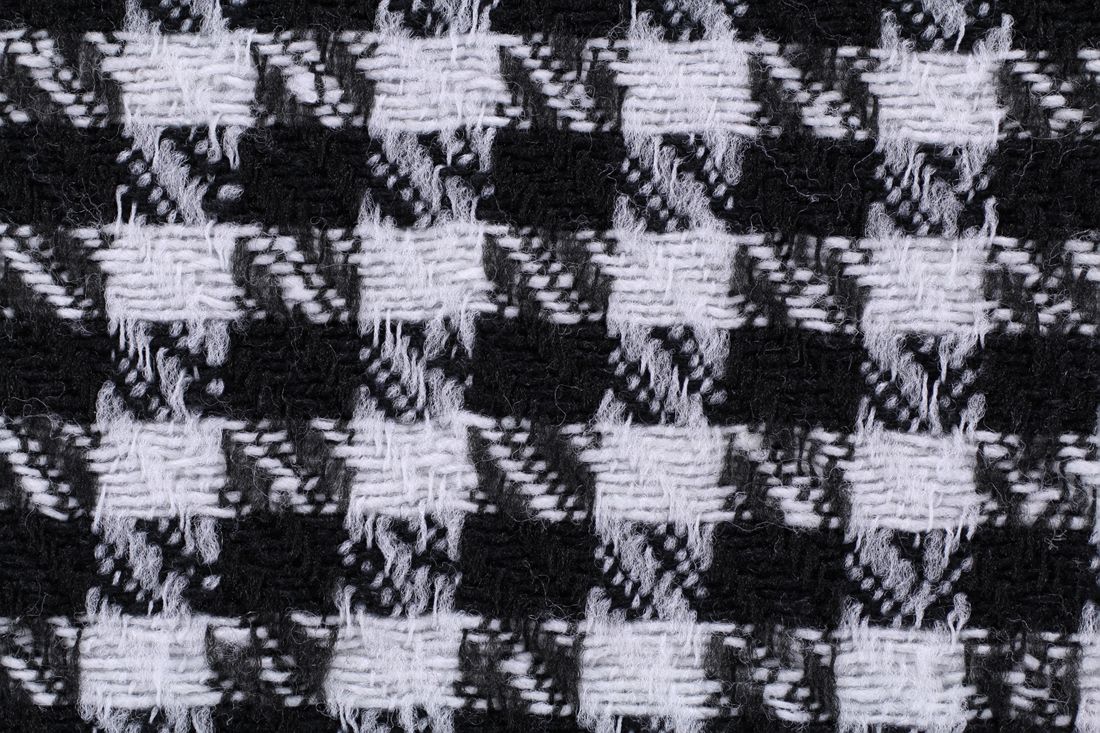
Why Do Fine Stripes, Tight Checks, and Herringbone Cause Trouble on Video That a Still Camera Can Survive?
A fine, repeating pattern can create moiré, a rippling, shimmering distortion, when its scale sits close to a camera sensor's own pixel grid. A still photo captures one fixed alignment between the pattern and the sensor, so the effect is often mild or absent entirely. Video keeps recording as the subject moves, sweeping that same pattern across the sensor at slightly different angles frame after frame, so the shimmer can appear and intensify at exactly the moment someone shifts.
Fine pinstripes, tight houndstooth, and herringbone weaves are the classic offenders, because their repeating detail sits at roughly the scale most likely to interfere with a sensor's own grid. A herringbone jacket can photograph as a clean, textured weave in a still portrait and still develop a visible shimmer the moment its wearer turns toward camera on video, an effect nobody chose and no amount of good lighting will fix.
This isn't a fabric flaw. It's a specific interaction between pattern scale and sensor resolution, which is exactly why a piece can pass every other test, comfort, color, movement, and still cause a problem that only shows up once the camera starts rolling and the subject stops holding still.
The safer move for anything scheduled for video is a looser, larger-scale pattern, or testing the actual piece on the actual camera before the shoot day rather than trusting how it reads in a fitting room mirror or a single test photo. What survives a still frame without complaint can still be the piece that causes the most trouble once motion enters the picture.
What Fabric and Jewelry Choices Cause Problems for a Video's Audio That a Photo Never Has to Worry About?
A stiff, structured fabric that looks composed in a photo can rustle audibly against a lavalier microphone every time its wearer moves or turns to speak. Jewelry that photographs beautifully, bangles, long earrings, anything with facets, can clink together or throw a small flare of reflected light into the lens the moment the camera starts tracking real motion.
A still photoshoot never has to think about sound. A stiff taffeta or heavily starched cotton can look sharp in a photo with no downside. The instant a lav mic gets clipped near a collar for video, that same fabric becomes a constant, distracting scratch under every word its wearer says, loud enough that an editor sometimes has to choose between usable audio and the outfit that was supposed to work.
Jewelry carries a similar split. A stack of bangles reads as deliberate styling in a still frame, caught in one motionless instant. On video, that same stack clinks with every gesture, competing with dialogue the way the fabric does. Anything with a reflective, faceted surface adds a second problem: a flash of light every time it catches the key light differently, which a still only has to avoid once and video has to avoid continuously.
None of this means quiet and motionless is the only option for video. It means fabric and jewelry chosen for a video day deserve a real test, worn and moved in front of a live mic and a rolling camera, before anyone assumes something that photographed well will also hold up in motion and sound together.
What's the Continuity Problem in Video Styling That a Still Photoshoot Never Has to Solve?
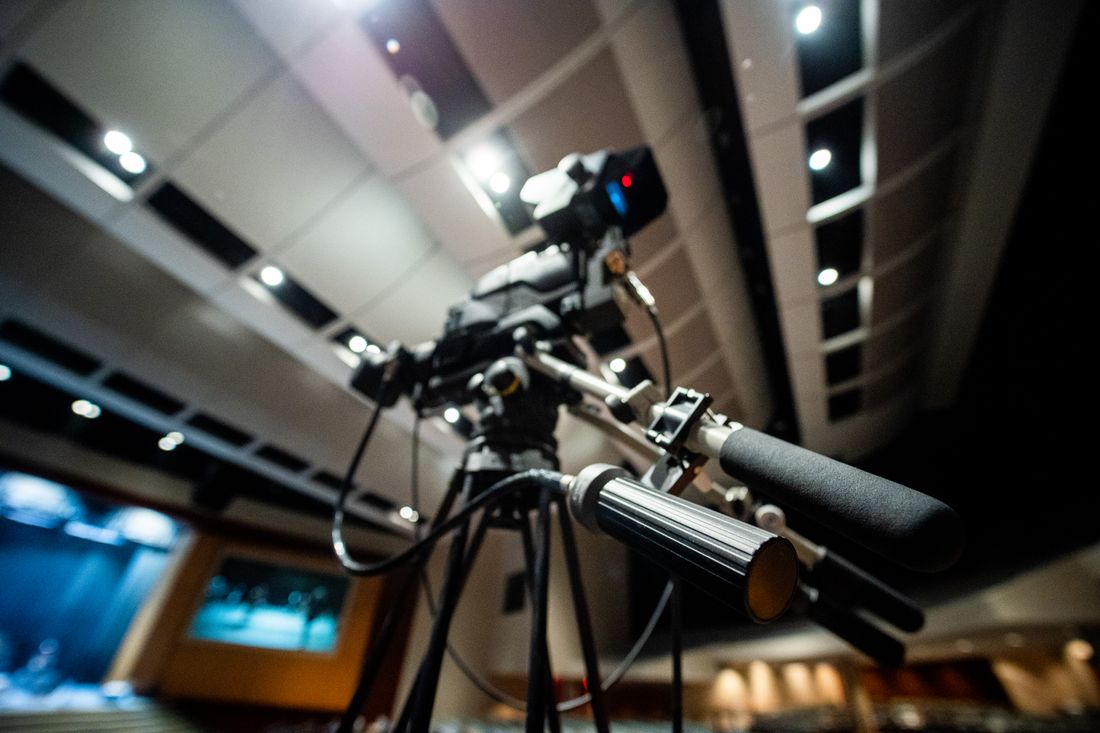
A still photoshoot produces a set of separate, individual images, so if a sleeve gets rolled up differently after lunch, nobody standing between two photos taken hours apart will ever notice or care. Video keeps everything inside one continuous sequence, so that same rolled sleeve becomes a visible mismatch the instant an editor cuts between two moments that no longer actually match.
This is a problem a still shoot structurally doesn't have. Each photograph exists on its own, disconnected from whatever came before or after it. A subject can change how their collar sits, unbutton a cuff, or swap which hand holds a tool between two portraits taken an hour apart, and the two images will simply read as two different moments, because that's exactly what they are.
Video erases that separation. A cut from one shot to the next implies the two moments happened in unbroken sequence, so any visible difference between them reads as an error rather than the passage of time it represents. A rolled cuff that was fine in isolation becomes a jarring jump the moment it sits next to a version of itself from twenty minutes earlier, spliced together as though no time passed at all.
The practical response is treating wardrobe state as something to actively track, not something to assume. Photographing the exact state of cuffs, buttons, and jewelry placement between setups, even on a small shoot without a dedicated continuity role, is what keeps a rolled sleeve from becoming the detail that gives away an edit nobody meant to be visible.
What Actually Stays the Same Between Styling for Photos and Styling for Video?
Not everything changes between the two formats. Color still has to hold its own next to the work or the setting without fighting it for attention. Comfort still matters, because a person who's uncomfortable reads as uncomfortable regardless of what's recording them. And dressing like a costume rather than like the actual person still undermines a photo and a video in exactly the same way.
Color relationships are the clearest constant. An outfit that competes with the work behind it, too loud, too close in hue, too busy, creates the same problem whether it's frozen in one frame or moving through sixty of them. The eye still goes to whatever's brightest or busiest first, whether the image is still or in motion.
Comfort matters in both formats, though video raises the stakes on it rather than inventing it from nothing. A pinching waistband or a shoe that hurts is a liability in a two-hour photo session and a bigger one across a longer video day, but the underlying principle, that discomfort shows on a person's face and posture no matter how good the outfit looks on paper, was never format-specific to begin with.
The costume risk is the same story. An outfit that feels like a performance of what the subject is supposed to represent, rather than something they'd plausibly wear, reads as false in a photo and even more false once video lets a viewer watch the person move and speak inside it. The medium changes the hazards. It doesn't touch this part of the job at all.
How Should Styling Work on a Day Shooting Both Stills and Video, and Whose Rules Win When They Conflict?
When a single day covers both formats, the practical order is stills first, while wardrobe is fresh, then video once the stills are safely captured. When a specific piece has to serve both and its rules conflict, video's stricter standard should generally win, because a photo can be reshot in the room but a bad video is far harder to fix after the fact.
The reasoning comes back to what each format forgives. A still shoot can absorb a wasted frame or two without anyone noticing, since only the best ones ever get chosen. Video doesn't have that safety net. Every frame recorded is potentially usable, which means a wardrobe problem that shows up once during video has a real chance of ending up in the final cut rather than quietly getting discarded.
That asymmetry is why video's rules should set the baseline whenever the two formats share a wardrobe. An outfit built to survive motion, sound, and continuity usually still photographs fine, since a still frame is a smaller, easier test to pass than a full take. The reverse isn't reliably true. An outfit built only to look good standing still can fail in ways a photo would never have revealed.
In practice, that means deciding which pieces are stills-only before the day starts, rather than discovering it mid-shoot when a jacket starts rustling into a lav mic or shimmering under the lights. Knowing which format's rules are actually in charge, before anyone gets dressed, keeps a combined shoot day from turning into two shoots fighting over one wardrobe.
Frequently asked questions
Can the same outfit work for both a still photoshoot and a video shoot on the same day?
Often yes, but only if it passes video's stricter test first: no fine repeating pattern, no fabric that rustles into a mic, jewelry that won't clink or flare, and enough range of motion to hold its shape through real movement rather than a posed instant. An outfit built for video usually works fine in stills too, since stills forgive more than video ever does. The reverse mismatch is far more common.
How do you avoid moiré on camera without giving up pattern entirely?
Choose a looser, larger-scale pattern over a fine, tightly repeating one. A bold check reads clearly on camera where a tight houndstooth or a thin pinstripe can shimmer against the sensor. When a specific fine-patterned piece genuinely matters, test it on the actual camera before the shoot day, since moiré depends on the exact combination of pattern scale, distance, and sensor, not on the fabric alone.
What should someone do about jewelry that looks great in photos but is risky for video?
Save anything that dangles, stacks, or carries a lot of reflective surface area for the still portion of a shoot, then swap to simpler, closer-fitting pieces once video starts rolling. A stud earring or a flat band photographs and films equally well. A long chandelier earring or a stack of loose bangles is a much bigger gamble once sound and continuous motion both enter the picture.
Who is responsible for tracking wardrobe continuity during a video shoot?
On a small shoot, this usually falls to whoever is styling or producing, since there often isn't a dedicated continuity role. The practical habit is photographing the wardrobe state, rolled cuffs, unbuttoned buttons, jewelry placement, between setups whenever the crew pauses for more than a few minutes, so nothing shifts unnoticed before the next shot picks back up in the same sequence it left off in.
Does video really require more wardrobe planning time than a still photoshoot?
Usually, yes, mainly because problems a still shoot can quietly discard, an awkward reach, a flash of moiré, a stray clink, have to be caught and solved in advance for video instead. That means testing fabric on camera, checking jewelry for noise, and planning for natural movement, not just how an outfit looks standing still. Solved once, it typically stays solved for the rest of the shoot day.
Let the clothes support the work.
We plan wardrobe for artist portraits the same way we plan everything else on set: around the person and the work, not around the idea of a photoshoot.
Explore styling services →