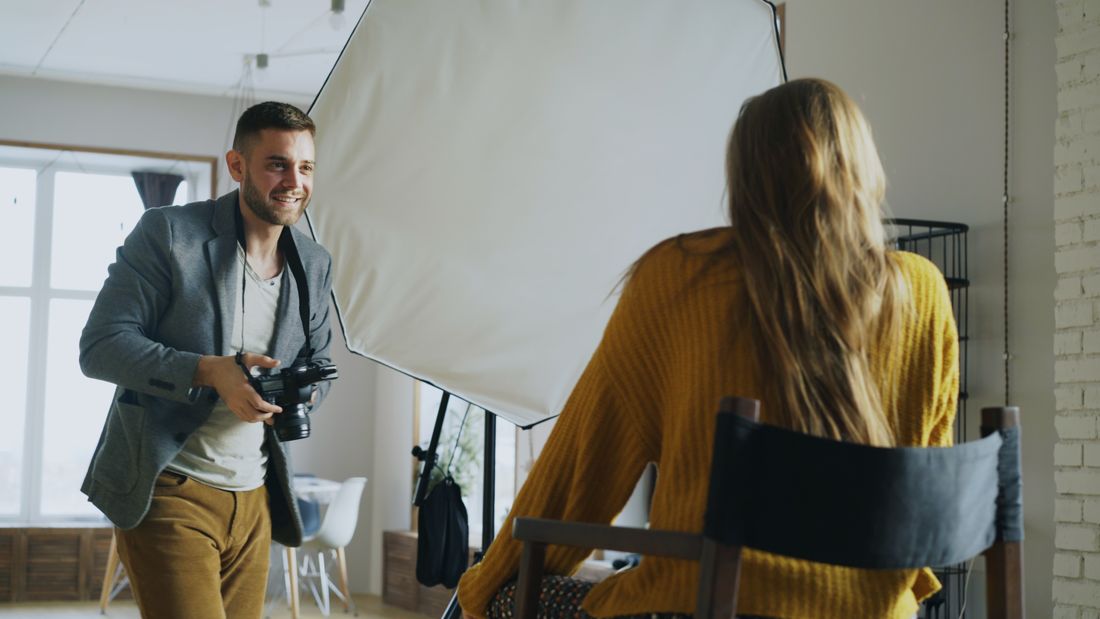
A press photo and an opening-night photo can be taken in the same room, sometimes minutes apart, and still call for different outfits. One image gets filed away and reused for years, without anyone in the room today controlling when it resurfaces or what it ends up paired with. The other only has to work for one night, for the people actually standing in front of it. Treating the two as the same styling job is where the advice usually breaks down.
Styling for a press photo and styling for opening night are different jobs because the photos live differently. A press photo gets archived and reused for years without a caption explaining when it was taken. An opening-night photo only has to work for one room, one night, and a few hours of standing, talking, and moving through a crowd.
What's the difference between styling for press photos and styling for opening night?
Press photos get filed, archived, and pulled again years later, often without the original context attached. Opening-night photos only have to work for one room on one night. That difference in lifespan changes the actual styling decisions, what reads as safe and legible five years from now, versus what feels alive for three hours in a crowded gallery.
A press photo is usually one or two frames, chosen by an editor or a gallery's own archive, and reused every time the artist's name comes up again, a profile next year, a group show press release two years from now, a retrospective wall text a decade later. The outfit in that frame becomes attached to the artist's public image for as long as the photo stays in circulation, which for a working artist can be a very long time.
An opening-night photo lives differently. It gets taken by dozens of phones and one or two hired photographers, seen mostly by people who were actually in the room, and mostly forgotten once the next opening happens. The job that night is to be a person other guests can find, talk to, and photograph next to the work comfortably for the length of the event. Nobody is filing this one away for years.
Both are real jobs, and they protect against different failure modes. Dressing for one as if it were the other is where the mismatch usually starts.
What does it actually mean for a press photo to outlive the event?
A press photo outliving the event means the image keeps circulating long after the show closes, attached to the artist's name rather than to that one night. It gets cropped, recaptioned, and republished without the photographer, gallery, or artist controlling when it resurfaces or what text sits next to it.
Once a press photo leaves the room where it was taken, nobody involved in the outfit choice gets a say in how it gets used again. An editor might crop it tight for a thumbnail. A different outlet might run it two years later next to a headline about an entirely different show. A gallery might pull it from its own archive for a group announcement with no date attached, so a reader has no way to know whether the photo is from last month or five years ago.
That last part matters more than it sounds like it should. Without a visible date, the outfit becomes the only clue to when the photo was taken, and a piece that read as of-the-moment when it was shot can read as dated once the moment passes. A caption rarely rescues this. Most reuse strips captions down to a name and a show title, not a styling note explaining the context.
The practical result is that a press photo has to hold up as a standalone image, disconnected from the room and the story everyone in attendance already understood. It has to make sense to someone seeing it for the first time, with none of that context, possibly years from now.
Why is a loud pattern or trend piece riskier in a press photo than at an opening?
A loud pattern or trend piece is riskier in a press photo because that photo gets looked at again after the trend has passed, when a choice that once read as current starts reading as a timestamp. An opening-night photo is seen once, in the context of that room and date, so the same choice mostly just reads as alive.
Trends move faster than most press photos stay in circulation. A silhouette, a print, or a color that feels sharp and current the week it's photographed can look distinctly of-its-moment two or three years later, the way old fashion editorials instantly announce their decade. In an opening-night photo, that's rarely a problem, because everyone looking at it already knows when it was taken and reads the outfit as part of that specific night, not as a claim about timeless style.
A press photo carries no such anchor. Strip away the date and the outfit is often the only clue to when the image was made, and a loud, trend-forward choice becomes the most visually dominant thing in frame, competing with the reason the photo exists in the first place, which is usually the artist or the work, not the outfit. A viewer's attention lands on the print before it lands on the face.
This isn't an argument for blandness. It's an argument for choosing pieces with a longer shelf life for anything expected to circulate on its own, and saving trend-forward, of-the-moment choices for the night that only ever needs to work once.
What does a press photo call actually capture, and how does that change the wardrobe?
A press call usually produces one or two usable frames, a portrait or a three-quarter shot standing near the work, not a wide range of candid moments. That narrow yield means the single outfit choice carries outsized weight, since there's rarely a second angle or a different moment for an editor to pick instead.
Compare that to an opening night, where dozens of photos exist of the same person across a few hours, different angles, different expressions, different groupings. If one shot looks a little off, there are ten others to choose from instead, and most of them never leave the crowd of images taken that night. A press call doesn't work that way. It's often a fixed setup, a few minutes with one photographer, sometimes a single backdrop, producing a small, deliberate set of images that gets narrowed down to the one or two that represent the artist going forward.
That narrowing is exactly why the outfit matters more, not less, in this setting. There's no volume to dilute a choice that doesn't hold up. Every visible detail, the fit through the shoulders, whether a pattern reads as intentional or busy under studio-flat lighting, whether the color sits well against the work behind it, gets scrutinized in that one frame because it has to do all the work a whole night of candids would otherwise share.
This is also why a press call benefits from simpler, more considered choices than an opening might. Fewer competing elements means fewer chances for the single surviving frame to go wrong.
What stays the same between press styling and opening-night styling?
One principle holds in both settings. The outfit should relate to the work without disappearing into it or competing with it for attention. What changes between a press photo and an opening-night photo is not that principle. It's how a failure of it looks, and how long that failure stays visible once it happens.
Neither setting rewards an outfit that tries to blend in so completely the artist is hard to find in the frame, and neither rewards one so loud it becomes the actual subject of the photo. That balance is the same job whether the camera is a single photographer at a press call or a hundred phones in a crowded room. An artist who understands how to strike it once generally understands how to strike it twice, in different rooms, under different pressure.
Where the two settings pull apart is what's actually being protected. At an opening, the risk is mostly social and immediate, an outfit that reads as trying too hard or not enough in front of the exact people who showed up that night. In a press photo, the same imbalance gets frozen and reproduced every time the image resurfaces, so a small miscalculation that would have faded from memory after one evening instead keeps showing up, unedited, for as long as the photo stays in use.
That's the real reason the two calls for wardrobe feel different even though the underlying judgment call is identical. The stakes attached to getting it slightly wrong are not the same size, even when the goal is.
Why does opening-night styling prioritize comfort over durability?
Opening-night styling prioritizes comfort because the outfit only has to hold up for one room, for a few hours of standing, talking, and moving through a crowd. Archival durability, whether it still looks considered years from now, isn't really a factor, since no single opening-night frame gets reused and re-examined the way a press photo does.
That shifts what "working" actually means for the night. An outfit that looks composed in a still frame but pinches, rides up, or needs constant adjustment becomes a visible distraction well before anyone else notices anything's wrong, and there's no equivalent cost to that discomfort surviving into next year. The photo that matters most from an opening is usually one taken late, after a few hours of standing and talking have already tested the outfit, not the first frame from when everyone was still fresh.
A press call doesn't ask an outfit to survive three hours of movement. It asks it to survive being looked at once, carefully, then looked at again much later. That's a shorter physical window and a longer visual one, the reverse of what an opening night asks. So the practical work shifts too, less time spent testing whether something holds up under motion, more time spent on whether it holds up as a still, standalone image with none of the room's energy attached to explain it.
Comfort still matters at a press call, nobody photographs well while distracted, but it isn't the deciding constraint the way it is for a multi-hour opening.
How should an artist prepare when a shoot is booked only as press photos?
"Press photos" gets used loosely to describe two different shoots, so the useful question is what happens to the image afterward. Is it a single frame for one outlet's article with a fixed publish date, or a general-purpose image the gallery or artist keeps reusing on a website, press kit, or database for years. Style toward whichever answer comes back.
The people booking the shoot often don't distinguish between these cases out loud, because from a scheduling standpoint they look identical, a photographer, an artist, maybe thirty minutes near the work. But the two calls answer to different lifespans. A shoot tied to one piece, with a known outlet and a known publish window, behaves more like a moment. A shoot meant to stock an artist's own press kit or a gallery's general archive behaves more like an asset, one that gets pulled out again for unrelated future uses nobody can predict yet.
A short question before the shoot clears this up faster than guessing. Is this for one specific piece, or something the gallery or artist expects to reuse. Will there be a caption with a date attached, or is it likely to circulate without one. Who else might pull this image later, a different outlet, a grant application, the artist's own site.
When the answer is unclear, the safer default is treating it as the more durable case. A choice that holds up as a standalone image years from now rarely reads as wrong for a single-use press moment, but the reverse isn't true.
What's a fast gut-check before getting dressed for either one?
One question does most of the work. Will this photo likely be seen once, in the room, on this date, or will it get looked at again later with no date attached. If the second is even plausible, dress for durability. If the answer is clearly the first, there's more room to lean into whatever feels alive for that night.
This test resolves most borderline cases faster than memorizing separate rules for press versus opening wardrobe. A gallerist photographed for a single write-up about one specific show can lean closer to the opening-night end of the spectrum, since that image is tied tightly to one article and one date. An artist whose portrait will anchor a gallery's website or an ongoing press kit should lean toward the press-photo end, even if the photos happen to be taken the same evening as an opening, in the same room, by the same photographer.
It's the intended use of the image that sets the rules, not the physical setting it was captured in. Two photos taken five minutes apart, at the same event, can call for different instincts if one is destined for a single social post and the other for a gallery's permanent artist page.
When in doubt, the safer bet leans toward the more durable choice. A considered, simple outfit rarely looks wrong in a photo meant to be seen once. A loud, trend-forward one can look wrong in a photo meant to be seen for years, with no way to take that photo back once it's already in circulation.
Frequently asked questions
Should a press photo and an opening-night photo ever use the same outfit?
They can, but it's worth checking rather than assuming. An outfit built for durability, simple, well fitted, without a loud trend element, usually works fine at an opening too, since durable rarely reads as boring in person. The reverse is riskier. An outfit chosen purely for how alive it feels for one night can look dated or overdone if it later surfaces as the artist's standalone press image with no context attached.
What makes an outfit date in a press photo?
Mostly a trend element that was current the week the photo was taken and looks tied to that period once the trend moves on, a silhouette, a print scale, a color pairing that was everywhere for a season and then wasn't. Without a caption date, that trend becomes the viewer's only clue to when the photo was made, and it reads as older than the artist's actual current work.
Is it ever okay to wear something bold or trend-driven for a press photo?
Yes, when the photo's use is clearly limited and short-lived, tied to one article with a fixed publish date that won't get reused later. The risk rises with how long and how widely the image is expected to circulate. A press photo destined for a gallery's permanent archive or an artist's own site carries more risk from a bold, trend-forward choice than a one-off image for a single week's coverage.
How should an artist handle a photo call that's part of a bigger press day with multiple outlets?
Treat it like the more durable, press-photo end of the spectrum by default, since multiple outlets usually means the image gets used more than once, in more than one context, with less control over which outlet keeps it longest. A simpler, considered outfit protects against the widest range of eventual reuses better than one built around a single outlet's specific angle or story on that day.
Who typically decides what a press photo gets used for once it's taken?
Usually not the artist. The outlet, the gallery's marketing team, or whoever manages the archive decides where and when an image resurfaces, often years after the artist has moved on to different work entirely. That loss of control is exactly why a press photo benefits from an outfit that holds up on its own, without relying on a caption or context nobody can guarantee will travel with it.
Let the clothes support the work.
We plan wardrobe for artist portraits the same way we plan everything else on set: around the person and the work, not around the idea of a photoshoot.
Explore styling services →