
A press preview and a public opening happen at the same exhibition, days or hours apart, and photographers working both quickly learn they are not the same job. One is a quiet, fully lit room built for documentation. The other is a full room built for people. Shooting both off a single shot list usually means one of the two comes back thin.
A press preview and a public opening cover the same exhibition but they call for two different shot lists. The preview happens in an empty, fully lit room and is the only window for installation views and detail frames. The opening happens in a full room and records the crowd. Put the two lists side by side and it's clear why one rarely does both jobs well.
What's the real difference between a press preview and a public opening?
A press preview and a public opening document the same exhibition, but they're two separate jobs. The preview happens in a controlled, empty room and produces installation views, artwork-in-context shots, and clean detail frames. The opening happens in a full room and produces a record of the crowd, the energy, and who showed up.
One photographer pass rarely covers both well. A preview runs on a schedule set by the gallery and the press list, not by guests arriving whenever they arrive. The room is staged. Lighting is dialed in, labels are up, and nothing is moving except the photographer. That stillness is what makes tripod work, careful framing, and even exposure across the whole show possible. A public opening runs on none of that. Guests move through the space at their own pace, and the work behind them becomes a backdrop instead of a subject.
Galleries that book one photographer for both events sometimes assume one list covers it, then find the preview images read casual and the opening images are missing people entirely. Naming the two jobs before the day starts is what prevents that. A preview list is a documentation brief. Full views, mid-distance context, close details. An opening list is an event brief instead, built around entrances, groupings, and reactions.
The two shot lists, side by side
The fastest way to see why one list doesn't cover both events is to put them next to each other. Here's what a preview list actually asks for against what an opening list actually asks for, row by row.
| Press preview | Public opening | |
|---|---|---|
| Room condition | Empty, fully lit, staged | Full, moving, lit for a reception |
| Shooting window | One fixed slot before doors open | Hours, with room to circle back |
| What the camera is chasing | The work itself | The people in the room |
| Core shots | Installation views, artwork-in-context, detail frames | Entrances, groupings, candid reactions |
| What it can't capture | Any record of guests, since the room is empty | A clean, unobstructed view of a single piece |
| Where the images end up | Press, archive, insurance, loan requests | Social feed, thank-you notes to attendees |
Run one list at both events and both columns suffer. A preview shot with an opening list wastes the only quiet window on shots that need a crowd to make sense. An opening shot with a preview list produces a room full of clean, empty walls and nobody in the frame. The two lists aren't a stricter version of each other. They're built for different rooms.
Why does the press preview usually have the tighter clock?
The press preview looks calmer than the opening because the room is empty, but the actual shoot window is often shorter. Press and outlet contacts are usually given a fixed slot before the show opens to the public, and the photographer has to cover the entire exhibition inside that single window, with no second chance.
An opening runs for hours and gives a photographer room to circle back. Miss a grouping at 7:15, there's likely another one at 7:45. A preview doesn't offer that. Once the room fills for the public opening, the clean sightlines are gone, and any wall the preview photographer skipped stays undocumented until the show comes down.
The math works against the preview too. A show with twenty pieces and a sixty-minute window leaves roughly three minutes per piece for a full view, a context shot, and a detail frame, before accounting for reframing around glare or fighting glass. That single-pass pressure is what surprises galleries who assume a quiet room means an unhurried one. Build in real buffer rather than assuming the schedule has slack. A preview that starts fifteen minutes late has lost real coverage time, not a few casual minutes.
What happens to each set of photos after the shoot?
Press-preview images are built for two audiences: outlets deciding whether to run a story, and the gallery's own archive. An editor choosing an image for a review wants a shot that reads clearly at a small size and doesn't need a caption to explain what's happening. A crowded, candid opening photo rarely clears that bar. A quiet installation view does, which is part of why outlets lean on preview coverage when a story runs. Most also expect real caption data to arrive with the image. Artist name, title, medium, year.
The archive use matters just as much, even though it's less visible in the moment. Once a show closes, the preview set is often the only complete visual record that the exhibition existed in that exact configuration, on those exact walls, under that lighting. Insurance, future loan requests, and an artist's own portfolio all draw on that set later, sometimes years later.
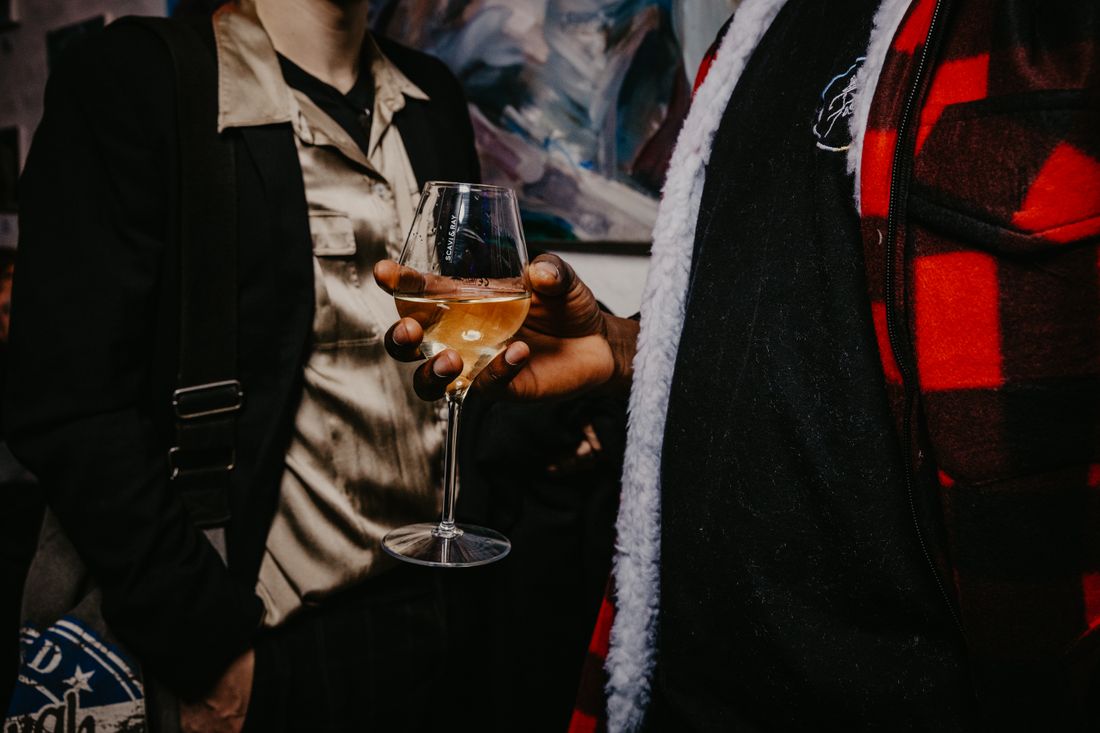
Opening photography serves a different audience: the people who came. Galleries post from this set within a day or two while the night is still fresh, and a photo of a specific donor in conversation, or an artist surrounded by well-wishers, becomes something worth sending directly to that person afterward. None of that depends on the artwork reading cleanly in the frame. What matters is that people recognize themselves.
What does a gallery need to arrange before a preview shoot?
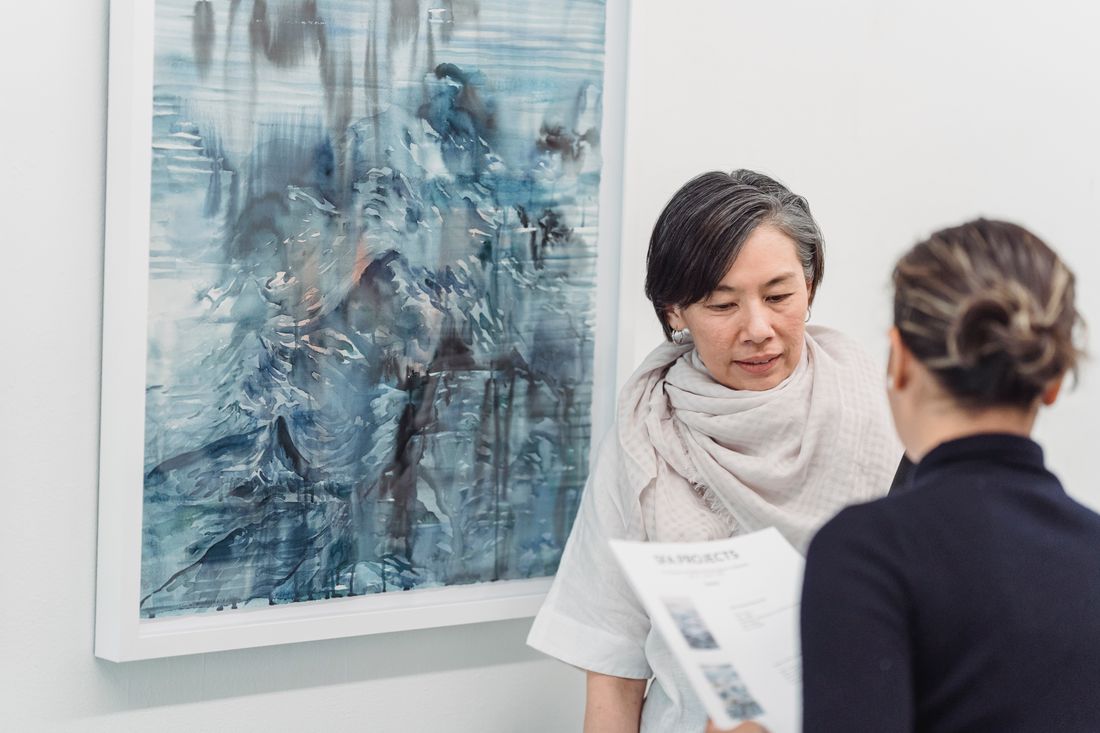
A preview shoot only works if the room is genuinely ready before the photographer arrives. Lighting set to its final show state, labels installed on the wall, and a clear sense of when any embargo lifts. Arriving to a half-hung room or unset lighting eats directly into the preview's already short window.
Lighting has to be at its final level, not a work light left over from installation. Track heads aimed, dimmers set, any color temperature adjustments made. A preview shot under temporary lighting doesn't match what the show will actually look like once it opens, and reshooting after the fact usually isn't possible once the room fills for the public event. Labels matter more than they seem to at first. An artwork-in-context shot without a label reads as incomplete, and adding labels later means the preview photography has to be redone from scratch.
Embargo timing is the piece galleries most often forget to settle in advance. If images are going to press ahead of the public opening, the gallery needs to know exactly when those images can run, and needs to tell the photographer and any receiving outlets the same date. A preview that produces great images nobody can use on time because the embargo was never clarified is a wasted shoot, no matter how clean the room looked.
What changes if the budget only covers one event?
Covering only one event means accepting a real gap, not a smaller version of the same coverage. Skip the preview and the gallery has no clean documentation of the show, only candid opening images. Skip the opening and the gallery has a complete archive but nothing to send the people who actually attended.
The honest question is which gap costs more to leave open. A show going into press coverage, an artist's portfolio, an insurance file, or a future loan request needs the preview's clean images to exist at all. Nothing from the opening substitutes for a missing installation view. A gallery whose priority is the relationships in the room, without a press push and without a strong need for archival images, may get more real use out of covering the opening instead.
Budget for both when the show is doing real work in both directions, meaning it has a press list worth documenting for and a guest list worth thanking afterward. That's most openings with any public program behind them. Budget for one when the show clearly leans one way. A quiet gallery show with no press interest probably doesn't need a preview shoot, and a preview-only show with a closed opening doesn't need opening coverage either. The decision should follow what the images are actually going to be used for, not which event feels like the bigger occasion.
Frequently asked questions
Do we need a photographer at both the press preview and the public opening?
Only if the show genuinely needs both kinds of coverage. The preview produces clean installation views and archive-grade images. The opening produces a record of the crowd and the relationships in the room. If the show has real press interest and a guest list worth documenting afterward, budget for both events. If it clearly leans toward one purpose, one event usually covers what the gallery actually needs, and the other becomes an avoidable expense rather than a gap.
Can the same shot list work for both events?
Not well. A preview list is a documentation brief built around empty, lit rooms. Full views, context shots, close details. An opening list is an event brief built around people. Entrances, groupings, candid reactions. Running one list at both events usually means the preview images read casual and unfinished, while the opening set ends up missing the crowd and energy it actually needed to capture, since neither list was built for the room it was shot in.
Got overlapping openings already on the calendar?
We work out the coverage plan well before the night gets close, whether that's two shooters, a tight schedule, or simply booking early enough to avoid the conflict entirely.
Explore event coverage →