A useful gallery opening photo list follows the actual shape of the evening. The room before it fills, the people who made the show, the artwork with guests around it, the crowd at its fullest, anything scheduled, and the handful of shots nobody thinks to request until they need them.
The goal is not a folder of interchangeable party photos. It is a set organized by phase of the night, so a gallery, an artist, or a PR person can hand a photographer this list and know nothing important got missed.
Before doors open: shoot the room while it's still yours
Get to the gallery for the last quiet stretch before the crowd, usually the twenty minutes before doors open. This is the only point in the night when the installation looks the way the curator actually hung it: even spacing, clean sightlines, nothing blocking a piece that will be surrounded by people an hour later.
Shoot a wide frame from every entrance or axis into the room. Add medium frames that show how two or three works relate to each other on the same wall. If the show has a sculptural or hanging element, work around it from more than one angle, since a single straight-on shot rarely explains how a piece changes as a visitor walks past it.
Make both a horizontal and a vertical version of the two or three views that matter most. The horizontal goes to the gallery's press page or exhibition archive. The vertical is what actually gets used in a story or a newsletter, and there is no good way to manufacture one from a horizontal crop after the fact.
This is the shot most galleries forget to ask for, because by the time anyone remembers to request it, the room already has fifty people and a bar cart in it. If the photographer only gets one instruction before the event, make it this one: arrive early enough to shoot an empty room.
The artist, the curator, and whoever else has to be identifiable later
Before the room fills, get a short, named list from the gallery: the artist, the curator, the director, and anyone else whose presence needs to be provable later, for press, for a grant report, or for the artist's own archive. A phone photo of headshots, or five minutes with the gallery's own introductions, solves a problem no list of names does on its own. Nobody can pick a collector out of a crowd from the phrase blue jacket after the third blue jacket walks in.
Shoot the artist alone first, while they still look like themselves and not like someone who has been talking for ninety minutes. Then the artist with the curator. Then the artist with the gallery director, if that relationship matters to this show. Each pairing tells a different part of the story, and none of them can be recreated once the room is loud and everyone is holding a drink.
The window for this coverage is short. Most artists are genuinely available for a clean portrait in the first twenty minutes and again, briefly, near the very end, once the room thins out. The middle of the night belongs to the guests, not the photographer's shot list.
The artwork with people actually looking at it
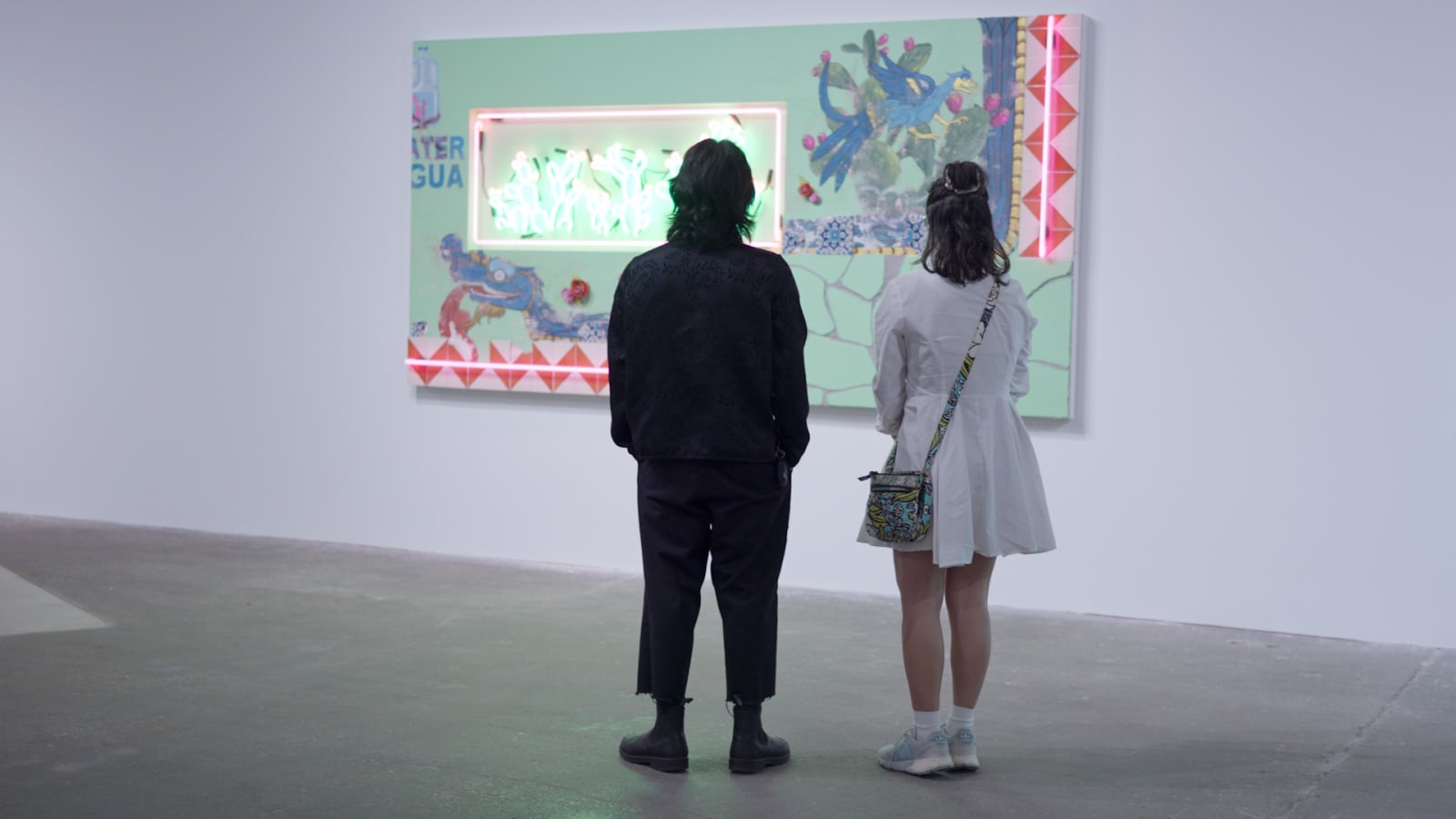
An opening exists because of the work, so the work needs to stay visible in the record of the night, not just in the empty-room shots from before doors. Get frames where a piece reads clearly on its own, frames where several works share a wall, and frames where a guest gives a painting scale without standing in front of the parts that matter.
Most galleries run low, warm light and ask photographers to skip the flash, since a flash on varnished or glazed work throws a hot spot straight back into the lens and can genuinely interrupt a quiet moment with the artist. That means wider apertures, higher ISO, and accepting some grain in exchange for a shot that does not blow out the piece it is supposed to be documenting. It is documentary coverage, not a substitute for a full documentation session shot under controlled light.
Watch reflections. New York galleries are full of glass, uneven track lighting, and guests holding phones that catch a stray highlight right where a face should be. A photographer who already shot the room before doors open knows where those hot spots sit and can plan an angle around them once the crowd arrives.
The room at its most crowded, not just posed groups
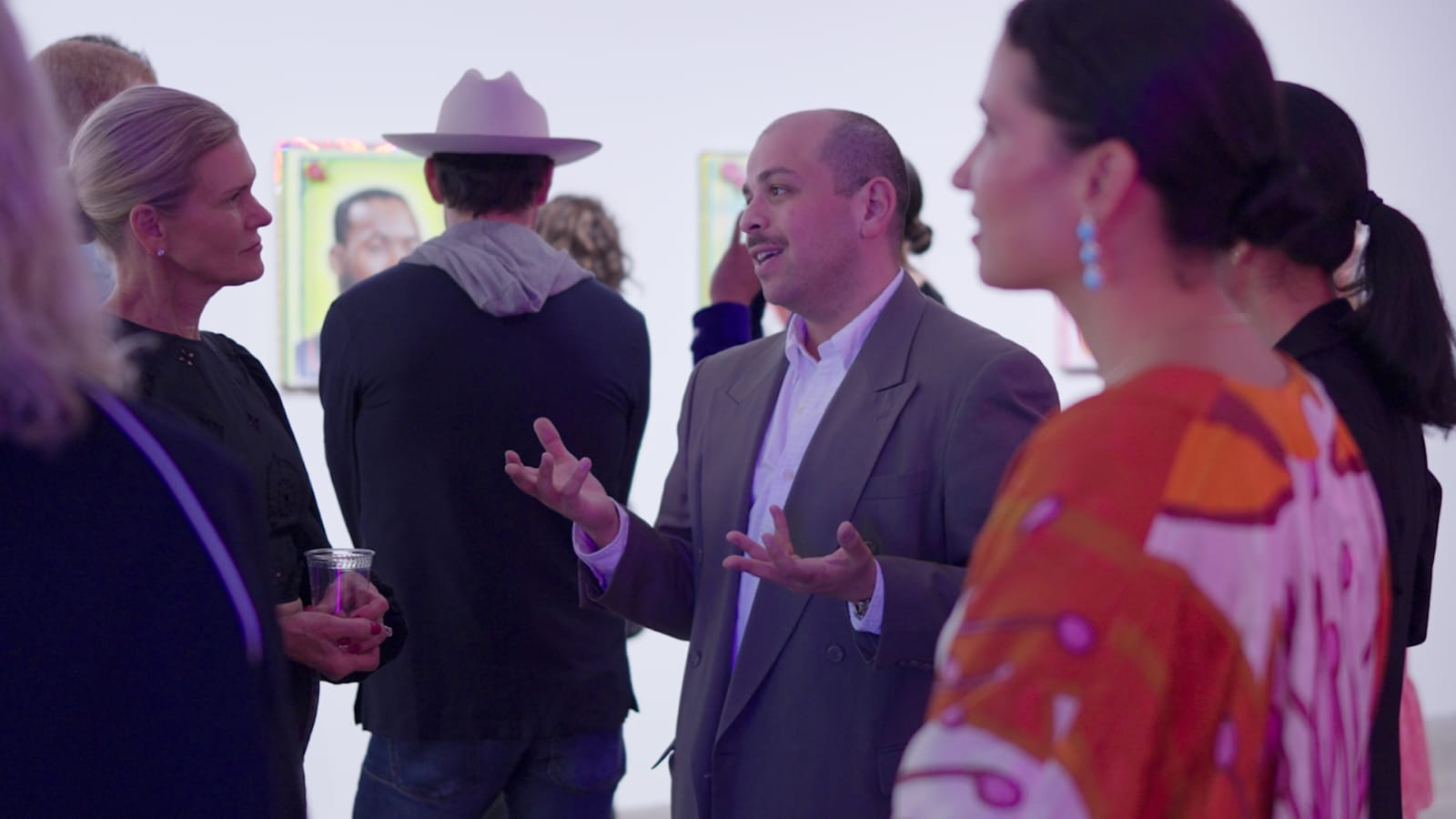
Crowd photographs prove two things: that people showed up, and what they showed up to see. A wide frame during the busiest twenty minutes of the night, usually shortly after most guests have arrived and before anyone starts leaving, does both if it keeps enough of the installation in frame to say which show this was.
Cover the arc of the evening, not just the peak. Early frames tend to look spacious and attentive, since the first guests are actually looking at the work before the room fills in around them. Peak hour reads as energy. The last half hour, once the crowd thins, often produces the most relaxed and specific candids of the night, because the people still there are the ones who actually wanted to be.
Avoid treating every guest as an isolated portrait request. A handful of requested groups is useful, but the more valuable frames are observational: two people mid-conversation in front of a piece, someone reading a wall label alone, a small group blocking a doorway because nobody wants to leave. Those are the images that end up reused, because they show the room actually working, not a lineup in front of it.
Any scheduled remarks, toasts, or performances
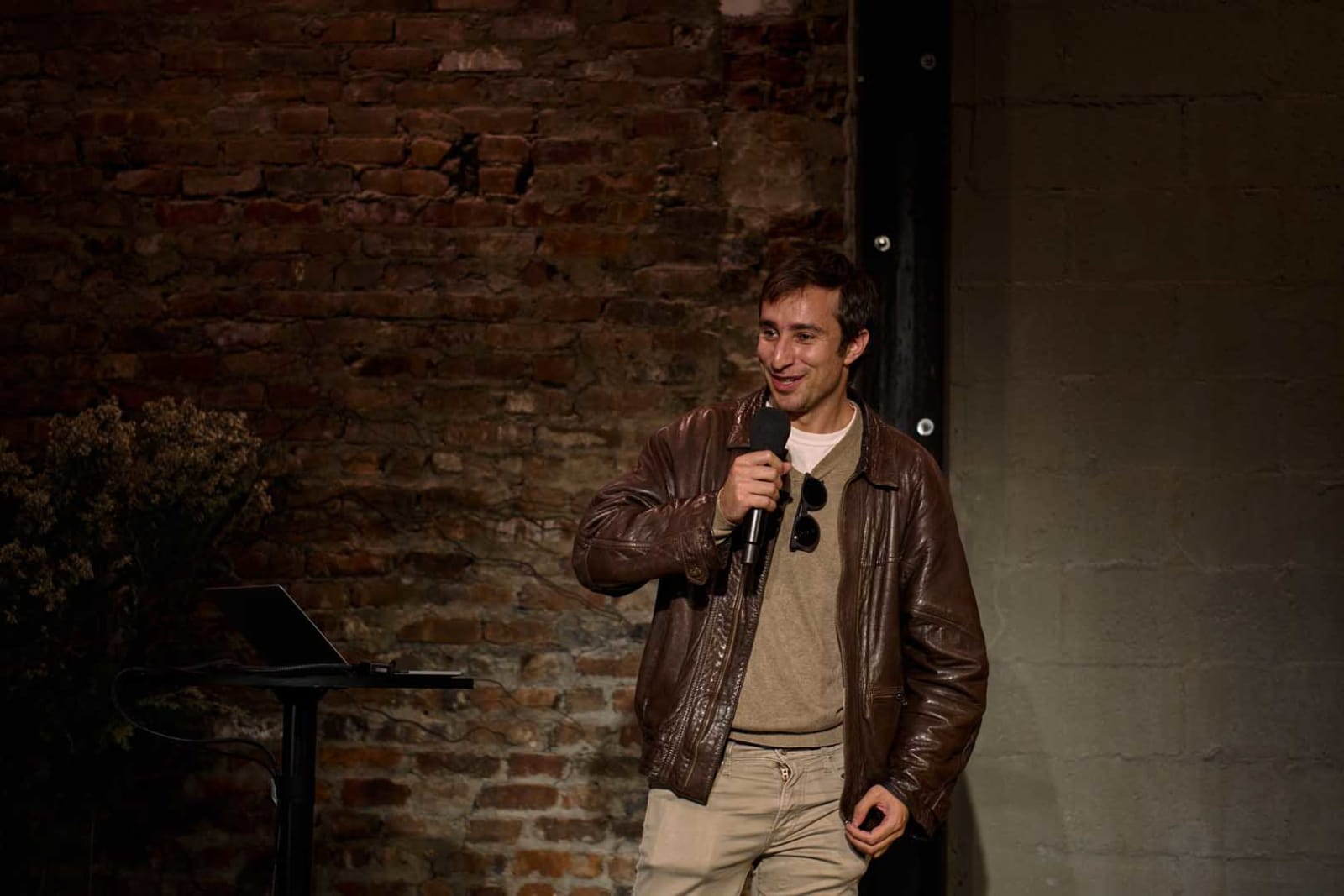
If the gallery has a program, remarks, a reading, a performance, get the schedule and the exact spot the speaker will stand before the night starts. That single piece of information changes where the photographer needs to be standing thirty seconds before it matters, instead of finding out from the back of a suddenly quiet room.
Cover it in three parts. One clean frame of the speaker alone. One wider view that shows the audience and enough of the room to place the moment inside the exhibition, not in a generic crowd. And reactions, the specific two or three seconds where a guest actually responds to what is being said, which almost never happens on cue and has to be watched for rather than requested.
Program moments only happen once. There is no second toast to reshoot if the photographer is on the wrong side of the room, so this is the one part of the checklist worth confirming twice with the gallery ahead of time, not assuming it will announce itself. A gallery running a program alongside the opening should say so in the first message to the photographer, not the walkthrough five minutes before it starts.
The shots people forget until they need them
A few frames rarely make anyone's mental list but come up constantly once the gallery is building a recap post or answering a press request. The exterior of the space with signage visible, so a viewer knows where this happened without reading a caption. The gallery's own team, not just the artist and curator, since the people who hung the show are part of the record too. A sold sticker or a red dot next to a piece, if the gallery is comfortable with it being shown. The printed checklist or price list on the wall, useful later for anyone trying to match a photo back to a specific work.
A guest actually leaning in to read a label, or the guest book if the gallery keeps one, both do more to show engagement than another wide shot of the crowd. And one frame near the very end, once the room has thinned to the last dozen people, closes the story the empty-room shot opened. It shows the same space the night changed and then handed back.
One night, two openings, no dropped coverage.
We plan clustered opening nights before they turn into a scramble, whether that means a split schedule, a second shooter, or an early enough booking that the calendar never becomes the problem.
Explore event coverage →