
We shoot a lot of openings, and the pattern afterward is almost always the same: a burst of energy the next morning, one post, then quiet. Meanwhile the drive has forty or fifty usable frames sitting on it, and the show is still up for weeks. That's not a posting-frequency problem. It's a sequencing problem.
One well-shot opening can carry a gallery's feed for the entire run of the show, not just the morning after. Post the least precious, most energetic frame first, while the opening is still current. Hold the strongest artwork and detail shots for the quiet weeks in the middle, when the show is up but there's no event to post about. Save one real recap post, with specifics, not vibes, for a few days before it closes. Spreading one night's coverage across the run does more for the gallery than dumping it all into a single carousel the next morning.
The one-post mistake
Posting three or four opening photos in a single carousel the morning after feels efficient, and it isn't exactly wrong, it's just a waste of an archive. That post gets seen once, by whoever happens to be online that day, and then it's buried under the next thing in everyone's feed within twenty-four hours.
The same photos, spread across four or five posts over the run of the show, get seen by different people at different times, and each one gets its own moment instead of splitting attention with three other images in a carousel. A gallery isn't losing anything by slowing down. It's getting more out of a night that already happened and already cost the same amount to shoot.
There's a quieter cost too. If the only time an account posts is the morning after an opening, the account reads as dormant the rest of the month, and dormant accounts get less reach when they do post. A spread-out sequence uses the archive properly and keeps the account looking like an active thing worth checking, not a bulletin board that lights up four times a year.
What to post the first day or two
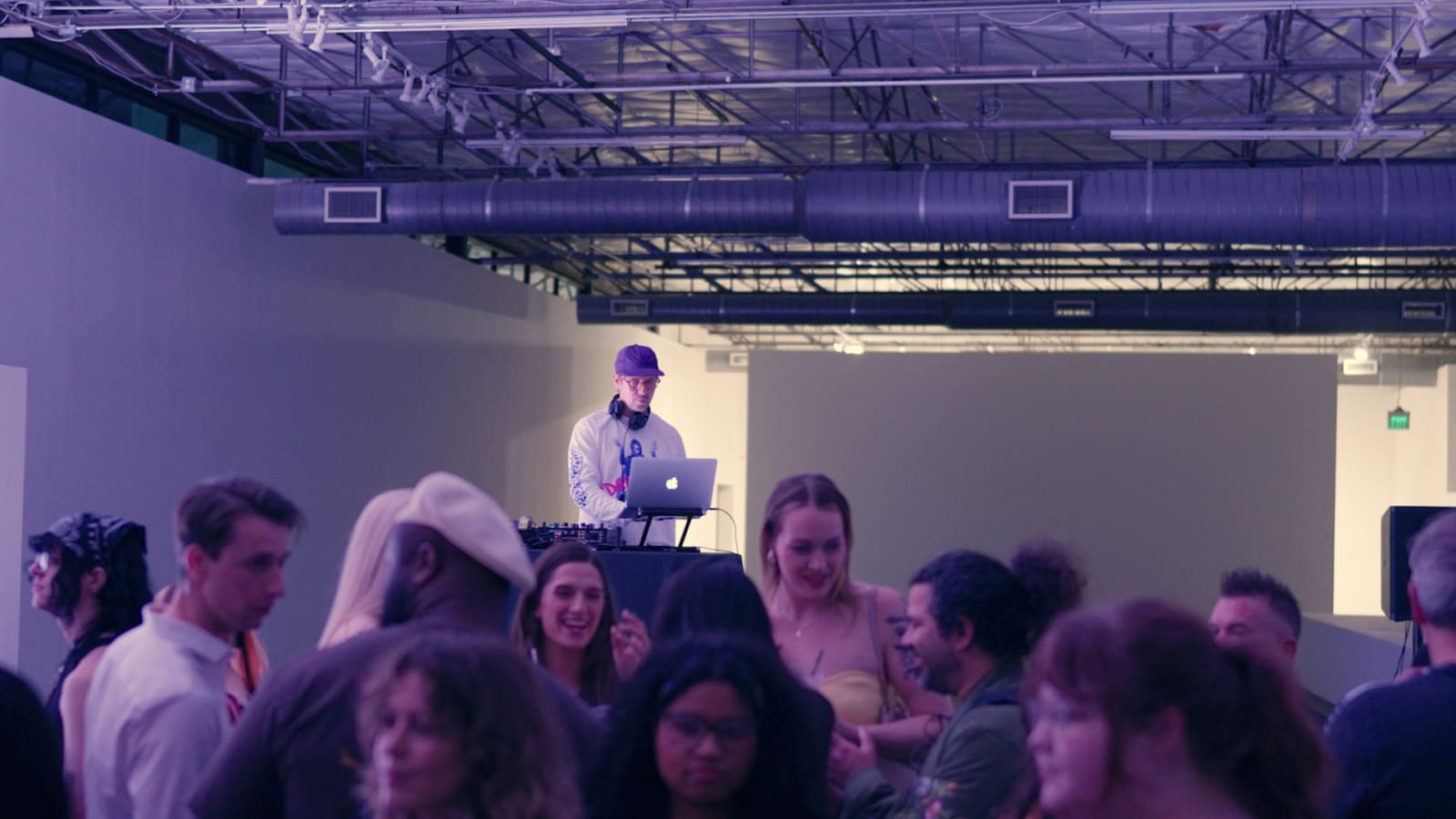
The first post should go up within a day or two, and it should be the least precious frame in the archive: a crowd shot, a candid of people looking at the work, something that reads as "this just happened" more than "this is the best photo of the night." Momentum matters more than polish here, because this post has one job, telling people who missed the opening that something real took place.
If the night didn't produce a strong crowd moment, a wide install shot of the room works just as well. This isn't the post to explain the work in depth or make claims about how the show was received. A short, honest line, who came, what the room felt like, does more here than a paragraph trying to sum up the whole show on day one, and it leaves the artwork's own language for the posts that follow.
Once that energy post has run its course, usually two or three days, shift to the artwork itself. A crowd photo feels dated within a week. A clean, well-lit shot of a piece on the wall doesn't, which is exactly why it shouldn't go out first and get buried alongside it.

What to hold back while the show is still up
Not everything from opening night needs to go out in the first week. A show that runs for weeks needs material spread across all of them, not spent while the energy is highest and the account is quietest for the rest of the run.
Save one or two strong images, ideally a detail shot or an unusual angle that didn't make the earlier posts, for a point in the sequence when there's no scheduled event to post about. That's the stretch most gallery accounts go quiet during, and it's exactly when a held-back image does the most good. It also gives the gallery something ready to post on a week when nothing else is planned, instead of scrambling for content once the feed has already gone stale.
This isn't about manufacturing scarcity. It's the same reason a gallery wouldn't hang every piece from storage on the wall at once. Some material earns more attention by not competing with everything else from the same night, and a several-hundred-photo shoot has more than enough to spread across a full run without repeating itself.
What a recap post should actually contain
A closing post belongs a few days before the show comes down, not after it's already gone. "Last chance to see this" does real work that a recap posted once the show has closed can't, because it still gives someone a reason to actually show up.
The photo can be one already used elsewhere in the sequence; it doesn't need to be new. What matters is the caption doing a different job than the earlier posts. This is the one place in the sequence where a plain, practical caption beats a warm one: closing date, hours, and address, if that isn't already obvious from the account bio. People who've been half-meaning to stop by all month respond to a clear deadline more than another photo of the room.
A recap post that only says "thanks for coming out" wastes the slot. It's not a memory, it's an invitation with a real expiration date, and it should read and sound like one, right down to the specifics a person actually needs to show up before the show is gone for good.
Group shows need one extra post
A solo show sequences itself: energy, work, detail, wrap. A group show has an extra problem, the strongest two or three pieces in the room absorb most of the attention, and quieter contributors can end up with zero real coverage even though they're in every wide shot.
The fix is a dedicated post, or a short run of them, that gives every included artist at least one moment where they're the actual subject, not a background presence in someone else's photo. It costs one extra post in the sequence, and it's the difference between a group show that feels evenly represented and one where three names quietly did all the social lifting.
Artists notice when a gallery's account only ever features the same two or three names across every group show, and it affects who's excited to submit work next time. A short, deliberate post, one image per artist, is exactly the kind of small habit that builds trust with a roster over time, and it's already sitting in the archive if the shoot captured individual pieces cleanly.
A realistic sequence for the run of the show
Here's what a full sequence typically looks like from one well-shot opening, stretched across however long the show is actually up, whether that's two weeks or two months:
- Day 1-2: the crowd or energy post, the least precious frame in the archive.
- A few days later: the strongest single artwork, its own post, its own moment.
- Mid-run: a second piece, or the group-show equalizer post if the roster needs it.
- A quiet week with nothing else scheduled: the held-back detail or process shot.
- A few days before it closes: the recap post, timed as an invitation, not a memory.
That's five posts, with room for a sixth if the archive supports it, all from photos already shot and paid for on opening night. Nothing about this requires more coverage. It requires not spending the whole archive in one morning. Caption and tag decisions for each of these posts are their own subject, and the shot list that makes this sequence possible in the first place starts on the night itself, before any of it gets posted.
Not every month has an opening, but the feed still needs to run.
We plan content for the ordinary weeks as carefully as the big nights, mixing archive work with what's actually going on in the gallery.
Explore monthly media →