The opening is documented, the closing is weeks away, and the same paintings are still on the same walls. That middle stretch is where most gallery feeds go quiet, and it is also the stretch that fills a room on an ordinary Tuesday.
A static show still generates new material for six weeks: how individual works read up close, how light changes them by the hour, how the empty room feels without a crowd, and how visitors move through it. Shoot a batch on one return visit, post on a steady weekly cadence, and vary the angle each time so the same show never repeats itself.
What Counts as New Material When the Work Hasn't Changed
The work on the wall is fixed for six weeks, but four things around it are not: how a piece reads up close, how light moves across it at different hours, how the empty room feels without anyone in it, and how visitors actually move through the space. Those four give a gallery real material every week of a run.
Most galleries treat a show as one content event: install shots, an opening crowd, maybe a closing note, then silence in between. That leaves the longest part of the run undocumented, which is backwards, because the middle weeks are when a feed's regular audience is deciding whether to actually walk in. A post from week three of a run is doing different work than a post from opening night. It is not selling an event anymore. It is answering the quieter question of whether the show is still worth a stop on a weekday.
None of this requires new work to hang. It requires looking at the existing work differently than the opening-night photographer did. Detail, light, the room, and the visitor are not filler categories invented to pad a calendar. They are the same show seen from four angles nobody used on opening night, because opening night does not have the light, the quiet, or the time to notice them. The rest of this piece works through each one, plus how to gather them in a single visit and space them out sensibly.
A Single Work, Read Closely
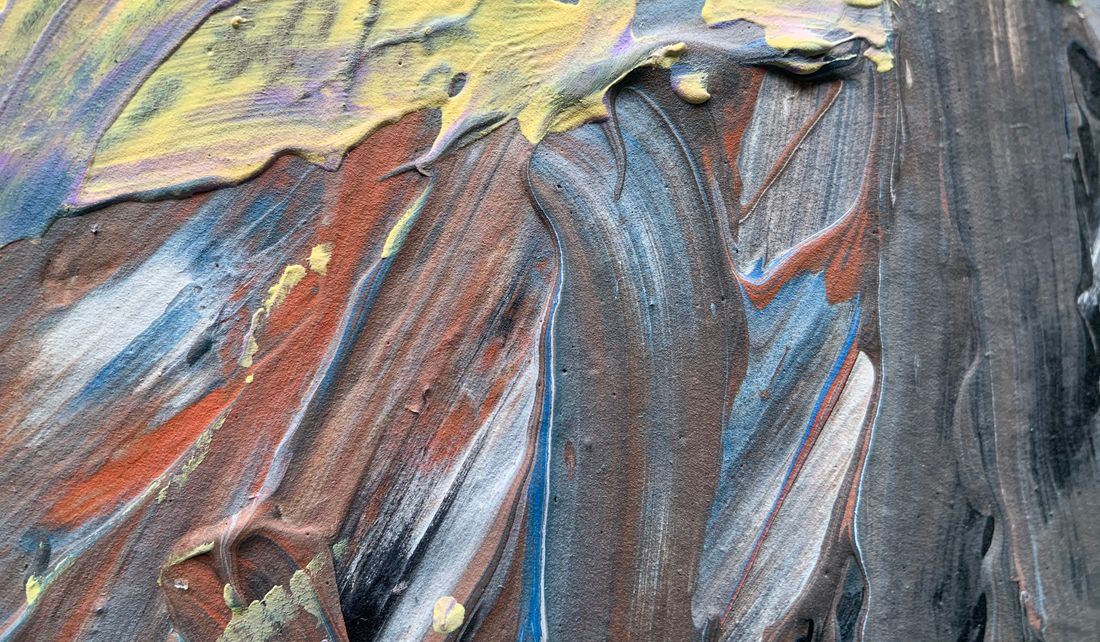
A detail crop of one piece, held on screen long enough to actually look at, is content an opening crowd never allowed: brushwork, a join in a panel, the texture of a print's surface, a color that photographs differently than it reads on the wall. One work, one close pass, is enough for a full post.
Opening night photography tends to move fast and stay wide, because there is a room full of people and a limited window to cover it. That leaves the individual works under-documented in a way most galleries never circle back to fix. A quiet weekday visit is the chance to do it properly: get close enough that the crop is about the surface, not the whole piece, and let the caption do what a wall label already does at a glance, which is to slow a viewer down and make them look again.
This works especially well on a show's stronger or more talked-about piece, since a closer look gives an audience that already noticed the work at the opening a reason to look a second time. It also works on a piece that got skipped over in the opening crowd, because a slower, closer image can do what a fast walkthrough could not: make a case for one work on its own terms, without competing against everything else on the walls for a few seconds of attention.
The Same Room in Different Light
A show installed under fixed gallery lighting still changes across a day if any daylight reaches the room: morning light raking low across a canvas, midday flattening it, late afternoon warming the whole wall. Photographing the same wall at two or three different hours produces genuinely different images from work that never moved.
Not every space has this to work with. A gallery lit entirely by track fixtures with no windows will look close to identical at 11am and 4pm, and there is no point forcing a light-based post out of a room that does not change. But many spaces have at least one window, skylight, or glass storefront where the light shifts meaningfully across the day, and that shift is worth treating as its own subject rather than an accident to avoid.
The easiest way to capture it without a special trip is to fold it into a documentation visit that already runs long: shoot the detail and room images first, then let an hour or two pass and come back to the same spot for a second pass in changed light. Two images of the same corner, hours apart, side by side or spaced a week apart in a feed, say something an opening-night photo cannot: this show is still here, and it looks different depending on when you walk in. A light study like this reads best a couple of weeks after opening, once the first burst of coverage has passed and a feed needs a reason to bring the show back into view.
The Room Itself, With Nobody In It
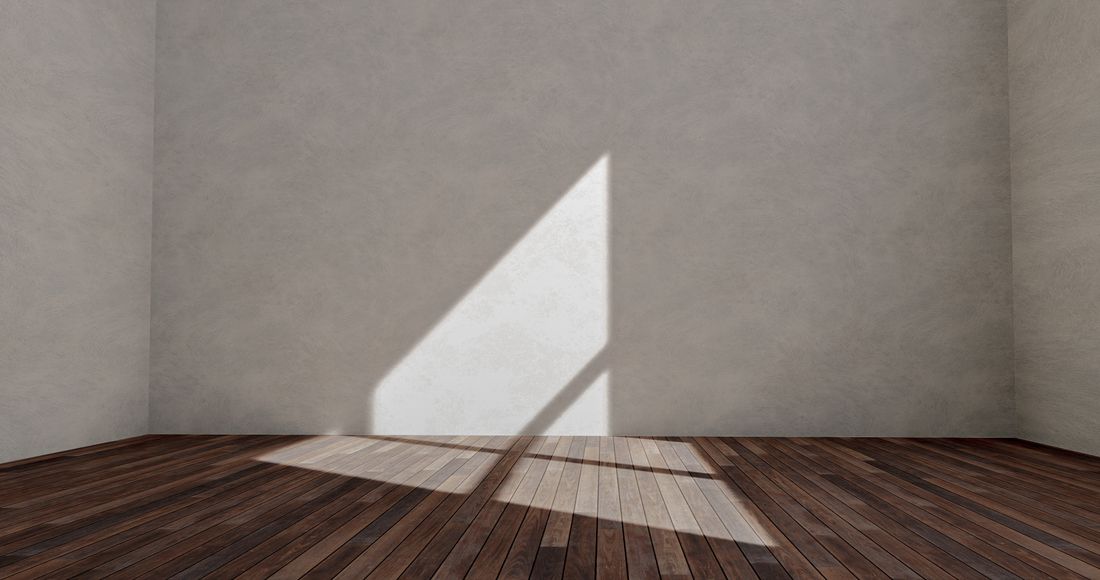
An empty gallery mid-run, daylight or track light crossing the floor, no crowd between the camera and the walls, reads as a genuinely different image from an opening-night crowd shot, and it says something an opening photo cannot: the show is still installed, still available, still worth the walk in on an ordinary afternoon.
Opening photography is almost always full of people, because that is the point of an opening. But a crowded room photographs the event, not the exhibition, and most of a run happens without a crowd in it. An empty room mid-show is a different kind of proof: it shows the actual experience a weekday visitor is going to have, which is quiet, unhurried, and theirs alone. For a lot of the audience deciding whether to make the trip, that quiet is more appealing than a party they were not invited to.
This image also does real work for a gallery that wants to be seen as a place to visit, not just a place that throws openings. A wide shot of the room, floor to ceiling, with the works legible but not the focal point, sets up the closer material well: it establishes the space once, so the detail crops and light studies that follow have a room to belong to instead of floating as disconnected close-ups. One clean empty-room frame, taken early in the run, can anchor several weeks of posts that follow.
How a Visitor Actually Moves Through the Show
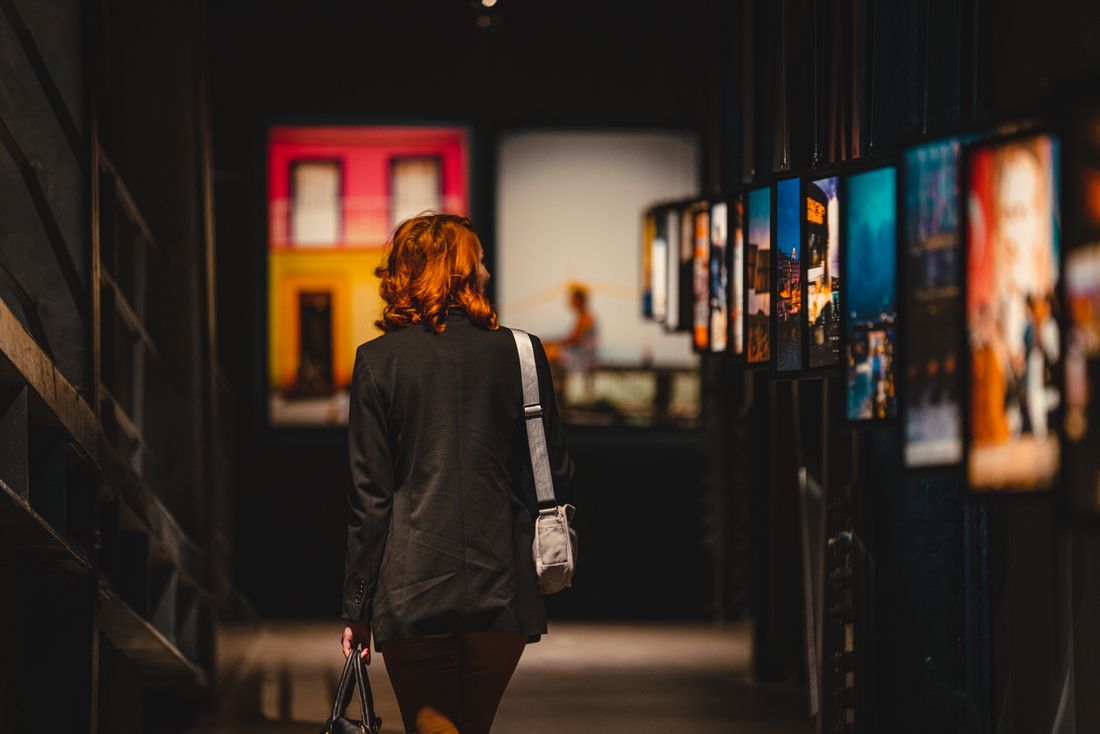
A photograph of someone's back or silhouette moving through the room, taken from behind or at a distance, shows a show being used rather than just displayed: a figure pausing at one piece, walking the length of a wall, standing at a distance to take in the whole room. It is proof of an audience without turning any one visitor into the subject.
This kind of image needs almost no planning if a gallery is already open during regular hours: a staff member walking through during a quiet stretch, a visitor seen from behind with their permission, or simply timing a shoot for a moment when one or two people happen to be in the room. It does not need a crowd, and a crowd is not the point. One figure, at a comfortable distance, is enough to shift the image from architecture to experience.
Handled carelessly, this category turns into candid photos of strangers, which is worth avoiding on privacy grounds alone. The safer version keeps the person unidentifiable by distance, angle, or framing, or uses a staff member who has agreed to be photographed. The payoff is a post that answers a question detail shots and empty rooms cannot: what does it actually feel like to walk through this show, at your own pace, on a random weekday. That answer is often what actually moves a hesitant follower from scrolling past to putting the gallery on a weekend list.
Shooting a Batch on One Visit That Carries Six Weeks
One well-planned return visit, timed for a stretch of good light and a quiet room, can produce enough material to carry a full run: a handful of detail crops, two or three room-wide shots, a light study if the space allows it, and a few visitor or staff-in-the-room frames. Spaced out, that batch covers six weeks without a second trip.
The planning question is not how much to shoot but what range to cover in one visit, since a single afternoon rarely offers changing light, an empty room, and people passing through all at once. A practical approach treats the visit as three short passes rather than one long one: an early pass for the empty room and detail work while the space is quiet, a midday or late pass to catch a light change if the room has one, and a final short window near closing or opening hours to catch natural foot traffic without staging it.
Planning this as one visit instead of four scattered ones is also simply more efficient for a gallery's own time and, where outside help is involved, for a photographer's day rate. A single return visit with a clear shot list produces the same spread of material as multiple short trips, without asking anyone to keep coming back to a show that is not changing. Write the shot list before walking in the door, so the visit stays efficient instead of turning into an open-ended wander through a familiar room.
Setting a Cadence for the Middle Stretch
A steady weekly post through the middle of a run, drawn from one batched visit, does more for a show than a burst of activity at the opening followed by nothing until closing. The exact day matters less than the consistency: one post most weeks reads as a gallery that is open and paying attention, not one going quiet the moment the party ends.
The trap most galleries fall into is treating a show as two events, an opening and a closing, with a gap between them that nobody plans for. That gap can run four or five weeks on a typical run, which is long enough for a feed to look abandoned even though the gallery is fully open and staffed the entire time. A weekly post, even a modest one, closes that gap without demanding a heavy production schedule.
There is no single correct frequency, and posting daily from one visit's material just burns through it too fast and starts to feel repetitive by week two. A weekly rhythm tends to match how much genuinely different material one batched visit produces, and it also matches how often a typical follower actually checks in, so the pacing lines up with attention rather than racing ahead of it or falling behind it. A gallery with more staff time can stretch to twice a week without strain; a smaller team is usually better served picking one solid post a week and holding that line for the full run rather than starting strong and trailing off.
Talking About the Same Show Without Repeating Yourself
Each post through a run should answer a different question rather than restate the last one: not "here is the show again" but "here is one work up close," "here is the room in late light," or "here is what a slow Tuesday afternoon here actually looks like." Varying the angle each week keeps repeated posts about the same show from reading as repetition.
The caption is where this either holds together or falls apart. A caption that just restates the show's title and dates every week trains an audience to skim past it, because there is nothing new in the words even when the image is different. A caption that names the specific thing in front of the camera, a texture, a shift in light, a visitor's pace through the room, gives each post its own reason to exist, separate from the fact that it belongs to the same exhibition as the post before it.
It also helps to vary who or what a post is actually about from week to week: one week on a single piece, the next on the room, the next on the experience of visiting. That rotation does the work of variety without inventing new events that are not happening. The show has not changed. What a gallery chooses to say about it each week is what keeps a six-week run from sounding like one long, repeated announcement.
Frequently asked questions
How often should a gallery post during the middle of a six-week show?
A weekly post is a reasonable default for most galleries. It is frequent enough to keep a feed from going quiet during the longest stretch of a run, and it matches how much genuinely different material one well-planned documentation visit tends to produce. Posting daily from a single visit's material usually exhausts it too fast and starts to feel repetitive well before closing, while posting only at the opening and closing leaves a long, silent gap in between.
Do we need to hire a photographer again mid-show, or can staff shoot it?
Either can work. A single staff member with a phone can capture detail crops, an empty room, and a visitor passing through, especially if the gallery already has decent daylight or track lighting. Bringing in outside help makes more sense when the goal is a full, consistent batch in one planned visit, particularly for light studies, difficult surfaces, or work that photographs poorly on a phone in mixed gallery lighting.
What if the gallery has no windows and the light never changes?
Skip the light-at-different-hours idea entirely rather than forcing it. A room lit only by fixed track lighting will look nearly identical at any hour, so that category will not produce a real difference worth posting. Lean instead on detail crops, the empty room, and visitor-path shots, none of which depend on daylight, and all of which work under any consistent, unchanging gallery lighting setup across the whole run.
Is it okay to photograph visitors without asking first?
Keep any visitor in a photograph unidentifiable, by distance, angle, or framing that shows a back or silhouette rather than a face, unless that person has clearly agreed to be photographed first. A staff member who has agreed to be shown is the simplest option, since there is no ambiguity about consent. The goal of a visitor's-path image is to show the show being used, not to document any one specific person.
How is this different from what to post during a slow month with no show up?
A slow month with nothing on the walls has to invent material from process, archive, or planning content, because there is no current exhibition to draw from. A mid-run show has the opposite problem: real, current material sitting on the walls that most galleries simply stop photographing after opening night. This piece is about using what is already there, not filling a gap where nothing is.
Give the quiet month something to say.
We help galleries build content out of the ordinary weeks too, pulling from the archive, planning ahead, and keeping the feed honest between openings.
Explore monthly media →