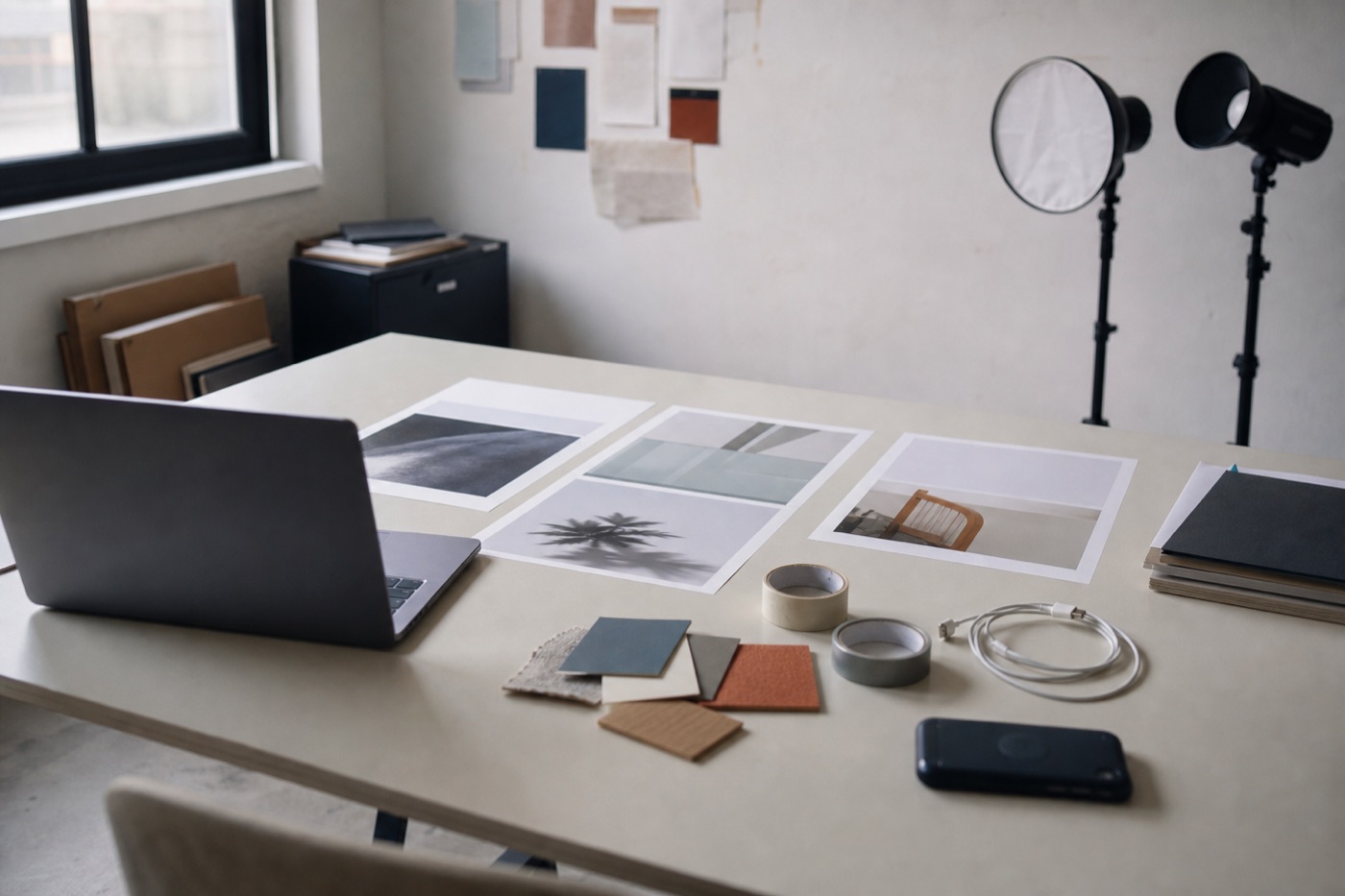
Choose a one-off content shoot when you have one clear moment to support, such as a launch, website refresh, press feature, new offer, exhibition, or campaign. Choose monthly media when your studio publishes regularly, your work changes often, and the recurring restart is taking more energy than the actual content.
Neither option is automatically more professional. One-off production gives a defined project concentrated attention. Monthly media trades some of that campaign scale for continuity, smaller updates, and a growing library that follows the real pace of the studio.
The useful question is not how much content you can collect in a day. It is what the images and videos need to keep doing after the day is over. This guide compares both models and shows where a hybrid plan often makes sense. For ongoing production support, see our monthly media for artists and creative studios.
The short answer
A one-off shoot is best for a defined communication job. It can build a complete campaign library, replace old website images, introduce a new service, document a finished space, or give a press push one consistent visual language. The project has a beginning, a delivery, and a reasonably clear finish line.
Monthly media is best when the communication job keeps changing. An artist makes new work. A gallery installs new shows. A designer develops new materials. A creative business has changing projects, people, offers, and small moments worth sharing. The production follows that movement instead of asking one shoot to predict the entire season.
The deciding factor is usually repetition. If you need excellent images for one important use, one-off is enough. If you need to keep finding, planning, and producing new material, a recurring structure can remove the repeated setup cost in attention. Calendars are surprisingly talented at making the same decision feel new every month.
What a one-off content shoot solves
A one-off shoot concentrates the work. You define the audience, destinations, shot list, formats, location, people, and delivery before production. This makes it easier to build a coherent visual set around one message or moment.
It is especially useful when the visual system needs a reset. A website may contain photographs from different years, lighting styles, seasons, and versions of the business. One planned production can create a connected group of portraits, process images, space details, service visuals, and short motion clips. The files can then work together across several pages.
The same model fits a launch. A new collection, exhibition, menu, product, service, or identity may need a strong opening set. Concentrated production gives that release a visual center. It also makes approvals simpler because the team is reviewing one defined body of work rather than an open stream.
The limit is time. A one-off library reflects one version of the studio. The room, work, team, season, and visual idea may eventually change. Even evergreen photographs begin to feel repetitive when every post returns to the same table, jacket, and very productive Tuesday.
What monthly media solves
Monthly media creates a repeatable production rhythm. The exact shape can vary, but the principle stays steady. A recurring planning check identifies what is new, what is running low, what needs to publish next, and which formats are earning their place. The shoot then fills those needs instead of starting with a blank page.
This works well for studios with visible movement. New artwork, works in progress, installations, events, team changes, product updates, seasonal shifts, and changing spaces can each become useful material. The goal is not to manufacture a monthly spectacle. It is to notice what is already happening and document it with enough intention to be useful.
A recurring plan also creates feedback. You can see which photographs get reused, which video shapes are difficult to place, which crops are always missing, and which parts of the work deserve more explanation. The next session can respond. One shoot teaches the next instead of leaving every production to rediscover the same needs.
The limit is substance. A monthly schedule is not helpful when nothing meaningful changes and the business does not publish often. Repetition can quickly become photographs of the same desk from increasingly philosophical angles. Recurring production should follow a real content need, not create one to justify itself.
The real difference is the planning horizon
One-off content plans deeply around one defined horizon. The team may build a larger shot list, prepare several setups, gather more people, and create multiple formats during one production. The library is designed to launch together or support a fixed period.
Monthly media plans lightly and repeatedly. Each session can be smaller because it does not need to solve every visual problem. One month may focus on process and detail. Another may cover a finished project, a portrait update, or a short reel. The connected system lives across the sessions rather than inside one day.
This changes the brief. A one-off brief asks what the campaign must contain. A monthly brief asks what changed, what is about to happen, what the audience still needs to understand, and what the current library cannot support. Both require direction. They simply place the decisions at different intervals.
It also changes the kind of consistency you get. One-off work can look highly consistent because it comes from one production. Recurring work can feel consistent through color, editing, framing, voice, and subject priorities while still showing real change. The visual system stays recognizable without pretending the studio is frozen.
When one-off content is the stronger choice
Choose a one-off shoot when the need is important, specific, and likely to stay useful. A website relaunch, new brand identity, finished interior, major collection, press package, or focused campaign usually benefits from concentrated planning.
It is also the stronger choice when production has meaningful setup costs. If several people, locations, props, permissions, or complex deliverables must align, one well planned day may be more practical than repeating the setup. The shoot can capture the full range while everything is available.
One-off production suits studios that publish occasionally. If the main needs are a strong website library, a few profile images, and visual support for periodic announcements, recurring production may create more files than the communication system can use. A full refrigerator is not helpful when nobody is cooking.
Finally, choose one-off when you are still learning what the studio needs. A focused first library gives you material to use and evidence to review. You can see which destinations consume images quickly before building a recurring agreement around assumptions.
When monthly media earns its place
Monthly media earns its place when the studio has a real publishing rhythm and a real stream of change. The work does not have to be dramatic. It needs to produce enough new visual information to justify regular capture.
It is useful when several channels need different shapes. A website may prefer horizontal photographs. A social feed may need vertical images and short motion. Press requests may need clean files with context. A newsletter may need one strong image and a few details. Recurring planning can build those formats gradually instead of forcing every future crop out of one frame.
It also helps when content planning keeps stalling at the same point. The studio may know it should share the work but repeatedly loses time deciding what to photograph, when to schedule it, and how to turn the files into a usable sequence. A recurring process turns those decisions into a familiar check rather than a small internal referendum.
Choose monthly media when continuity has practical value. The growing library can show process, change, and range over time. That record is useful for more than social media. It can support proposals, press, talks, portfolios, grant materials, team pages, and future website updates.
Compare budget by useful output
Compare the options by the cost of producing material you will actually use. A one-off shoot may require more planning and production at once, but it can solve several defined needs in one project. Monthly media spreads production across smaller sessions and adds the value of adjustment over time.
Start with destinations. Count the kinds of assets, not an imaginary mountain of content. Do you need a website hero, service images, portraits, process details, press options, short vertical clips, event updates, or a recurring look at new work. Then ask how often those needs change.
Consider internal time as part of the decision. Gathering references, building shot lists, scheduling people, preparing spaces, reviewing files, selecting crops, and deciding what publishes next all require attention. A recurring system can reduce some repeated planning. It still needs a clear person on the studio side who can identify what matters now.
More deliverables do not automatically create more value. A smaller set with clear destinations often works harder than a large folder labeled for later. Later is a very spacious place. Many useful files have moved there and never returned.
Build a rhythm around real work
A strong recurring plan begins with the studio calendar, not a list of content trends. Look at what is being made, installed, launched, revised, delivered, discussed, or opened. Those moments already contain the material. Production gives them a clear visual form.
Plan each session around one primary story and a small group of secondary uses. A new body of work may lead the month. Process details, a short portrait, a studio update, and a few vertical clips can support it. The set stays coherent because the material comes from the same real movement.
Keep a simple library map. Record what already exists, where it has been used, and what is wearing thin. Notice whether every portrait is horizontal, every process image is too close, or every clip begins in the same room. The next brief can fix the gap without rebuilding the whole strategy.
Leave room for ordinary moments. A recurring system becomes more believable when it includes small changes, useful details, and work in progress alongside finished announcements. The studio does not need to perform a launch every month. It needs to show enough of the real practice that people can follow it.
A hybrid plan can be the useful middle
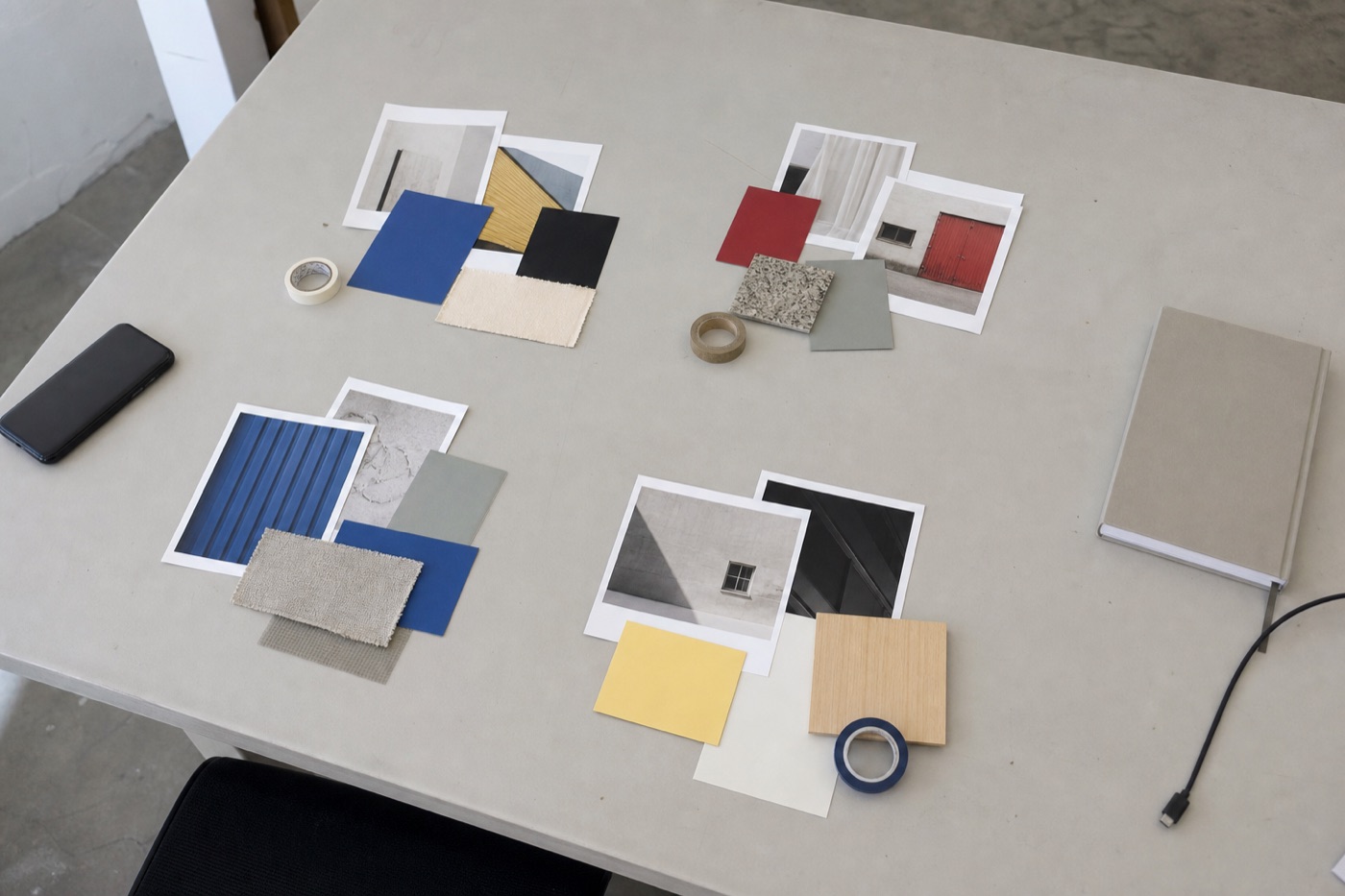
Many studios benefit from a larger foundation shoot followed by lighter recurring sessions. The first production creates the stable library. It may include core portraits, the space, services, process, evergreen details, and the flexible images a website needs. Later sessions document change.
This prevents monthly production from carrying the full weight of the brand each time. A small session can focus on a new project or current priority because the essential photographs already exist. It also prevents the foundation library from becoming the only visual record for the next several years.
The hybrid model can begin as a test. Start with one focused shoot. Use the files across real destinations. Track what disappears first, what never gets used, and what people keep requesting. If the gaps repeat, build a recurring plan around those facts.
Recurring does not have to mean identical. The useful cadence may follow exhibitions, releases, seasons, or periods of active work. The structure should match the studio. A calendar is a tool, not a tiny manager demanding a reel on the first business day.
What to include in the brief
For a one-off shoot, name the main event or change, the audience, the destinations, the deadline, and the exact asset families that must be delivered. Share current layouts and crop requirements. Identify what should remain useful after the immediate launch.
For monthly media, add the publishing rhythm, recurring channels, current library, next important dates, and the person who can approve priorities. Keep a running list of visual gaps. The brief should become easier to update, not a new strategy document written from the emotional depths every month.
In both cases, separate essential frames from optional ideas. Confirm what must be photographed, what can be captured if time allows, and what should wait for a better moment. This protects the main job of the shoot while leaving enough freedom to notice useful things on the day.
Share boundaries too. Note private information, unreleased work, people who should not appear, spaces that cannot be shown, and any client material that needs permission. A content system becomes much easier to use when the approval questions are handled before the files arrive.
A simple way to choose
Choose one-off content when one clear moment needs a strong, connected visual library. Choose monthly media when your studio has regular change, regular publishing, and a repeated planning burden that a steady production rhythm can reduce.
If both seem true, build the foundation first. Make the core images that explain the studio clearly. Then use smaller recurring sessions to follow new work and replace the parts of the library that get used fastest.
The best plan is the one your studio can keep using. A one-off shoot should leave you with more than a launch day. Monthly media should leave you with more than a monthly folder. In both cases, the real goal is a visual record that stays close to the work and makes the next communication decision easier.
FAQ
Is monthly content better than a one-off shoot?
Monthly content is better when your studio publishes regularly, has changing work to show, and benefits from a repeatable production rhythm. A one-off shoot is better for a launch, website refresh, campaign, press need, or another defined moment. The stronger choice is the one that matches the job and the pace of your work.
How do I know if my studio has enough for monthly media?
Look for recurring visual changes such as new work, works in progress, installations, team activity, events, products, spaces, or seasonal offers. You do not need a dramatic launch every month. You need enough real movement to create a small useful set without inventing activity for the camera.
Can a one-off shoot create content for several months?
Yes, when the material is evergreen and planned for several destinations. A one-off library can support a website, profiles, press, and scheduled posts for a while. It becomes less useful when the studio changes quickly or when every post starts drawing from the same day, wardrobe, room, and visual idea.
Can you start with one shoot and move to monthly media later?
Yes. A focused first shoot can establish the core library and reveal what gets used fastest. A recurring plan can then concentrate on the gaps, new work, and formats that need regular replacement. This is often a practical way to test the workflow before committing to a longer rhythm.
Need a content rhythm that follows the work?
We plan recurring photo and video for artists, galleries, and creative studios in NYC, with each session built around what is changing and where the files need to go.
Explore monthly media →