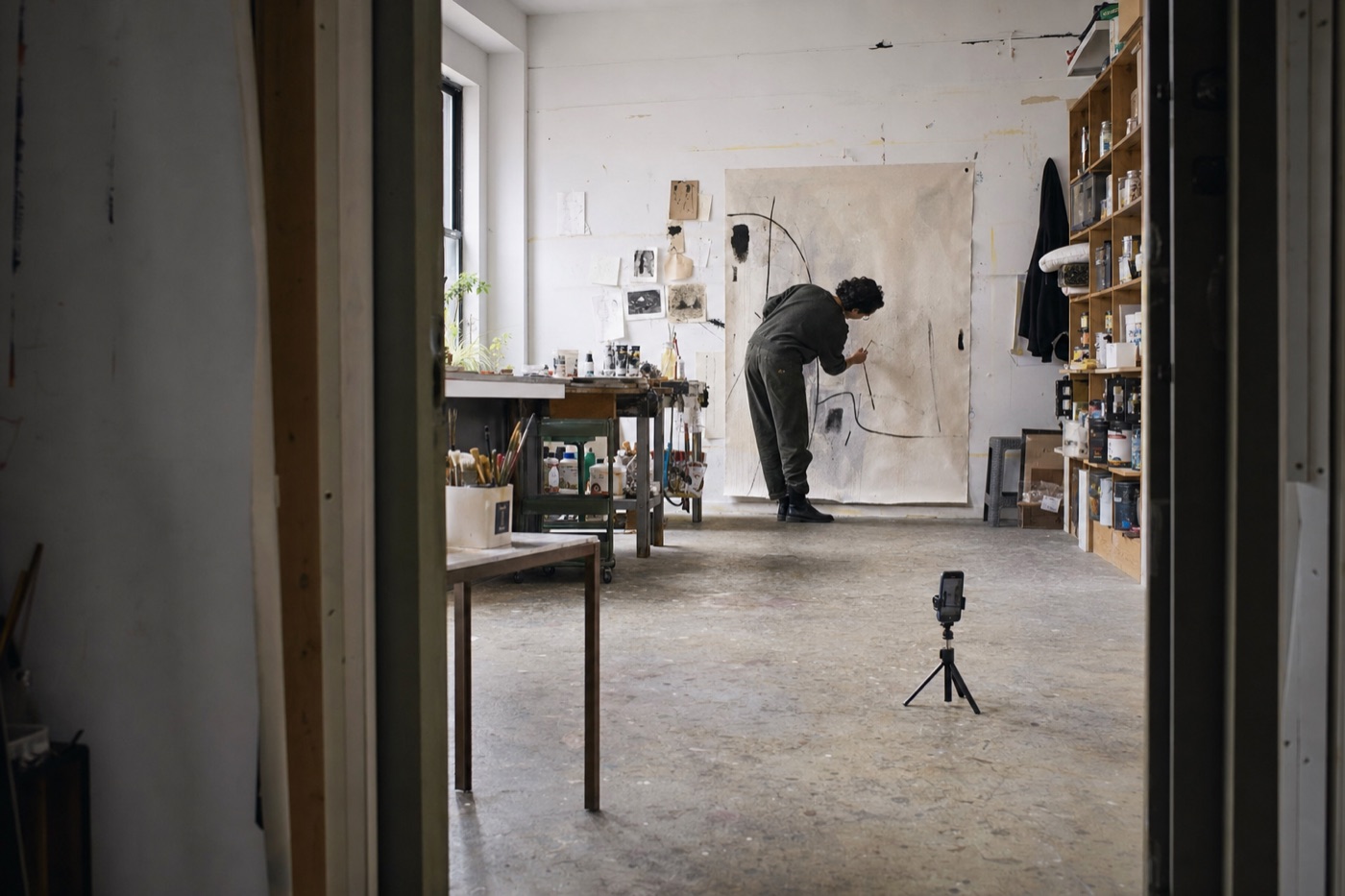
An artist can share the work without turning the studio into a permanent performance set. The useful system begins with the practice that already exists, then records enough of it to help people follow the work over time.
This guide separates the practical decisions so you can see what actually changes, what can be planned, and what is simply part of working with real images in real places. For related production support, explore our monthly media.
The work can stay first
Social media for artists works best when it documents the practice instead of replacing it. The artist does not need to invent a separate online personality, perform every studio session, or produce a new lesson each time the internet looks hungry.
A calm system records what already has meaning. A work in progress. A material decision. A finished piece. A studio view. A short note about a question inside the work. An installation day. A detail that changes how the whole piece reads.
The goal is not constant output. The goal is continuity. Someone who discovers the work should be able to understand what is being made, how it develops, and where they can see more. That can happen through a modest rhythm if the pieces connect.
Give each post one job
A post becomes easier when it has one job. It can introduce a finished work, show process, announce an exhibition, explain a material, share a studio moment, document installation, or point someone toward a website or event.
Trying to make every post explain the entire practice creates pressure and vague captions. The individual post only needs to open one door. The profile, website, exhibitions, and body of work provide the larger room.
Before making content, finish the sentence. This post helps someone see. The answer might be scale, texture, context, progress, personality, or an upcoming place to encounter the work. If the answer is everything, the post is carrying groceries with no bag.
Build from real moments
Keep a short list of moments that already happen in the studio. Stretching a canvas. Mixing color. Testing a material. Looking at work from across the room. Packing a piece. Updating an inventory. Visiting the installation site. Seeing the finished work in different light.
These moments can become still photos, short clips, details, or a few spoken sentences. They do not need to be recorded every time. A focused capture session can gather several weeks of material without placing a camera beside every private part of the practice.
The camera should arrive with a reason. Some processes are too repetitive to record often. Some need concentration. Some ideas are not ready for public language. A content system can respect those boundaries and still show a living practice.
Use a small set of recurring themes
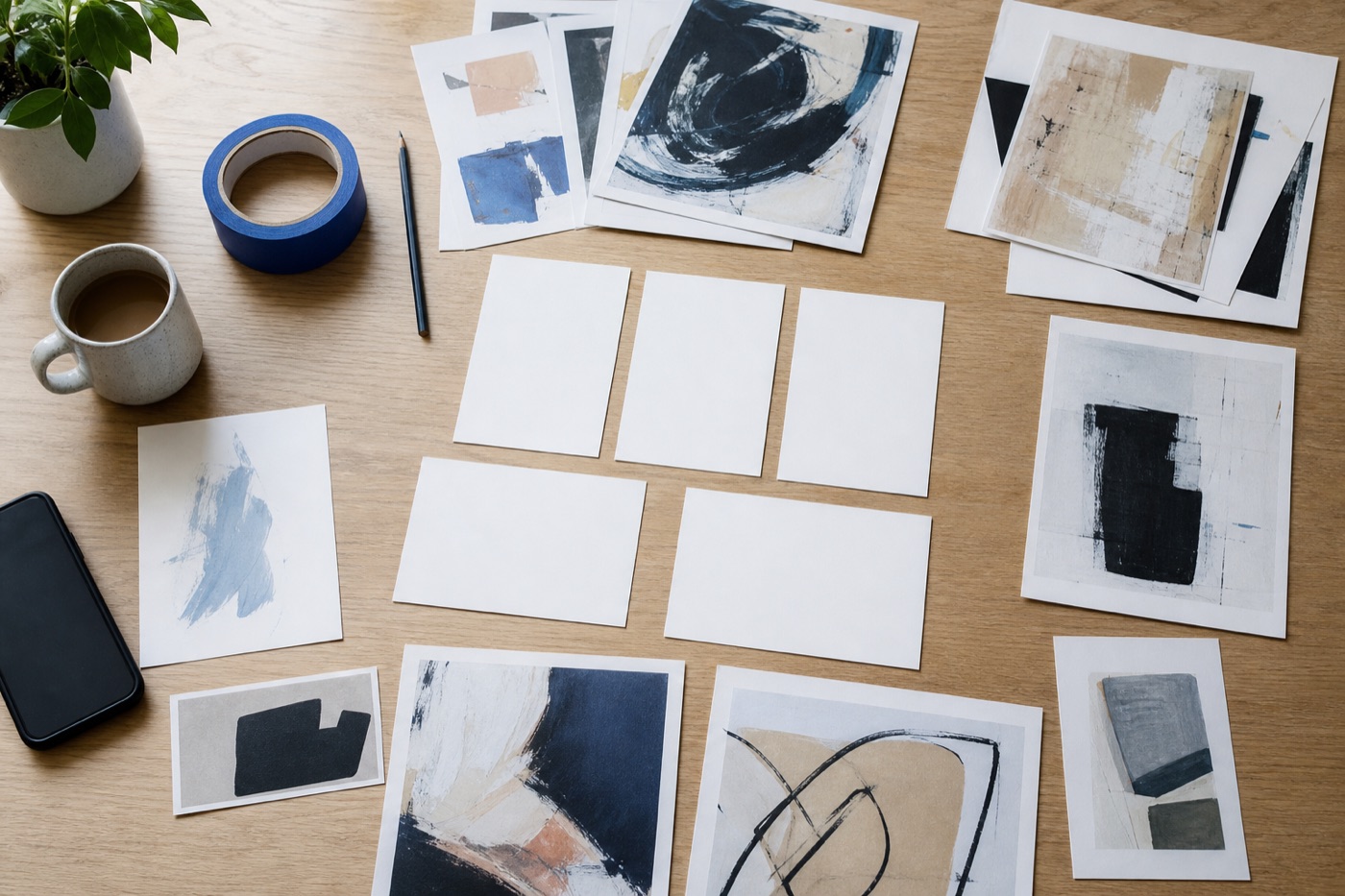
A few recurring themes remove the blank-page feeling. One theme can be finished work. One can be process and materials. One can be context, such as the studio, research, place, or installation. One can be news, including exhibitions, open studios, publications, or available work.
These themes are not rigid categories. They are shelves. When something worth sharing happens, you know where it belongs. Over time, the mix gives viewers several ways into the work.
The balance can change with the season. Before a show, installation and finished pieces may lead. During a quieter studio period, process and research may have more room. The rhythm follows the practice instead of forcing the practice to supply equal portions to an invisible spreadsheet.
Separate making from publishing
Capturing, editing, writing, approving, and publishing are different kinds of attention. Doing all five while paint is drying nearby makes the studio feel like a small media company with inconvenient art inside it.
Batch the tasks. Gather visuals during one planned window. Review them later. Write several captions when the ideas are fresh. Schedule what is ready. Leave space for immediate news or a spontaneous studio moment.
This separation protects both activities. The work gets uninterrupted time. The social system gets enough focus to stay coherent. Monthly support can help because one shoot creates a library, and the artist can choose what feels public without managing the technical process every week.
Captions can be short and specific
A useful caption can name the work, material, scale, stage, question, or context. It does not have to become a miniature artist statement. Specific language usually feels more generous than a broad claim.
Describe what changed. Mention the material that behaves unexpectedly. Explain why two works are being shown together. Share what the viewer cannot see from the image alone. A short concrete observation gives people a way to look.
Use the artist's normal language. If the studio conversation is plain and curious, the caption should not suddenly arrive dressed as an institutional wall label. The work can hold complexity without every sentence applying for a grant.
Video does not require performing
Short video can show movement, scale, sequence, and sound without placing the artist in front of the camera. A slow view across a surface, a hand working, an object moving through light, or an installation taking shape can carry real information.
When the artist does speak, keep it narrow. One question is enough. What changed in this piece. What are you testing today. What should someone notice at the exhibition. A specific prompt makes a natural answer more likely than the instruction to say something about your art.
Voiceover is another option. Record a short thought after the studio session and place it over process footage. The artist can speak when the thought is ready, and the camera can focus on the work instead of capturing the familiar expression of a person trying to remember how hands normally behave.
Choose what stays private
Visibility does not require total access. Decide which parts of the practice are comfortable to share and which need privacy. Early ideas, unfinished writing, personal research, client information, other artists, and quiet working time can remain outside the content system.
Boundaries make consistency easier because the artist is not renegotiating the entire self each time a phone appears. The team knows what can be recorded, what needs approval, and what should never leave the studio.
A useful rule is to share from the work, not every moment of making it. The public can see enough to build connection while the practice keeps an interior life. Art managed this arrangement for quite a long time before platforms began sending weekly performance summaries.
Choose a rhythm you can keep
A sustainable rhythm is better than a burst followed by silence and resentment. Start with the moments the practice naturally produces. A monthly capture session, a small library of finished-work images, occasional process clips, and timely exhibition updates may be enough.
Review what people respond to, but do not let engagement become the only measure. Useful outcomes also include gallery conversations, studio-visit interest, easier website discovery, clearer context for the work, and a professional record that grows over time.
The artist does not need to become a content person. The content needs to become a light, accurate record of the artist. When the system stays close to the work, sharing feels less like a second identity and more like leaving the studio door open at the right moments.
Approval can be lightweight without becoming careless. Choose a regular moment to review the next group of images and captions, remove anything that feels too early or too personal, and confirm names, dates, materials, and exhibition details. This is easier than making a new decision every day. It also gives collaborators a clear boundary. The photographer or editor can shape the material, while the artist keeps final control over what leaves the studio and how the work is described.
Keep the website as the stable home of the work. Social posts can introduce a detail, studio question, exhibition, or finished piece, then direct interested people toward a fuller portfolio, statement, event page, or contact path. This removes pressure from the caption. It does not have to hold every image, dimension, date, and idea at once. The platform creates discovery and rhythm. The website carries depth and continuity. When those jobs are separated, artists can make smaller, more natural posts without losing the larger context around the work. It also protects the archive from being trapped inside one feed whose layout, reach, and rules may change without consulting anyone in the studio.
A small record of what was posted also prevents accidental repetition and makes future exhibition or portfolio planning easier.
Make the archive do some of the work
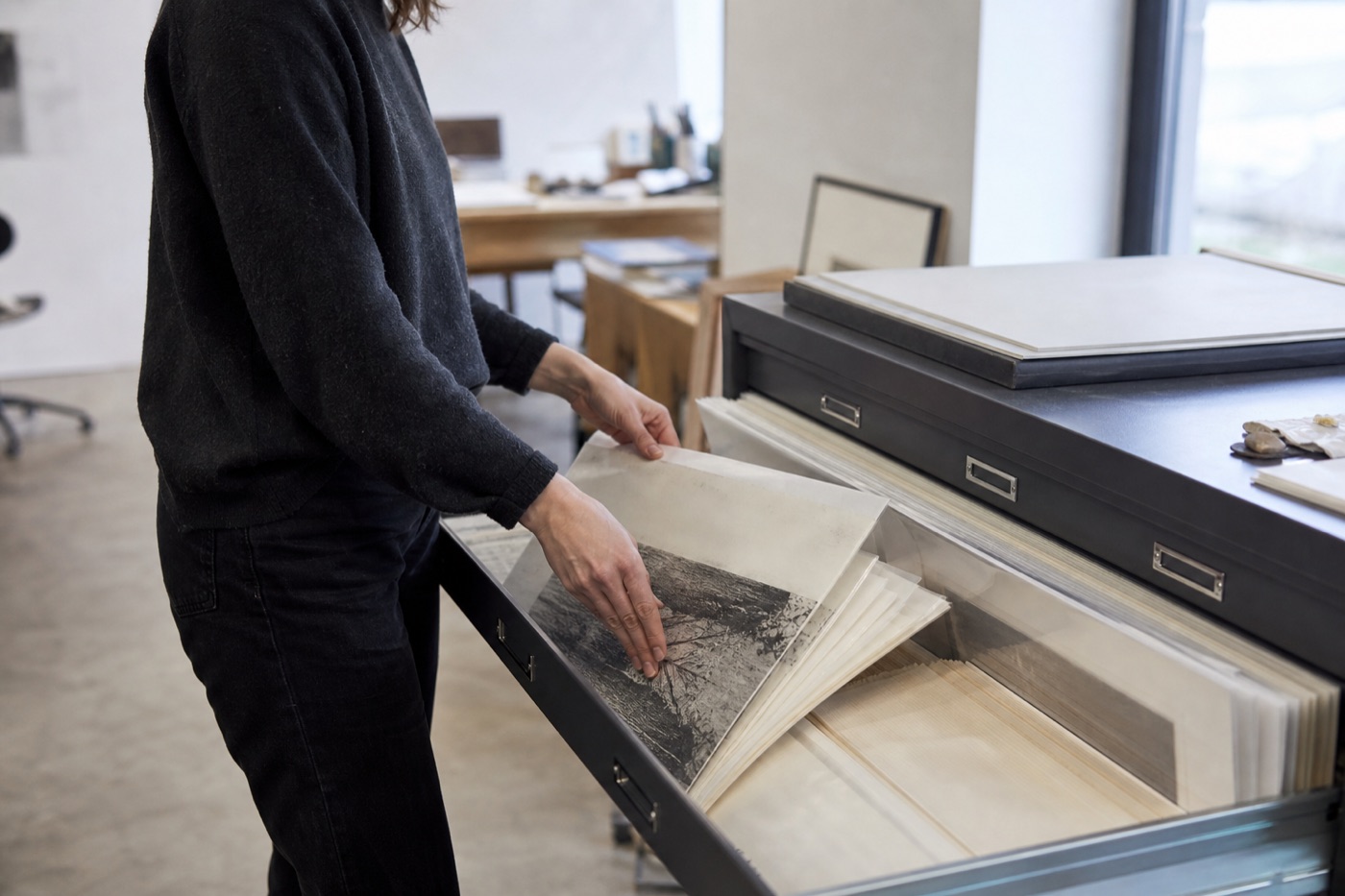
An artist's image archive can support social media without demanding a new shoot every week. Finished work, installation views, studio portraits, process details, press images, sketches, and older exhibitions can return when there is a real reason to show them.
Organize files by project or year, and keep titles, dates, materials, dimensions, photographer credits, and usage notes nearby. A clean archive makes it easier to build a post around an exhibition anniversary, a recurring material, a new body of work, or a question that connects older and current pieces.
Reuse does not mean posting the same image with a slightly rearranged sentence until the pixels ask for representation. Change the frame around it. A full work can introduce the piece. A detail can discuss material. An installation view can explain scale. A studio image can show where the work came from.
This approach also reduces the pressure to publish work before it is ready. The archive gives the public story enough continuity while the current practice stays private. When the new work arrives, it enters a context instead of appearing as a single isolated announcement.
FAQ
How often should an artist post on social media?
Choose a rhythm that can be maintained without taking energy away from the work. The useful frequency depends on exhibitions, new work, studio activity, and the size of the content library. Consistency and clarity matter more than filling every day.
What should artists post when they have no new finished work?
Share process, materials, studio context, research, details, installation planning, older work with new context, or a specific question inside the current practice. A post can help someone look more closely without requiring a new finished piece.
Do artists need to appear on camera?
No. Video can focus on the work, hands, materials, scale, movement, installation, and the studio. Artists who want to add a voice can use a short interview answer or voiceover without turning every post into a performance.
Can social media content be created in one day?
A focused session can create a useful library of portraits, work details, process clips, studio views, and short answers. It works best when the team plans real activities and desired posts in advance, then leaves room for natural moments.
Want a social rhythm that starts with the real work?
We create monthly photo and video for artists, galleries, and creative businesses in NYC. The process begins with what is already happening, then turns it into a useful library without asking the studio to become a full-time set.
Explore monthly media →