
A portrait for a bank's art program, a law firm's collection, or a museum's development office comes with wardrobe rules nobody in the room actually wrote. Color and formality get decided long before the shoot, often years earlier, by people who aren't in the room either. The image still has to look like one specific person a colleague would recognize, not a compliance photograph standing in for one. Finding the room that's genuinely still open, once the obvious constraints are accounted for, is the entire craft.
Inside a strict institutional dress code, real styling latitude survives in texture, fit, layering, a single third piece, and small choices at the collar and wrist, not in color or formality, which the institution has usually already fixed. Working inside those fixed edges, rather than around them, is what keeps a portrait looking like a specific person.
What changes when a dress code isn't the studio's to write?
An institutional dress code sets the outer limits on wardrobe before a shoot is even booked, and the portrait still has to work as a specific likeness of one person, not a compliance illustration. The tension between an external rule and an individual portrait is the actual styling problem here, not a formality checklist waiting to be cleared.
Most portrait styling starts from something close to a blank canvas: a photographer and a subject deciding together what the image should say. Inside a bank's art program, a law firm's collection, or a museum's development office, that canvas already has edges. Somebody upstream decided years ago that staff-facing photography follows the same visual register as the annual report or the donor newsletter, and the subject usually arrives already sensing the rough shape of what's expected, even without a written rule to point to.
The work on set is to fill that shape without letting the portrait collapse into it. A curator, a collections manager, or a development director still needs to look like someone a colleague would recognize walking into a room, not like a stand-in wearing whatever wardrobe got assigned. That's a different brief from an artist portrait built around personal identity from the ground up. It calls for less inventing and more finding the room that's genuinely still open once the obvious constraints are accounted for, which turns out to be more room than it first appears.
How do you read a dress code that's never actually written down?
An unwritten dress code gets read the same way a house style gets read: by looking at what the institution has already published and treating that as the working precedent, not by guessing at a rule that was never written down. Staff bios, annual reports, past event photography, and the way senior colleagues dress on ordinary days all carry more signal than a direct question usually does.
Asking the subject outright what the dress code requires often produces a vague answer, because most people inside these institutions have absorbed the code without ever seeing it stated. A more useful question is narrower: what did the last person in this role wear for their staff photo, or what does the department's page on the institution's site currently show. Those examples carry the real boundary in a way a general description rarely does.
Precedent also reveals where the boundary has already moved. A museum's development office and its curatorial staff often read differently in the same building, one closer to donor-facing formality, the other allowed a little more of the art world's own texture. A law firm's litigation group and its trusts-and-estates group can differ the same way. Reading a handful of real examples, rather than asking for a rule in the abstract, is what actually locates where a given subject sits inside an institution that has never written any of this down on paper.
Once color and formality are fixed, where does the real latitude live?
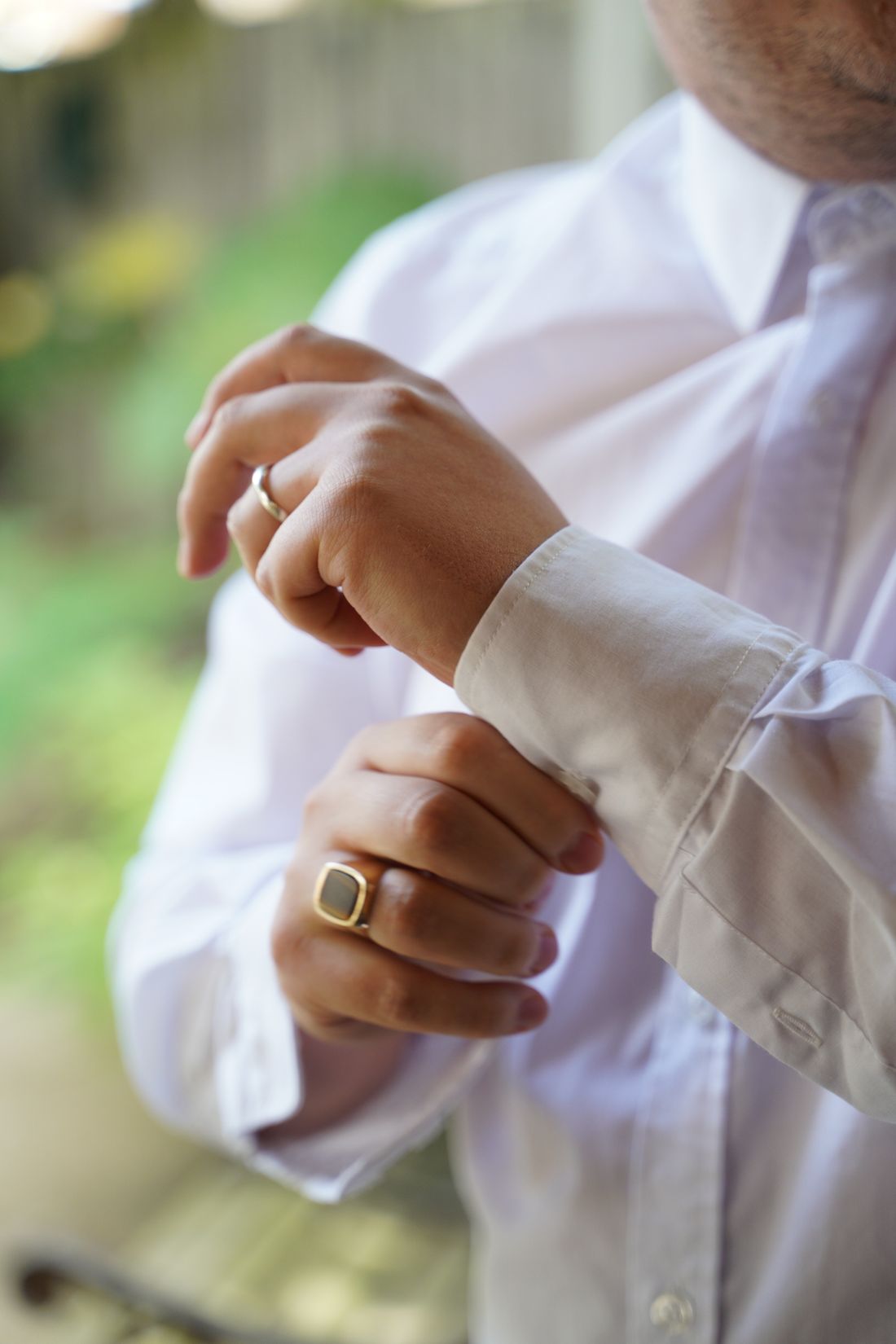
Once color and formality are fixed by the institution, real latitude usually survives in five places: texture, fit, the layering order, a single third piece, and what shows at the neckline and the wrists. None of these breaks a dress code built around dark suiting and muted tones, and all five are strong enough to carry a portrait's personality on their own.
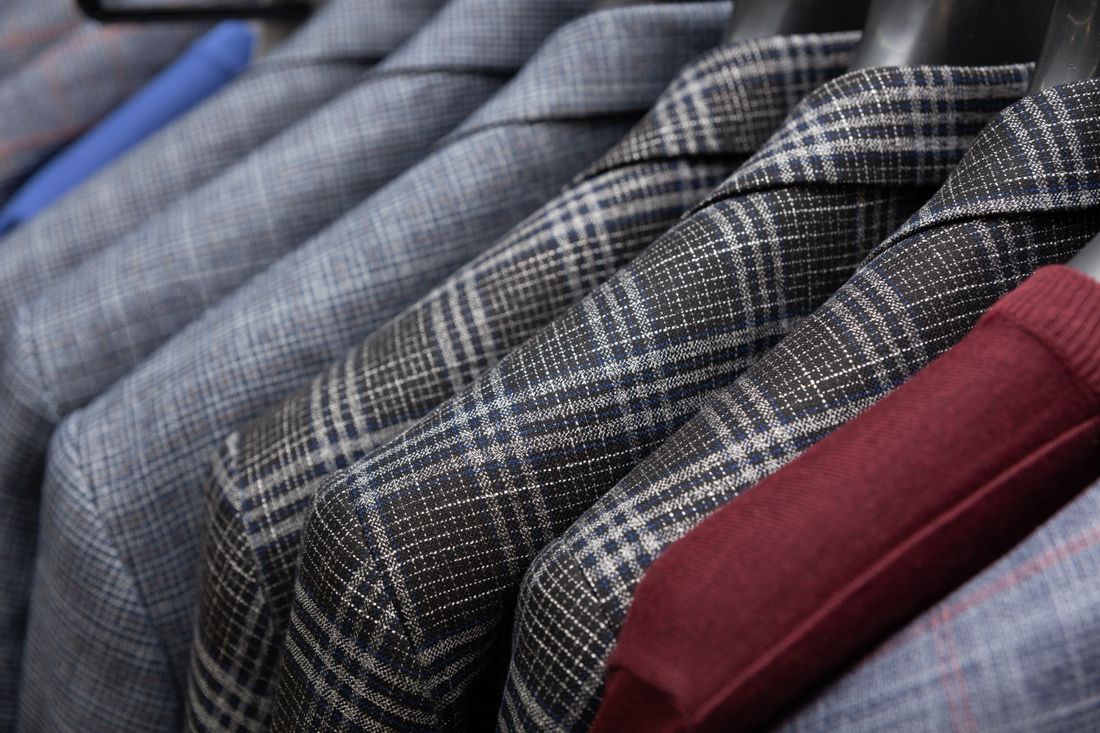
Texture does more work than color inside a narrow palette. A nubby wool jacket, a matte silk blouse, and a smooth worsted suit can all sit in the same navy and photograph as three completely different people, because texture is what a camera actually resolves once color stops doing the differentiating. Fit is the next lever, and it's covered in more depth further down, since it rewards its own attention.
The third piece, a scarf, a pocket square, a particular pair of glasses, a specific watch, is often the one element an institution never thought to regulate, because dress codes are written around suits and blouses, not accessories. A single considered third piece can carry more identity than an entire outfit built to comply.
Necklines and wrists round this out. An open collar versus a buttoned one, a rolled sleeve versus a cuffed one, changes how relaxed or formal the same jacket reads without touching color or formality at all. Hands resting differently, a watch worn a certain way, these are small enough to clear almost any code and specific enough to be recognizably someone's own.
Why does the same navy suit photograph as four different navies?
The same navy suit can photograph as four visibly different navies because navy is not one color under a camera, it's a range that shifts with fabric weave, the color temperature of the light, and the specific blue-black or blue-gray undertone woven into the cloth. A flat, true navy under daylight-balanced light reads differently than the same suit under warmer tungsten, and differently again once a camera's white balance is set for skin rather than fabric.
A worsted wool with a tight, smooth weave reflects light evenly and holds its navy closer to how it looks on the rack. A nubby or slubbed weave scatters light across its surface and can read several shades lighter or grayer in a photograph than it does standing in a fitting room. Add a warm-toned indoor light, common in institutional lobbies and offices, and a navy with a subtle black undertone can shift toward looking simply black on screen, losing the specific quality that made it navy in the first place.
Choosing the right navy for a given shoot means testing it under the actual light the portrait will be shot in, not judging it under a window or a store's fitting-room bulb. A swatch or a full test shot in the real location settles this faster than any description can. Where daylight and interior tungsten will both hit the subject during the session, a true, tightly woven navy with minimal undertone tends to hold its color most consistently across both.
Why does conservative clothing read as either sharp or defeated?
Conservative clothing has very little middle ground: a suit that fits well reads as sharp and deliberate, and the same suit half an inch off in the shoulders or the length reads as defeated, like the person is being worn by the clothes rather than the other way around. Bold or unusual pieces can survive an imperfect fit because the eye is busy elsewhere. Plain, dark, well-behaved tailoring has nowhere else to send the eye, so fit becomes the entire story.
The shoulder seam is the single detail that decides more of this than any other. A jacket whose shoulder seam sits even slightly past the natural shoulder reads as borrowed, no matter how good the fabric or the color choice underneath it. Sleeve length, breaking cleanly at the wrist bone, and jacket length, generally covering the seat without extending well past it, are the next two details a viewer registers before consciously noticing anything else about the outfit.
This matters more in institutional styling than almost anywhere else, because the wardrobe is already doing less individual work. When color, pattern, and formality are largely fixed by the code, fit becomes one of the only remaining variables strong enough to separate a portrait that reads as composed from one that reads as uncomfortable. A single fitting before the shoot, even a short one, tends to close most of this gap, and it closes a gap that no amount of posing or lighting on the day can fully compensate for.
What changes about dressing for the room a portrait will hang in?
A portrait destined for a lobby wall, a website's leadership page, or a donor report has to keep working years after the sitting, in a setting the wardrobe choice can't preview on shoot day. That's a different target than dressing for how the room looked and felt during the two hours of the shoot itself, and it changes which choices are actually safe.
A trend-forward cut or a fashionable color pairing that feels current on the day can date a portrait faster than the institution itself changes. A lobby portrait or a staff page photo often stays in place for years without anyone revisiting the wardrobe choice, unlike a personal or editorial portrait that gets refreshed on its own schedule. The image ends up being judged, quietly, against whatever the institution looks like by the time most people actually see it.
The room the portrait will hang in also has its own visual conditions worth thinking about ahead of the shoot: a marble lobby with cool overhead light, a wood-paneled boardroom with warm sconces, a matte website background rendered on a screen instead of print. Wardrobe that reads correctly on a monitor can go slightly gray or slightly warm printed large on a wall, and it's worth asking where the final image will actually live before finalizing tone and fabric, rather than judging everything against how it looked live on set.
How do you run the wardrobe conversation with a subject who has to clear it with someone else?
Running the wardrobe conversation with a subject who has to clear choices with someone else works best as an early, narrow exchange, options presented well before the shoot, framed around what's already known to be acceptable, rather than a last-minute ask that puts the subject in the position of defending an unfamiliar choice to a supervisor or a communications office under time pressure.
The most useful early move is finding out who actually signs off and what they're likely to be looking for. A communications team reviewing final images is usually checking for consistency with existing staff photography, not evaluating fashion sense, so options that visibly echo what's already published tend to clear faster than something built from scratch.
Giving the subject two or three considered options ahead of the shoot, rather than one fixed plan, does two things at once. It gives them something concrete to show whoever needs to approve it, and it removes the pressure of an on-the-spot decision that has to satisfy someone who isn't even in the room. Photographing each option in ordinary daylight on a phone, before the sitting itself, is often enough for an approver to say yes without a formal fitting.
A subject who walks in already cleared is visibly more relaxed in front of the camera than one still mentally negotiating with an absent approver, and that ease shows up in the final images more than any single wardrobe detail does.
What does shoot day look like once the wardrobe is settled?
On shoot day, the practical version of all of this is simple: bring the cleared option plus one close backup, check fit and texture under the actual light before the first frame, and keep the third piece, the collar, and the wrist as the last adjustments made once everything else is locked. That order keeps the shoot moving without reopening decisions that were already settled ahead of time.
A quick check under the room's real light, not a phone flashlight or a hallway window, catches most of the navy-shifting and texture problems described earlier before they show up in a final frame. If the fabric reads differently than expected once the lights are actually on, the backup option earns its place in the bag rather than sitting there unused. This is also the moment to confirm the fit still holds after travel, since a jacket that sat fine in a fitting can shift after a car ride or a full day at a desk.
The last adjustments, rolling a cuff, opening a top button, angling a scarf, are worth making once the subject is standing in position and warmed up, not while they're still getting dressed. Those small moves read differently on a relaxed, in-motion body than they do in a mirror, and they're exactly the kind of detail an institution's dress code was never written to cover, which is precisely why they carry so much of the portrait's actual personality once everything else has been settled around them.
Frequently asked questions
How do you figure out what an institution's dress code requires when there's nothing written down?
Look at what the institution has already published rather than asking for a rule that may not exist in words. Staff bios, past event photography, and how senior colleagues dress on an ordinary day carry more real signal than a direct question usually does. Asking what the previous person in the same role wore for their portrait is often the fastest way to locate the actual, unwritten boundary.
Can a plain navy suit still look like a specific person and not a uniform?
Yes. Once color and formality are fixed, texture, fit, the third piece, and small details at the neckline and wrists carry most of a portrait's personality. A nubby wool jacket, a particular watch, or a sleeve rolled a certain way can make an otherwise standard navy suit read as distinctly someone's own, without touching the color or formality an institution actually cares about most and would notice first.
What should happen if a subject needs someone else to approve the outfit before the shoot?
Handle it early rather than on shoot day. Present two or three considered options well before the sitting, ideally photographed in ordinary light so an approver can react without a formal fitting. A subject who arrives already cleared is visibly more relaxed in front of the camera than one still mentally negotiating with an absent approver, and that ease tends to show up clearly in the final images.
Why do some professional portraits look dated within just a few years?
Usually because the wardrobe leaned on a trend-forward cut or pairing that felt current on the day but doesn't age at the same pace as the institution around it. A lobby or website portrait often stays in place for years without anyone revisiting it, so a choice built for long-term use benefits from favoring considered, durable pieces over anything tied too closely to one specific season or trend.
Does a strict dress code leave any real room for personal style in the final photograph?
More than it first appears. Color and formality are usually the only genuinely fixed parts of an institutional code. Texture, fit, layering, a single third piece, and small choices at the collar or the wrist are rarely regulated at all, and together they carry enough weight to make a portrait feel like a specific, recognizable person rather than a generic compliance photograph standing in for one.
Let the clothes support the work.
We plan wardrobe for artist portraits the same way we plan everything else on set: around the person and the work, not around the idea of a photoshoot.
Explore styling services →