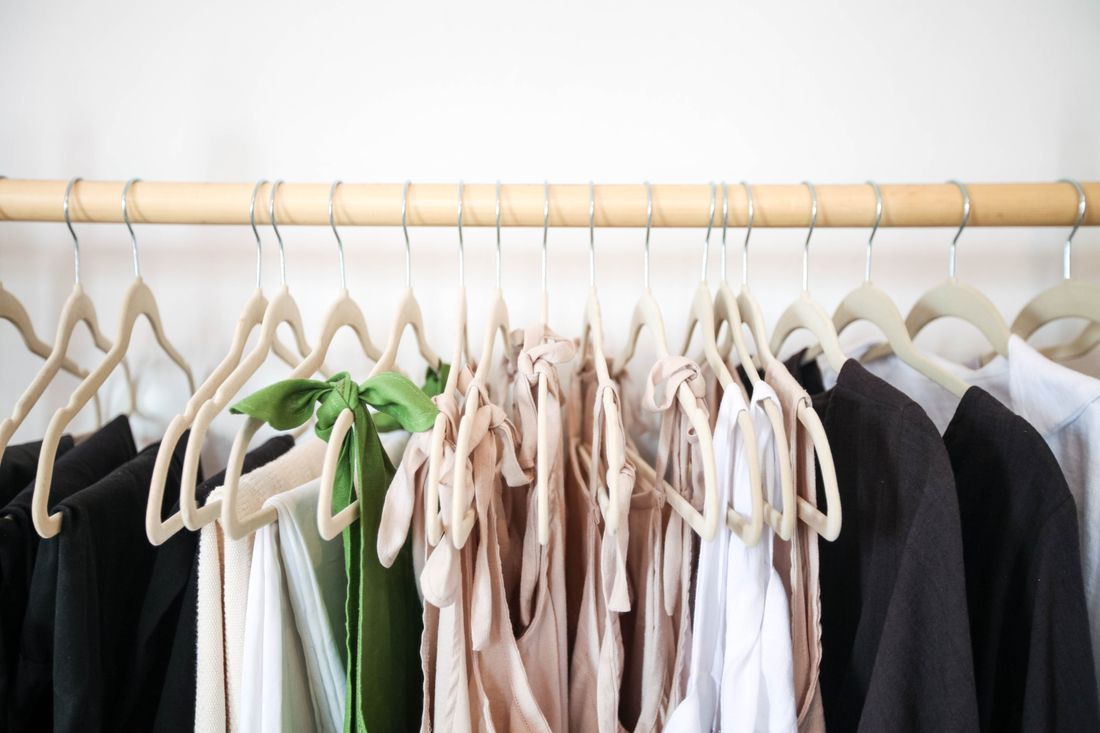
There is a version of a styled shoot where everything arrives on a rail, still tagged, and the artist spends the day in clothes they would never own. Sometimes that is exactly right. More often, for an artist portrait, the best thing in the frame is a jacket they have had for six years.
An artist's own wardrobe is usually the better source for portraits meant to represent a practice, because familiarity reads as ease. Sourced wardrobe wins when a shoot needs a specific register the person does not own, when multiple looks are required in one day, or when the image is closer to editorial than to documentation.
The Variable Is Familiarity, Not Quality
Clothes a person actually wears do something in a photograph that new clothes cannot fake: the body relaxes in them. Sleeves sit where the wearer expects, a collar has already been broken in, a jacket has learned the shoulders. That is visible in a frame even when nobody could name what they are seeing.
New sourced garments, especially unaltered ones, tend to introduce a small amount of self-consciousness. The subject adjusts more, notices the fit, holds themselves slightly differently. A good stylist manages that with fit work and time, but it is a cost that has to be paid rather than a problem that does not exist.
So the first question is not whether the clothes are good. It is whether this particular shoot benefits more from ease or from a specific look the person's closet cannot produce. Those are genuinely different briefs, and they point in opposite directions.
When the Artist's Own Closet Is the Right Answer
For a portrait meant to represent a practice (a website, a gallery bio, a grant application, a press image), the closet is usually the stronger source. The image is claiming that this is who the person is, and clothing they genuinely wear supports that claim in a way that a sourced look quietly contradicts.
It is also the right answer when the setting is the artist's own studio. A person in unfamiliar, immaculate clothes standing in a room full of their own materials produces a small dissonance; a viewer registers that the room is real and the outfit is not. Matching the register of the clothes to the register of the room matters more than either does alone.
And it is the right answer on any shoot where the person is nervous. Wardrobe is one of the few variables that can either add or remove anxiety, and for someone who is already uneasy about being photographed, wearing something they trust removes an entire category of worry before the session starts.
There is a longevity argument too. A portrait made in clothes a person genuinely wears tends to still look right two or three years later, because the register has not moved. A portrait made in a sourced look tied to a particular season dates on the same schedule as the season did, and an artist rarely wants their public image to have a visible expiry date attached to it.
When Sourcing Genuinely Wins
Sourcing earns its cost when the shoot needs a register the person does not own. A press image aiming at a specific publication's tone, a campaign, a lookbook, a portrait deliberately more constructed than documentary. These are asking for something other than an honest account of a person's Tuesday.
It also wins when a day needs several distinct looks. Multi-look shoots are difficult to build from one closet without repetition becoming obvious, and a stylist sourcing across a range solves that quickly. The same applies to any shoot where color has to be controlled against a specific background or artwork palette.
The third case is fit. Many people's own wardrobes fit them approximately rather than well, and on camera the difference is larger than in life. Where a portrait needs to be genuinely sharp, a stylist's ability to source and pin a correct fit is doing real work that no amount of familiarity replaces.
Colour is the case people most often underestimate. When a portrait has to sit against a specific artwork, a coloured wall, or a defined palette for a campaign, the odds that a personal wardrobe happens to contain the right tone are not good. A stylist sourcing to a known colour brief solves in an afternoon what a closet pull cannot solve at all, and that is a legitimate reason to spend the money.
The Hybrid That Suits Most Artist Shoots
The arrangement that works most often is neither extreme. The artist brings a curated selection from their own closet, chosen against a brief the stylist supplies in advance, and the stylist sources a small number of specific additions (a layer, a better-fitting version of something, a piece that solves a color problem).
This keeps the ease of familiar clothes while removing their usual weaknesses, which are limited range and imperfect fit. It also tends to cost less than full sourcing, since the sourcing list is short and targeted rather than speculative.
The prerequisite is that the brief arrives early enough to be useful. A stylist asking for options the night before gets whatever is clean; a stylist sending a clear note ten days out gets a genuine selection, and has time to source the two or three things the closet cannot cover.
What a Stylist Does Whether or Not They Source
Sourcing is the most visible part of styling and not the largest. Fit, proportion, and on-set maintenance are the parts that decide whether a photograph looks considered, and all three apply identically to clothes the subject already owned.
A stylist working with a personal wardrobe still builds the looks, decides the order, handles the pinning and taping that makes an off-the-rack fit read as tailored, and watches for the collar, hem, and shoulder problems that only appear once someone moves. That is most of the value, and it does not depend on where the garment came from.
There is also the editing function: saying no to two of the five options the artist loves, and explaining why one of them will fight the artwork. That conversation is easier with a person's own clothes than with sourced pieces, because nobody has spent money on the ones being rejected.
On-set maintenance is the least glamorous item on that list and the one that most reliably rescues a shoot. Fabric creases within minutes of sitting down, a collar rolls, a hem catches, a shoulder seam shifts every time an arm moves. Someone watching for that between frames is the difference between a set where every image is usable and a set where half of them have a small distracting fault nobody noticed at the time.
There is also a planning function that happens before anyone gets dressed: deciding the order of the looks. Starting with the outfit the subject feels most confident in tends to produce better frames throughout the session, because the first twenty minutes set the tone for how relaxed someone is. That sequencing decision costs nothing and is invisible in the final images, which is usually the sign of good styling.
What Each Option Actually Costs
Sourcing carries costs beyond the garments: time spent pulling, transport, returns, and often a rental or purchase budget that has to be agreed before anyone starts. It also carries a deadline, since anything ordered has to arrive with enough margin for a fit check rather than landing on the morning of the shoot.
Personal wardrobe carries a different cost, which is the artist's own preparation time. Steaming, checking hems, finding both shoes, and actually bringing everything requires a real hour or two, and a shoot where that hour was skipped will spend the same time on set instead, at a much higher cost per minute.
The hybrid usually lands cheapest overall, because the sourcing list is short and the personal selection is guided. It is also the least likely to produce the two classic failures: a rail of clothes nobody wears, and a bag of options where nothing quite works.
Alterations sit in an awkward middle and are worth pricing explicitly. A sourced garment that needs a hem, or a personal jacket that needs taking in at the shoulder, can transform a portrait, but it needs a few days and someone to do it. Deciding on the shoot morning that something almost fits is how a session ends up compromised in a way that is visible in every frame.
The Brief That Makes a Closet Pull Work
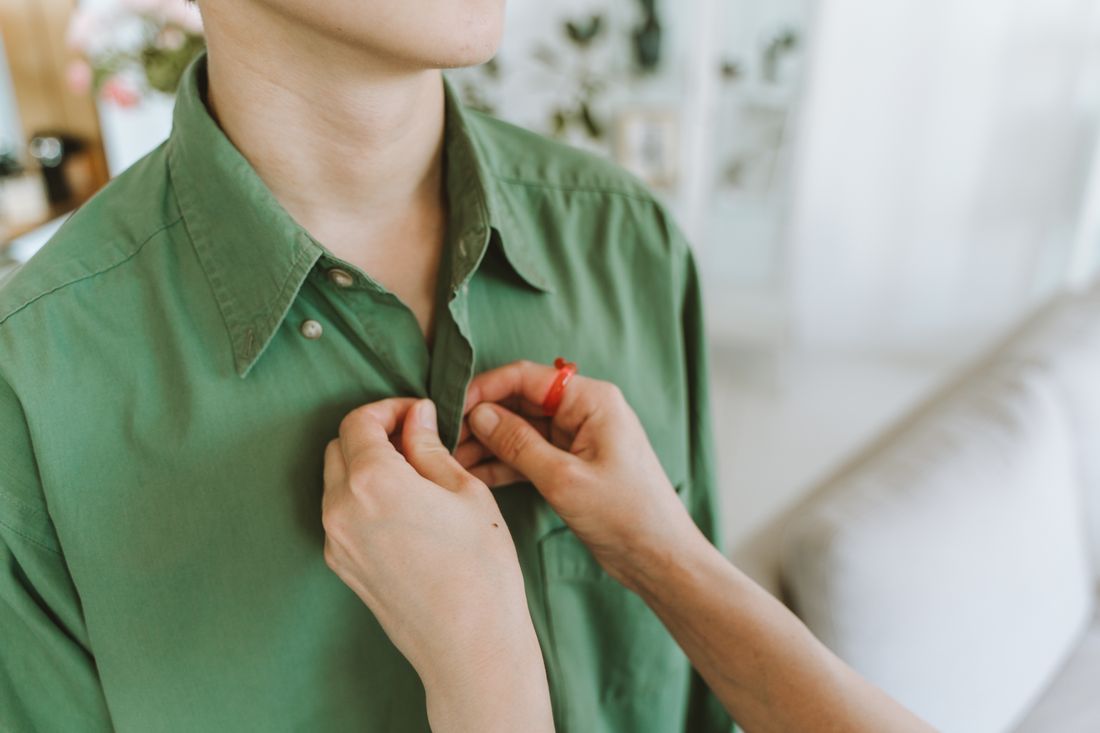
A useful wardrobe brief for an artist is specific about function rather than about taste. Bring three tops in solid mid-tones you already wear, one layer that can go on or off, avoid tight patterns and logos, bring the shoes you actually stand in for a day, and include one thing you feel unusually good in even if it seems wrong.
That last instruction matters more than it looks. The garment a person feels best in tends to photograph better than the one that is technically correct, and it is frequently the one they would not have brought without permission.
It also helps to name what the clothes will be sitting against. Wardrobe chosen without knowing the wall color, the artwork palette, or whether the setting is a white studio or a paint-covered workspace is being chosen blind, and that is where most of the near-misses come from.
It is worth asking for the clothes to be brought on hangers rather than folded in a bag, and for anything creased to be dealt with the night before. That sounds like a trivial note and it saves the most common half-hour loss on a shoot day, which is someone steaming a shirt while everybody else waits and the light moves.
Who Actually Makes the Call
The decision belongs to whoever the image is for. A portrait an artist will use across their own practice should be led by what feels true to them, with the stylist advising. A campaign or editorial image commissioned by someone else should be led by the brief, with the artist's comfort protected rather than prioritized.
Where those two are in tension (and they occasionally are), it is worth naming the tension rather than resolving it silently on the day. An artist wearing something they dislike will look like an artist wearing something they dislike, regardless of how well it was sourced.
The practical default we would suggest for most artist and creative portraits is closet-first, with targeted sourcing where it is needed. It produces images people are still comfortable using three years later, which is a lower bar than fashion and a much harder one than it sounds.
Frequently asked questions
Does hiring a stylist mean they choose all the clothes?
Not necessarily, and for artist portraits it often should not. Sourcing is the most visible part of styling but not the largest. Fit, proportion, look-building, and on-set maintenance apply identically to clothes the subject already owns. A common arrangement is a guided pull from the artist's own wardrobe plus a short, targeted sourcing list for the gaps.
Why do an artist's own clothes often photograph better?
Because familiarity shows. The body relaxes in clothes it knows: sleeves sit where the wearer expects, a jacket has learned the shoulders. New, unaltered garments tend to introduce small adjustments and self-consciousness that a camera picks up. A stylist can manage that with fit work and time, but it is a cost paid rather than a problem that does not exist.
When is sourced wardrobe the better choice?
When the shoot needs a register the person does not own (editorial, campaign, or a deliberately constructed image rather than a documentary one). Also when a single day needs several distinct looks, when color has to be controlled against a specific background or artwork palette, or when fit matters enough that a stylist's ability to source and pin properly is doing real work.
What should an artist bring to a styled portrait session?
Three tops in solid mid-tones they already wear, one layer that can go on or off, shoes they can actually stand in all day, nothing with tight patterns or logos, and one item they feel unusually good in even if it seems wrong. That last one is often the strongest option in the bag. Knowing the setting and wall colors in advance makes the whole pull far more accurate.
Is a hybrid approach cheaper than full sourcing?
Usually, because the sourcing list is short and targeted rather than speculative, which reduces pulling time, transport, returns, and rental budget. It also avoids the two classic failures (a rail of clothes the subject would never wear, and a bag of personal options where nothing quite works). The requirement is that the brief reaches the artist early enough to be useful.
Styling that starts with what you already wear.
Jasmine styles artist and brand shoots from a real closet first, sourcing only what the day genuinely needs: fit, proportion, and on-set detail included.
Explore fashion styling →