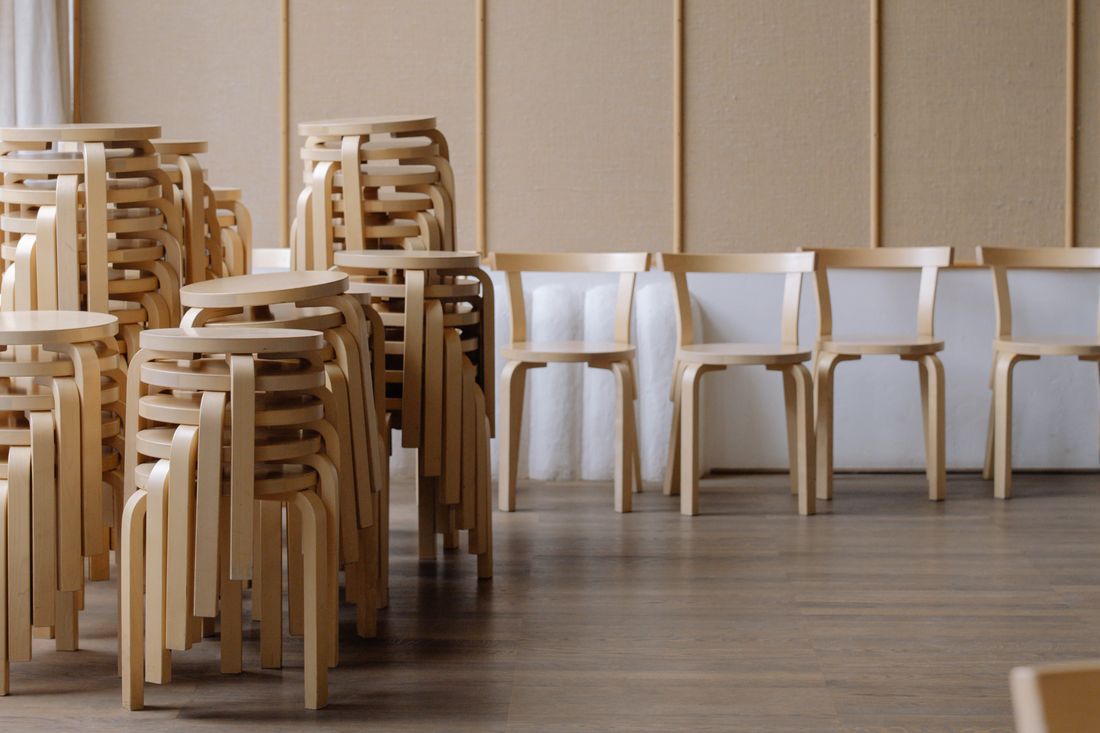
A gallery that rents its room for someone else's night is still the gallery when the lights come up. The nonprofit fundraiser ends, the brand launch wraps, the private book party clears out, and the space goes back to showing art, but whatever happened in the room that evening is now part of how people remember it. We've watched this go two ways: either the gallery and the renting party settle who owns what before a single chair gets placed, or they find out the hard way, mid-event, when someone needs a decision nobody agreed to make. The second version is avoidable, and it usually comes down to four questions nobody wrote down in advance.
When a gallery hosts a nonprofit, brand, or private client's event, ownership of the night splits into parts: guest list, messaging, photography, and final say over the room. Settling each one before the event, not during it, is what keeps the gallery's space and reputation intact while the renting party still gets the event they planned.
Whose event is this, actually?
A rented gallery night has two owners at once: the gallery, which owns the room and its reputation, and the renting party, which owns the reason people are there. Before doors open, both sides need to agree, in plain terms, who's making the calls if a decision falls between the two.
That split sounds obvious until an actual decision shows up. A nonprofit wants to move a bar cart in front of a painting. A brand wants its logo on an easel by the door. A private host wants their own photographer to be the only one shooting. None of those requests are wrong on their own. They just belong to different people's version of the night, and the gallery finds out which version wins by asking early, not during setup.
The useful move is naming one point of contact on each side before the date is locked in, not just before doors open. The gallery's contact should have authority over anything touching the physical space or the art. The renting party's contact should have the same authority over guest experience, program, and messaging. When those two people agree where the line sits, most of what could go sideways on the night gets settled in a short conversation weeks earlier instead of a hallway negotiation while guests are already arriving. The gallery doesn't need to control every detail of someone else's program. It needs to be clear about which details it's handing over and which ones stay with the room.
Who decides who's on the guest list?
The renting party sets the guest list, since the event and its purpose belong to them, but the gallery keeps the right to flag capacity, access, and safety limits for its own room. A workable list is one the gallery has actually seen before the night, not one it finds out about at the door.
Capacity is the most common friction point. A gallery built to comfortably hold a crowd for an opening doesn't automatically hold the same number for a seated dinner or a program with a stage and rows of chairs. The renting party is usually thinking about their invite count, not the room's actual layout once furniture, catering, and AV are added. The gallery is the one that knows what the room can hold once it stops being an open floor.
Access questions matter just as much. Is this list open to walk-ins, or closed at the door? Is press invited, and if so, does the gallery want press in its space covering someone else's program? Who handles a guest who isn't on the list but insists they should be? None of these need a long policy. They need one short conversation where the gallery says what it will and won't accept, and the renting party commits to a list that respects it. Settled early, this takes ten minutes. Settled at the door, it becomes the renting party's problem and the gallery's bad night.

Whose messaging goes on the walls?
The renting party's branding belongs to their event, not to the gallery's identity, so the two need a clear boundary on what appears where. Signage, banners, and sponsor logos are usually fine near the entrance or check-in table; they get more complicated the closer they move toward the art itself.
A gallery that hosts a brand launch or nonprofit fundraiser is lending its walls, and most renting parties understand that the art on those walls isn't theirs to compete with. Trouble usually starts small: a step-and-repeat backdrop placed where it blocks a piece, a projector throwing a logo onto a section of wall that turns out not to be blank once the lighting changes, a stack of printed materials left on a pedestal meant for sculpture. None of it is malicious. It's a renting party planning their event without fully picturing the room as a gallery still sees it.
The fix is a walk-through of where branding can live, agreed on before setup day, not negotiated in the moment. The gallery names the zones that stay clear: work on the walls, sightlines from the entrance, anything under active exhibition lighting. The renting party gets clear space to make their event feel like their event everywhere else. Both sides leave the conversation knowing exactly what a setup crew can touch and what it can't, which is the difference between a smooth setup and a tense one an hour before doors.
Who owns the photos and video from the night?
Ownership of event photography and video should be decided before the shutter clicks, not after someone asks for a file. Whoever hires and pays the photographer usually owns the resulting images, but the gallery should still confirm it can use a reasonable set for its own archive and future promotion.
In practice, three different parties might want the same night documented for three different reasons. The renting party wants proof of their program for their own reporting or marketing. The gallery wants images that show the room working, for its own portfolio and future rentals, the kind of coverage laid out in our guide to exhibition documentation. And if there's a press or influencer presence, a third set of images gets made outside anyone's control. Sorting out who's shooting for whom, before the event, avoids duplicate photographers working the same small room and avoids the awkward moment where two shooters both want the same clear shot of the same wall.
The simplest working agreement is that the renting party's hired photographer covers their program and guests, and the gallery is free to take its own separate images of the space, the art, and the crowd for its own use, without needing separate permission for every frame. Anything more specific, like whether the gallery can post images from the night on its own channels, or whether guest faces need to stay out of gallery marketing, is worth naming out loud beforehand rather than assuming.
What happens if the renting party wants to change something in the room?
Renting parties often want to adjust the room once they see it in person: move a bench, dim a light, shift a piece to open a sightline for a speaker. The gallery should decide in advance what can move without a conversation, what needs a quick check-in, and what doesn't move at all.
Furniture and general layout usually fall into the first category. Lighting adjustments fall into the second, since a gallery's track lighting is often calibrated for how the art reads, not for a stage or a step-and-repeat, and moving one fixture can throw off a whole wall. Artwork itself belongs firmly in the third category. It doesn't get moved, covered, or turned to face away from a program without the gallery's direct involvement, no matter how good the reason sounds in the moment.
The reason this needs to be settled ahead of time is timing. Most of these requests surface during setup, a few hours before doors, when the renting party's crew is moving fast and the gallery may not have anyone dedicated to answering questions in real time. A short list, agreed on days earlier, of who can say yes to a change on the spot removes the guesswork. It also protects the renting party from an awkward on-the-spot no from someone who wasn't part of the original conversation and doesn't have context for why the request matters to their event.
Who's responsible for the art while someone else runs the night?
The gallery stays responsible for the art in the room, even during someone else's event, because the work is still under its care and usually its insurance. That responsibility doesn't disappear because a different program is running for one night; it just needs its own plan for a room full of unfamiliar guests.
A gallery opening crowd is usually art-literate about how close to stand to a canvas or how to move through a room without brushing a pedestal. A fundraiser, launch, or private party brings a different crowd, often with drinks in hand, a program pulling attention toward a stage instead of the walls, and less built-in instinct for staying a careful distance from the work. None of that is a knock on the guests. It's a different kind of night, and it calls for different safeguards.
Practical steps carry more weight here than a signed waiver. Deciding where drinks and catering stay clear of the art, whether any pieces need extra distance or a barrier for the night, and who on-site is actually watching the room once the program starts, matters more than paperwork nobody reads. The renting party isn't expected to know these details walking in. The gallery is, and naming them out loud clearly before the event is what keeps someone else's event from turning into a claim on the gallery's own collection, filed after the fact instead of prevented on the night itself.
How does the gallery protect its own name when it's not running the show?
A gallery's reputation is attached to its room regardless of who's running the program that night, so guests, press, and neighbors will remember the space, not the org chart behind the event. Protecting that name means having a say in tone and quality even while handing over control of content.
This isn't about approving every detail of someone else's program. It's about the handful of things that reflect directly on the space: whether the event's tone fits a room that also shows serious work, whether vendors and staff know how to move through the gallery without treating it like a blank event hall, and whether the night ends looking like it was cared for or like it needs to be reset before the next opening. A gallery that skips this conversation is trusting a stranger's event to protect a reputation it spent years building.
The easiest way to hold this line without becoming difficult is a short, specific list shared before booking: what the gallery needs preserved, what it's flexible on, and one named person from the gallery who can make a call if something during the night doesn't match what was agreed. That list does more for the gallery's name than any contract clause, because it gets used in real time, not after the fact. It also gives the renting party something concrete to plan around instead of guessing at what might cause friction on the night itself.
What should be settled before doors open?
Before any rented gallery event, both sides should have plain answers to four questions: who has final say over the space and the art, who controls the guest list, whose messaging appears where, and who owns the photos from the night. Everything else in planning the event is easier once those four are settled.
None of this needs to be formal to be effective. A short conversation, or a one-page shared note, that names a point of contact on each side and answers those four questions covers most of what actually goes wrong on event nights. The point isn't to draft a contract for every possible scenario. It's to make sure the two people who'll actually be in the room that night already agree on who decides what, so neither one is improvising in front of guests.
The gallery that does this well isn't the one with the strictest rules. It's the one that treats a rented night the same way it treats its own opening: with a clear sense of what the room needs to protect and enough flexibility to let someone else's event actually feel like theirs. Settled early, that balance is simple to hold. Settled during setup, with a truck outside and a clock running, it turns into a negotiation nobody wanted to have, in front of the one audience nobody wants watching it happen: the guests.
Frequently asked questions
Can the gallery say no to part of the renting party's plan?
Yes, on anything touching the physical space or the art itself. A gallery can decline a request to move artwork, add branding near the walls, or exceed a safe guest count, even after a rental agreement is signed. The renting party keeps control over their program, guest experience, and messaging elsewhere in the room. The clearest version of this split gets named before booking, not asserted mid-setup, so a decline never feels like a surprise on event night.
Does someone from the gallery need to be present at the event?
In most cases, yes, at least in a limited capacity. A gallery staff member who knows the space, the lighting, and the art's exact placement can make quick calls a renting party's team isn't positioned to make. That doesn't mean managing the event itself. It means having one person on-site who can answer a question about the room in under a minute, and who has the standing to say no if something crosses a line agreed on beforehand.
Who pays for photography, the gallery or the renting party?
Usually the party that wants documentation of the event pays for it. If a nonprofit needs images for its own reporting or a brand needs coverage for its own marketing, that party hires and pays their own photographer. The gallery can arrange separate coverage of the space and art for its own archive, and the two shoots don't need to be the same photographer or the same invoice, as long as both sides know that going in.
What happens if the renting party wants to rearrange or cover the art?
That request goes to the gallery, not the setup crew, every time. Moving, covering, or turning artwork away from a program is a gallery decision because the work's condition and placement are the gallery's responsibility, not the renting party's. If a piece genuinely needs to come down or shift for the event to work, the gallery handles it directly, on its own timeline, rather than letting an outside crew handle the art during setup.
How far in advance should this framing conversation happen?
As early as booking, ideally before a contract or deposit is finalized. The framing conversation, guest list authority, messaging zones, photo ownership, and who has final say, takes less time than most people expect, often under half an hour. Having it early means it shapes the planning instead of catching up to decisions already made. Waiting until the week of the event turns a simple conversation into a rushed one, right when there's the least room for it.
One night, two openings, no dropped coverage.
We plan clustered opening nights before they turn into a scramble, whether that means a split schedule, a second shooter, or an early enough booking that the calendar never becomes the problem.
Explore event coverage →