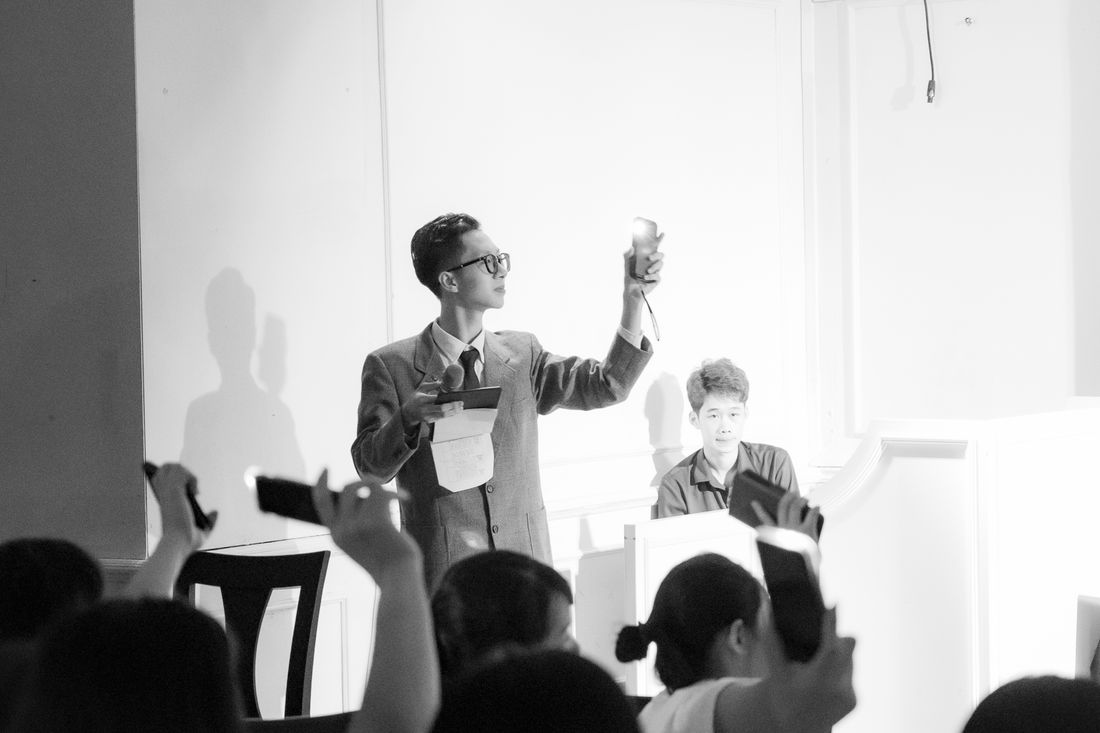
A benefit auction has one moment that decides how the night gets remembered afterward: the paddle-raise ask. It happens once, live, on the auctioneer's cue, with no way to reshoot a room's reaction to a number on a screen. Everything else on the program, cocktail hour, auction lot displays, honoree remarks, exists around that single moment, which changes what a photographer needs to prioritize compared to a standard gallery opening. Donor and board recognition, live and silent auction lot documentation, the ask itself, and room energy during active bidding all need their own plan, built around a scripted program rather than an open reception. The photos that come out of it get used for months afterward: donor follow-up, next year's invitation, and the nonprofit's annual report.
A benefit auction needs different coverage priorities than a gallery opening: donor and board recognition, live and silent auction lot documentation, the paddle-raise ask itself, honoree or artist remarks, and room energy during bidding. Because the ask happens once on a scripted program, positioning ahead of each segment matters more than reacting to it as it happens.
How Is Covering a Benefit Auction Different From a Gallery Opening?
A benefit auction runs on a scripted program with sponsor recognition, auction lot displays, a live appeal, and a paddle-raise ask that happens once, on a schedule set by the emcee or auctioneer. Coverage priorities shift from documenting art and mingling toward documenting the room's reaction when the ask actually lands.
A standard gallery opening runs on open time: guests arrive when they arrive, look at work when they look, and leave when they leave. A benefit auction runs on a clock. Cocktail hour has a hard end, because a room full of donors, a caterer, and often a hired auctioneer all have their own schedules to keep. That structure changes what coverage needs before a single photo gets taken.
The subject list shifts too. A gallery opening calls for artwork detail, install shots, and candid mingling. A benefit auction calls for who's in the room (board members, honorees, major donors), what's for sale (live and silent auction lots), and the moment the ask lands. Art on the walls, if there is any, becomes secondary to the fundraising happening in front of it.
None of this makes gallery-opening instincts wrong, it means walking in with a different priority list. The event's real purpose isn't the art on view. It's the money raised for the organization behind it, and the photos need to prove, clearly and specifically, that it actually happened.
What Donor and Board Recognition Shots Does a Nonprofit Actually Need?
A nonprofit typically needs clear, flattering shots of board members, major donors, honorees, and event chairs, both candid and posed, along with sponsor signage and step-and-repeat moments if the event has one. These photos get used in thank-you notes, annual reports, and next year's invitation, so identifiable faces matter more than atmosphere.
Board members and top donors are the people a nonprofit needs to thank publicly and privately after the event, and a blurry or half-turned photo doesn't do that job. Get a few deliberate, posed frames of the board chair, the honoree, and major table sponsors early in the evening, before the room gets crowded or anyone's had too much wine to hold still for a portrait.
Candid recognition matters just as much as posed shots. A donor caught mid-laugh at their table, a board member genuinely engaged in the auctioneer's pitch, an honoree being hugged after their remarks, these read as warmer and more usable than a stiff lineup. Nonprofits often want a mix: a handful of clean, formal frames for the annual report, and a wider set of candid ones for social media and thank-you follow-up.
Sponsor signage and any step-and-repeat backdrop deserve their own frame too, even if it feels like the least interesting part of the room. A sponsor who sees their logo photographed and used afterward is more likely to sponsor again next year, and that photo often costs nothing more than a few extra minutes of coverage.
How Should Live and Silent Auction Lots Get Documented?
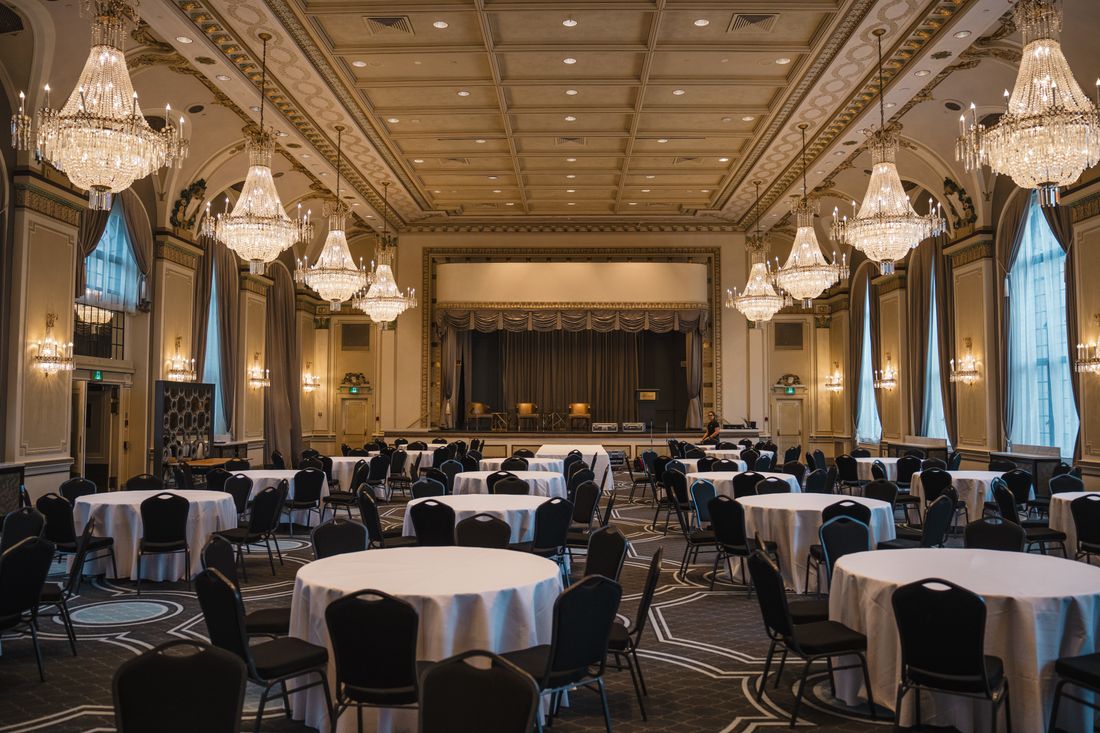
Every live and silent auction lot needs a clean, well-lit photo before the event opens, plus a shot of the winning bidder or paddle when it sells, since the nonprofit needs both records for accounting, donor follow-up, and next year's donor solicitation packet.
Documenting the lots themselves is easy to overlook because it happens before guests arrive, when there's no energy in the room yet. But those static shots, a framed piece of art, a travel package card, a bottle of wine with its description, become the record the nonprofit uses to thank the donor who contributed the item and to value it for tax and accounting purposes.
Once bidding opens, the priority shifts to documenting who's actually competing for each lot: a raised paddle, a bid sheet filling up with names, a phone held up during a live appeal. These frames don't need to be posed. They need to be timed to the moment competitive bidding is visibly happening, because that's the proof a nonprofit uses to show a sponsor or board member that their donated item generated real interest.
The winning moment matters most. A photo of the winning bidder, paddle raised or hand shaken with the auctioneer, closes the loop on that lot's story. It's also the frame most likely to get used again: in a thank-you note, in next year's invitation showing what past guests won, or in a wrap-up post recapping how the night went.
How Do You Cover the Paddle-Raise Moment When There's No Retake?
The paddle-raise ask happens once, live, on the auctioneer's cue, so positioning matters more than any other moment in the night. A photographer needs a clear sightline to both the stage and the crowd before the ask starts, because there's no way to reshoot a room's collective response to a number on a screen.
Most of the evening allows for some flexibility. A missed candid at cocktail hour can be recreated a few minutes later with a different guest. The paddle-raise ask doesn't work that way. It's a single scripted sequence, the auctioneer names a giving level, paddles go up, the level drops, more paddles go up, and it's over in a few minutes with no do-over available afterward.
The practical fix is positioning before the ask starts, not during it. Knowing the run of show in advance, usually from the emcee, event planner, or program script, means being in place with a clear view of both the stage and the crowd's paddles before the auctioneer opens the appeal. Moving through the room mid-ask disrupts the moment and usually means missing it entirely.
Two angles cover this moment well: one wide shot showing the scale of paddles going up across the room, and one tighter shot on the stage or a specific table reacting. Neither replaces the other. The wide shot proves the room responded. The tighter shot gives the nonprofit a usable, emotional image for next year's invitation or a thank-you email.
What Do Honoree and Artist Remarks Need From a Photographer?
Honoree and artist remarks need close, quiet coverage: an unobstructed view of the speaker's face, a read on the room's reaction, and enough restraint not to distract from a moment that's often the emotional center of the evening. A tripod-free, low-movement approach works better here than anywhere else in the program.
These remarks tend to run shorter and carry more weight than a typical event speech. An honoree talking about why the organization matters, or an artist speaking about the work being auctioned, often produces the most genuine expressions of the night, on stage and in the audience watching. That makes this the moment to prioritize faces over wide room shots.
Getting close without becoming visible in the room's sightline is the real skill here. A side angle near the stage, rather than dead center in front of it, usually gives a clean shot of the speaker's face without blocking a single guest's view. Staying still and shooting in short bursts rather than constant motion also keeps the photographer from becoming part of the scene guests remember.
The audience reaction matters as much as the speaker. A board member wiping their eyes, a table leaning in, someone applauding early because they're moved rather than prompted, these reactions tell the nonprofit the remarks landed. A photo of an engaged, responding room does more for next year's invitation copy than a photo of the speaker alone ever could.
How Do You Capture Room Energy During Active Bidding?
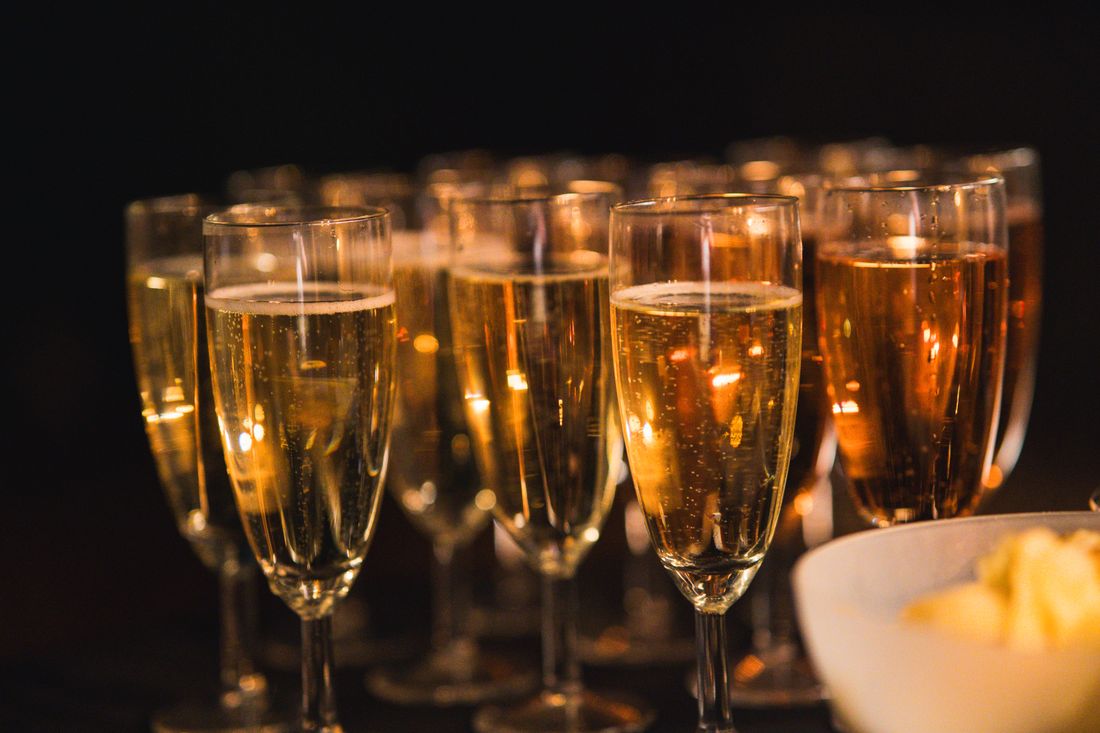
Room energy during active bidding shows up in small, fast details: a raised paddle, a competitive glance between two tables, a runner walking a bid sheet, laughter when the auctioneer teases a bidder. Wide static shots of the whole room miss this; the useful frames come from moving close and shooting quickly between competing bidders.
Live bidding has its own rhythm, and it's faster and more physical than most of the rest of the evening. Two tables competing for the same lot will lean forward, whisper, glance at each other, and raise paddles in quick succession. None of that reads in a single wide shot of the room from the back. It needs a photographer working close enough to catch specific reactions between specific bidders.
The auctioneer is part of this energy too, not separate from it. A good auctioneer works the room, calls out bidders by name or table number, and builds tension on purpose. Photographing the auctioneer mid-call, gesturing toward a table or pointing at a paddle, captures the performance driving the bidding rather than just its aftermath.
This is also where a second angle helps most, if two photographers are covering the event. One can stay near the stage tracking the auctioneer and the number on the screen, while the other moves through the tables catching reactions as bids happen. A single photographer can still get this by alternating quickly between the two, but it takes more anticipation to catch both sides of the same bid.
How Should a Photographer Position Around a Scripted Program?
A benefit auction runs on a printed program with a real run of show, so a photographer needs that schedule in advance, not a general sense of the evening. Knowing when cocktail hour ends, when remarks start, and when the paddle-raise begins makes it possible to be in position before each moment, not scrambling to catch it after.
Getting the actual run of show ahead of time, from the event planner, emcee, or auction house running the night, is worth more than any amount of experience improvising in the room. A typed schedule with approximate times for cocktails, dinner, remarks, live appeal, and paddle-raise means walking in already knowing where to stand for each segment instead of guessing in the moment.
Programs also slip. Remarks run long, dinner service is slower than planned, an unexpected toast gets added. A schedule with rough timing still holds up better than no schedule, because it gives a sense of sequence even when the exact minute shifts. Staying near the stage during transition points, rather than fully committing to one spot in the room, makes it easier to adjust without missing what comes next.
Positioning also means not blocking sightlines during the scripted portions. Guests paid to be in that room and see the honoree, the auctioneer, and each other clearly. A photographer working the aisles or kneeling at the edge of the stage gets the same shots as one standing in the middle of the room, without becoming the thing three tables have to look around.
What Does a Nonprofit Actually Use the Photos For Afterward?
Nonprofits typically use benefit auction photos for three things: personalized donor follow-up (a specific photo attached to a thank-you note), next year's invitation and marketing materials showing what the event actually looks like, and the annual report's proof that the event happened and raised real support.
Donor follow-up is usually the fastest use. A specific photo, a donor at their table, a board member accepting an award, a winning bidder with their item, attached to a personal thank-you note reads as more genuine than a form letter. Nonprofits with development staff often ask for a same-week or even next-day turnaround on a handful of these images specifically for that purpose.
Next year's invitation is the second major use, and it's often overlooked until someone starts designing the save-the-date months later. A strong photo from this year's paddle-raise or a candid shot of the room mid-bid does more to sell a return ticket than a generic stock graphic, because it shows a prospective guest exactly what the evening feels like.
The annual report and grant materials round out the list. Funders and board members who weren't in the room want proof the event happened, drew a crowd, and generated support, and a handful of clean, well-composed photos does that job better than attendance numbers alone. These same images often get reused for a full year, on the website, in a newsletter, or in a follow-up grant application, so it's worth delivering a wider edit than just the highlight reel used for social media the next morning.
Frequently asked questions
Does a benefit auction need two photographers instead of one?
Not always, but it helps for the paddle-raise and live bidding specifically, when a wide shot of the room and a tight shot of the stage or a competing table both matter at the same moment. A single photographer can usually cover a smaller event alone by alternating between angles ahead of key moments. For a large room or a long live-auction segment, a second photographer reduces the risk of missing either angle.
How soon after the event should photos be delivered for donor follow-up?
A small edited set, usually the recognition shots of the honoree, board members, and top donors, works best delivered within a day or two, so development staff can attach specific images to thank-you notes while the event is still fresh. The full gallery, including every auction lot and candid room shot, can follow on a normal turnaround afterward without slowing down that first, more time-sensitive round.
Should the event committee give the photographer a shot list before the event?
Yes, a short one focused on names and priorities helps more than a long generic list. The photographer needs to know who the honoree, board chair, and top sponsors are, when the paddle-raise happens on the program, and whether there are specific auction lots or sponsor signs that must be documented. Beyond that, the photographer's own judgment on candid moments usually produces better results than an exhaustive checklist.
How is a benefit auction different from covering a corporate gala or holiday party?
The core difference is the ask. A corporate gala or holiday party is usually social with no fundraising mechanic built into the program, while a benefit auction has a scripted moment where the room is asked directly for money, through a live appeal, a paddle-raise, or both. That single moment, along with the auction lots and donor recognition around it, is what most of the coverage priorities are built around.
Do we still need photos of the artwork or items in a silent auction, not just people?
Yes, every live and silent auction lot benefits from a clean, well-lit photo before the event opens, separate from any bidding-moment coverage. This static shot is what the nonprofit uses to thank the person or business that donated the item, value it for records, and sometimes reuse it in next year's solicitation materials when asking the same donor to contribute again. A quick phone snapshot on the day doesn't hold up the same way in print.
One night, two openings, no dropped coverage.
We plan clustered opening nights before they turn into a scramble, whether that means a split schedule, a second shooter, or an early enough booking that the calendar never becomes the problem.
Explore event coverage →