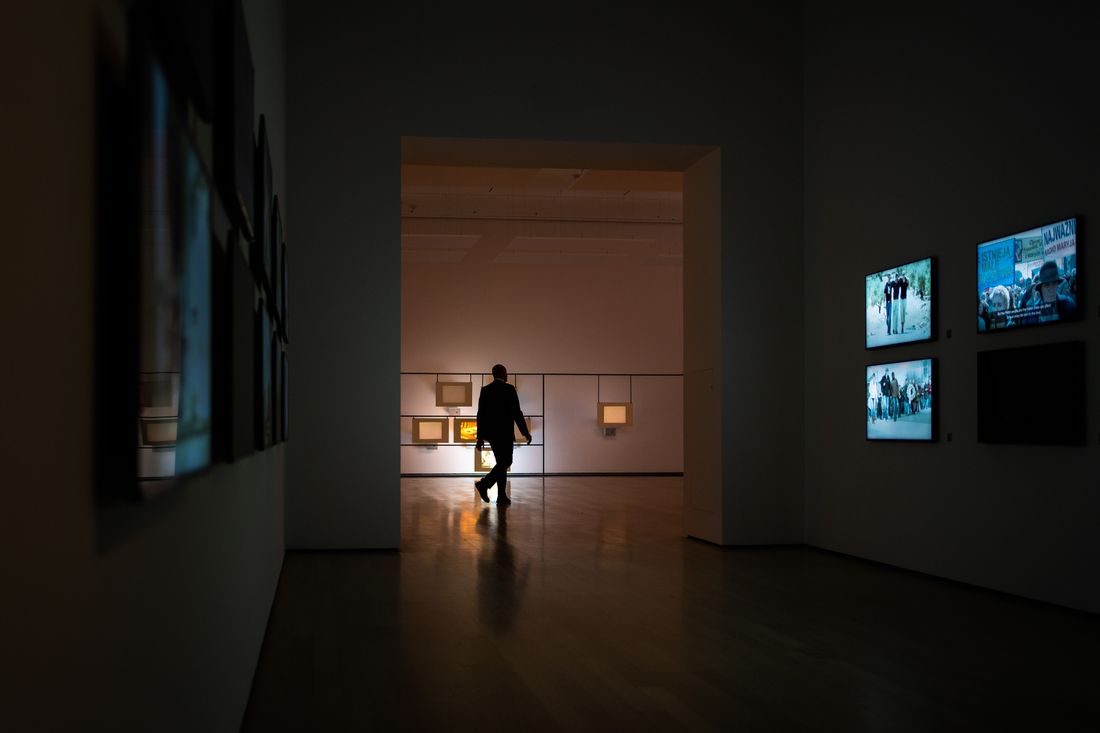
Viewing-only openings are more common than they used to be, timed-entry slots, daytime-only hours, quiet walkthroughs, spaces that genuinely can't hold a crowd safely. None of that makes the event less worth documenting. It changes what the photographer is actually there to get, and how much patience it takes to get it.
This guide covers what still needs coverage when there's no reception to lean on, how the light and mood shift, how a photographer finds real moments instead of posed ones, and why the finished set of images ends up looking a little different too.
What actually changes without a reception?
A reception-style opening does a lot of a photographer's work before the camera is even raised. Put a crowd in a room with wine and conversation, and you get natural material almost automatically: people mid-laugh, small groups forming and breaking apart, someone gesturing at a piece while they talk. None of that requires much invention from the photographer. It just requires being present and paying attention as it happens.
Take the reception away and that supply disappears. A viewing-only opening might have a handful of visitors moving through at their own pace, or a single timed-entry slot with ten people in a room for twenty minutes. There's no ambient noise of a party to hide behind, no natural excuse for a candid shot of someone laughing. The photographer isn't documenting an event with a crowd inside it. They're documenting a quiet encounter between people and the work, which is a genuinely different assignment, not a scaled-down version of the first one.
There's also no arc to the coverage the way there is at a reception. A reception has a shape (people arriving, the room filling up, a toast or a few remarks, the crowd loosening as the evening goes on) and a photographer can build a set of images around that shape almost without thinking about it. A viewing-only opening doesn't hand over that structure. Visitors come and go on their own schedule, sometimes one at a time, and there's no single moment when "the room is full." The photographer has to build the set around the work and the space instead, since that's the part that actually holds still.
What still needs to be covered?
The work itself still comes first. That means installation views that show how the pieces relate to each other in the room, not just individual artwork shots, the kind of image that tells you how the show reads as you walk through it. The space and the lighting matter too, captured the way visitors actually experience them, since that's part of what a gallery is communicating with the hang.
Beyond the art and the room, a no-reception opening still has people worth photographing, just fewer of them, and in a different register. A visitor genuinely engaging with a piece, not posed for the camera, is worth more here than it would be at a packed reception where there are dozens of similar moments to choose from. Signage and wall text are worth a frame too, especially if the gallery will want to reuse the images for press. And there are the quieter human beats: someone reading a label closely, someone stepping back to take in a large piece, a hand nearly touching a frame before pulling back. Small moments, but they're the ones that actually read as real.
It helps to think of the shot list less like an event recap and more like a hybrid of documentation and reportage. The installation views do a lot of the heavy lifting, since they're the images that read clearly on their own months later, when nobody remembers the exact energy of that particular Tuesday afternoon. The human moments add life to that record without pretending the room was busier than it actually was.
How does the lighting and mood change?
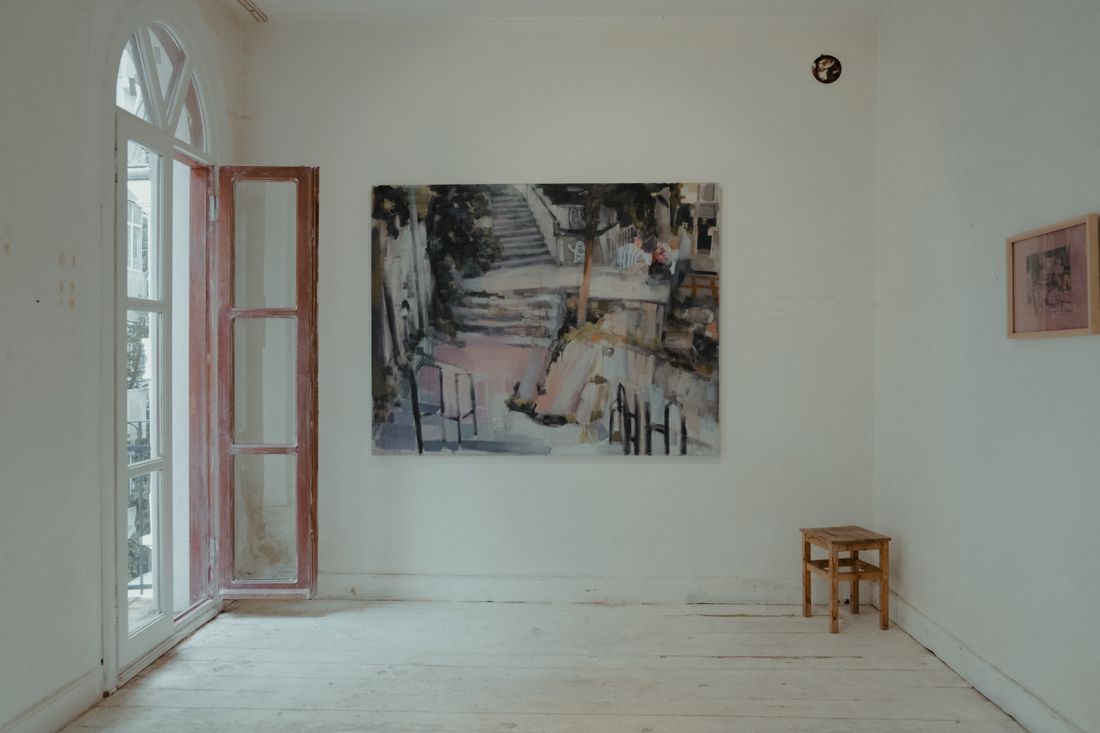
Reception-style openings typically run into the evening, under whatever the venue's track lighting and ambient fixtures give you. That look has become the default mental picture of a gallery opening, warm, a little dim, everyone slightly backlit by the space itself. A viewing-only event doesn't have to follow that pattern. Plenty of them run entirely in daylight hours, which changes more than just the schedule.
Daylight is often genuinely better for photographing the art. It tends to render color and texture more accurately than warm venue lighting, which can shift toward amber and muddy the true palette of a piece, something a photographer then has to correct for in editing. The tradeoff is mood. A daytime, daylight-lit gallery reads calmer and cooler than an evening reception, and that's a real shift in how the finished images feel, not just how they're technically lit. A photographer planning for a daytime viewing has to think about white balance and where the light is actually coming from in a way that evening venue lighting doesn't ask for, since daylight moves and changes color temperature throughout the day in a way a fixed set of gallery lights does not.
That planning happens before the shoot, not during it. Knowing whether the room gets direct sun through a front window at 2pm, or stays flat and even all day because the light comes from a skylight, changes where a photographer stands and what time they'd rather show up. A reception at 7pm under fixed track lighting removes most of that guesswork. A daytime viewing puts it back in, which is one more reason it's worth telling the photographer the format in advance rather than letting them find out at the door.
How do you get real moments without a crowd?
With fewer people in the room, there's a temptation to ask someone to stand near a piece and look at it for the camera. That's usually a mistake. A posed engagement shot reads as posed almost every time, and it undercuts the honesty that makes documentation-style photography useful in the first place. The better approach is to wait for it to actually happen.
That means watching for the moment someone slows down on their own, not directing them into one. It's slower work, and it can mean standing back with a longer lens rather than moving in close with a flash, since a flash going off next to someone quietly looking at a painting tends to end the quiet moment on the spot. The upside is that when it works, the image is more convincing than almost anything a reception crowd produces, because there's no question that the person in the frame is genuinely looking, not performing for a camera they know is there.
What if the artist gives a walkthrough or remarks?
Some viewing-only openings still include a short moment where the artist says a few words or leads a brief walkthrough, even without a full reception around it. That's worth planning for specifically, since it's often the one point in the event with the most concentrated attention in the room.
The coverage approach is close to what works for any artist talk: stay unobtrusive, don't interrupt the room's actual energy with obvious camera movement, and get a mix of the artist speaking and the group's reaction rather than only one or the other. If remarks are part of the plan, it's worth telling the photographer in advance so they can position themselves before it starts instead of scrambling once the artist begins talking.
Why patience matters more than grab shots
A reception rewards a photographer who can move fast and grab a lot of material, because there's a constant stream of it. A viewing-only opening rewards the opposite instinct. There isn't a constant stream, so working the room the same way just produces a lot of empty or repetitive frames.
The practical shift is fewer photos, taken more deliberately, with more time spent waiting between them. A photographer covering this kind of event might spend several quiet minutes watching how the light falls across a piece as different visitors pass through it, or waiting for the one visitor who actually stops rather than passes by. It's a different rhythm than event photography usually runs on, closer to how someone would approach a documentation shoot than a party. That's a genuinely useful skill, and not every event photographer defaults to it without being told the event calls for it.
How does the deliverable set change?
The finished set of images shifts along with everything else. A reception-style shoot usually delivers a healthy batch of what amounts to party photography (energy shots, crowd moments, people clinking glasses) useful for social posts that want to show the room was full and alive. A viewing-only opening produces far fewer of those, because there wasn't much of that energy to begin with.
In its place, the set leans toward clean, documentation-adjacent images: strong installation views, individual artwork detail, the quieter engagement shots, and clear signage or wall text. Those images tend to be more useful for press, for the gallery's own archive, and for reuse later than a folder of crowd photos would be. It's a different kind of usefulness, not a lesser one, and it's worth setting that expectation before the shoot rather than after, when someone's scrolling through the gallery expecting a party recap that was never going to exist.
That shift matters for how the gallery plans its own social calendar too. A reception recap post practically writes itself from a full folder of crowd energy. A viewing-only opening produces fewer of those obvious social moments, so the more useful posts often end up being about the work itself (a strong installation shot, a detail crop, a quiet visitor moment) rather than a recap of the event as a gathering. Neither approach is wrong. They're just built from different material.
Why the gallery should say which kind of opening it is
None of this works well as a surprise. A photographer who shows up expecting reception energy and finds a silent, timed-entry viewing will spend the first stretch of the shoot recalibrating instead of working. The fix is simple and costs nothing: tell the photographer in advance which mode the event is running in.
A short heads-up is usually enough, no bar, no mingling, possibly timed entry, maybe a brief artist walkthrough partway through. That one piece of context changes the shot list, the pacing, and even the lens choices a photographer brings. Galleries that run a mix of reception and viewing-only formats over a season benefit from making this a standard line in whatever they send the photographer beforehand, so nobody's guessing on the day.
It also sets expectations for everyone else involved, not just the photographer. Gallery staff, the artist, and anyone helping run the day benefit from knowing in advance that this one is quiet by design, not quiet because something fell through. Framed that way, a no-reception opening reads as a deliberate choice with its own kind of coverage, rather than a smaller version of the real thing.
Frequently asked questions
Do we still need a professional photographer if there's no reception?
Yes, arguably the coverage matters more, not less, when there's no crowd to fall back on. A viewing-only opening still needs installation views, engaged-visitor moments, and clean documentation of the work in the room. Without a photographer paying attention, that record often just doesn't happen.
How many photos should we expect from a no-reception opening?
Expect a smaller, more curated set than a reception-style shoot. There's less raw material to work through, and the goal is a handful of strong, deliberate images rather than a wide spread of crowd shots. Quality over volume is the honest tradeoff here.
Should the photographer stay for the whole viewing window?
It depends on the format. A tightly timed-entry slot might only need coverage for that window. A longer daytime viewing period benefits from a photographer checking in at a few points rather than standing in the room the entire time, enough to catch a few genuine visitor moments without hovering.
Is daylight actually better for photographing the art itself?
Often, yes. Daylight tends to render color and texture more accurately than warm evening venue lighting, which can shift the palette a photographer has to correct for later. The tradeoff is mood. Daylight images read differently than evening reception photos, so it's worth deciding in advance which look the gallery actually wants.
What should we tell the photographer before a viewing-only event?
Say plainly that it's a quiet, viewing-only format, no bar, no mingling, possibly timed entry, so the photographer plans for patience and documentation rather than reception energy. That one piece of context changes the shot list more than almost anything else.
Every opening gets the coverage it actually calls for.
Reception or quiet viewing, we plan the shoot around the event you're actually running, not a default version of one.
Explore event coverage →