
Both categories exist on the same booking form, event photography, and both get quoted with roughly the same hourly logic. That similarity is exactly what causes the confusion. A photographer who treats a gallery opening like a corporate mixer, or a corporate panel like a gallery opening, produces work that technically covers the event without actually representing it.
This guide lines up what each category is actually proving, then puts the concrete differences side by side: what gets shot, how the photographer moves, and what the client does with the files afterward.
The same camera, a different job
It's easy to assume event photography is one skill applied to different rooms. The camera settings, the instinct to stay out of the way, the need to catch candid moments, all of it looks similar from the outside. That similarity is what makes the difference easy to miss and expensive to get wrong, and it's why a client who's only ever booked one kind of event is often surprised the deliverables from the other kind look nothing like what they expected.
A corporate event and a creative event are usually asking the coverage to prove two different things. One is proving that an organization is competent, organized, and worth associating with. The other is proving that a room full of people genuinely responded to a piece of creative work. Those aren't the same claim, and a set of photos built to prove one doesn't automatically prove the other.
Once the job is framed that way, most of the practical differences, where the photographer stands, what they prioritize, how they move through the room, stop feeling like style preferences. They're the obvious consequence of a different assignment, and the table further down makes them concrete.
What each kind of coverage is actually proving
Corporate coverage is usually building a record: who spoke, what the space looked like, that the event ran the way it was supposed to. The photos support a recap email, a slide in next year's planning deck, or a page on a company site. Structured shots carry real weight, the stage from a clean angle, the room at capacity, key attendees identifiable and well-lit, because a corporate audience is looking for proof the event happened at the standard the organization wants associated with its name.
Creative coverage, a gallery opening, an art fair booth, an artist talk, is proving something closer to atmosphere: that people showed up, that the room had energy, that the work landed with an audience. The priority shifts toward candid, unplanned moments, someone genuinely absorbed in a piece, a conversation happening in front of the work. A creative event rarely has a fixed shot list the way a corporate one does, because the useful moments aren't scheduled. They happen, and a photographer who's waiting for a cue misses them.
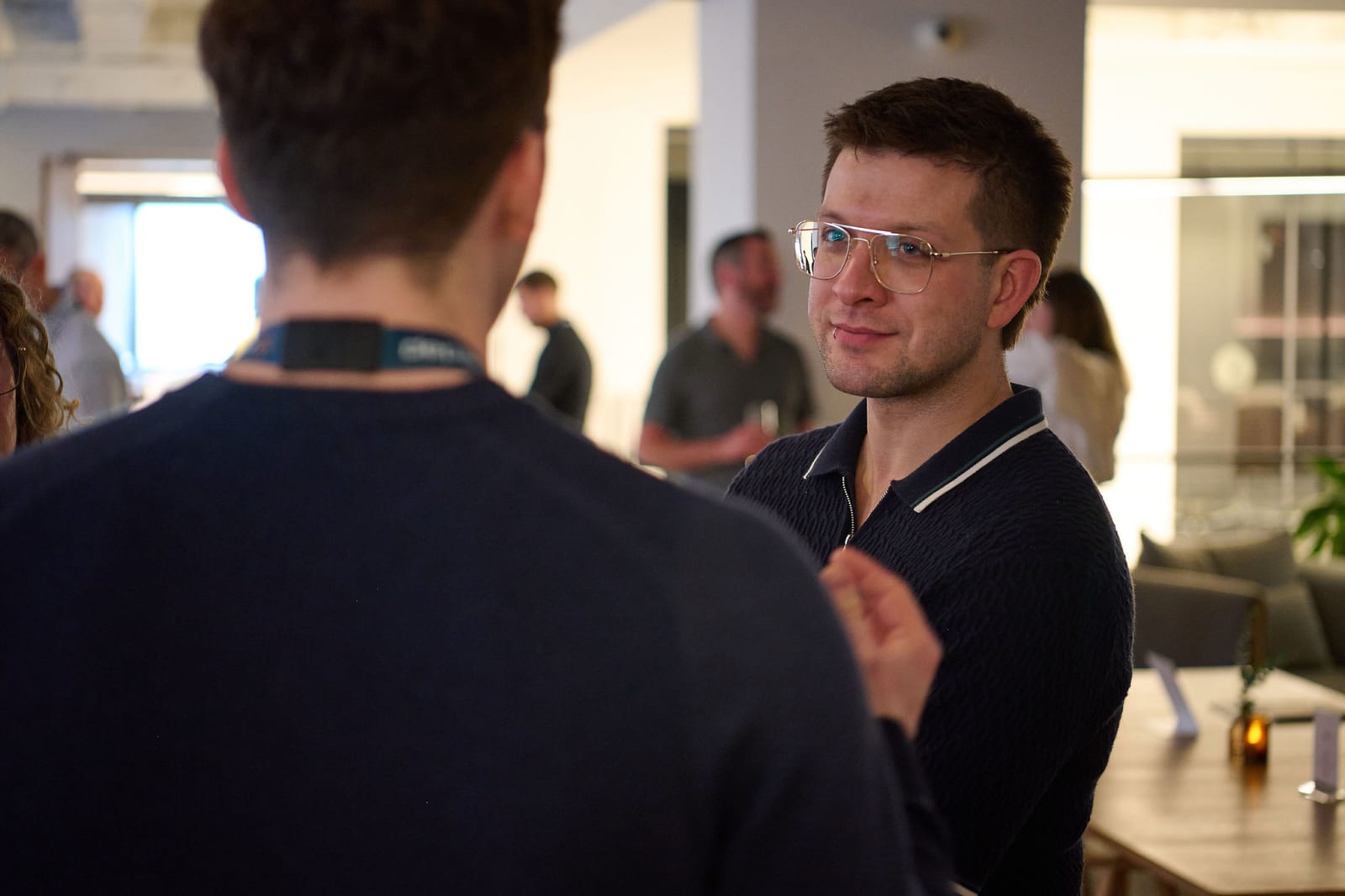
Side by side: what changes on the day
The differences aren't abstract. They show up in five concrete decisions a photographer makes before and during the event, and they're worth naming plainly rather than as a mood description.
| What changes | Corporate coverage | Creative coverage |
|---|---|---|
| Shot list | Fixed and known ahead of time: opening wide, podium, room at capacity, closing group shot | Not written down; priority is unplanned moments, someone stopped in front of a piece, a candid conversation near the work |
| Lighting approach | Photographer corrects toward even, legible light so everyone reads clean on camera | Photographer protects the room's own lighting, spotlights and dim house lights, instead of flattening it |
| Pace and movement | Follows the printed agenda, repositioning as segments change | Roams continuously through the room since nothing is scheduled |
| Crew size | One photographer usually covers it well, since the agenda does some of the organizing work already | A large gallery or busy booth can call for a second shooter, since more of the room needs watching at once |
| What the client publishes | Recap email, planning deck, company site, one correct photo per use | Ongoing gallery or artist archive and social feed, pulled from over weeks |
| Edit style | Smaller curated set, color-corrected toward neutral accuracy | Fuller set, retains the mood and contrast of the room instead of normalizing it |
None of these rows is a hard rule. They're the default a photographer starts from before adjusting to the specific room.
Why the room itself reads differently
A corporate room is usually built for legibility, rows of chairs, a stage, clear sightlines, even lighting meant to make everyone visible on camera. A creative room is often built for atmosphere first, dimmer lighting, irregular layouts, work hung at heights and angles chosen for viewing rather than photographing. Neither room was designed with a camera in mind, but the two design intents pull coverage in opposite directions, and the camera settings that flatter one will actively work against the other.
A quick walkthrough before doors open usually settles which one a photographer is dealing with. Directional spotlights on the work and dimmed house lights are telling the photographer to preserve mood, not correct it. Even, bright overhead lighting and a podium facing rows of chairs is telling the photographer to make everyone legible. Recognizing which reading applies before the event starts, rather than reacting to it in the moment, is most of what separates coverage that fits the room from coverage that feels imported from somewhere else.
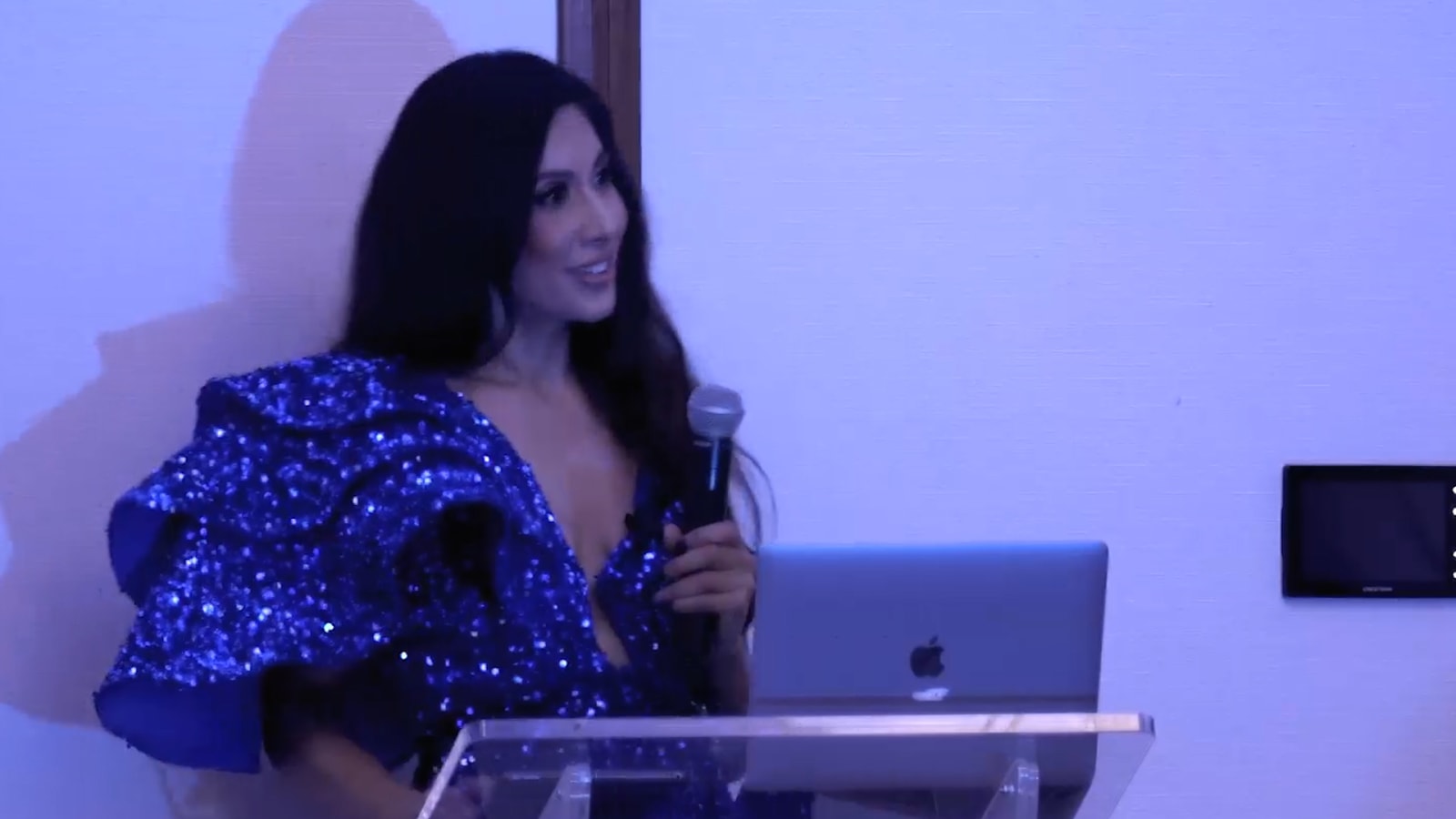
When an event genuinely blends both
Plenty of real events sit somewhere in between, a corporate brand hosting an art-adjacent activation, a gallery opening with sponsor involvement, a product launch styled like a creative event. These don't need a third category. They need a photographer who identifies which register is actually dominant and shoots accordingly, while still catching the handful of shots the other side genuinely needs.
The mistake isn't blending the two. It's treating both halves as equally dominant and producing a set of photos that doesn't fully satisfy either need. A useful check is asking who actually reviews the final images afterward. If it's mostly the gallery and the artist building their own archive, the event is creative-dominant even with sponsor branding on a step-and-repeat somewhere in the room. If it's mostly a marketing or communications team building a report, it's corporate-dominant even if the venue happens to be an art space rented for the night, and the shot list should follow that answer, not the venue.
How to brief a photographer for the right category
The clearest signal to give a photographer isn't a shot list, it's what the photos need to prove once the event is over. Telling a photographer "this needs to look organized and professional for a recap" sets up different instincts than "this needs to show people genuinely connecting with the work," and either sentence alone does more work than a page of requested angles.
Naming the room's actual character matters too: whether the lighting is dim and atmospheric or bright and structured, whether there's a fixed agenda or open social time, and whether the work itself, art, product, presentation, needs to appear in the frame as its own subject. A short conversation before the event, ten minutes about what the photos are actually for, does more to align coverage with the right category than any equipment choice or shot list ever could. That's also the moment to say out loud if the event is a blend, so the photographer knows which register to default to and which shots are the secondary requirement.
Frequently asked questions
Can the same photographer shoot both types of events well?
Yes, but it takes a deliberate shift, not just showing up with the same instincts twice. A photographer who's genuinely comfortable in both worlds treats each booking as its own brief, reading the room and the shot list from the table above, rather than running one default approach across every kind of room. The switch has to happen before the event starts, during the walkthrough, not partway through the night once the wrong instincts have already cost a few key moments.
Does creative event coverage cost more than corporate coverage?
Not inherently. Both categories get quoted on the same hourly logic. What raises the cost on either side is a longer timeline, a larger room, a second shooter, or a faster delivery deadline, not the creative-versus-corporate label itself, so the table above is a better predictor of price than the category name. A creative event that needs a second shooter for a big gallery costs more for that reason, not because it's creative.
One night, two openings, no dropped coverage.
We plan clustered opening nights before they turn into a scramble, whether that means a split schedule, a second shooter, or an early enough booking that the calendar never becomes the problem.
Explore event coverage →