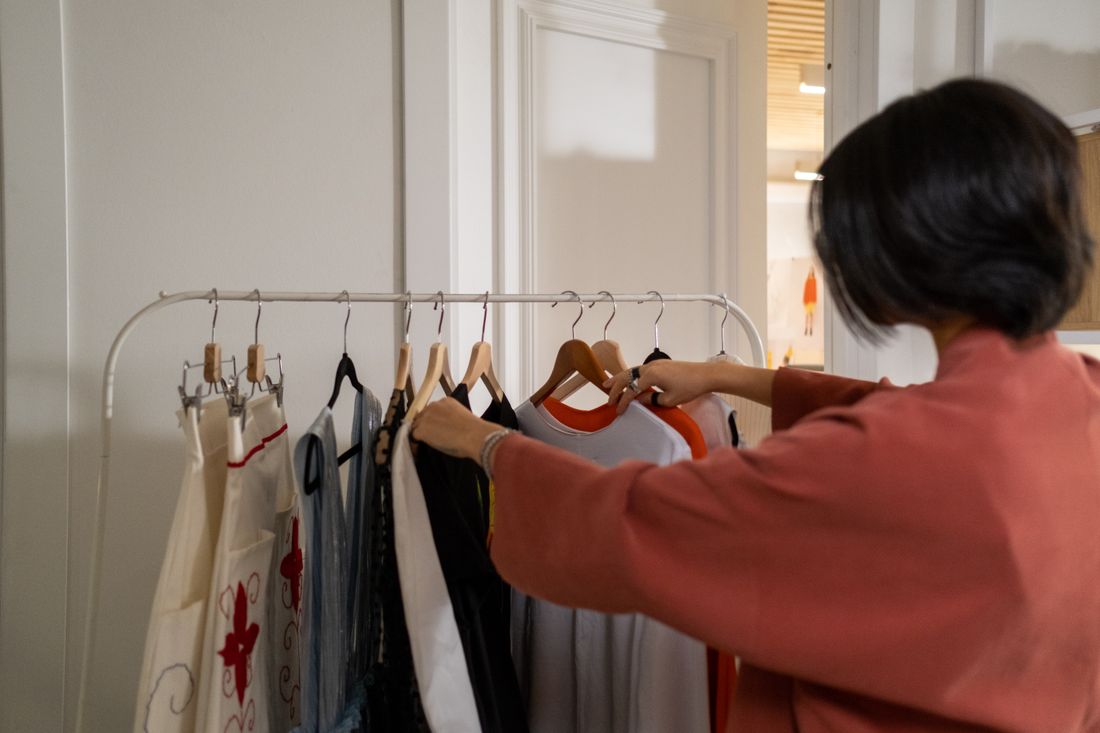
A lookbook isn't a stack of nice outfit photos taken on the same day. It's a system: a set of coordinated looks meant to be seen together and compared, where every choice in look one has to answer to look four. That's a different job than styling one strong portrait, and it changes almost everything about how a stylist plans a shoot day, from how many looks actually fit, to the order they get shot in, to what a client needs to have ready before anyone touches a garment. Get the system right and the whole set reads as one story. Get it wrong and five great outfits still look like five different shoots stapled together.
A lookbook is a set of coordinated looks planned and shot together so they read as one story, not a portfolio of individually strong photos. Building one well means picking a realistic look count for the day, holding a shared color and mood across every look, sequencing the day around difficulty and light, and getting the client's full wardrobe organized and ready before the first look goes in front of the camera.
What Is a Lookbook, and Why Does It Work Differently Than a Single Styled Photo?
A lookbook is a set of coordinated outfits meant to be viewed together and compared, not a collection of individually strong photos. Every look answers to the others in color, proportion, and mood, so a viewer moving through the set feels one continuous idea instead of a string of unrelated photo opportunities.
A single portrait or editorial image only has to work on its own. It carries one mood, one wardrobe choice, one relationship between the subject and the frame, and nothing else has to agree with it. A lookbook is judged as a group instead. If one look leans casual while the rest lean polished, or one sits warm while the others sit cool, the set reads as scattered even when every individual photo is composed well.
That group-level thinking is what separates a lookbook from a folder of nice shots taken on the same day. A client flipping through a lookbook is comparing looks against each other, not evaluating them one at a time, so the real job is building a sequence where every look earns its place next to the others rather than simply existing near them.
This is also why a lookbook takes more planning up front than a single shoot. The stylist isn't just choosing what looks good on the body in one frame. They're choosing what looks good next to look two, look three, and look four, and holding that relationship steady across a whole shoot day instead of a single setup.
How Many Looks Should a Small Lookbook Shoot Realistically Fit Into One Day?
A contained lookbook shoot day usually holds four to six looks comfortably, sometimes up to eight with a fast wardrobe team and simple sets. Fewer looks with real variation between them beat a longer list that starts repeating the same silhouette, color, or mood in a slightly different shirt.
The number that actually fits depends on how much changes between looks, not just how many outfits are on the rack. A look that only swaps a top keeps hair, makeup, and lighting mostly intact, so it moves fast. A look that changes silhouette, layering, or accessories from the ground up takes real time to reset, and that time adds up across a single day far faster than most people expect going in.
A useful planning habit is counting full resets, not garments. If four of the six planned looks need a hair or makeup adjustment on top of a wardrobe change, that's closer to a six-look day of effort even though it's technically four looks. Building the count around actual reset time, rather than the number that sounds impressive on a shot list, keeps the day realistic.
Small lookbook shoots also benefit from treating the count as a range rather than a fixed target going in. Locking five looks on paper but staying open to cutting the weakest one, or combining two similar ones, keeps the day from running long chasing a number that stopped serving the story partway through.
How Do You Keep Color and Mood Consistent Across Every Look?
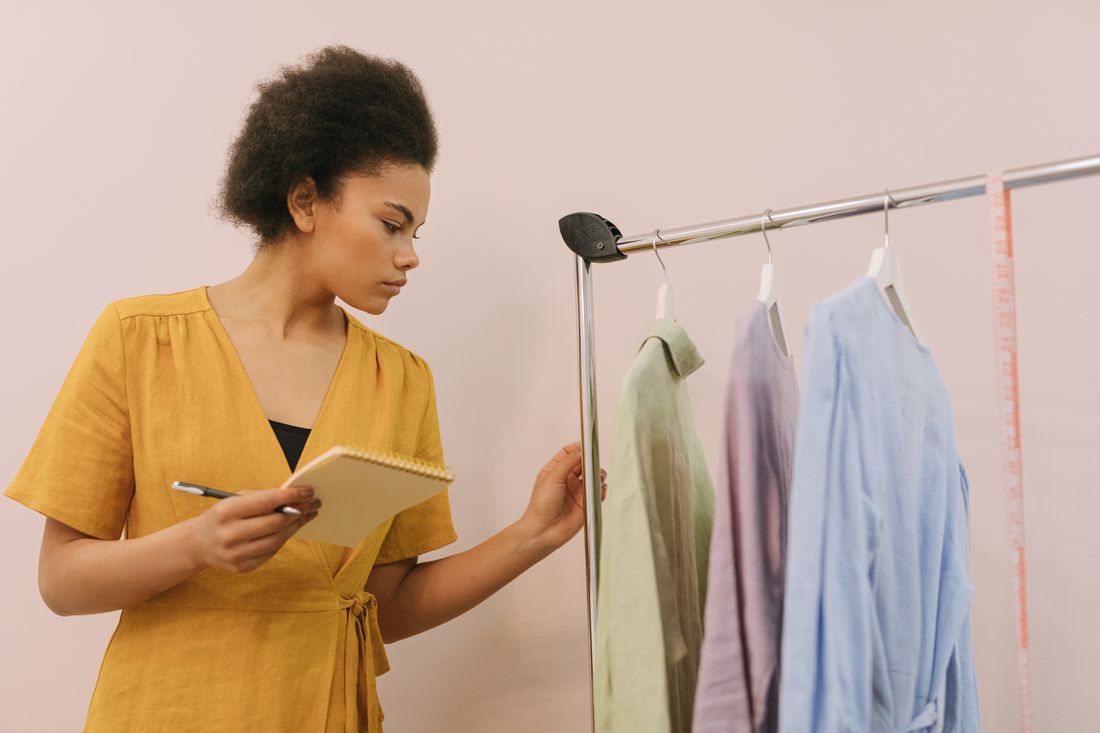
Color and mood consistency comes from a shared palette and a repeatable set of styling choices, not identical outfits. A stylist usually locks in two or three anchor colors, one formality level, and a consistent texture or era across the wardrobe, then lets each individual look vary within those fixed boundaries.
Anchor colors do most of the work. Choosing a small palette before pulling any garments, rather than after, means every piece gets checked against it instead of judged on its own merits. A look can introduce a new color as long as it relates back to the anchor palette somehow, through a print, an accessory, or a tone that sits close enough on the color wheel to feel intentional rather than accidental.
Mood consistency works the same way through formality and texture. A lookbook that mixes a relaxed linen shirt with a structured tailored blazer two looks later can still work, but only if something else, the color story, the accessories, the setting, is doing the job of tying them together. Without that thread, the set reads as two different shoots stitched into one.
The easiest way to catch a break in consistency is to lay every planned look out together before the shoot, not just review them one at a time. A look that seemed fine in isolation often reveals itself as the odd one out the moment it sits next to the other four or five. Catching that at the planning stage is far cheaper than catching it after the shoot day is already over.
How Do You Build a Lookbook So It Reads as One Story Instead of Separate Outfits?
A lookbook reads as one story when each look shares something concrete with its neighbors, a color, a fabric, an accessory, a silhouette line, even as the overall outfit changes. That shared thread is what a viewer's eye tracks across the set, and it's what turns a stack of outfits into a sequence that feels planned rather than assembled.
Variety still matters. A lookbook where every look is a close variation on the last one feels repetitive fast, even if it's technically consistent. The goal isn't sameness, it's a family resemblance: enough shared DNA that the looks clearly belong together, with enough real difference between them that the set doesn't start to blur into one outfit photographed five times.
A useful way to check this before the shoot is to imagine two looks placed side by side with everything else removed. If they share nothing recognizable, color, formality, era, texture, the transition between them will feel like a hard cut instead of a step forward. If they share too much, the two looks will read as redundant rather than as two distinct ideas.
Thinking in pairs like this, rather than judging the full set only as a whole, catches most consistency problems early. It's much easier to notice that look three has nothing in common with look four than to spot the same gap once six looks are laid out together and the eye has more to track at once.
How Should a Stylist Sequence Looks Across a Shoot Day?
The most demanding look, the one with the most layers, the trickiest fit, or the biggest hair and makeup change, should usually shoot first, while the crew and the subject both still have full energy and patience. Simpler looks that need less adjustment can fill the back half of the day, when everyone is naturally moving faster and getting tired.
This is the opposite of how many people instinctively plan a shoot day. It feels natural to warm up on something easy and build toward the hardest look, but a lookbook day rarely has that luxury. Energy, patience, and precision are all highest in the first hour or two, and they decline steadily after that, so the look that needs the most careful attention should claim that window instead of being saved for last.
Sequencing also has to account for what has to happen between looks. A look with heavy layering or complicated accessories takes longer to break down than it did to build, and that reset time needs to be planned into the schedule rather than discovered mid-shoot. Grouping looks that share a similar base, the same trousers with different tops, for example, cuts down on full resets and buys back real time across the day.
A simple rule of thumb: order the day by difficulty, not by preference or the order the looks were designed in. The list that looks best on paper isn't always the list that runs smoothly once hair, makeup, wardrobe, and light all have to move together on schedule.
How Does Changing Light Across the Day Affect the Order of Looks?
Natural light changes shape and color across a shoot day, so any look that depends on a specific quality, direct window light, golden hour, open shade, needs to shoot when that light is actually available, not wherever it falls in the sequence. Looks built for controlled studio lighting have more flexibility and can fill the gaps around that fixed window.
This means the light schedule sometimes overrides the difficulty-based order rather than working alongside it. A demanding look that needs harsh midday sun for a specific graphic effect has to shoot at midday regardless of how tired everyone is by then. Planning the day around light first, then fitting difficulty-based sequencing into what's left, avoids the trap of building a perfect order on paper that falls apart the moment the sun moves.
Indoor shoots aren't exempt from this either. A room with one strong window has its own version of golden hour, a stretch where the light is soft and directional in a way that's hard to recreate later with artificial sources. Looks styled around that natural quality need to claim that stretch of the day just as much as an outdoor look needs to claim true golden hour.
Building the shoot day schedule with light constraints marked first, before difficulty or preference, keeps the whole plan realistic. Everything else about sequencing can flex around a fixed light window. The reverse rarely works, because light on a schedule doesn't wait for wardrobe to catch up.
How Is Styling a Lookbook Different From Styling a Single Portrait or Editorial Image?
Styling a single portrait or editorial image means building one outfit to carry one mood, with every choice serving that one frame. Styling a lookbook means building several outfits that each carry their own mood while still relating to each other, turning the job from picking one right answer into managing a whole set of related answers at once.
A single-image styling session can chase a strong, specific idea without worrying about what comes before or after it. If the wardrobe, hair, and makeup all serve one bold concept, that's success, even if the styling would feel out of place anywhere else. A lookbook can't operate that way. Every look has to stand alone and still sit comfortably next to the others, which is harder to pull off than it sounds.
The planning process reflects that difference. A single portrait typically starts with one moodboard and one wardrobe pull. A lookbook starts with a palette, a sequence, and a wardrobe pull for every look at once, because choices made for look one directly affect what look three is allowed to do. Nothing about a lookbook gets decided in isolation the way a single image can.
This is also why a lookbook usually needs more lead time relative to its length. A single portrait might be styled the morning of the shoot. A lookbook with several looks needs its palette, sequence, and full wardrobe checked against each other well before the shoot day starts, because fixing a consistency problem after the fact means reshooting, not just re-editing.
What Should a Client Have Ready Before a Small Lookbook Shoot?
Before a small lookbook shoot, a client should have every planned look fully pulled, steamed, and organized in shoot order, along with accessories, shoes, and any layering pieces sorted by look rather than left loose. A short reference list or moodboard showing the intended palette and mood for the set helps everyone stay aligned once the day gets moving.
Organizing by look order matters more than it sounds like it should. A rack sorted by garment type, all the tops together, all the bottoms together, forces someone to reassemble each outfit from scratch during the shoot, which eats time that a lookbook day rarely has to spare. A rack sorted by look, each outfit hanging together with its accessories bagged or clipped nearby, turns a wardrobe change into a fast swap instead of a small scavenger hunt.
Sizing and fit information matters more here than for a single portrait too, since a lookbook usually means one person moving through several outfits back to back rather than one outfit fitted carefully in isolation. Knowing in advance that everything actually fits the subject avoids losing shoot time to an unplanned alteration mid-day.
A short written sequence, even a simple numbered list of which look goes first, second, and so on, saves real back-and-forth on set. It lets the stylist, photographer, and subject all work from the same plan instead of deciding the order in real time, which is exactly the kind of decision that's much easier to make calmly in advance than under a moving schedule.
Frequently asked questions
Does every look in a lookbook have to be shot in the same location?
No, but every location change should serve the story rather than happen by convenience. A small lookbook shoot can move between two or three connected spots, a room and a hallway, an interior and a doorway, as long as the light and mood stay consistent enough that the set still reads as one shoot. Jumping between unrelated locations for each look usually breaks the sense of a single coherent set, even when the wardrobe itself stays consistent.
What happens if a client's wardrobe doesn't have enough range for a full lookbook?
A stylist can usually stretch a smaller wardrobe further than a client expects, by re-pairing the same pieces with different layers, accessories, or styling choices rather than treating each look as a completely new outfit. If the range genuinely isn't there, the honest move is trimming the look count rather than padding it with weak repeats. Four strong, distinct looks read better than six where two are barely different from the ones before them.
Should a small lookbook use one model or more than one?
One model keeps a small lookbook simplest to plan and shoot, since every reset only has to happen once per look instead of once per person. Multiple models can work when the concept calls for it, showing how the same pieces read on different people, but it adds real scheduling weight: more hair and makeup time, more fittings, and more coordination across a day that's already tight. For a contained shoot, one model is usually the more realistic choice.
How is a lookbook different from a moodboard?
A moodboard is a planning tool built before the shoot, references, colors, and textures gathered to align everyone on the intended direction. A lookbook is the finished output, the actual photographed set of coordinated looks. A moodboard shapes what the lookbook should look like; it isn't the deliverable itself. Teams sometimes use the two terms loosely, but keeping them separate in planning conversations avoids confusion about what's actually being delivered at the end of the shoot.
Can a lookbook mix close-up and full-body shots of the same look?
Yes, and it often should. A full-body shot establishes the outfit and silhouette clearly, while a close-up can highlight a detail, a fabric, an accessory, a fit point, that would get lost in a wider frame. The two work together rather than competing, as long as the close-up is planned as a deliberate addition to a look rather than a substitute for showing the full outfit at least once.
Wardrobe should point back to the work, not away from it.
We plan styling for artist portraits the same way we plan the rest of the shoot, around who you are and what you make, not around looking photographed.
Explore styling services →