
A stylist is easy to misunderstand because the finished image looks simple. A jacket sits correctly. A shirt does not fight the light. The color feels connected to the room. None of that happens on camera. Almost all of it happens in the days before the shoot, in work nobody photographs.
Before a creative photoshoot, a stylist is doing a specific, mostly invisible sequence of work: turning a brief into a moodboard, sourcing and pulling options, fitting them on the actual person, steaming and repairing what needs it, packing the kit that solves problems on the day, and returning what was borrowed once the shoot wraps. At The Lightroom Studio's fashion styling service, Jasmine handles that sequence directly, so the shoot itself is about making pictures, not discovering wardrobe problems in front of the camera.
What the brief and moodboard actually settle
Before Jasmine pulls a single piece, the shoot needs a shape. That starts with a brief: what the images are for, where they will run, who is in front of the camera, and what the shoot is trying to say. A portrait for a gallery announcement asks for different clothes than a campaign image or a social content day, so this part is not paperwork. It decides everything that follows.
The moodboard comes out of that brief. It is not a folder of pretty outfits. It is a working set of references for color, texture, silhouette, and mood, chosen because they say something specific about the person or the project, not because they look good on a phone screen. Three to eight images usually does it. More than that and the direction gets muddy instead of clearer.
This is also where constraints get named early: colors or materials to avoid, sizing, comfort limits, anything that would derail the shoot if it only surfaced on set. A client who hates tight collars or never wears heels should say so here, not halfway through a fitting. The brief and moodboard are the cheapest place to fix a wrong direction. Fixing it during the shoot costs time nobody has.
Sourcing and pulling the options
Once the direction is set, the clothes have to come from somewhere. Some come from the client's own closet, pulled and edited down to the pieces that will hold up on camera. Some get borrowed from a showroom or a designer. Some get bought new, tried, and returned afterward if they do not make the final cut. Which route makes sense depends on the shoot, the budget, and how specific the look needs to be.
The point of pulling is never one perfect outfit. It is a controlled set of options: a structured look, a softer one, a different color, a backup. Light, background, and how a person actually feels in the clothes are variables nobody can fully predict from a moodboard, so the options exist to let the shoot respond instead of stall. A closet with one plan and no alternative is a fragile plan.
This stage also means saying no to pieces that look fine in a mirror and bad on camera: thin fabric that clings, a collar that collapses, a print that vibrates on video. Editing those out before the shoot is the same work as choosing what to include. Both halves happen here, not on set, when there is no time left to swap anything out.
The fitting, where most problems get caught
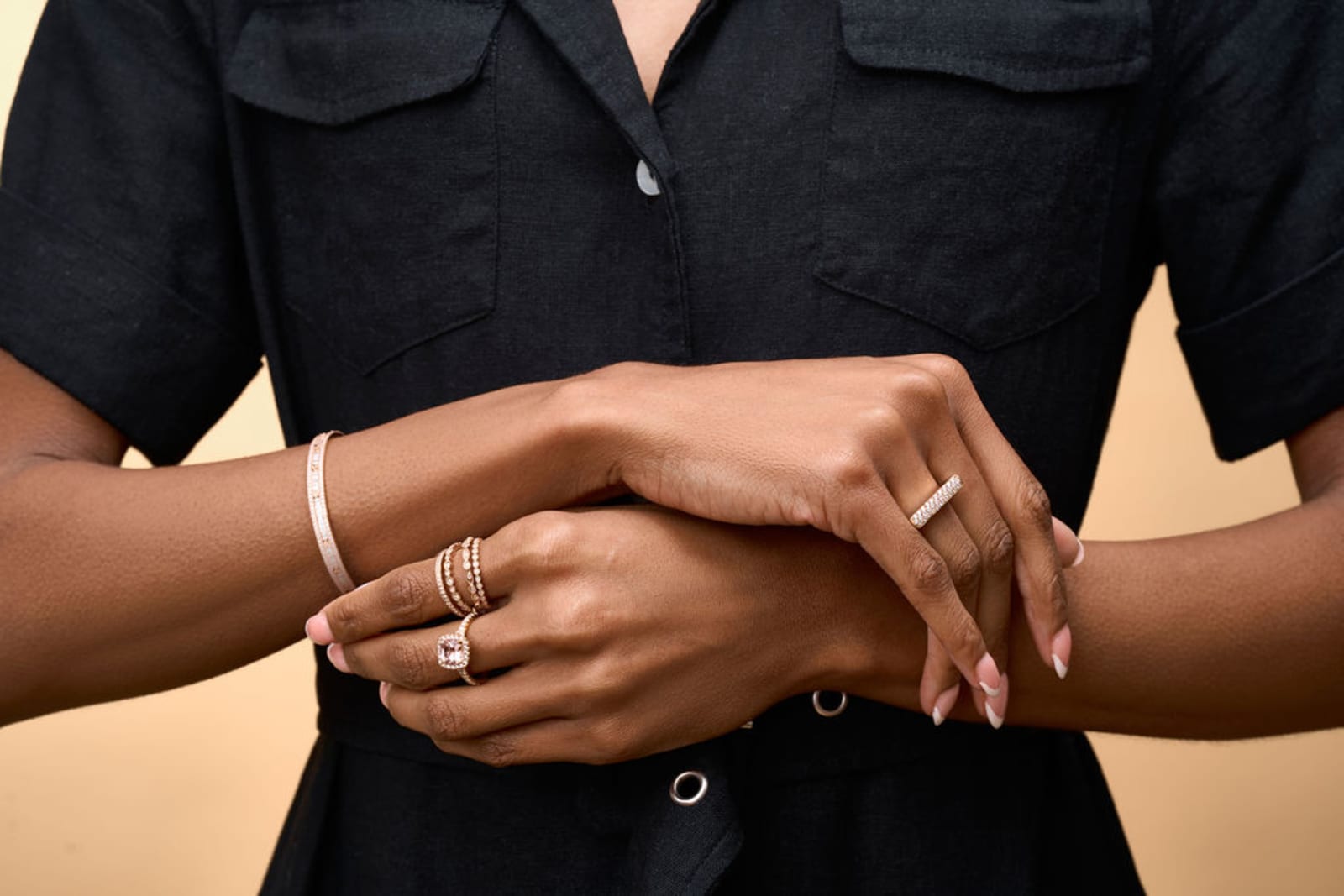
A fitting is where the plan meets an actual body in actual light, and it is usually where the real decisions happen. Clothes that read as one thing on a hanger can read completely differently once they are on. A jacket sits wrong at the shoulder. A hem falls an inch too long. A texture that looked interesting in a photo goes flat or busy in person. None of that shows up until someone tries the piece on.
Jasmine checks more than whether something fits the body. She checks whether it fits the shoot: can the person move in it, sit in it, turn toward the camera without the collar folding wrong. If a set or a studio wall is involved, she will often check the piece against that background too, because a color that reads clean on its own can disappear or clash once it is standing in the room the shoot actually happens in.
This is also the point where small fixes get flagged: a button that needs moving, a hem that needs a pin, a strap that needs shortening for the day. Catching that here means the shoot morning is about making pictures, not discovering that something does not actually work the way it looked like it would.
Steaming, pressing, and the small repairs
Wardrobe that has been folded, shipped, or sitting in a bag does not walk into a shoot camera-ready. Before the day, pieces get steamed or pressed so wrinkles do not become lines across a composition, which is a bigger problem on camera than it feels like in a closet. Delicate fabrics get handled carefully here, because the wrong heat or the wrong tool can do more damage than the wrinkle it was meant to fix.
This is also when small repairs happen. A loose button gets tacked down. A stray thread gets clipped. A hem that will not survive a seated pose gets pinned so it holds for the frame, even if it would not hold for a full day of wear. None of this is complicated, but skipping it means discovering the problem in front of the camera instead of the night before, when there is still time to fix it.
The goal is not a showroom-perfect garment. Some texture and wear are useful, they give a piece character instead of making it look untouched. The goal is removing the accidental detail: the crease that reads as a mistake, the loose thread the camera will find before anyone else does. Prep is quiet work, and it is the reason nobody notices it later.
What actually shows up on the day
By the time the shoot starts, the wardrobe decisions are mostly made, but the kit that comes along is what keeps the day from stalling on something small. It is not glamorous. It is a bag of tools that solve the problems clothes create in the moment.
- A travel steamer, for a wrinkle that shows up after the drive over.
- Safety pins and fabric clips, for a fit adjustment that needs to hold for one frame, not a full day.
- A lint roller, because dark fabric shows everything under studio light.
- Double-sided fashion tape, for a neckline or strap that needs to stay put.
- A small sewing kit, for the button or seam that decides to fail that day.
- Backup pieces from the fitting, in case the planned look is not working once the light and the person are actually in the room.
- Notes or reference photos from the fitting, so continuity across setups does not rely on memory.
None of this is dramatic, and most of it never becomes visible in the final image. That is the point. The kit exists so a small wardrobe problem stays small instead of eating into shoot time budgeted for making pictures, not for solving a collar that will not sit right.
Returns, notes, and closing the job
The work does not end when the camera stops. Anything borrowed or bought on approval needs to go back, usually within a set return window, checked, bagged, and returned promptly rather than left in a car for a week. Anything belonging to the client goes back to them, steamed or at least in the condition it arrived in, whenever that is possible.
Jasmine also keeps notes after a shoot: what worked, what did not, what a client's comfort limits turned out to be in practice versus what they said beforehand. That record is not for show. It makes the next shoot with the same person or brand faster, because some of the guesswork from the brief stage is already answered.
Scoping styling work is usually a conversation rather than a fixed number. It depends on how many looks a shoot needs, how much sourcing is involved, and whether pieces are being pulled from a closet, borrowed, or bought. The Lightroom Studio's fashion styling service is where that conversation starts, alongside the wardrobe, color, texture, fit, and visual direction covered above. Naming the budget and the number of looks needed at the brief stage keeps the scope honest instead of guessed at halfway through.
Not sure what to wear for your portrait session?
We build the wardrobe plan around your actual work and how you present it, so the clothes support the portrait instead of competing with it.
Explore styling services →