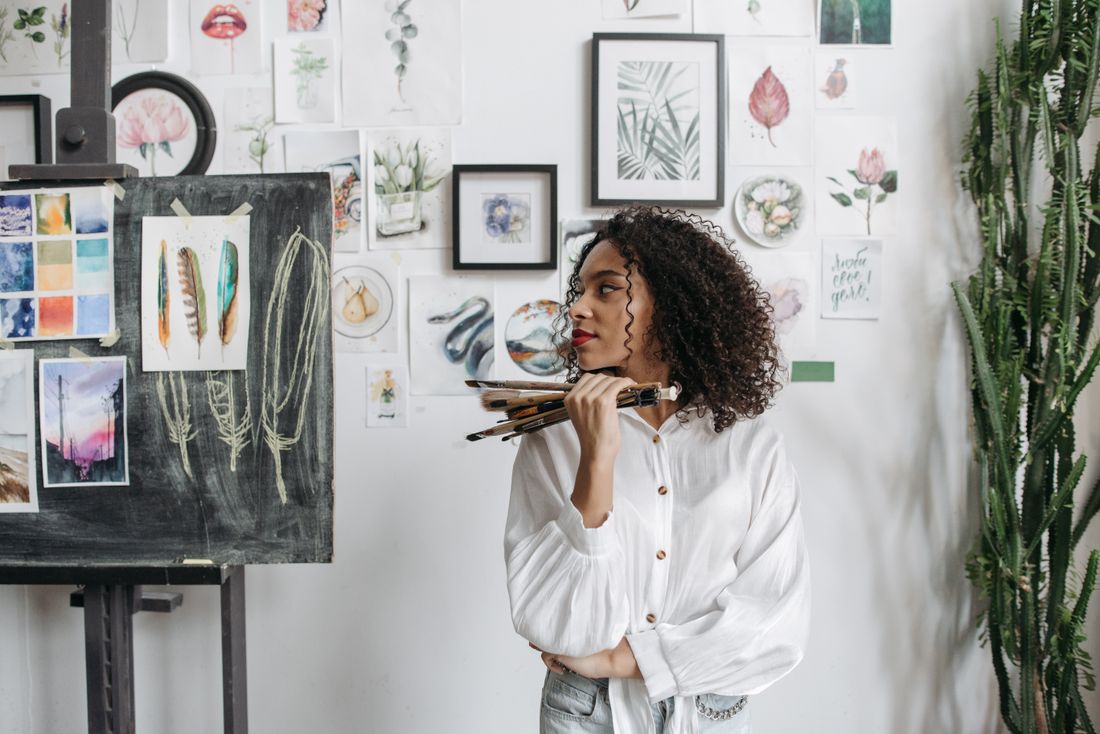
Plenty of artists build a whole practice around staying out of the frame, so it makes sense that being the subject instead of the maker feels wrong. Camera-shyness isn't a quirk to joke about or a wall to push through with cheerful direction. It's a real, common response that gets worse under the usual advice, and better under a session built to work around it instead of against it.
A camera-shy artist gets more comfortable through structure, not encouragement: a real task to focus on, shorter sessions with breaks, motion instead of stillness, early looks at real frames, a familiar room, and permission to skip the posed smile when an unguarded frame is more honest.
Why do so many artists dread being photographed?
Many artists spend years training themselves to disappear behind the work, so a camera pointed at them instead of at the canvas, the clay, or the finished piece asks for a skill they were never asked to build. The discomfort is not a personality flaw. It is a sign the instinct that makes their work good is still intact.
A painter learns to let the painting hold the attention. A sculptor learns to let the object fill the room. Neither discipline involves standing still while someone studies your face. So when a portrait session asks for direct eye contact and an easy smile, it is a genuinely different job, handed over with no rehearsal and no warm-up.
This is not ordinary nervousness, and it is not shyness in the everyday sense either. It is closer to a mismatch: someone used to standing behind the work is suddenly asked to become the work, in front of a stranger holding a camera. Once a photographer sees it this way, the whole session changes shape. The goal stops being "get the artist to relax" and becomes building a session that does not require relaxing the way people usually mean it.
Every idea in this guide follows from that shift. Giving someone a task, shortening the sitting, shooting mid-conversation, skipping the posed smile, none of it is a workaround for a problem. It is a way of working with what is actually true about how this person operates, which tends to produce a more honest picture anyway.
Why doesn't telling someone to "just relax" work?
Telling a camera-shy subject to relax or be themselves fails because it asks a self-conscious person to perform naturalness on command, which is a harder task than standing still, not an easier one. The instruction points a spotlight directly at the discomfort the person is already trying to manage, and now they have to manage it while appearing to have none at all.
Think about what "just relax" actually requires. The subject has to notice they are tense, correct it, hide the correction, and do all of that while a camera watches the attempt happen in real time. That is several tasks stacked on top of the original one, not a shortcut past it. The same problem shows up with "be yourself," which quietly asks someone to locate an unselfconscious version of themselves while fully conscious of being watched and photographed.
Direction that works does the opposite. It gives the mind something else to hold: a question to answer, an object to handle, a task with a beginning and an end. None of it mentions relaxing, and that is exactly why it works. A nervous system settles when it has somewhere else to put its attention, not when it is told to settle.
The photographer's job in this moment is not cheerleading. It is removing the instruction that creates the problem and replacing it with one that solves it sideways. A session built around tasks instead of commands to relax usually gets there faster, and the pictures look calmer because the person actually is.
What's the fastest way to put a reluctant subject at ease?
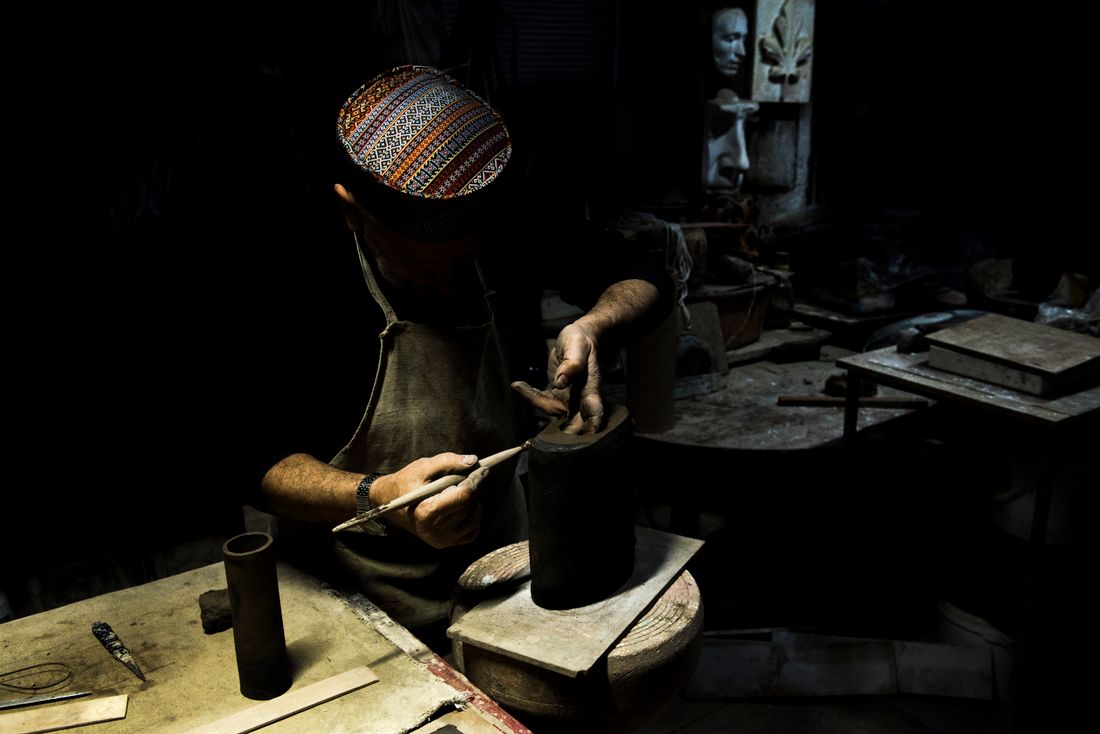
The fastest way to put a reluctant subject at ease is to give them something to do with their hands and attention besides posing: a tool from their studio, a mug, a sketchbook, or simply describing a piece of work. Once the camera is not the only thing in the room, the face relaxes, because it is no longer the point of focus for the person wearing it.
This works because self-consciousness needs a target, and an empty pose gives it a wide-open one. Standing with nothing to do but look natural leaves the mind with one job: monitor how the face looks. Hand someone an object, a task, or a question, and that monitoring job gets pushed aside by a real one. The photographer becomes a background presence instead of the main event.
In practice, the object does not need to be meaningful or symbolic. A cup of coffee works as well as a specific tool, as long as it gives the hands a place to be and the eyes a place to land besides the lens. Asking a question and photographing the answer works even better, because it borrows a habit most people already have: talking normally makes faces move normally.
The picture that comes out of this approach rarely looks staged, because nothing about the moment was staged for the camera. The task was real, the engagement was real, and the photograph is a record of that instead of a record of someone trying to look unbothered.
Should a portrait session be one long sitting or several short ones?
A camera-shy subject usually does better across several short sessions, or one session broken into stretches with real breaks, rather than one long sitting that demands sustained comfort the whole way through. Discomfort in front of a camera tends to build, not fade, the longer someone is asked to hold it, so a long unbroken sitting works against the goal instead of toward it.
The early minutes of any session carry the most tension, before the subject has gotten used to the room, the camera, and the person behind it. A short session can end right around when that tension usually starts easing, which means the whole session lives in the easier part of the curve. A long sitting keeps going past that point and often runs the subject back into fatigue, which reads on camera as strain rather than calm.
Breaks matter for the same reason. A pause to check a phone, step outside, or simply stop being looked at for a few minutes resets the nervous system in a way that continuing through discomfort never does. Photographers who build breaks into the plan usually get better frames right after each one, because the subject returns with less to manage, not more.
None of this means fewer usable images. Several short, well-timed stretches of shooting tend to produce more genuinely relaxed frames than one marathon sitting, because the subject spends more of the total time in the comfortable range and less of it gritting through the rest.
Why shoot in motion or mid-conversation instead of posed stillness?
Shooting a subject in motion or mid-conversation works better than asking for posed stillness, because movement gives the body something to do besides hold a position under observation, and stillness is exactly what makes a self-conscious person feel most watched. A subject walking across a studio, adjusting a piece, or mid-sentence is thinking about the action, not about how their face looks.
Posed stillness asks for two things at once: stay still, and look natural while doing it. Those instructions work against each other, because true stillness under scrutiny tends to look held rather than relaxed. Motion resolves the contradiction by removing the stay-still half entirely. The face still needs to be photographed well, but the body is not frozen while it happens, which changes the whole feel of the image.
Conversation works the same way. A subject answering a real question, describing a process, or reacting to something the photographer just said produces expressions that come from an actual thought rather than an instruction. The photographer's job shifts from directing a pose to noticing a moment, which is a different skill and usually a more forgiving one for everyone involved.
This approach asks more of the photographer, not less. It means shooting continuously through movement and conversation instead of setting up a single frame and waiting for a good expression to arrive on command. The payoff is a set of images that look like they happened, because they did.
Should a subject see photos during the session or wait until the end?
Letting a reluctant subject see a few frames early in the session, rather than promising they will see everything at the end, builds trust in a way that "you'll see them all later" never does. A camera-shy person is often anxious about how they look on camera specifically, and a quick look at the back of the camera answers that anxiety directly instead of asking them to sit with it for the rest of the shoot.
The logic behind withholding images until the end usually comes from a different context entirely: protecting a creative vision from second-guessing mid-shoot. That concern does not apply here. A nervous subject is not trying to art-direct the shoot. They are trying to find out whether the thing they are afraid of, looking bad, is actually happening. A few honest frames, shown early and without ceremony, usually settle that question fast.
In practice, this means pausing naturally a few minutes in, turning the camera around, and letting the subject see two or three real frames, not a curated highlight. The specific images matter less than the act of showing them. Once someone sees the camera is not catching something embarrassing, the rest of the session gets easier, because the biggest unknown in the room has been answered.
This costs very little time and prevents the alternative, where unspoken worry builds for the length of the whole shoot and shows up as tension in every later frame.
Why shoot in the artist's own space instead of a studio?
Shooting in an artist's own studio or workspace, rather than an unfamiliar rented studio, gives a reluctant subject one less unknown to manage, since they are already comfortable in that room in every way that has nothing to do with the camera. A rented studio adds a second layer of self-consciousness on top of the first: strange lighting, an unfamiliar layout, and the sense of being a guest in a space built for exactly this kind of scrutiny.
A working studio, by contrast, already holds the subject's habits, tools, and posture. They know where to stand, what to touch, and how the light usually falls at that hour, because they have spent real time in that room doing something other than being photographed. That familiarity carries into the session even when the subject is aware of the camera, because the environment is not asking anything new of them.
There is a practical upside too. A working space is full of the objects and tasks described earlier, worktables, tools, half-finished pieces, without needing to bring anything in or stage it. The environment does part of the job that a rented studio would otherwise need lighting and props to fake.
None of this rules out a studio session when a project genuinely calls for one. But for a subject already uneasy about being photographed, removing the unfamiliar-room variable is one of the simplest ways to lower the total amount of newness they have to manage at once.
When is a turned-away or unguarded shot better than a posed smile?
A photographer should not push for a smiling, direct-gaze frame when the subject's natural, unguarded state is a slight turn away from the lens or a more serious expression, because forcing the expected portrait pose over the person's honest expression usually produces a less usable image, not a more polished one. A posed smile that took visible effort to extract often reads as effort in the final frame, even when the technical execution is clean.
The instinct to chase a direct, smiling shot comes from a reasonable place: it is the default idea of what a portrait is supposed to look like. But default is not the same as best. A slightly turned head, a caught-mid-thought expression, or a serious, steady gaze can carry more of the subject's actual presence than a produced smile ever will, particularly for someone whose relationship with the camera was never going to be casual.
Knowing when to stop pushing takes attention, not a rule. If a subject's smile looks held rather than arrived at, or their eyes go a little flat under direct instruction, that is usually the moment to back off and let the unguarded version stand instead. The best frame from a session like this is sometimes the one taken while the subject thought the photographer was still adjusting a setting, not posing them.
The goal was never a specific expression. It was an honest one, and honest does not always come with a smile attached.
Frequently asked questions
Is it normal for artists to hate being photographed?
Yes, and it is common enough that it should not be treated as unusual. Many artists spend years training themselves to stay behind the work rather than in front of it, so a portrait session asks for a skill their practice never required. The discomfort is not a flaw to correct. It is a predictable result of doing creative work that is not built around being looked at, and a session can be planned around it instead of against it.
What if a subject still looks stiff no matter what we try?
Stiffness usually means the session is asking for something directly, a smile, a pose, eye contact, rather than working around it. Switching to a task, a question, or movement mid-conversation often loosens things faster than repeating the same direction. A short break resets the moment better than pushing through it, and a slightly turned, unguarded frame can end up the more honest result anyway, worth keeping instead of forcing a direct shot.
How long should a portrait session be for a camera-shy artist?
Shorter than a standard sitting, and broken into stretches with real breaks rather than one continuous block. Discomfort tends to build the longer someone holds a pose under observation, so a session that ends before fatigue sets in usually produces more usable, relaxed frames than a longer one pushed to the end. The exact length depends on the person, but planning breaks in from the start works better than adding them only once the subject seems to need one.
Should we tell an artist beforehand that we know they are camera-shy?
Yes, briefly and without turning it into a bigger topic than it needs to be. Naming it plainly, something like acknowledging that being photographed is not everyone's favorite part of the process, tends to lower pressure rather than raise it, because the subject no longer has to hide the discomfort on top of managing it. What does not help is dwelling on it, offering repeated reassurance, or treating it as a problem to solve before the session can start.
Can a portrait still look professional if the subject will not smile or look directly at the camera?
Yes. A professional portrait needs to look confident and intentional, not necessarily smiling or facing the lens directly. A serious expression, a slight turn of the head, or a gaze aimed just past the camera can look more deliberate, and more like the actual person, than a produced smile does. What makes a portrait read as professional is sharp technical execution paired with a genuine expression, not one specific pose.
Let's find out which one you actually need.
We shoot both refresh sessions and full new concepts, and we'll tell you honestly which one your portrait needs before we book anything, not after.
Explore portrait sessions →