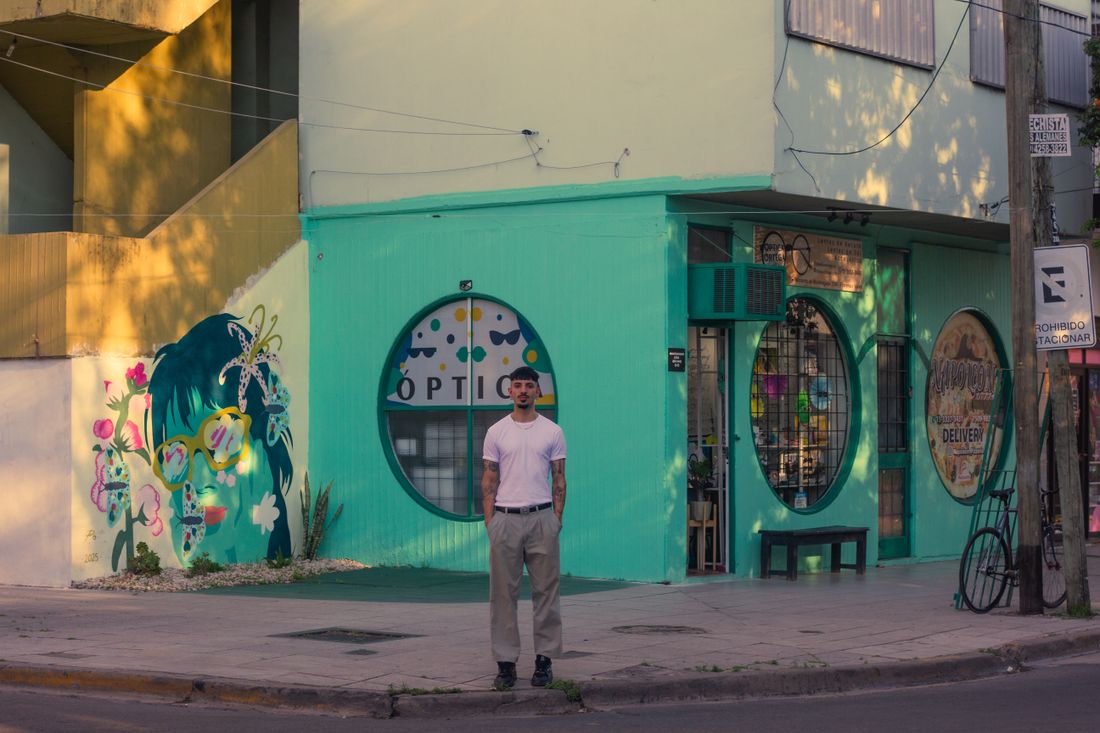
The moment a portrait moves outside the studio door, the background stops being neutral. A plain backdrop says nothing about where an artist works or who they are; a specific street, storefront, or block says a lot, whether or not it's actually true. This piece is about telling the difference: when the neighborhood outside genuinely belongs in an artist's portrait, and when it's just a good-looking wall standing in for a story that isn't there.
Moving a portrait outside the studio changes what the image claims about the artist, so it should only happen when the location genuinely reflects the artist's practice, materials, or scene. If the same photo could be taken on any block with no real difference to the story, the location is decoration, not evidence of who the artist actually is.
When does the neighborhood actually belong in an environmental portrait?
An environmental portrait earns its setting when the location explains something about the person that a plain background can't — where they work, what they make, or the specific place their practice depends on. If the backdrop could be swapped for any street and nothing about the read changes, it isn't doing that job yet.
The clearest case is an artist whose practice is tied to one place. A muralist who has worked the same few blocks for years, a photographer who only shoots her own neighborhood, a sculptor who sources scrap metal from a yard two blocks from the studio. Here the street isn't scenery — it's where the work actually happens, and leaving it out would cut a real part of the story the portrait is supposed to tell.
A second case is work built for a specific site: a mural, an installation, or a public sculpture made to sit inside one location. Photographing the artist without the surrounding block strips the piece of the relationship it was made to have with its site, and the viewer loses the connection between the work and where it actually lives.
The third is an artist already associated with a particular scene — a gallery row, a stretch of a borough, a building tied to their name. In this case the neighborhood works almost like a signature. People who already know the artist's world will recognize it, and that recognition does something a plain wall never could.
When is a recognizable street just decoration instead of part of the story?
A location is decoration when it's chosen for how it looks rather than what it means — a colorful wall, a pretty stoop, graffiti with no real connection to the artist's work. The test is simple: if nothing about the caption or the artist's practice would need to change had the shoot happened three blocks over, the block is scenery, not substance.
This shows up most often when a portrait borrows a neighborhood's visual reputation without any real tie to it. A painter with no connection to a particular arts district gets shot in front of its most photogenic mural because it reads well online, not because the location says anything true about the work. The picture looks specific. The claim underneath it is generic.
Decoration isn't automatically wrong to use — a genuinely striking wall can still make a strong portrait. The problem is presenting it as meaningful when it isn't. If a caption or bio implies the artist belongs to a scene they only visited for an afternoon, that's a credibility risk the artist carries long after the post goes up, not just an aesthetic choice made on shoot day.
The fix is honesty about what the background is doing. A striking backdrop chosen purely for color and texture is a fine, ordinary decision — treat it as one. Save the language of belonging, of practice, of a scene, for the portraits where the location has actually earned that claim.
What makes an artist's practice genuinely site-responsive?
A practice is site-responsive when the work itself depends on a specific place — the materials, the light, the community, or the physical structure of a location shape what gets made, not just where it happens to be photographed. If the artist could do identical work anywhere, the practice isn't site-responsive, even if the artist has a favorite street to shoot on.
Public artists are the most literal example: muralists, sculptors working with a specific building, artists whose commissions respond to a particular block's history or architecture. Their portraits belong near the work because the work and the site are the same story, not two separate ones stitched together for a photo.
Less obvious cases still count. A textile artist who sources fabric from a specific market, a painter whose palette responds to the light in one particular part of the city, a photographer who has spent years documenting a single neighborhood — all of these have a real, provable tie between practice and place, even without a commissioned mural on a wall.
The test that separates this from decoration: could the artist explain, in one sentence, why this location and not another? If the answer is about the work itself — the materials, the commission, the years spent there — it's site-responsive. If the answer is about how the wall photographs, it's a backdrop, and the portrait should treat it like one rather than dressing it up as part of the practice.
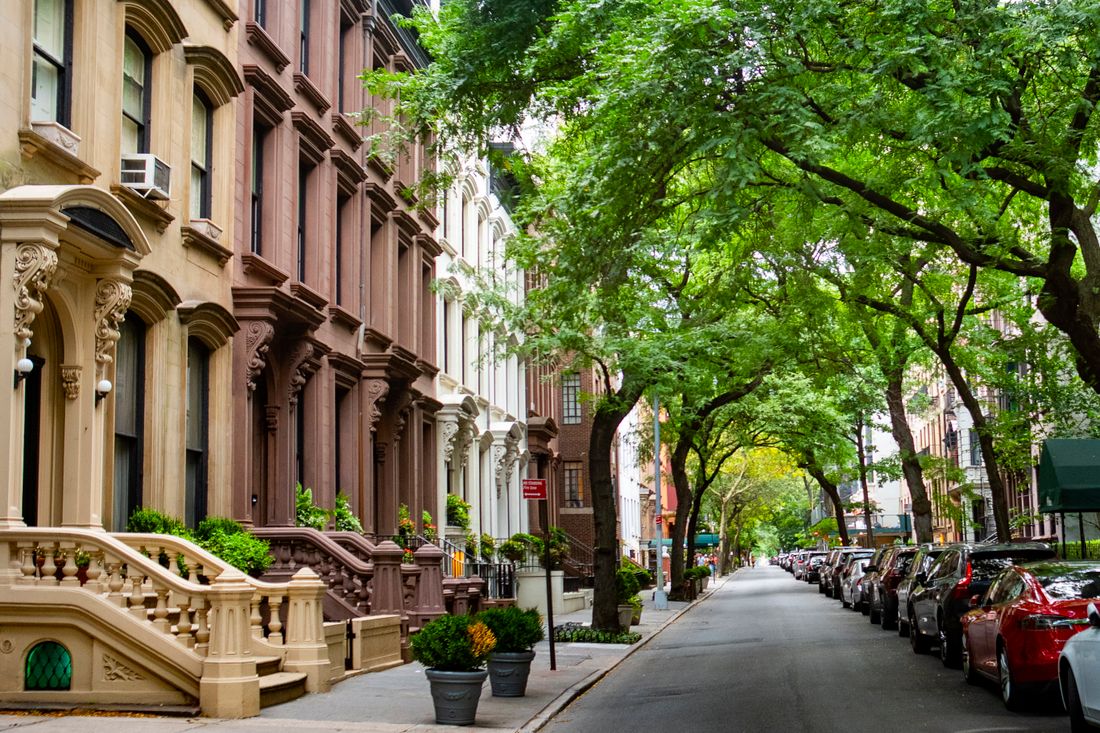
What changes when you actually shoot a portrait on an NYC street?
Shooting on an NYC street means working around real foot traffic, changing light between buildings, and a location that won't hold still for a reshoot. The block that looked perfect during a location scout on a quiet weekday morning can be a louder, busier place entirely by the time the actual shoot happens.
Light is the biggest variable. Between buildings, direct sun can disappear and reappear within a few feet, and shadows move faster outdoors than they do in an open lot or a controlled room. A spot that looks evenly lit at ten in the morning can go patchy by noon. Scouting at the actual time of day the shoot will run matters more outdoors than almost anywhere else.
Foot traffic and street noise are the other constant. Sidewalks don't clear on request, delivery trucks double-park where the light was best, and a scaffold can appear between the scout and the shoot day. Building in slack time, having a backup spot within a block or two, and shooting in short bursts between gaps in traffic all become part of the plan rather than an afterthought.
None of this means the street is unworkable — it means it needs a different kind of preparation than a controlled space does. A shot list built around a fixed studio rarely survives contact with an actual sidewalk; a shot list built around a range of angles and a real backup plan usually does.
How can a recognizable backdrop date a portrait?
A recognizable backdrop dates a portrait when the street itself changes — a storefront closes, a mural gets painted over, a construction scaffold goes up and stays — and the photo starts announcing an old moment in time rather than describing the artist today. The more specific and identifiable the location, the faster this can happen.
NYC blocks change quickly. A gallery that anchored a portrait's backdrop can relocate. A beloved mural gets buffed ahead of a new building permit. A stretch of storefronts that read as a specific, thriving scene two years ago can look completely different now. Unlike a plain wall or an interior set, a real street carries its own timeline, and that timeline keeps moving whether the portrait does or not.
This is different from ordinary portrait aging, where the person simply looks older. A street backdrop can date a portrait even when the artist hasn't changed at all, purely because the block behind them has. Viewers who know the neighborhood will notice before anyone comments on the artist's appearance.
The safeguard is choosing locations tied to something more durable than a single storefront — the general character of a block rather than one specific sign or mural, or a location the artist expects to have a long relationship with. It won't make a location immune to change, but it lowers the odds that one renovation ages the whole portrait overnight.
What permissions and passersby considerations come with shooting on a public street?
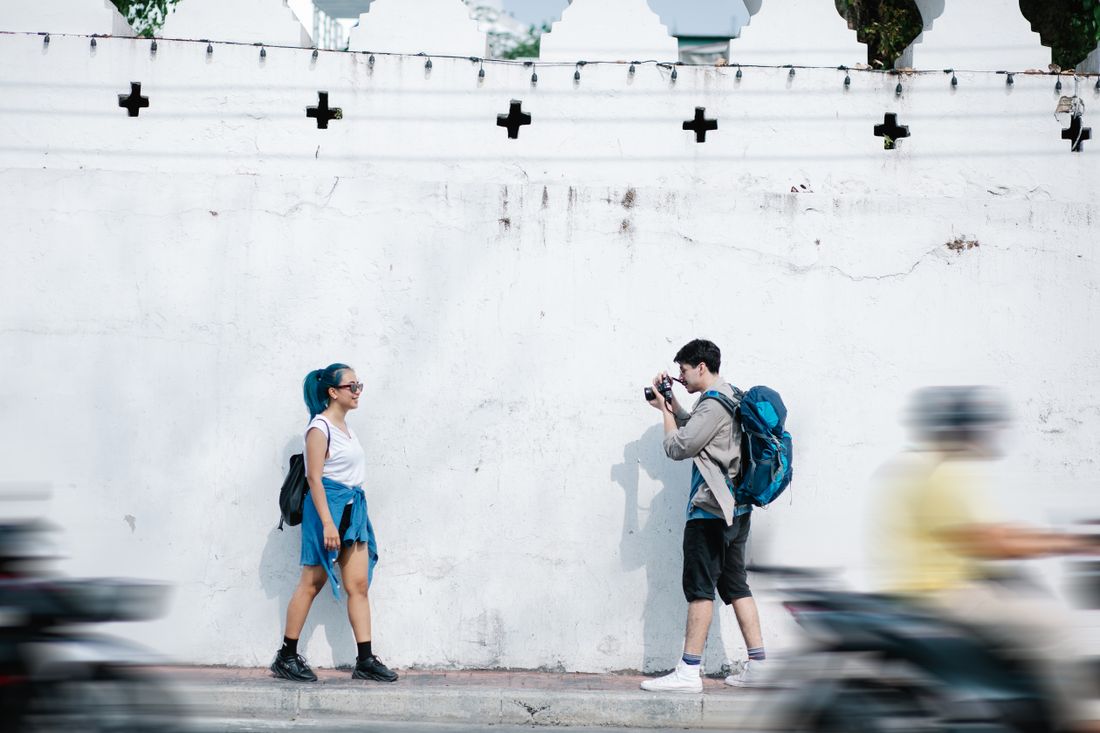
On a public sidewalk, a simple portrait with a handheld camera usually doesn't need special permission. Add lighting stands, a larger crew, or any blocking of pedestrian flow, and the situation changes — bigger setups often require a location permit, and shooting on private property or building steps always needs the owner's okay first.
The practical line is usually about footprint and impact, not the camera itself. A photographer and a subject standing on a corner rarely draws attention. A stand, a reflector, and three people rearranging foot traffic reads differently to a building super or a passing officer, even when the subject and the intent haven't changed at all.
Passersby are the other constant. On a busy NYC block, people will walk through frame, stop to watch, or occasionally ask what's happening. Planning for this — shooting in short bursts between gaps, having a second person manage the immediate space, briefing the artist that a few takes will get interrupted — keeps the shoot calmer than treating every passerby as a problem to solve on the spot.
None of this replaces checking current local rules for a specific block or building, which vary and change over time. The habit that holds up regardless: know before the shoot day whether the plan needs a permit, get a private property owner's permission in advance rather than on arrival, and treat the sidewalk as shared space for as long as you're using it.
How do you match the location to how the artist wants to be read?
Matching location to intent starts with asking what the artist wants the portrait to say before picking a street: established or emerging, rooted in one scene or open to many, quiet and serious or embedded in a busy creative neighborhood. The location should support that specific answer, not just look good on its own.
An artist trying to signal roots in a specific community benefits from a location genuinely tied to that community, even a modest one, if it's real. An artist trying to signal range or ambition beyond one scene might be better served by a more neutral or unexpected setting, so the portrait doesn't box them into a single geography they're actively trying to move past. The wrong backdrop can quietly work against the exact reputation the artist is trying to build.
This decision should happen before scouting, not after. Scouting first and asking what the location says second tends to produce portraits chosen for how a street photographs rather than what it actually communicates about the artist, which is exactly the decoration problem covered earlier in this piece. Deciding the message first keeps the search for a location honest.
A useful check before booking a location: describe out loud what a stranger should assume about the artist from the setting alone. If the answer matches the location under consideration, it's the right call. If the honest answer is that it just looks good, that's useful information too — it belongs in the decoration category, not the identity one, and the portrait should be planned accordingly.
How do you decide between the studio and the block outside?
Choose the studio when the goal is control — consistent light, a clean background, and a portrait that reads the same regardless of season or street conditions. Choose the neighborhood when the location itself is part of the true story: the practice, the scene, or the specific place the work genuinely depends on.
Studio portraits age more predictably because the background never changes and never announces a specific year. They're the safer default when the artist doesn't have a strong, honest tie to a particular place, or when the portrait needs to work across many contexts — a press kit, a gallery submission, a book jacket — where a very specific street might read as distracting rather than informative.
Location portraits carry more risk and more payoff. They can say something a studio background never could, but they also introduce weather, foot traffic, permissions, and the slow drift of a neighborhood changing underneath the photo. That tradeoff is worth taking exactly when the location is doing real narrative work, and not worth it when it's there for atmosphere alone.
The decision doesn't have to be permanent or singular. Some artists are well served by both: the studio for polished, portable images, and a neighborhood portrait for a specific project, feature, or moment where place genuinely matters. What matters most is making the choice on purpose, for a real reason, rather than defaulting to whichever option feels more photogenic that week.
Frequently asked questions
Do I need a permit to shoot a portrait on an NYC sidewalk?
A simple, small portrait setup on a public sidewalk usually doesn't require a permit, but that changes once lighting stands, a larger crew, or any blocking of pedestrian flow enter the picture. Those bigger setups often do need one, and shooting on private property or steps always needs the owner's permission first. Rules vary by location and can change, so it's worth confirming current requirements for the specific block before the shoot day rather than assuming.
What's the difference between an environmental portrait and a lifestyle photo?
An environmental portrait uses a real, specific location because that location explains something true about the subject: their practice, their materials, or a scene they're genuinely part of. A lifestyle photo borrows a setting mainly for mood and visual appeal, without claiming a real connection between the person and the place. Both can look similar; the difference is whether the location is doing narrative work or just decorative work.
Can a portrait shot on a public street still look professional?
Yes, professionalism on a street shoot comes from preparation, not the setting itself. Scouting light at the actual shoot time, having a backup location, working in short bursts between foot traffic, and using minimal, mobile gear all produce clean, deliberate images. The difference between a professional street portrait and an amateur one is almost never the location; it's how much planning went into using it well.
How should a shoot handle passersby during an outdoor portrait?
Plan around them rather than trying to eliminate them. Shoot in short bursts between gaps in foot traffic, have a second person manage the immediate space and equipment, and let the artist know some takes will get interrupted so it doesn't throw off the session. Most passersby move on quickly once they see what's happening, and the calmer the crew acts, the faster that tends to happen.
Should an artist's neighborhood always show up in their portrait?
No, only when the location genuinely explains something about the artist's practice or scene. A neighborhood tied to years of work, a specific commission, or a real community the artist belongs to earns its place in the frame. A neighborhood chosen because it photographs well, with no real connection to the artist, is better treated as a nice backdrop rather than a meaningful setting, and labeled that way rather than dressed up as identity.
Let's find out which one you actually need.
We shoot both refresh sessions and full new concepts, and we'll tell you honestly which one your portrait needs before we book anything, not after.
Explore portrait sessions →