
A small room does not stop a useful photo or video shoot. It changes the order of decisions. A walk-up studio, a shared gallery building, or an apartment-sized space asks the same questions before anyone unpacks a case: how far back the camera can get, what the ceiling does to the light, and whether the freight elevator is even free that day.
This guide separates the practical decisions so you can see what actually changes, what can be planned, and what is simply part of working with real images in real places. For related production support, explore our creative portraits.
Small spaces reward early choices
Photography in a small NYC space works when the team decides what matters before filling the room with equipment. The subject, background, light direction, camera position, and final frame should lead. Gear follows those choices, not the other way around.
The room may be a working studio, apartment, walk-up gallery, shared building with other artists down the hall, office, or borrowed corner with one good wall. None of that automatically makes the location unsuitable. It means the shoot needs a clear visual priority before the first light stand goes up.
Start by identifying the strongest angle and the minimum space required for the frame. Then protect the path between subject, camera, and light. Everything else, the cases, the coats, the extra chairs, can be moved, staged outside the room, or introduced only when needed.
This guide separates the decisions that a small NYC space actually changes, camera distance, ceiling height, access, sound, and timing, from the ones that stay the same wherever the shoot happens. Reading it before booking a walk-up studio or a shared building tends to save the first ten minutes on site, which in a tight room is time that matters.
A quick location scout does real work
Photos, a short video walkthrough, or an in-person scout can reveal ceiling height, window direction, wall color, power access, mirrors, noise, and the actual distance available for the camera. Wide phone photos are useful, but a slow view from each corner tells us more than one flattering wide shot.
Measure the working wall and the distance across from it when a specific setup matters, especially for a large piece that needs to be shot straight on. Note door swings, hallways, stairs, and whether the building has a freight elevator or only a walk-up stairwell. In many NYC buildings, getting equipment into the room is its own short film with its own conflict, and freight elevators usually need to be booked with the building in advance rather than assumed available on arrival.
If a piece hangs high or a wall needs to be reached near the ceiling, ask ahead whether a ladder fits in the room or whether a compact lift is even possible given the doorway. The scout also reveals what should remain. Tools, artwork, and ordinary objects can make the image specific. The goal is not always to clear the room. It is to choose what the room says.
Lens choice changes how the room feels
A wider lens includes more space but can stretch faces and objects near the edges. A longer lens gives flattering compression but needs more distance between the camera and subject. Small rooms make this tradeoff visible fast, especially when the piece being photographed is bigger than the room is deep.
For a large painting or panel, the honest question is how far back the camera can physically get. If the wall-to-camera distance is too short to fill the frame straight on, the options are a wider lens with corrected distortion in post, a slight angle with the same correction, or shooting the piece in overlapping sections and stitching them. None of these is a failure, but the plan should be made before the shutter clicks, not discovered afterward on a monitor.
For portraits, the camera may need to move into a doorway or hallway to create a comfortable perspective. The final placement matters too. A website banner may need horizontal breathing room. A vertical social frame may work in a narrow corner. Planning both formats can turn one small room into several useful compositions instead of asking one frame to survive every crop.
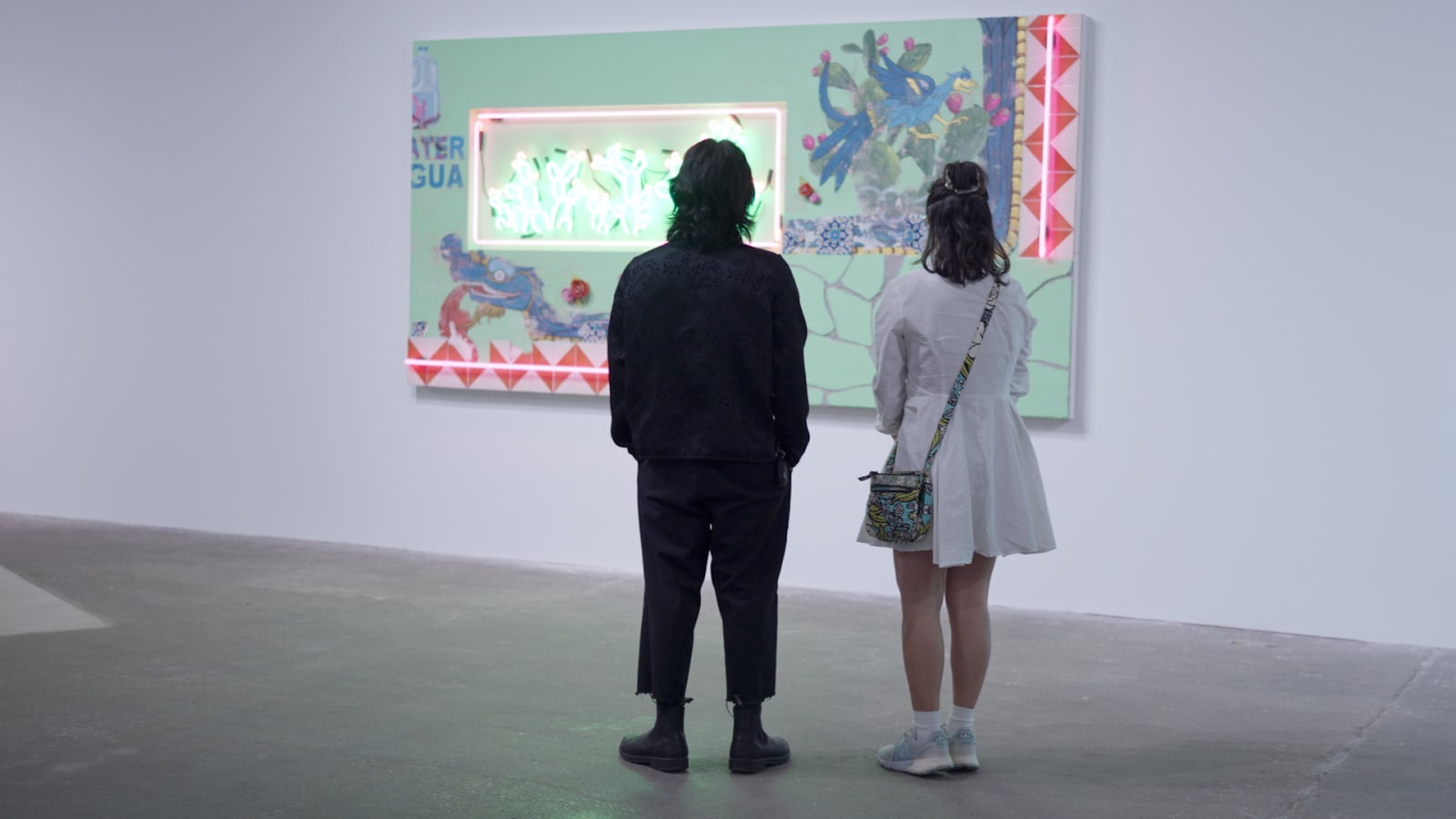
Use light that fits the room, including a low one
Large light sources create soft, flattering light, but their physical footprint matters. A low ceiling makes this worse before it makes it better: there is less room to bounce a light up and off the ceiling, less distance for a softbox to spread evenly, and a shorter throw before the light falls off hard toward the edges of the frame.
In a tight, low room, bouncing light from a wall, using a compact source with diffusion, or shaping window light usually beats trying to build a full stand forest under a ceiling that will not cooperate. Wall color affects bounced light too. A warm wall can warm skin and products. A saturated wall can tint shadows. Mirrors and glossy surfaces may reflect lights, crew, and the camera itself, which becomes its own small negotiation in a small room.
Keep stands stable and paths clear. Sandbags, taped cables, and compact rigging are not aesthetic details until someone needs to cross the room. Safety and comfort help the subject relax, which tends to improve the picture more reliably than one extra light does.
The background needs editing, not emptiness
Small rooms put the background close to the subject. Every object becomes sharper, larger, and more present. Choose a few elements that explain the person, the artwork, or the business, then simplify whatever competes with them.
This matters most when the space is actively in use and cannot be cleared: a working studio mid-project, a gallery back room between shows, a shared building where other artists still have work leaning against the same wall. Moving a chair, rotating a table, grouping materials, turning labels away, or shifting the subject six inches so a plant stops growing directly from their head does more work than an empty room ever would.
Depth can still be created. Shoot through a doorway, use foreground objects, place the subject at an angle to the wall, or let the room continue behind them. The goal is not to make the space look enormous. It is to keep the image from feeling visually pinned to one surface, whatever else is still sitting in the frame.
A short conversation before the shoot about what has to stay versus what can move usually settles this faster than trying to solve it on arrival. Whoever runs the space knows which materials cannot be relocated for practical or safety reasons, and building that list in advance turns a cluttered room into a background decision instead of a last-minute scramble.
Crew size affects the picture
Every person and case consumes working space. A compact team often moves faster in a small location because communication is direct and equipment stays controlled. The right size depends on the production, not on a general belief that smaller is always more noble.
A stylist, producer, sound recordist, or assistant may still be essential. Plan where each person works and where they wait. A nearby room, hallway, lobby, or a scheduled call time can keep the main set usable. Some formats are built around one camera moving through the space rather than a full crew standing in it, and that single-operator approach is often the more honest fit for a genuinely small room.
Client monitors and tethered laptops also need a home. When everyone gathers behind the camera, the subject can feel like they are addressing a small committee in a coat closet. A clear viewing station keeps feedback useful without crowding the performance.
Deciding crew size before the day, not after arriving, keeps the room usable. A team that shows up ready to trim its own footprint, wait in a hallway, or share a monitor moves through a small space far faster than a larger team that has to negotiate that on the spot.

Video makes the room audible
A room that looks quiet may contain traffic, radiators, refrigerators, ventilation, and a neighbor's conversation coming straight through the wall. In a shared building, sound crosses between units more than light does, and a unit that looks isolated on the scout photos may not be isolated at all once someone starts talking down the hall. Video planning should include a listening scout, not just a visual one.
Turn off controllable noise when safe. Close windows if traffic is stronger than the room tone. Move the interview away from a loud appliance. Place the microphone close to the speaker. Record room tone for the edit, ideally at the start of the visit before anyone else in the building gets busier.
Hard walls and low ceilings can create reflections. Soft furniture, rugs, curtains, and microphone placement can help. The goal is not a recording studio. It is a voice that feels close and clear enough to belong with the image.
Ask ahead whether the room shares a wall with anything predictable, a kitchen, an elevator shaft, a stairwell landing, so the schedule can work around the loudest stretch instead of fighting it in the edit. A five-minute pause is cheaper than trying to remove a refrigerator hum after the fact.
Access time and cost both change with the room
Tight access windows change what can be built. If a business is open, a studio is active, or a building requires weekday daytime access only, the team may need to load in, stage, photograph, and clear the room in a precise order. A walk-up with a narrow stairwell adds real minutes to that order before a single frame is shot, and a freight elevator that has to be booked with the building can decide the whole start time.
None of this changes the price by size alone. Within Manhattan, there is no separate travel fee for a small space versus a large one, and a small room does not carry its own surcharge. What does apply is the same NYC documentation booking minimum that applies to any visit, so a shoot with only one or two pieces in a tight studio still clears that floor the same way a bigger session would. Standard turnaround stays the same regardless of room size, and rush delivery is priced the same flat add whether the space was generous or a genuine squeeze.
Prepare the first setup before arrival. Know which furniture moves, where equipment lands, and which shots are essential. Capture the hardest or least repeatable moment first when the room will become busier later, and allow time at the end to restore the space to how it was found.
Let the space tell the truth
A small NYC space can give the work intimacy, specificity, and a clear sense of place. A portrait in a real studio may say more than a plain rented backdrop. A founder in the actual room can feel more believable than a generic location. A narrow gallery can show the relationship between people and art with unusual closeness.
The aim is not to disguise every limitation. It is to turn constraints into decisions. One strong angle, controlled light, an edited background, a comfortable subject, and a crew that fits can produce a complete visual story.
For documentation specifically, floor space is the one thing that is hard to fake: a horizontal copy setup wants roughly eight by eight feet at minimum, ten by ten if the room allows it, and glazed or framed work in a tight room usually needs the same anti-reflective lighting rig it would need anywhere else. Knowing that number before the visit, rather than discovering it on arrival, is what keeps a small-space booking from turning into a second trip.
Small rooms make vague plans uncomfortable very quickly. That is useful. They ask the production to decide what the image is about. Once that answer is clear, the square footage becomes a fact instead of the plot.
Build the shot plan around resets
In a large location, several setups can sometimes stay built at once. In a small room, each new frame may require the previous one to disappear. Plan the sequence so furniture, lights, wardrobe, and people move as little as possible.
Start with the widest clean view before cases and crew spread into the background. Capture anything that depends on a tidy room or exact natural light. Then move into medium portraits, details, process, and tighter frames that can hide more of the active production.
If the shoot includes photo and video, group moments that share lighting and action. Record the interview while the room is quiet. Photograph the same setup before changing wardrobe or background. Capture room tone and visual details before a coworker, delivery, or the building's own foot traffic changes the local ecosystem.
A simple order of operations saves more time than rushing individual shots. Small-space production feels calm when the sequence is clear, even if the equipment staging area is technically one chair pushed against the door.
The reset plan should live on paper, not just in someone's head. A short shot list with the order of setups written down means anyone on the team can see what moves next, which matters most in a small room where there is no space to improvise a new plan mid-shoot.
Frequently asked questions
Can professional portraits be made in a small apartment or office?
Yes. The team needs enough distance for a comfortable perspective, a workable background, and safe light placement. Doorways, hallways, window light, compact lighting, and careful furniture moves can create several useful frames without making the room look falsely large. The limiting factor is almost always camera distance, not the square footage itself, so a narrow apartment with one long sightline often outperforms a wider room with no clean angle at all.
What photos should I send before a small-space shoot?
Send wide photos or a slow video from each corner, plus the windows, ceiling, working wall, doorways, and power access. Mention stairs versus a freight elevator, whether the building has a fixed access window, noise, mirrors, and anything that genuinely cannot be moved. That short list settles most of the planning before anyone arrives, and it usually takes less time to put together than the walkthrough itself would.
Does a small room require a wide-angle lens, or can the camera just get closer?
Not always. A wide lens shows more space but can distort faces and objects near the edges. When a large piece will not fit the frame at the available distance, the camera can move into a doorway, the lens can change, or the piece can be shot in sections and joined in post rather than forcing one wide, distorted frame. The right call depends on the room and the piece, not on a rule that says small spaces always need a wider lens.
How can video sound better in a small NYC space?
Place the microphone close to the speaker, listen for traffic and building noise before rolling, and turn off controllable appliances when safe. In a shared building, sound often crosses walls more than light does, so a listening scout matters as much as a visual one. Record room tone and plan around predictable noise when possible, including a short pause during the loudest stretch of the day if the building has one.
Does shooting in a small NYC space cost more?
Not because of the size. Within Manhattan there is no separate travel fee for a small space, and the same NYC documentation booking minimum applies regardless of room size, so a tight studio with only a piece or two still clears that floor like any other visit. What can add cost is a genuine access problem, like a freight elevator that adds real load-in time.
Let's find out which one you actually need.
We shoot both refresh sessions and full new concepts, and we'll tell you honestly which one your portrait needs before we book anything, not after.
Explore portrait sessions →