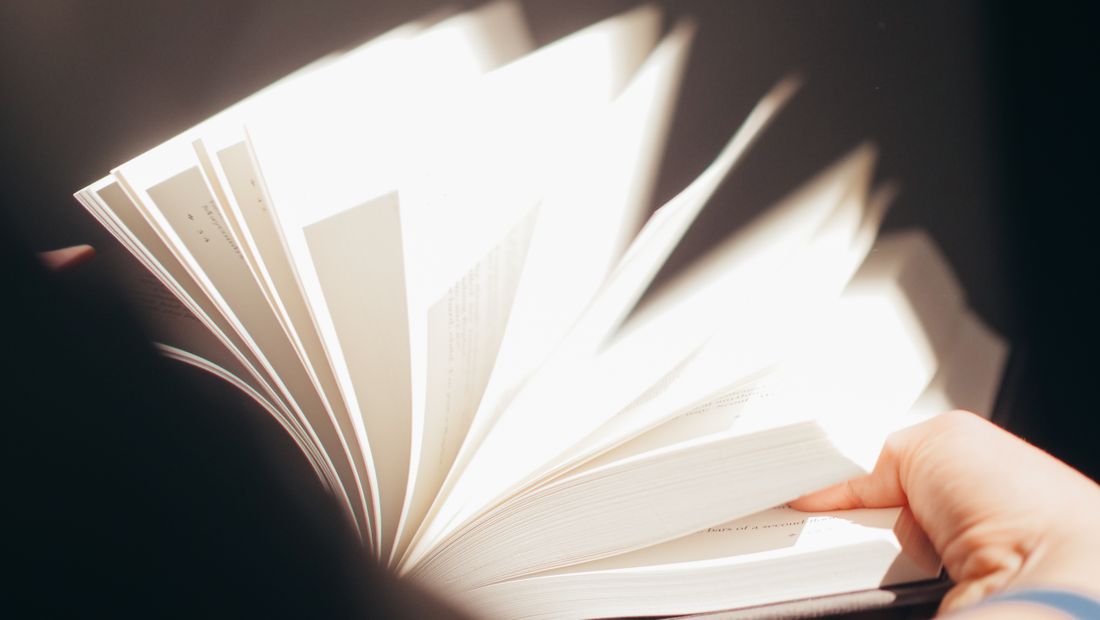
A painting has one face. An artist book has a cover, a spine, an edge, and dozens of spreads that only make sense in order, plus however many identical copies came off the same print run. A flat shot of one page proves nothing about the object as a whole. The real subject is the sequence, the binding, and the fact that this copy is one of many, not a single frame that happens to look good.
A book or zine needs its own shot list: the object closed, the spine, an angled view for thickness, spreads in reading order, and close details of paper and print method that prove the edition. Settle whether the record needs to prove the object, the sequence, or a few spreads before shooting anything.
What needs to be decided before you photograph an artist book or zine?
A painting has one face to record; a book is a sequence, an edition, and an object with weight and behavior all at once. Before the first frame, decide whether the record needs to prove the object itself, the full sequence, or a handful of representative spreads. That choice sets the shot count and the pace of the session.
A painting gets photographed once, and the file settles the question of what exists. A book doesn't work that way. Its identity lives across a cover, a spine, and however many spreads it holds, and no single frame stands in for the rest. Whoever is asking for the shoot, an artist, a small press, a gallery, or a grant panel, usually wants one of three things: proof that a specific object exists and holds together as a physical whole, a readable path through its pages in order, or a smaller set of spreads chosen because they carry the argument of the book on their own.
Skipping this conversation is the most common reason a session runs long or needs a second visit. A shoot planned around "a few nice pictures of the book" tends to produce neither a usable sequence nor a convincing single-object shot, just a pile of similar frames that don't answer any one question well. Settling the purpose first, a few minutes before the object comes out of its sleeve, decides whether the session needs fifteen frames or eighty, and whether pages get turned end to end or only at the spreads worth showing.
What shot set makes a book read as a book instead of a stack of page scans?
A shot set that reads as a book, not a stack of page scans, pairs object shots with sequence shots: the closed cover, the spine, a three-quarter angle showing thickness and edges, then spreads photographed in reading order with enough consistency between frames that a viewer can feel the pages turning. Isolated flat spreads alone lose that.
Page scans and single flat spreads tell a viewer what the content says, but they don't tell anyone what the object is. A stack of identical straight-on crops, however clean, reads as a document dump rather than a book, because nothing in the set shows how the pages relate to each other or to the cover holding them together. A shot set built around the object fixes that. Open with the closed book, front cover square to the camera, then the spine on its own, then an angled view that shows page count and thickness at a glance, the kind of shot a hand naturally reaches for on a shelf.
From there, spreads follow in the order a reader would actually encounter them, framed consistently enough that the set reads as one continuous pass through the book rather than several separate sessions. A closing shot, the book held slightly open or resting closed again, gives the set a natural end point the way the object itself has one. None of this requires every page. It requires the handful of shots that, seen together, let someone who has never held the book understand what kind of object it is.
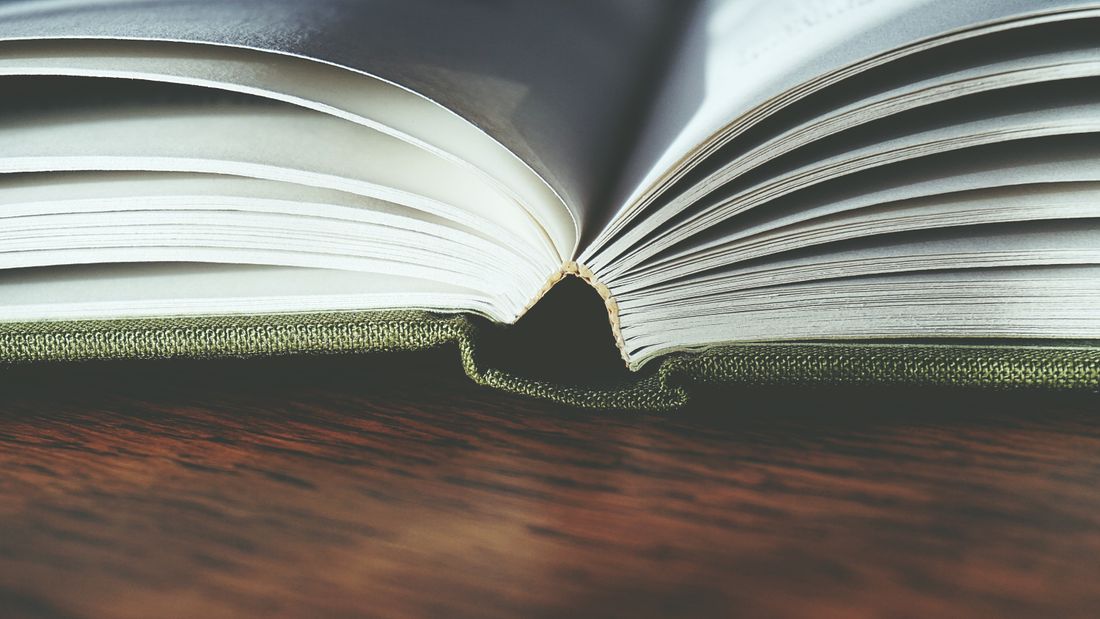
How do you handle the gutter and pages that won't lie flat without damaging the binding?
The gutter, the shadowed curve where facing pages meet at the spine, and pages that won't lie flat get handled with support, not force. Book weights, foam wedges, or a hand holding the spread open keep pages readable without cracking a binding, while the camera compensates for the curve rather than pressing the book flatter than it wants to go.
A bound book resists lying perfectly flat by design, and that resistance is often part of the binding method, saddle-stitched staples, a sewn spine, a glued perfect bind, each with its own tolerance for how far it opens before something strains. Forcing a book flat against that resistance is how spines crack and pages tear at the fold, and it's the fastest way to damage the one copy in the room. The safer approach supports the spread at the angle it wants to sit at, using padded weights at the outer edges rather than across the gutter itself, or a hand holding the pages open just enough to read.
The gutter shadow that results, a soft dark curve where the pages dip toward the spine, isn't a flaw to fight with more light. It's honest evidence of a physical object, and erasing it with aggressive flattening usually costs more than it's worth. Angling the camera slightly, rather than the book, often reads the page more evenly without added pressure. When a spread won't hold open on its own, a second pair of hands steadying the covers beats any clamp improvised for the job.
How do you photograph a book so it reads as one of an edition, not a singular object?
Capturing edition-ness, that a book is one of many identical copies, means photographing what proves the copies match: the paper stock, the print method's visible texture, and any hand-finished element like stitching, stamping, or a numbered colophon. A single hero shot of one copy alone can't carry that proof; a small set built around those details can.
A painting is inherently singular, so documenting it never has to argue that other copies exist somewhere. An artist book or zine usually does have other copies, sometimes dozens, sometimes a few hundred, and the photography can either acknowledge that or accidentally suggest the object is one of a kind. Acknowledging it means including a close frame of the paper's surface and edge, since paper stock is one of the clearest tells of a print run. A close frame of the print method itself, riso grain, offset dot pattern, screen-printed texture, or a hand-stamped mark, does similar work.
Hand-finished elements deserve their own frame rather than getting folded into a wider shot. A hand-numbered colophon, a stitched binding thread, a fold-out that was scored by hand, all of these are exactly the details a fair table, a shop listing, or a grant reviewer wants confirmed, because they answer a question a general cover shot can't: what is consistent across every copy, and what, if anything, varies copy to copy. Photographing those details once, clearly, does more for an edition's credibility than photographing the whole book several more times.
How do you establish scale for a book or zine in a photograph?
Establishing scale means photographing the book against something a viewer already knows the size of, most often a hand holding it open or closed, or the book resting on a plain surface with enough surrounding space to judge its footprint. Without a scale reference, a pocket-sized zine and an oversized artist book can look identical in a photograph.
A painting's dimensions usually get listed alongside its image, and viewers rarely need a visual cue to picture the actual size. A book photographed in isolation, cropped tight against a neutral background, loses that context entirely, and a small saddle-stitched zine can end up looking like a substantial hardbound volume purely because nothing in the frame contradicts that impression. A hand holding the object solves this cleanly and reads as natural rather than staged, as long as the hand isn't covering content that matters to the shot.
When a hand isn't appropriate for the deliverable, resting the book on a plain surface with visible space around it, rather than filling the frame edge to edge, gives a viewer enough visual room to judge proportion against the table, the shadow, or an object of known size placed just outside the main subject. Either approach works better than a ruler laid across the cover, which reads as a lab photo rather than documentation. The goal is a photograph that answers "how big is this, really" without anyone needing to check a caption first.

How do you photograph folded, accordion, and other formats where page isn't the right unit?
Folded, accordion, and other unconventional formats need a shot list built around how the object actually unfolds, not around "pages," since the unit that matters might be a single continuous sheet, a set of panels, or a shape that only makes sense partly open. Photograph the object closed, mid-unfold, and fully extended so all three states are on record.
A standard bound book has an obvious unit, the page, and a shot list built around pages almost writes itself. An accordion-fold zine, a single continuous sheet, or a book with a die-cut or unusual binding doesn't offer that same unit, and treating it like a normal book, photographing "page one, page two" in sequence, usually misses what makes the object interesting in the first place. The behavior of unfolding, the way panels reveal each other, or the way a shape changes as more of it opens, is often the actual content, not incidental to it.
The more reliable approach documents the object at its natural states rather than at an arbitrary page count: fully closed, at whatever midpoint reveals the format's structure most clearly, and fully extended if the object allows that without strain. A camera raised slightly above the object usually shows an accordion's folds better than a straight-on shot, since the folds themselves read as shadow and depth rather than as flat panels. When in doubt, ask what someone unfamiliar with the object would need to see to understand how it works in the hand, and build the shot list around answering that.
How do you keep color and lighting consistent across dozens of frames in one session?
Keeping color and lighting consistent across dozens of frames in one session comes down to locking the setup once and leaving it alone: fixed white balance, fixed light position, fixed camera distance and angle for each shot type, changed only when the object itself changes. Consistency matters more here than getting any single frame perfect.
A single artwork shoot can afford small adjustments frame to frame, since each image usually gets judged on its own. A book shoot doesn't have that luxury, because dozens of spreads will sit next to each other in a sequence, on a website, or in a printed catalog, and any drift in color temperature or exposure between frames reads as an error rather than a style choice. Locking white balance manually rather than trusting auto white balance to hold steady from spread to spread removes one of the most common sources of drift, since even small shifts in the object's own color can fool an automatic reading.
Keeping the light source, the camera position, and the surface the book rests on fixed for the whole run, rather than repositioning slightly for each spread, removes another variable that otherwise creeps in unnoticed over an hour of shooting. Reviewing a handful of frames from across the session, not only the first few, catches drift early enough to fix it rather than discovering it after the book has been closed and put away. A short pause every so often to compare a new frame against the first one is worth the time it costs.
What do a fair table, a shop listing, and an application each need from the same shoot?
A fair table, a shop listing, and an application draw from the same shoot but want different things from it: the table wants an object shot that reads at a glance, the listing wants clean spreads consistent with the printed piece a buyer receives, and an application wants a curated sequence that argues for the work.
Worth being explicit here: this is photographic documentation, not flatbed scanning, and the distinction matters for what a book shoot can and can't deliver. A scan produces a flat, edge-to-edge file of a page pressed under glass, useful for reproducing text or artwork at high fidelity. A photograph captures the object as it actually behaves, cover, spine, gutter, and all, and that's the more honest record for something whose physicality is part of the point. Neither replaces the other; they answer different questions, and a book shoot is built around the second one.
From that same set of files, a fair table or an online shop usually pulls the object shots first, the angled view showing thickness and cover together, since that's what makes someone stop scrolling or reach for the copy on the table. A shop listing adds a couple of interior spreads to show what a buyer is actually getting, chosen for how representative they are rather than how dramatic. An application wants fewer images but a stronger argument, the spreads and detail shots that make the case for the work, sequenced the way a juror would want to encounter them, not simply in page order.
Frequently asked questions
Is photographing an artist book the same thing as scanning it?
No. A flatbed scan presses a page under glass and produces a flat, edge-to-edge file, useful for reproducing text or images at high fidelity. Photography documents the book as an object, cover, spine, gutter, and page behavior included, which is the more honest record when the physical form is part of the work. Most book and zine shoots need photography, not scanning, and the two aren't interchangeable.
How many spreads should actually get photographed in one session?
It depends on the purpose settled before the shoot. A record meant to prove the object exists might need only a handful of frames: cover, spine, angle, and two or three representative spreads. A full sequence meant to stand in for reading the book needs every spread photographed in order, start to finish. There's no fixed number that applies across projects; the deliverable's actual purpose decides the count, not a default habit carried over from a previous shoot.
Can pages be photographed flat under glass, the way works on paper sometimes are?
Rarely, without risking the binding. A single loose sheet can sometimes be weighted flat safely under glass, but a bound book's pages are attached at the spine, and forcing them flat strains exactly the fold that holds the object together. Support the spread at the angle it naturally sits at instead, using weights at the edges rather than the gutter. Photographing works on paper without flattening covers that approach for unbound sheets specifically.
What actually proves a book is part of an edition rather than a one-off object?
Close, clear frames of the details that stay consistent copy to copy: the paper stock and its edge, the visible texture of the print method, and any hand-finished element like a numbered colophon or stitched binding thread. A single wide shot of one copy can't carry that proof on its own, no matter how well lit. A small set of detail frames does the work a caption alone can't do by itself.
Does an accordion-fold or unconventional zine need a different shot list than a bound book?
Yes. A bound book's shot list follows pages in order; an accordion or folded format doesn't have that same unit, so the object gets photographed at its natural states instead, fully closed, partly unfolded to show structure, and fully extended if it can open that far without strain. The goal is showing how the object actually behaves in the hand, not counting through pages that don't exist for this kind of format.
Give your collection a record that holds up.
We document artwork the way an adjuster or appraiser would actually want to see it: full views, accurate color, condition detail, and a system that keeps every file tied to the right record.
Explore artwork documentation →