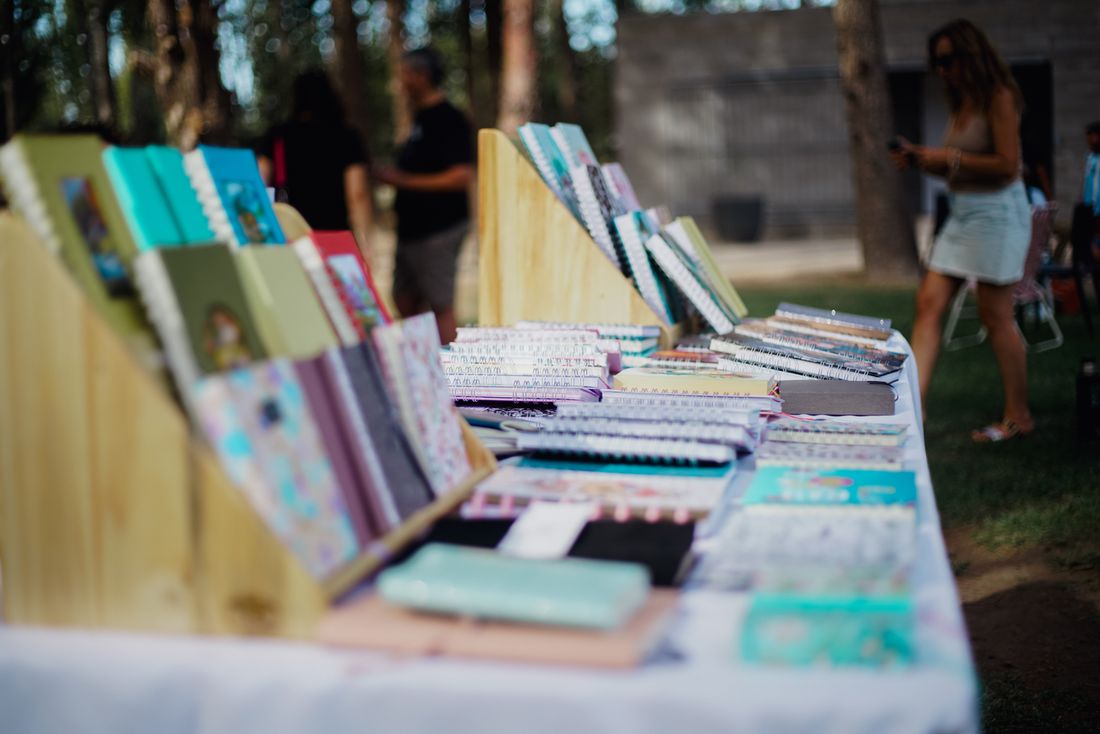
A table at an art book or zine fair asks for a completely different kind of coverage than a booth at a larger art fair. Instead of open floor and a handful of large works, a table holds hundreds of small printed objects in an aisle built for foot traffic, not photography. Instead of visitors glancing at work from a few feet away, browsers pick objects up and flip through them at close range, often within arm's reach of whoever is holding the camera. Here is what that actually changes about how a table gets photographed, from what needs to be in frame to how a shot list built for a booth falls short at a table.
A table at a book or zine fair needs coverage built for a narrow aisle and hundreds of small printed objects, not the open floor and handful of large works a booth offers. The wide table shot, close object detail, and the exhibitor at work replace the single anchoring shot a booth's backdrop and signage would normally provide.
What Makes a Book or Zine Fair Table a Different Coverage Problem Than a Booth?
A table at an art book or zine fair replaces open floor and large canvases with a narrow aisle and hundreds of small printed objects, so the coverage problem shifts from documenting finished works from a comfortable distance to documenting close, hands-on interaction in a space built for browsing, not standing back.
A booth at a larger art fair gives a photographer room to work: a wide shot of the space, a few steps back for a clean angle on a painting, enough floor to move around a visitor without asking them to shift. A book or zine fair table removes almost all of that. The exhibitor sits or stands behind a single surface a few feet wide, stacked with dozens or hundreds of individual objects, in an aisle other visitors are also trying to walk through. There's no depth to retreat into and usually no dedicated backdrop. Every shot has to be built from what's actually on the table and whoever happens to be standing at it.
That difference changes the plan for the whole day. A booth shoot can move at a slower pace, walking a fair floor and circling back to strong pieces. A table shoot works more like event coverage: reading the crowd, catching a browser mid-flip, staying alert to a five-second window before the moment passes. The gear and instincts carry over. The pacing and the physical space do not.
What Actually Needs to Be in Frame at a Table?
A complete table shoot needs three kinds of shots: a wide view of the whole table and its display, close detail shots of specific books or zines being handled, and images of the exhibitor themselves at work. Skipping any one of the three leaves a gap the others can't fill.
The wide table shot is the anchor. It shows how the work is arranged, what the covers look like as a set, and how much is on offer, and it's usually the only image in the set that gives a viewer the full context of the table. Close detail shots do the opposite job: they isolate one object, one spread, one cover, so a reader can actually see what the printed piece looks like rather than guessing from a small shape in a wide frame. Both are needed because a table full of zines reads as texture from a distance and as content up close, and a post-fair recap benefits from both registers.
The exhibitor shot rounds it out. A person mid-conversation, mid-sale, or simply present behind their table gives the other two shots a human anchor and signals that this is a real fair moment, not a still life. Leaving the exhibitor out of every frame makes a table's coverage feel like product photography instead of a record of a day. The three together, wide table, close object, present exhibitor, cover what a booth's single big-picture shot used to do on its own.
How Do Narrow Aisles Change Where a Photographer Can Stand?
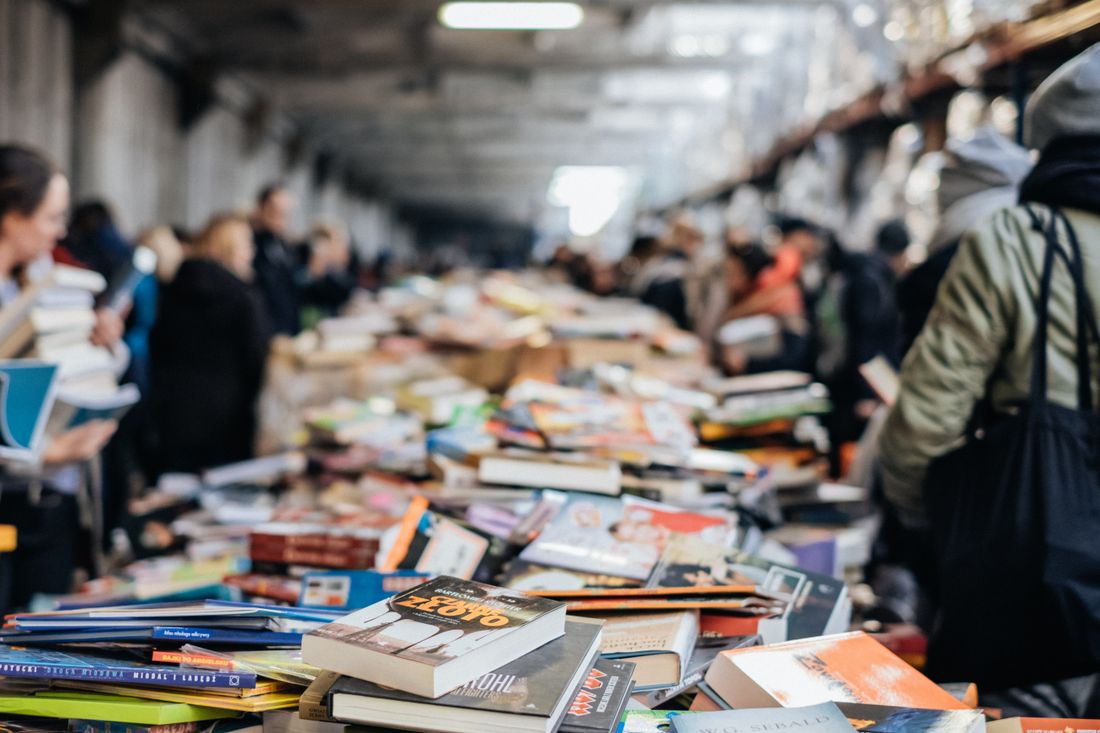
Narrow aisles mean a photographer is usually shooting from very close range or over the shoulders of browsers, because there's rarely enough distance to step back for a clean angle, and foot traffic constantly blocks the shot that was lining up a second earlier.
At a larger booth, a wide shot is a matter of finding the right spot and waiting a beat for the frame to clear. At a book or zine fair table, that spot often doesn't exist. Aisles are built for foot traffic, not photography, and a photographer standing still to compose a shot is also standing in someone's way. The practical result is a lot of shooting on the move: a step to the side to catch a table between two passing visitors, a shot taken from behind a browser's shoulder because that's the only angle available, a wider lens used not for style but because there's no room to back up.
This changes what to expect from any single frame. A shot planned in advance rarely survives contact with the aisle exactly as imagined, so the more useful habit is staying mobile and ready rather than picking one spot and defending it. Over-the-shoulder framing, once treated as a fallback, becomes one of the standard angles for this kind of coverage, and it often produces a more honest picture of the fair than a clean, empty-aisle wide shot would anyway.
What Turns a Photo of a Zine Into Something Worth Looking At?
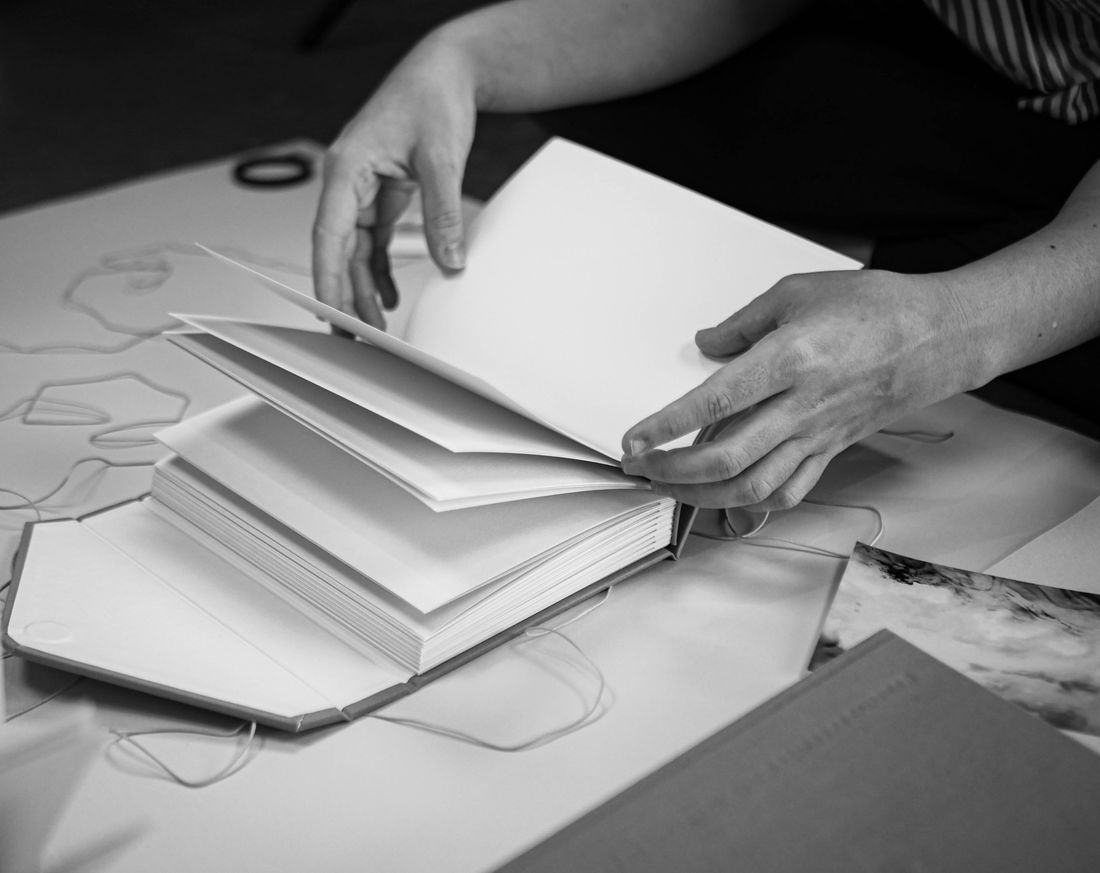
A strong photo of a printed object shows hands actually engaging with the pages, in natural light rather than a fair's overhead fluorescents, because motion and warmth read as a real moment while a flat, static, evenly lit object reads as inventory.
A zine or small book photographed alone on a table, straight on, under the fair's house lighting, looks like a catalog scan. It's accurate, but it isn't interesting, and a table full of these shots blurs together in a recap. The same object gets more compelling the moment a hand enters the frame: fingers mid-turn on a page, a cover being lifted to peek underneath, a spread held open at an angle that shows both pages and a bit of the paper's texture. The hand gives the object scale, gives the shot a moment instead of a still life, and gives a viewer a reason to look at that specific object instead of scrolling past it.
Light matters just as much as the hand does. Fair fluorescents flatten color and add a greenish or blue cast that no amount of editing fully removes, while natural light from a window or an open doorway brings back the paper's actual tone and the ink's actual contrast. When a table sits anywhere near a natural light source, that's usually worth prioritizing over a technically centered composition under the house lights. A slightly imperfect angle in good light beats a perfect angle in bad light almost every time.
Why Does Hand Contact Matter More Than the Object Itself?
A browser picking up and flipping through a zine tells a more useful story than the zine sitting untouched, because the handling shows the object was interesting enough to stop someone walking past, and that moment of attention is what a table's coverage is actually trying to capture.
A larger art fair booth is often built around a glance: a visitor walks the aisle, looks at a painting from a few feet away, and moves on without necessarily touching anything. A book or zine fair table works differently. The entire format depends on physical handling. A visitor picks something up, flips through a few pages, sets it down or carries it to the register. That handling is the actual transaction happening at the table, and it's usually a more interesting subject than the object sitting still ever could be.
This means the photographer's attention should track hands and motion more than it tracks the objects themselves. A browser pausing on a specific spread, two people passing a zine back and forth, an exhibitor pointing something out mid-conversation, these are the moments that make a table's coverage feel alive rather than archival. The object still needs its own clean documentation elsewhere in the shot list, but the interaction is what separates a table's event coverage from a simple inventory shoot of the same printed material. Watching for that handling means staying patient at a table rather than moving on once a wide shot and a detail shot are already in hand, since the best interaction moment often arrives later than expected.
How Is a Shot List for a Table Different From a Shot List for a Booth?
A table's shot list drops the branded backdrop and big signage a booth shot list relies on to anchor a wide frame, because a table usually has neither, so the display itself, the stack of objects, and the person behind it have to carry the whole image instead.
A booth shot list at a larger fair often opens with an establishing shot built around a name, a logo, or a large graphic panel that tells a viewer whose space this is at a glance. A book or zine fair table rarely has that anchor. Exhibitors work off a folding table, a tablecloth, maybe a small sign or a stack of business cards, and that's often the entire branding budget. A shot list built for a booth and simply applied to a table will keep reaching for signage that isn't there and come back with weaker establishing shots than the setup actually supports.
The fix is building the table's own display into the establishing shot instead: how the zines are stacked or fanned, whether there's a print pinned up behind the table, the exhibitor's own visual choices in how they laid the work out. That arrangement does the same anchoring job a backdrop does at a booth, just on a smaller and more personal scale. A shot list written for a table should plan around that display from the start, rather than treating its absence of signage as a problem to work around.
How Should a Photographer Work Around Fair Lighting?
The right approach to fair lighting is treating overhead fluorescents as the default to work against, not the light to shoot under, by prioritizing any available window light, doorway light, or portable fill over the house lighting whenever a table's position allows for it.
Most book and zine fairs run in venues built for foot traffic and vendor tables, not photography, which usually means a flat wash of overhead fluorescent light that adds an unflattering color cast to paper and ink. That light is workable for wide, documentary-style shots of the room, but it tends to make close detail shots of printed objects look colder and less appealing than the object actually is in person. A photographer who simply shoots under whatever light exists at a given table will end up with a set of images that all carry the same slightly off color temperature.
The better habit is scanning the room for daylight before setting up: tables near an entrance, a window, or a skylight are worth prioritizing for detail shots even if it means returning to that specific table more than once. Where no natural light is available, a small amount of portable fill light, used carefully so it doesn't compete with the fair's own atmosphere, can correct enough of the color cast to make a printed object look like itself again. Either way, lighting decisions belong in the plan before the fair opens, not worked out on the fly at the first table.
When During the Fair Should a Table Actually Get Photographed?
A table is worth photographing at several distinct points across a fair day, not once at a quiet moment: the slower opening hours for clean wide shots of the table itself, and the busier stretches later for the hand contact and browsing moments that make the coverage feel alive.
Early in a fair, before the aisles fill up, is usually the best window for the table's own establishing shot. The display is intact, nothing has been picked up and set down out of order yet, and there's enough room to actually stand back and frame the table cleanly. That quiet window closes fast once doors open to the public, so it's worth treating as a fixed part of the schedule rather than something to circle back to later.
Once the fair picks up, the priority shifts to catching browsers actually engaging with the table, which only happens once there's real foot traffic to photograph. This is also when the tight-aisle constraints are strongest, so it helps to plan for shorter, more frequent visits to a given table rather than one long stay, since a five-minute window with two or three genuine browsing moments is usually worth more than an hour spent watching an empty aisle. Spacing visits like this across the day also means an exhibitor isn't stuck posing for a photographer during their own busiest selling window.
Frequently asked questions
Do we need a wide shot and close-up detail shots at a table, or is one enough?
Both are worth planning for. The wide shot shows how a table's whole display is arranged and how much work is on offer, while close detail shots isolate individual books or zines so a viewer can see the printed object itself. A table read from a distance looks like texture, and read up close it looks like content, so covering both distances gives a fuller picture of the same table.
Why do photos of zines with hands in them work better than photos of zines alone?
A hand turning a page, lifting a cover, or holding a spread open gives a printed object scale, motion, and a specific moment, while the same object photographed alone on a table under fair lighting reads as flat inventory. Hand contact also signals that a browser found the object interesting enough to stop and pick it up, which is usually the more useful moment to document than the object sitting still.
What's the difference between shooting a table and shooting a full art fair booth?
A booth usually offers open floor, distance to step back for a clean wide shot, and a branded backdrop or large signage to anchor the frame. A table sits in a narrow aisle, holds hundreds of small objects instead of a handful of large ones, and rarely has any signage to lean on, so the table's own display and whoever is working it have to carry the whole image instead.
Should a table shoot happen early in the day or once the fair is busy?
Both, at different points. Early, quieter hours are the best window for a clean wide shot of the table's own display before anything gets picked up or rearranged. Once the fair picks up, the priority shifts to catching browsers actually flipping through work, since that interaction only happens with real foot traffic. Planning shorter visits across the day usually captures more than one long stay at a single busy moment.
Does fair fluorescent lighting actually change how a printed object looks in photos?
Yes. Overhead fluorescent lighting common at book and zine fairs tends to add a flat, slightly cold color cast that dulls a printed object's actual paper tone and ink contrast. Natural light from a nearby window, doorway, or skylight usually brings that color back closer to how the piece looks in person, which is why scanning a venue for daylight before setting up is worth doing before the fair opens to the public.
Got overlapping openings already on the calendar?
We work out the coverage plan well before the night gets close, whether that's two shooters, a tight schedule, or simply booking early enough to avoid the conflict entirely.
Explore event coverage →