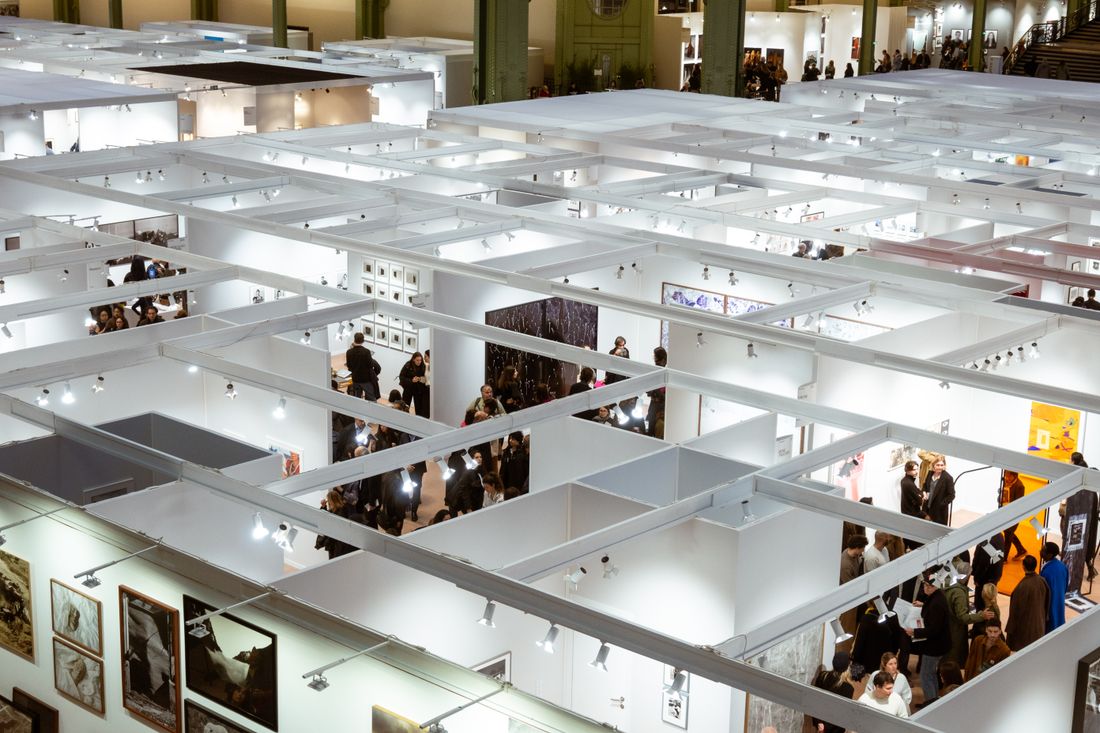
A booth exhibitor at an art fair needs proof their own booth looked good. The fair's organizer needs something harder to fake: proof the whole floor was alive, not just one corner of it. Those are two different assignments shot by two different kinds of logic, even when they happen on the same weekend in the same hall, and mixing them up is the fastest way to hand an organizer a set of photos that satisfies nobody.
Covering an art fair for the organizer means proving the fair as a market, not one booth: aisle-level energy across multiple times of day, honest crowd density instead of one flattering hour, VIP preview and public days handled as separate assignments, and signage kept deliberate so the images still look current when they get reused to sell next year's booths to this year's exhibitors.
What's the Real Difference Between Shooting a Fair for the Organizer and Shooting One Booth?
An organizer's fair coverage has to prove the entire floor was alive (full aisles, active booths, a market people actually came to) while a single exhibitor only needs proof their own booth looked good. Those are two different shot lists built on different logic, not the same job pointed at a wider lens.
A booth exhibitor's photographer works inward: their wall, their light, their conversations at their table, cropped close enough that the neighboring booth barely registers. That is the right job for that client, and a booth's own shot list covers it well. An organizer's photographer works outward, because the organizer isn't selling one exhibitor's work. They're selling the fair itself, as a place worth exhibiting at and worth walking through.
That difference changes where the photographer stands, what counts as a keeper, and who looks at the images afterward. A booth photographer's audience is mostly that one exhibitor and their collectors. An organizer's audience is next year's applicants deciding whether to sign up, sponsors deciding whether to renew, press deciding whether the fair earns a mention, and the organizer's own team assembling next year's sales materials. None of them care whether one booth photographed well. They care whether the floor read as a market worth joining.
Confusing the two jobs is a common failure, hiring one photographer and expecting both outcomes from the same handful of frames, when the images that satisfy an exhibitor and the images that satisfy an organizer were rarely going to be the same set to begin with.
What Do Aisle-Level Energy Shots Actually Need to Show?
Aisle-level energy shots need to show people actually moving through the fair (browsing, stopping, talking, carrying wine or a program) with enough booths visible in one frame that the image reads as a market, not a hallway. A single well-lit booth in an empty aisle proves nothing about the fair around it.
The strongest version of this shot usually comes from a slight distance and a slight height: standing back far enough to include several booths on both sides of an aisle, camera raised a little above head height so bodies don't fully block the storefronts behind them. That framing does two things a tight close-up can't. It shows real crowd depth, and it shows enough booth signage and artwork that multiple exhibitors get represented in a single frame, which matters when the organizer reuses the image later.
Movement matters more than any single perfect face here. A photo of someone paused mid-stride, glancing sideways into a booth, usually reads as livelier than a posed group looking at the camera, because it looks like something the fair produced rather than something staged for it. Working a slower shutter in busier light can add a touch of blur to bodies while keeping booths sharp, which reinforces the sense of motion without looking like a mistake.
These shots work best gathered across the day rather than in one pass, since a single aisle at a single hour is one data point, not a fair.
Why Is an Empty Aisle at 11am and a Packed One at 4pm Both a Problem?
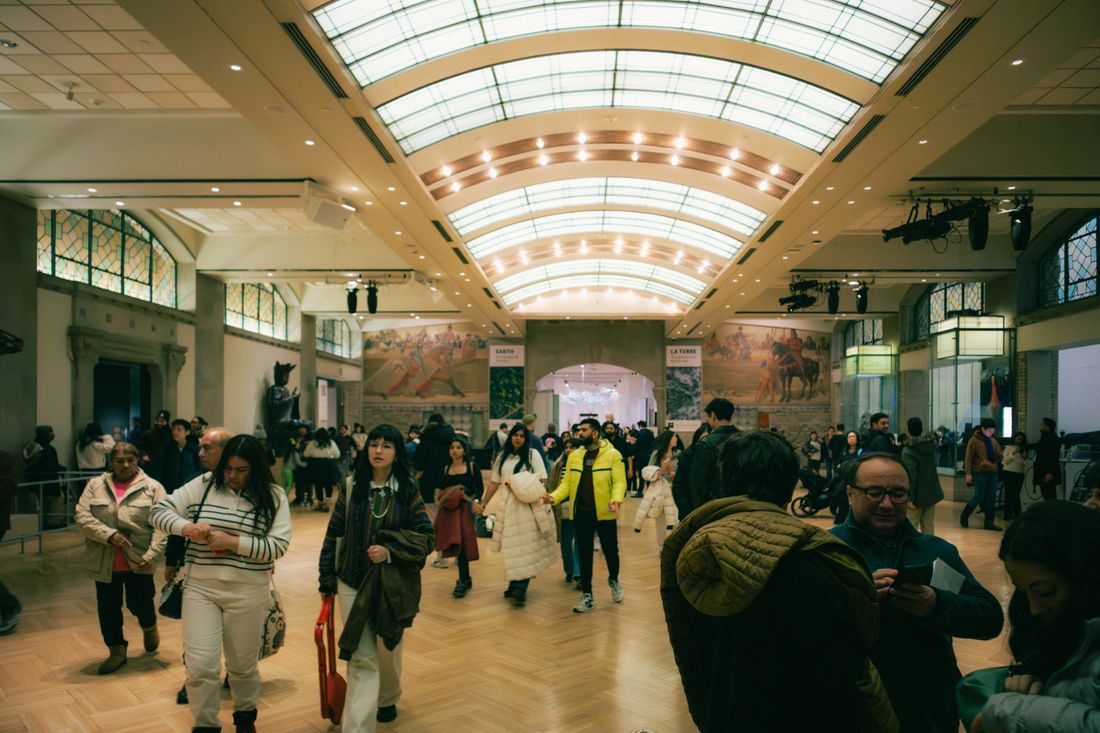
An empty aisle at 11am undersells a fair that fills up later, and a packed aisle at 4pm overpromises a fair that was quiet most of the day. Both are true moments, and both mislead if they're the only ones an organizer keeps. Crowd density needs to be documented across the day, not captured once and assumed to represent it.
Fairs rarely run at one consistent density. Many open slower than exhibitors expect, build through the afternoon, and peak around a specific window (often late afternoon or an evening reception) before thinning out again. A photographer working only the first hour will walk away with a set that looks thin no matter how the rest of the day went. One working only the peak window will hand over a set that looks busier than most of the fair actually was.
The practical fix is a return pass, not a single long shoot. Covering the same one or two aisles at more than one point in the day (an early pass and a mid-afternoon or peak-hours pass) gives the organizer both an honest record and a choice later about which moments actually represent the fair they want to sell. It also protects against the worst outcome: a whole gallery of images from one unrepresentative hour, with no alternative to reach for once someone notices the aisles look empty in every shot.
How Should VIP Preview Hours Be Covered Differently From Public Days?
VIP preview hours need quieter, closer coverage focused on serious looking and early sales conversations, while public days need broader coverage focused on volume and general foot traffic. Treating both as the same assignment produces a preview gallery that looks understaffed or a public-day gallery that looks thin on real engagement.
A preview is usually smaller and more deliberate by design, collectors, advisors, and press moving through before the wider public arrives, often with more space between people and more time spent actually looking at individual pieces. Coverage here should lean into that: a program or wine glass in hand, someone leaning close to a piece, a genuine conversation at a booth. Treating a preview like a packed public day and chasing wide crowd shots usually just proves how much emptier it was, since a preview crowd was never going to fill an aisle the way a public afternoon can.
Public days call for the opposite instinct, wider shots, more people per frame, the aisle-level energy that shows genuine turnout. The organizer typically needs both types in the final set, used for different purposes: preview images for a more exclusive, curated marketing angle aimed at serious collectors and press, and public-day images for the broader "the fair was busy" case aimed at future exhibitors and sponsors. Planning the schedule around both from the start avoids the common mistake of over-covering one and treating the other as an afterthought.
Why Does Signage and Wayfinding Quietly Date a Fair's Photos?
Signage and wayfinding (booth number placards, directional banners, sponsor logos, entrance graphics) carry a specific year's design in the background of almost every wide shot, which means a crowd photo can look noticeably dated years before the fashion or the artwork does. A fair's branding usually changes more often than people expect.
This matters because organizer coverage gets reused for longer than most event photography. A gallery opening's images might circulate for a season; a fair's crowd and aisle shots often get pulled for years, into anniversary posts, sponsor decks, and "look how far we've come" retrospectives. An image with an obviously outdated sponsor banner or a since-retired wayfinding system reads as old the moment someone who was there compares it to the current signage, even if nothing else in the frame changed.
The practical response isn't to avoid signage entirely. Some of it is useful for placing the viewer, like a clear entrance shot that says exactly what event and year this was. It's being deliberate about which shots feature current-year signage prominently and which stay generic enough to age well: a close-in aisle shot with people and artwork but no legible banner in frame will outlast a wide shot dominated by a sponsor wall that gets redesigned next season. Worth flagging to the organizer before the shoot, not after the retrospective post falls flat.
What's Off-Limits When Photographing Other Exhibitors' Booths on the Floor?
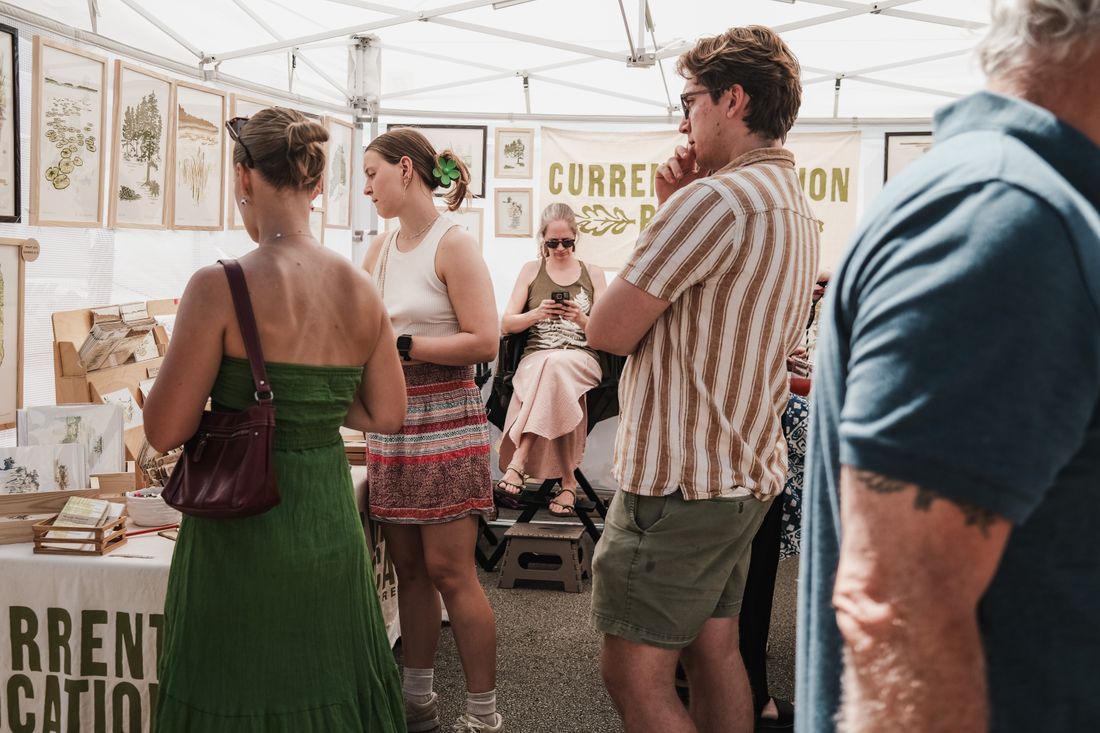
Photographing artwork inside other exhibitors' booths is a real permissions question, not a courtesy. The organizer's brief needs to settle in advance what's fair game for the fair's own marketing use versus what requires each exhibitor's separate consent. Assuming access because the booth is on the fair floor is the wrong default.
An organizer typically has a legitimate need to show the fair as a whole, which usually includes booths, aisles, and artwork in the background of wide shots. That's simply what an honest photo of a fair floor looks like, and most exhibitors agree to some version of this when they sign on. But there's a meaningful gap between a booth appearing incidentally in a wide crowd shot and a photographer deliberately framing a tight, artwork-forward shot of one exhibitor's specific pieces for the organizer's own promotional use. The second case usually needs its own conversation.
This is exactly the kind of detail that belongs in the pre-shoot brief, not worked out on the fly walking the floor. Many organizers already address image rights somewhere in their exhibitor agreement; if that's not clear, it's worth asking before the shoot rather than assuming either extreme, that everything is fair game, or that nothing can be photographed without individual sign-off. Getting this settled in writing protects the photographer, the organizer, and the exhibitors equally, and it's never something to guess at or treat as a technicality.
Why Do These Photos End Up Selling Next Year's Booths to the Same Exhibitors?
An organizer's fair photos are usually the core material for next year's exhibitor sales deck, meaning the same booth holders being photographed this year are often the very audience being pitched with those exact images twelve months later. A thin, uneven photo set doesn't just look bad on its own. It directly weakens the case for renewing.
This is a different kind of reuse than most event photography sees. A gallery opening's images mostly serve that gallery and that night's guest list. A fair's images serve the fair as an ongoing business, used in renewal emails to existing exhibitors, prospectus decks for new applicants, sponsor reports, and social posts building anticipation for the next edition. The exhibitor deciding whether to book a booth again is frequently looking at photos of the exact aisle they stood in, deciding whether that crowd looked worth the fee.
That reuse is a reason to take crowd density and aisle energy seriously rather than as a nice-to-have. An organizer showing thin, half-empty images to a booth holder who remembers a slow Tuesday is not going to close that renewal, no matter how sharp any single photo is. A photographer who understands this (that the deliverable isn't just documentation, it's next year's evidence) makes different choices about return passes, timing, and which hours matter most to cover well.
What Should a Fair Organizer Actually Walk Away With?
A fair organizer should walk away with a small, organized set spanning aisle-energy shots across multiple times of day, a handful of preview and public-day images kept separate, a few generic entrance or overview shots that age well, and enough variety that no single exhibitor dominates the visual story. Volume matters less than range.
The temptation is to hand over hundreds of similar wide shots from whichever hour was busiest and call it comprehensive. That set fails the organizer's actual uses: a sponsor deck needs different images than a renewal email, and a renewal email needs different images than a social post teasing next year. Building the shot list around those known future uses, rather than just walking the floor and shooting whatever looks lively, is what separates a genuinely useful archive from a pile of near-duplicates nobody has time to sort.
Labeling matters almost as much as shooting. A folder organized by time of day, by preview versus public, and by which images stayed generic enough to reuse across future years saves the organizer from re-opening the whole archive every time they need one image fast. Delivery timing matters too. A same-day or next-day set of top selects lets the organizer respond while the fair is still a live conversation online, with the fuller edit following after. That working set, more than any single striking photo, is what makes the coverage worth booking again next year.
Frequently asked questions
Should an art fair organizer hire the same photographer their exhibitors are using for booth shots?
Not necessarily the same person, but the organizer's photographer needs a different brief regardless of who's shooting. Booth-focused coverage and fair-wide coverage require different instincts, where to stand, what counts as a keeper, and who the images are ultimately for. An organizer should brief specifically for floor-wide, market-level proof, spelling out aisle timing and crowd coverage, rather than assuming booth-photography experience automatically transfers to fair-wide coverage.
How many photographers does it take to cover a fair for the organizer, not just one booth?
It depends on the fair's size and layout, but one photographer can reasonably cover a smaller fair across a return pass or two spread through the day. Larger fairs with multiple halls, or a wide time span between preview and public days, often benefit from a second shooter, mainly to catch both the quiet preview window and the busier public hours without missing either one entirely.
Can organizer photos and exhibitor booth photos come from the same shoot?
Sometimes, if the brief plans for both from the start. But they shouldn't be treated as automatically interchangeable. A wide aisle shot that serves the organizer rarely doubles as a booth's promotional image, and a tight booth shot rarely proves the fair itself was busy. If both are genuinely needed, say so upfront so the shot list can be built to cover both jobs properly.
How far in advance should a fair organizer book coverage?
As early as the schedule allows, ideally several weeks ahead, since planning return passes across preview hours and multiple points in the public day takes real coordination with the fair's own timeline and floor plan. Booking late usually means settling for whatever single window a photographer has open, which is exactly the kind of one-hour snapshot that misrepresents a fair's actual crowd pattern over a full day.
Do fair organizers need permission to photograph exhibitors' artwork for their own marketing?
This should be settled in the exhibitor agreement or a pre-shoot conversation, not assumed on the day. Incidental artwork appearing in a wide crowd shot is usually treated differently than a tight, deliberate shot of one exhibitor's specific pieces used in organizer marketing. Ask the organizer what their existing agreement already covers before the shoot, rather than guessing on the floor or defaulting to either extreme without checking first.
One night, two openings, no dropped coverage.
We plan clustered opening nights before they turn into a scramble, whether that means a split schedule, a second shooter, or an early enough booking that the calendar never becomes the problem.
Explore event coverage →