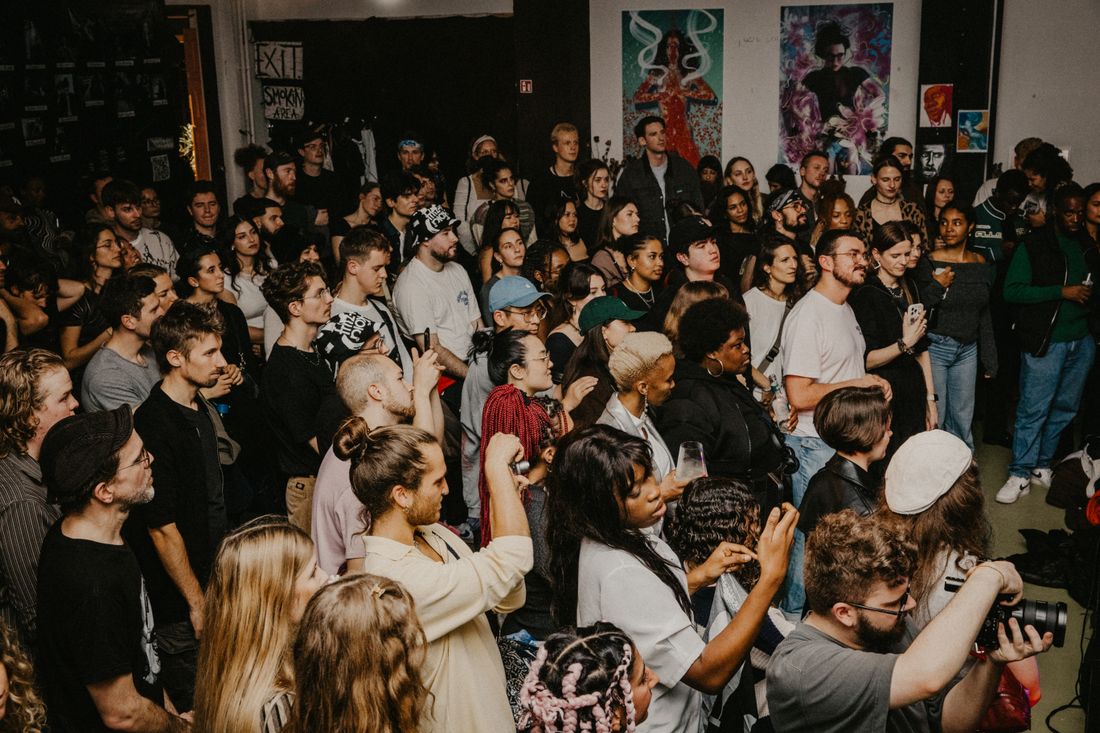
A gallery opening that draws a bigger crowd than the room can comfortably hold usually reads as a success story, and it is one. It's also a different photography problem than a normal opening. The wide shots, open sightlines, and easy movement a standard event allows mostly disappear once a room fills past capacity. Coverage doesn't stop being possible. It just needs a different approach: tighter framing, earlier arrival, fixed vantage points, and a shot-priority conversation that happens before the doors open, not once the room is already full.
A gallery opening that sells past capacity needs a different shooting plan than a comfortable one: earlier arrival for clean artwork shots, tighter framing once the crowd builds, fixed vantage points instead of free movement, and a pre-event conversation about which shots matter most if the room genuinely can't be fully covered.
What Changes When A Gallery Opening Runs Out Of Space?
A packed opening changes the coverage problem, not just the coverage amount. Instead of arranging clean wide shots of a comfortable room, we're navigating shoulder-to-shoulder crowds that block sightlines, swallow the art, and cut normal movement down to a slow shuffle between clusters of guests.
A quiet opening and an overcrowded one are not the same challenge scaled up. A small or slow-paced event mostly needs someone to fill the room with coverage: candid conversations, a few installation shots, portraits near the door. An opening that's run out of space needs the opposite instinct. The room is already full of energy, so the job shifts from generating interest to managing physical access. Every angle that assumed open floor space to step back into is gone. The wide establishing shot that normally opens a gallery's recap gets harder to find because there's no clear sightline across the room without twenty heads in front of a painting.
The other real difference is unpredictability. A packed room moves in waves. A cluster forms near the bar, thins out, then a new group blocks a different wall entirely as people migrate. What worked as a vantage point five minutes ago can be gone by the time we get back to it, so a packed opening rewards constant repositioning over a fixed shooting plan. Treating this like a normal opening with more people in it usually means missing the shots that mattered, because the room simply won't hold still long enough for a standard approach to work.
How Do Shot Priorities Change In A Packed Room?
In a packed room, shot priorities shift from wide establishing shots toward tighter, closer framing: candid faces mid-conversation, hands holding a glass near a painting, or the artwork glimpsed between bodies. Working the edges of the crowd, rather than the center, usually produces cleaner, more usable frames than fighting for a straight-on angle.
A wide shot of the whole room works when there's room to make it. In a full gallery, that same composition mostly captures the backs of heads and shoulders, which reads as clutter rather than energy. The more reliable move is to get physically closer and frame tighter: a genuine reaction to a piece, two people leaning in to read a wall label, a glass raised near a doorway. These frames hold up even when the wider context is impossible to capture cleanly.
The edges of a crowd matter more than the middle. Standing near a doorway, a corner, or the far end of a room gives a clear line into the crowd without needing to push through it, and it's usually where the room breathes a little. Shooting the art itself over a shoulder or through a gap between guests can read as more honest than staging an empty moment at the wall. It shows the room actually working, people genuinely engaging with the work, rather than manufacturing a clean shot the crowd never made possible. None of this replaces a few controlled, well-lit frames of the art alone. It just means those frames get planned for a specific window, not assumed to be available whenever convenient.
Where Should The Photographer Stand In A Crowded Gallery?
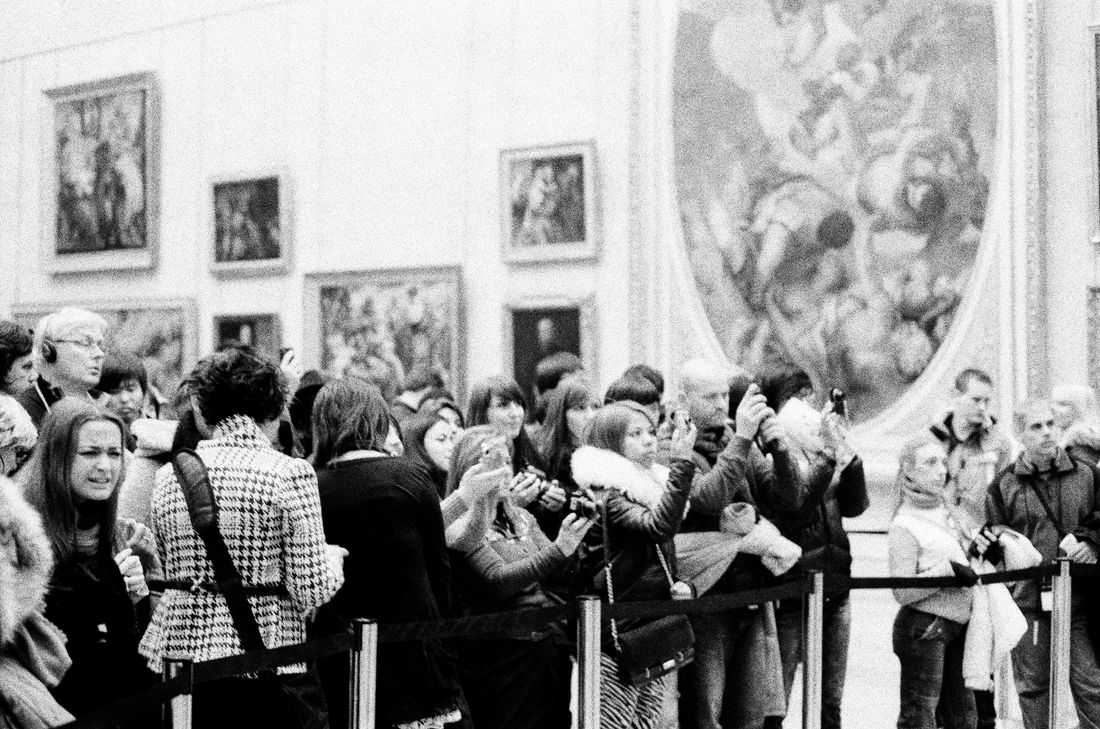
Physical positioning in a crowded gallery means claiming a few fixed vantage points early (a stair landing, a doorway, a corner with a clear sightline) rather than trying to move freely through the densest part of the room. Once a room fills past a certain point, walking a straight line across it stops being realistic.
Height and edges do more work than mobility once a room is genuinely full. A slightly raised spot, even a low step or a threshold between rooms, opens a sightline over people's heads that's impossible to get from inside the crowd. Doorways work for a different reason: guests naturally funnel through them, so standing just to the side gives a steady stream of candid moments without needing to chase anyone down. Corners are underused for the same reason. They're out of the main foot traffic, but still close enough to see most of the room.
Moving through the thick of a packed crowd should be the exception, not the default plan, because it's slow, it draws attention, and it usually means arriving at a good angle just as the moment that made it worth reaching has already passed. A more efficient pattern is picking three or four strong positions around the room's perimeter and rotating between them as the crowd shifts, catching what happens in each zone rather than trying to cover the whole floor continuously. That rotation also protects against the single point of view every recap ends up looking the same from.
Why Does Arrival Time Matter More At A Packed Opening?
Arriving well before guests build up matters more at a packed opening because it's the only reliable window for clean, well-lit shots of the artwork itself. Once the room fills, straight-on installation shots without a stray shoulder or blocked frame become close to impossible, so that coverage has to happen early or it usually doesn't happen at all.
A gallery opening's first thirty to sixty minutes look completely different from its peak. Early on, the walls are visible, the lighting is even, and there's time to check color and framing without competing with a moving crowd. That window is when the documentation-style shots get made: full views of each piece, straight angles, detail shots of texture or medium. Waiting until the room fills to grab these means shooting around people all night, if it happens at all.
This timing choice also protects the gallery's own needs. Clean artwork shots from before the crowd arrives are what usually end up in a gallery's own recap post, a press mention, or an artist's portfolio, not a photo with six strangers' elbows crossing the canvas. Once guests arrive, the job shifts toward the room's energy: reactions, conversations, the crowd itself as the subject. Both kinds of coverage matter, but they only both happen if the quiet-room shots are treated as a scheduled task early in the night, not something to catch whenever a gap in the crowd appears. A gap that clean rarely appears again once a room is genuinely full.
How Does Flash And Lighting Change In A Dense Room?
Flash and lighting choices change in a dense room because bounce surfaces, sightlines, and available space all shrink at once. A packed gallery holds more bodies absorbing light, less open wall to bounce a flash off of, and less physical room to angle a flash unit without it pointing directly into someone's face nearby.
In a quieter room, a flash can bounce off a ceiling or a wall a few feet back for soft, even light. In a full room, that bounce surface is often blocked by people standing in the way, and the working distance between the camera and a wall shrinks to almost nothing. This usually means relying more on the venue's ambient lighting and pushing ISO higher rather than fighting for a clean bounce angle that isn't there anymore. Direct, unmodified flash pointed straight at a subject in a crowd tends to look harsh and draws attention in a way that a quieter room doesn't create.
A dense room also concentrates body heat and movement, which changes how forgiving the light is from one minute to the next as people shift position near a light source or block it entirely. Working handheld and adjusting exposure frequently, rather than locking in one flash setup for the night, tends to hold up better than a fixed lighting plan built around how the room looked before guests arrived. The room the photographer sees at hour one and hour two are functionally two different rooms to light.
What Should You Brief The Photographer On Before A Packed Opening?
Briefing the photographer in advance means telling them the event has sold past capacity, sharing the venue's layout ahead of time, and agreeing on which shots matter most if the room runs out of space. A packed room isn't the moment to discover the shot list together. That conversation happens before the doors open.
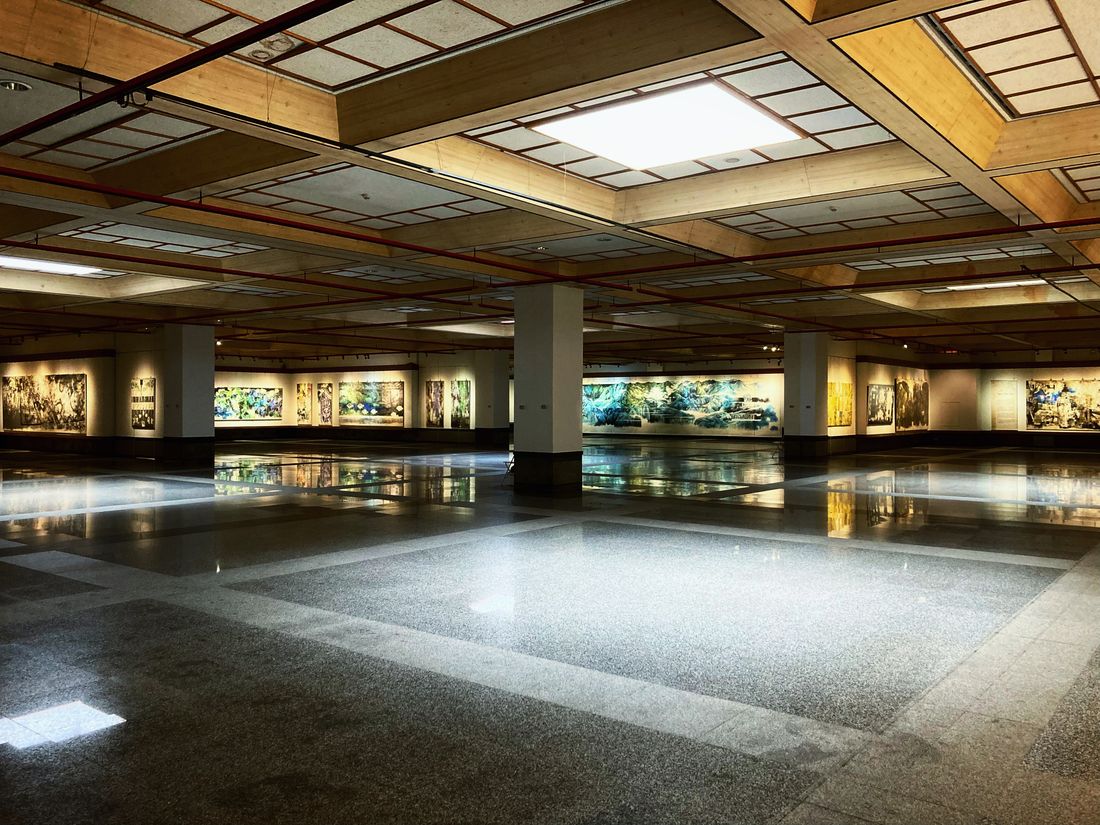
The most useful thing a gallery or artist can share ahead of time is an honest read on expected turnout. "This opening usually draws a steady crowd" and "we've oversold this one and expect it packed" call for genuinely different coverage plans, and finding out which one it is only after arriving wastes the window when the room is still manageable. A floor plan or even a phone photo of the empty space in advance helps identify doorways, corners, and raised spots worth claiming early, before a hundred people make that scouting impossible.
It also helps to agree on priorities before the crowd arrives: is the top priority clean shots of every piece, coverage of specific people expected to attend, or documenting the room's energy for social use? A packed room rarely allows equal coverage of everything, so having a ranked sense of what matters most means the photographer can make fast decisions under pressure instead of guessing. That single conversation, ten minutes before doors, tends to save more usable images than any amount of equipment or skill applied without it.
How Do You Still Get Clean Artwork Shots When The Room Is Full?
Getting clean artwork shots when the room is full usually comes down to the early-arrival window, plus short return trips to specific pieces during quieter lulls later in the night. A packed opening rarely stays uniformly packed for its whole run, and a photographer watching for lulls can grab more clean frames.
Openings tend to build toward a peak somewhere in the middle of the evening, then thin out again as guests filter toward dinner plans or the next event. That later lull is a second, smaller window for artwork coverage, worth checking rather than assuming the early shots were the only chance. It's rarely as clean as the pre-doors window, but a piece that had six people in front of it all night sometimes clears out for thirty seconds near the end.
When neither window produces a fully clean shot of a particular piece, a tighter crop that deliberately includes part of the crowd, framed intentionally rather than accidentally, often reads better than a strained attempt at an empty wall shot that never quite works. A detail crop of texture, medium, or a corner of the piece can also stand in for a full view when the full view genuinely isn't available. The goal isn't perfection on every single piece. It's making sure the pieces that matter most got their clean shot during whichever window actually delivered one.
What Can Still Go Wrong Even With A Good Plan?
Even with early arrival, a good vantage plan, and a clear brief, a packed opening can still cost coverage: a piece that never clears out, a guest who leaves before their portrait happens, or angles that never open up. Naming that tradeoff honestly keeps expectations realistic instead of promising complete coverage a full room can't deliver.
The most common gap is a single popular piece staying surrounded the entire night, especially near the center of the room where foot traffic naturally pools. If a gallery knows in advance which piece needs a guaranteed clean shot, doing that specific one first, before doors open, removes the risk entirely rather than hoping a gap appears later. The same logic applies to a specific person who needs a portrait: catching them near arrival, before the room fills in behind them, is far more reliable than trying to find them again once they're absorbed into a full room.
A packed room is also physically demanding in ways a quiet one isn't (constant repositioning, shooting through gaps, adjusting exposure on the fly). That's a normal part of covering a well-attended opening, not a sign anything went wrong. The honest version of this work accepts that a packed room trades some of the polish a spacious one allows for the harder-to-fake proof that the event actually landed: a room too full to move through easily is usually a room the gallery wanted.
Frequently asked questions
Do we need to tell the photographer if we expect the opening to be over capacity?
Yes, and as early as possible. A packed room needs a different shooting plan than a comfortable one: earlier arrival for clean artwork shots, specific vantage points scouted in advance, and agreement on which shots matter most if the crowd makes covering everything impossible. Finding out the room is full only after arriving wastes the short early window when clean coverage is still easy to get.
Can a photographer still get wide shots of the whole room if it's packed?
Rarely, once the room fills past a comfortable point. A true wide shot mostly captures the backs of heads and shoulders rather than the room's layout or the art on the walls behind them. The more reliable substitute is a slightly raised vantage point, like a step, landing, or doorway threshold, which gives a partial overview of the room without needing an empty floor to work.
Why would a photographer arrive so early for an opening that starts later?
Early arrival is the only reliable window for clean, well-lit shots of the artwork itself, before guests block sightlines or crowd in front of specific pieces. Once the room fills, those documentation-style shots become difficult or impossible to get cleanly. Arriving thirty to sixty minutes ahead of doors lets that coverage happen calmly, before the busier, energy-focused crowd coverage takes over for the rest of the evening.
Does flash photography work differently in a crowded gallery than in a normal room?
Yes. A crowded room removes the open wall space a flash normally bounces off of and shrinks the working distance to almost nothing, so direct flash pointed at a subject becomes more common and tends to look harsher. Relying more on the venue's ambient lighting, adjusting exposure frequently, and working handheld through the night usually holds up better than committing to one fixed lighting setup for the whole event.
What's the single most useful thing a gallery can do before a packed opening?
Give the photographer an honest read on expected turnout before the event starts, not once guests are already arriving. Knowing a room will likely sell past capacity lets the photographer plan arrival time, scout vantage points, and agree on shot priorities well in advance. That one short conversation, held ahead of doors opening, tends to protect more usable coverage than any amount of skill applied without a heads-up.
One night, two openings, no dropped coverage.
We plan clustered opening nights before they turn into a scramble, whether that means a split schedule, a second shooter, or an early enough booking that the calendar never becomes the problem.
Explore event coverage →