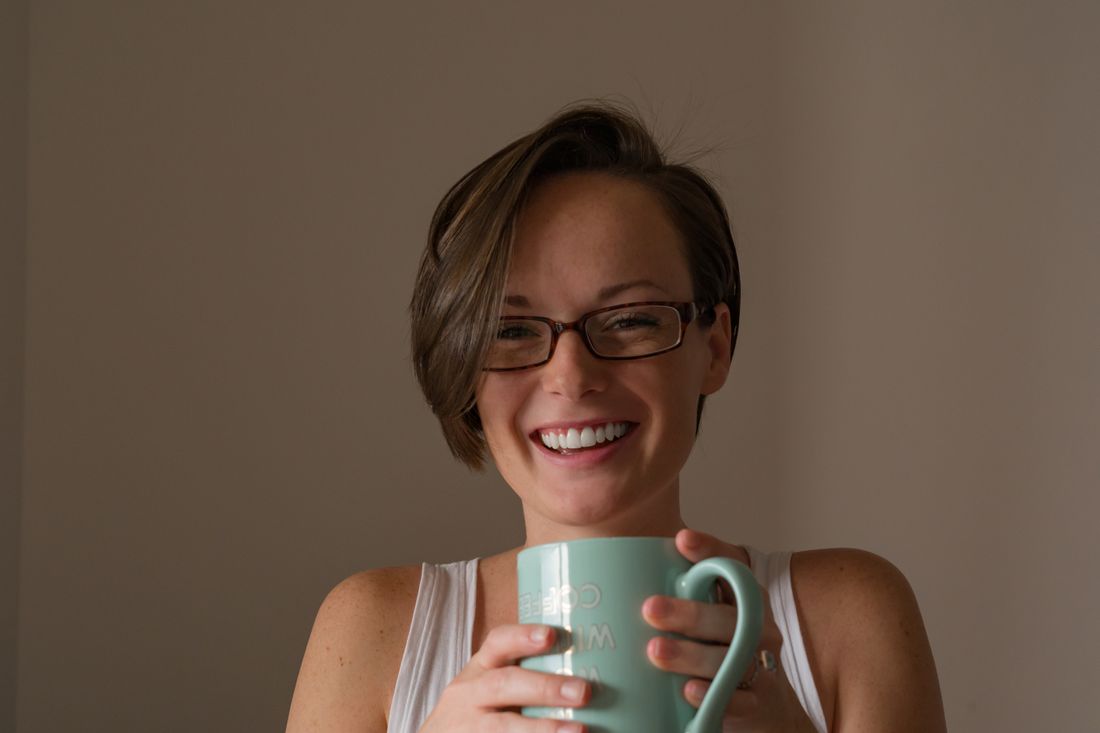
Almost everyone who's had personal brand photos taken knows the feeling of looking at the results and thinking, that's technically me, but it doesn't look like me. Nothing is wrong with the lighting or the outfit. What's wrong is that the photo captured a person performing "professional" instead of a person doing their actual work, and the gap between those two things is what reads as stiff.
This guide covers what actually causes that gap, what to change about the shoot itself, not just the editing, and what a session looks like when it's built around avoiding it from the start.
None of this requires becoming a more photogenic person. It requires a different kind of session, one built around real context and real movement instead of a locked pose and a held expression.
What actually causes the hostage note look
It's rarely one obvious mistake. It's usually three small things stacking on top of each other: a posture locked into a single position for the whole shoot, an expression held for the camera rather than caused by anything real, and a background so blank and generic it stops reading as an actual place someone exists in. Any one of those alone is fine. A studio backdrop isn't the problem by itself. A held smile isn't the problem by itself. Together, they add up to a photo that looks staged because it was staged, with nothing else in the frame to soften that.
The fix isn't more takes of the same pose hoping one lands more naturally. It's changing what's actually happening during the shoot, so the camera has something real to catch instead of a held expression waiting to be released.
It's also worth naming that this isn't really a photography problem, it's a direction problem. A technically excellent photographer can still produce a stiff result if the session itself is structured around static posing rather than real activity. The camera, the lens, the lighting setup, none of that fixes a session built around asking someone to hold still and perform confidence for forty-five minutes.
Location does more work than posture
A generic backdrop, a plain wall, a rented studio cyc, puts all the pressure on the subject's face and posture to carry the whole photo, because there's nothing else in the frame doing any work. A real environment, an actual desk, a studio, a kitchen table, a window with real light, does some of that work for free. It gives the eye somewhere else to land, and it gives the subject something to relate to instead of just facing a lens in empty space.
This doesn't mean the background needs to be interesting or busy. A plain wall in someone's actual apartment, with real light coming through a real window, already reads more honest than a seamless studio backdrop, because it's a specific place rather than an anywhere-and-nowhere. The goal isn't to show off a nice space. It's to put the subject somewhere real enough that their body relaxes into it instead of bracing against a blank set.
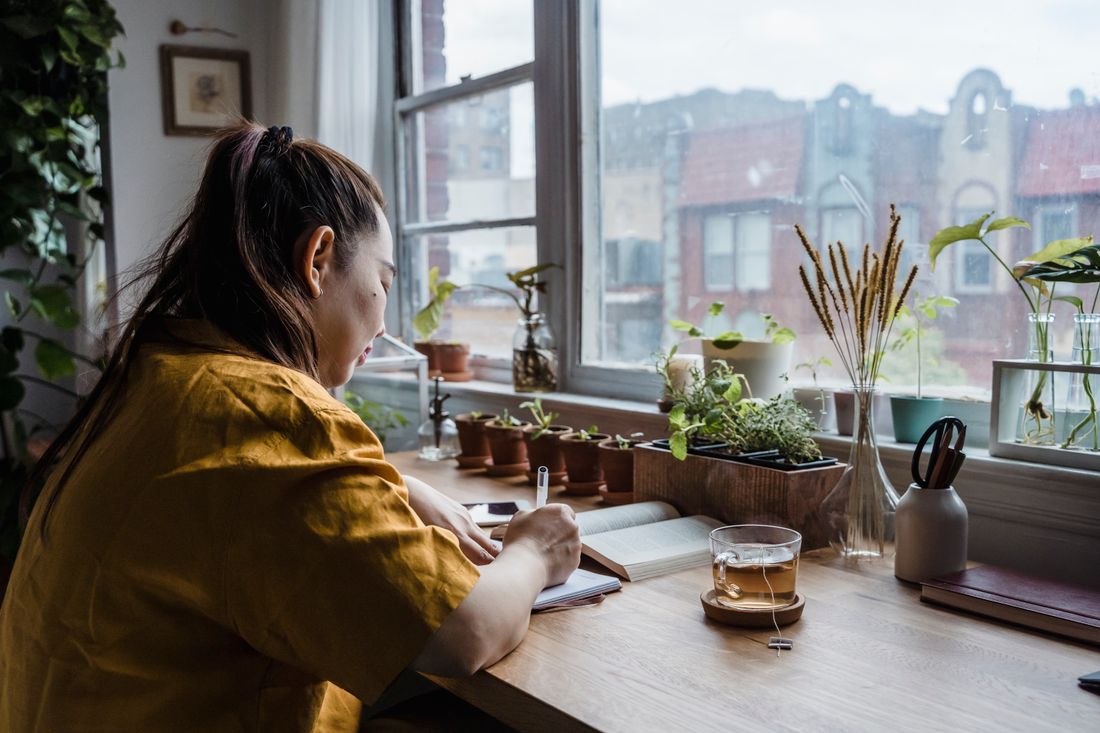
Give the subject something to actually do
The single biggest shift between a stiff photo and a natural one is whether the subject is doing something during the shoot, or just standing there waiting for the shutter. Talking through a normal work task, sketching, reading, typing, arranging something on a desk, produces real posture, real hand positions, and real micro-expressions that no amount of "just relax" instruction can manufacture from a standing-still pose.
This is also where a lot of the best usable frames actually come from. Not the moment someone poses and smiles on cue, but the half-second between two real actions, glancing up mid-sentence, a genuine laugh at something the photographer said, adjusting something on the desk without thinking about the camera. A session built around real movement produces far more of those moments than one built around holding still for a series of poses.
Wardrobe: dress like the work, not the occasion
A common mistake is treating a personal brand shoot like a special occasion and dressing for the shoot instead of dressing like a normal day at work. That mismatch is subtle but it reads, an outfit that's slightly too formal for how someone actually works every day creates a small but real gap between the photo and the person, and that gap is part of what makes a photo feel like a performance.
Two outfits usually cover it: whatever someone actually wears on a normal working day, and one slightly more polished option for uses that genuinely call for it, a speaker bio, a press photo, a formal proposal. More than that starts to feel like a costume change rather than natural range, and it also eats into the time that should be spent getting real, relaxed material in each look rather than rushing through a wardrobe checklist.
Fit and comfort matter more here than most people plan for. An outfit that looks fine in a mirror can pull, gap, or ride up in ways that only show up once someone's sitting, leaning, or reaching for something on camera, not just standing still. It's worth actually moving around in an outfit before a session, not just trying it on, since the photos are going to capture exactly that kind of real movement on purpose.
The smile problem specifically
A held smile, the kind kept in place for several seconds while a camera clicks through a burst, almost always looks different from a smile that happened for a reason. The muscles around the eyes settle differently when a smile is caused by something rather than sustained on command, and most people, without any training in reading photos, can feel that difference even if they can't name it.
The fix isn't asking someone to smile less or smile more. It's giving them something to actually smile about during the shoot, a real comment, a genuine question, something happening in the room, so the expression has a cause instead of being held open like a door. A photographer's job here is closer to a conversation partner than a director calling out poses.
What good direction actually sounds like
Direction that produces natural photos rarely sounds like "smile" or "look here." It sounds more like ordinary conversation: a question about the actual work, a comment that gets a real reaction, a small adjustment framed as physical rather than emotional, "turn your shoulder slightly toward the window" lands very differently than "look more confident."
This is also why rapport matters more in this kind of session than in almost any other type of shoot. A subject who's a little tense for the first ten minutes and genuinely warms up by the last twenty is completely normal, and it's exactly why the best frames tend to cluster toward the back half of a session rather than the very first setup, once the camera has stopped feeling like the main event in the room.
It also helps to plan the session so the easiest, lowest-pressure setup comes first. Starting with a simple working shot, someone at their own desk doing something familiar, gives them a chance to get comfortable in front of the camera before moving into anything that asks for more direct eye contact or a more composed frame. Sessions that open with the hardest setup tend to spend their first fifteen minutes fighting nerves instead of getting usable material.
Editing: what to leave alone
Heavy retouching is its own way of producing the hostage note look, just after the fact instead of during the shoot. Smoothing skin until texture disappears, reshaping features, or pushing color and light until nothing in the frame looks like it was actually there, all of that quietly reintroduces the same disconnect a rigid pose creates: a photo that's technically a picture of someone, but doesn't read as them.
Basic correction, exposure, color balance, small blemishes that would resolve on their own in a day or two, is reasonable and expected. The line worth holding is anything that changes the actual structure of someone's face or body. A useful test: if a close friend would say "that doesn't really look like you" before they'd say "you look great," the edit went too far.
How many usable photos should come out of a session
A well-run session, roughly forty-five minutes to ninety minutes, across a couple of settings or outfit changes, should produce somewhere between fifteen and thirty genuinely usable images, not fifteen that are all nearly identical, but a real range: a headshot-style crop, a couple of working shots, a wider environmental frame, something with real motion or a genuine expression.
That range matters because a personal brand photo set gets used in more places than most people plan for going in, a website, a speaker bio, LinkedIn, a press mention, a slide deck. A single perfect headshot covers exactly one of those uses well. A small, varied set covers all of them without forcing the same rigid photo to do a job it was never framed for.
Frequently asked questions
What makes personal brand photos look stiff and posed?
Usually it's a combination of a locked posture that never changes across the whole shoot, a smile held for the camera rather than caused by anything, and a background so neutral it stops reading as a real place. Any one of those alone is fine. All three together is what produces the stiff, over-posed look most people are trying to avoid.
Should personal brand photos be shot in an office or at home?
Wherever the work actually happens and the light is genuinely good, whichever of those two wins. A real workspace, home office, studio, kitchen table, gives photos more texture and context than a generic backdrop, as long as it's not so cluttered or dim that it fights the subject for attention.
How many outfit changes does a personal brand shoot need?
Two is usually enough: one that matches how the person actually dresses for real work, and one slightly more polished option for uses that call for it, like a speaker bio or a press photo. More than two starts to feel like a costume change rather than natural variety.
What should someone do during the shoot to avoid looking stiff?
Keep doing something real instead of just facing the camera and holding a pose. Talking, working, moving between two or three natural positions all produce more genuine expressions than freezing and waiting for the shutter. A good photographer directs around that movement rather than asking for stillness the whole time.
How long does a personal brand photo session usually take?
Most sessions run 45 minutes to an hour and a half depending on how many settings and outfit changes are involved. Longer than that tends to produce diminishing returns, since both the subject and the photographer start running out of genuinely new material well before the two-hour mark.
Get personal brand photos that actually look like you.
We build sessions around your real work and real space, not a locked pose in front of a blank wall.
Explore portraits →