
We hear some version of this question a lot: an artist looks at their portrait from three, five, ten years ago and feels a vague sense that it's "not working anymore," without being able to say exactly why. The instinct is usually to treat that discomfort as evidence of needing to start over (new location, new styling direction, new everything, essentially a rebrand). Usually the actual gap is narrower than that.
This isn't about talking anyone out of a bigger shoot when they genuinely want one. Sometimes the old portrait really was built for a different version of the work, and a full new concept is the right call. But those two situations get briefed, shot, and budgeted completely differently, and it helps to know which one you're actually dealing with before you pick up the phone.
What does "aged" actually mean?
When people say a portrait "doesn't work anymore," they're usually describing one of three separate things without realizing it. The first is the person: hair, style, weight, age, general presence have shifted enough that the photo reads as an older version of them rather than a current one. The second is the image itself: an older camera or lighting setup, a color grading style that was current at the time but now looks visibly of its era, or a file that's too low resolution for how the web uses images today. The third is context: a new studio, a new body of work, a slightly different audience, none of which necessarily change who the artist is, just where the portrait needs to show up now.
Any one of those on its own is usually a refresh. It's when several of them combine with an actual identity shift (a different medium, a different professional direction) that you're looking at something bigger. The mistake is treating all three as the same problem and reaching for the same fix, which is either "just live with it" or "reinvent everything."
Signs you need a refresh, not a reinvention
A refresh is the right call when the concept underneath the photo still fits. A few patterns we see often:
The person looks noticeably different than they do in the photo (new hair, new style, a different physical presence), but nothing about who they are as an artist or what they make has actually changed. The original portrait's setting and energy still represent them accurately. It's just the current-day version of them that's missing from the frame.
The image is technically dated. An older camera, older lighting choices, or an editing style that was popular at the time can all make a portrait look like it belongs to a specific year rather than to the artist. This one is easy to miss because the concept can look perfectly fine and the photo can still read as old the second it sits next to newer work.
The context has shifted slightly without the core identity moving. A new studio space, a new body of work, a gallery representation change. These can all make an old portrait feel slightly out of step even though nothing about who the artist is has actually changed. The fix there is usually an update, not a rebuild.
Signs you actually need a new concept
On the other side, there are a few honest signs that a refresh won't solve the actual problem.
The original portrait was styled for a genuinely different phase of the work (a different medium, a different audience, a different professional identity than the one the artist occupies now). A portrait built around a painting practice doesn't necessarily carry over cleanly if the primary work has shifted to sculpture or installation. The setting, the energy, and the visual language the photo needs to speak may simply be different now.
The artist has said, in feedback at the time or since, that the photo never quite felt like them, even when it was brand new. That's worth listening to. A refresh updates a portrait that used to work. It doesn't fix one that never landed in the first place.
The use case has fundamentally changed. Moving from gallery-only representation into public-facing teaching, speaking, or press work is a real shift in what the portrait needs to communicate, not just how current it looks. A different job for the photo can mean a genuinely different photo.
What a refresh session actually involves
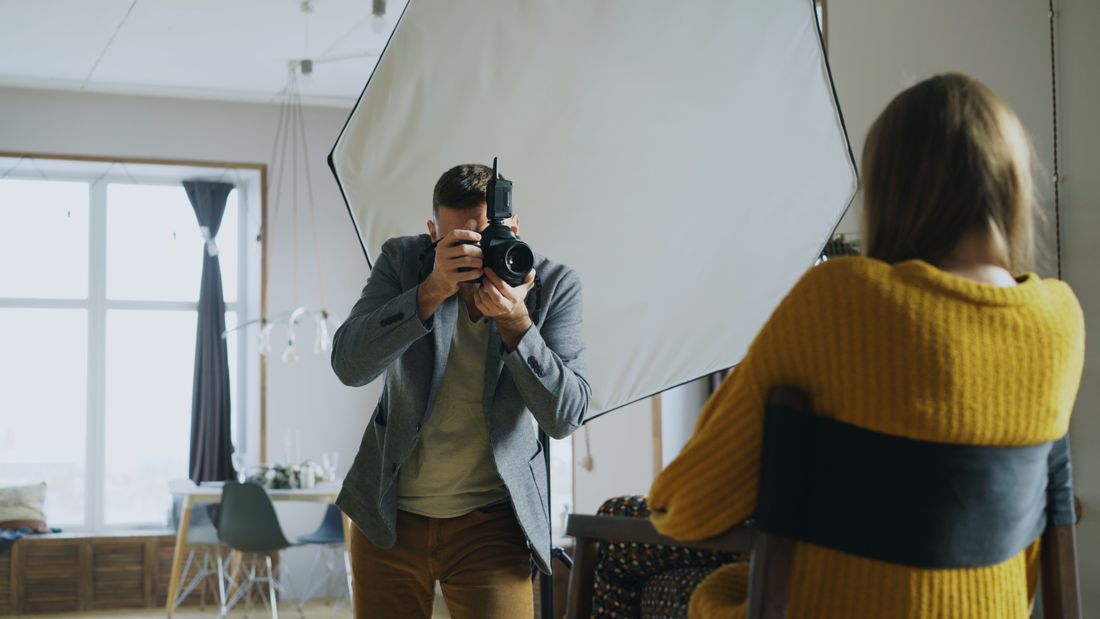
A refresh session generally keeps the general setting and energy of the original portrait and updates what's actually dated around it: current wardrobe and grooming, current technical quality, and often an updated crop set for how the image gets used now. A portrait shot five years ago for a printed catalog wasn't built with a square social crop or a vertical story frame in mind, because that wasn't the priority at the time. A refresh is a natural place to solve that too.
From shooting refresh sessions, one thing that helps enormously is having the old portrait open on a laptop or printed out during the shoot itself, not as something to copy exactly, but as a reference for the angle, the framing, and the general feeling that already worked. It keeps the new session honest to what the artist actually liked about the original, instead of drifting into a different photo entirely because a new location or a new lens naturally pulls things in a new direction.
This also tends to be a more relaxed shoot day for the artist. There's less pressure to "figure out who you are" in front of the camera, because that question already has an answer from the original session. Most of the energy goes toward small, practical decisions: which shirt actually reads well now, whether the light in that corner still hits the way it used to, whether a slightly wider frame gives more room for how the photo gets cropped later. Those are much easier conversations to have on the day than open-ended creative direction.
How briefing a refresh differs from a new concept
A refresh is usually simpler to brief and shoot than a full new concept, mostly because the hardest question is already answered. Concept development asks "who is this person and what should this photo say about them," which takes real conversation, reference gathering, and sometimes location scouting before a camera comes out. A refresh starts from an existing answer to that question and asks a narrower one: what needs updating to make this still-accurate answer look current.
That narrower brief means less pre-production time, fewer open creative variables during the shoot, and a shorter conversation about direction on the day. It doesn't mean less care. A refresh still deserves proper lighting, a real wardrobe conversation, and enough shooting time to get a range of usable frames. It just means that range gets built around a known starting point instead of an open one.
What changes even when the concept doesn't
Even a portrait with a rock-solid concept ages in ways that have nothing to do with the idea behind it. Color grading trends move. A warm, heavily filtered look that felt current a few years ago can now read as dated the moment it sits next to newer, more neutral work. Camera and lighting quality move too. Files that were perfectly usable at the time may now look soft or noisy compared to what current equipment produces as a matter of course.
Resolution is its own quiet problem. A file sized for an older website or a printed piece may not hold up at the sizes modern sites, social platforms, and press requests now expect. None of that reflects on the concept. It reflects on the fact that the technical bar for "looks current" moves whether or not the artist's identity does.
Why a refresh is usually the cheaper, faster problem
Cost and time-wise, a refresh is typically a shorter, more contained session than full concept development. There's no scouting a new location, no building a new styling direction from scratch, no extended pre-production conversation about who the artist is becoming. Most of the working time goes directly into getting current, well-lit, well-composed frames of a person whose story the photo already knows how to tell.
That's worth knowing before assuming a portrait problem automatically means a portrait-sized budget. A lot of artists put off updating a portrait for years partly because they're picturing the cost and complexity of the original shoot, when the actual fix in front of them is much smaller.
The most common mistake artists make
The most common mistake goes one of two ways, and they sit at opposite ends of the same misunderstanding. The first is never refreshing at all, using a photo that's a decade old because "the concept still works," which is often true and also beside the point. A concept can be exactly right and the image can still look like it belongs to a different era, which undercuts the very thing the portrait is supposed to communicate.
The second is over-refreshing: paying for a full reinvention, new location and all, when a two-hour update session would have solved the actual problem. This tends to happen when the discomfort with an old photo gets misread as evidence that the whole approach is wrong, rather than evidence that the photo just needs to catch up to the person.
How to decide which one you need
Before booking anything, it helps to ask a few plain questions. Does the setting and energy of the current portrait still sound like a fair description of who you are and what you make right now? If yes, that's a strong signal toward a refresh. Has your work moved into a genuinely different medium, audience, or professional context since the photo was taken? If yes, that leans toward a new concept.
Did the original photo ever actually feel like you, even when it was new? If the honest answer is no, a refresh will make an inaccurate photo more current without making it more accurate. And finally, is the discomfort mostly about how the image looks technically (lighting, color, resolution) rather than about what it says? That's usually the clearest sign of all that a refresh, not a reinvention, is the right next step.
If you're still not sure after sitting with those questions, that's a normal place to land, and it's a fine thing to bring to a photographer directly rather than trying to resolve alone. Describe what feels off about the current photo as specifically as you can (the way you look, the way it's lit, the way it's cropped, or the way it represents the work) and a good conversation about that should surface which kind of session actually solves it before either of you commits to a plan.
Frequently asked questions
How do I know if my portrait needs a refresh or a full new concept?
Start with what's actually changed. If the concept still fits who you are and what you make, and the main problems are how you look now versus how you look in the photo, or the technical quality feeling dated, that's a refresh. If the original portrait was built around a different phase of your work entirely, or it never felt like you even when it was new, that points to a new concept instead.
How long does a portrait refresh session take?
A refresh is typically a shorter, more contained session than a full concept development shoot. There's less pre-production because the setting, energy, and general direction are already established. Most of the working time goes into wardrobe, grooming, and getting current, well-lit frames rather than figuring out who you are in front of the camera from scratch.
Does a refresh cost less than a new concept shoot?
Usually, yes. A refresh skips the concept development, location scouting, and styling direction that a full reinvention requires, so both the time and the cost tend to be lower. The exact difference depends on the photographer and what your refresh includes, but the session itself is structurally smaller.
Can I refresh a portrait without changing the original location or style?
Yes, and that's usually the point. A refresh keeps the general setting and energy of the original portrait and updates what's actually dated: how you look now, the technical quality of the image, and the crops available for how the photo gets used today. The identity behind the photo doesn't need to change for the image itself to need updating.
How often should artists update their portrait?
There's no fixed schedule, because it depends on how much you've changed and how the portrait gets used. A useful check is whether the photo still looks like you when you see it next to a mirror or a recent candid. If it doesn't, or if the technical quality feels visibly dated next to newer work, it's worth a refresh conversation regardless of how many years it's been.
Let's find out which one you actually need.
We shoot both refresh sessions and full new concepts, and we'll tell you honestly which one your portrait needs before we book anything, not after.
Explore portrait sessions →