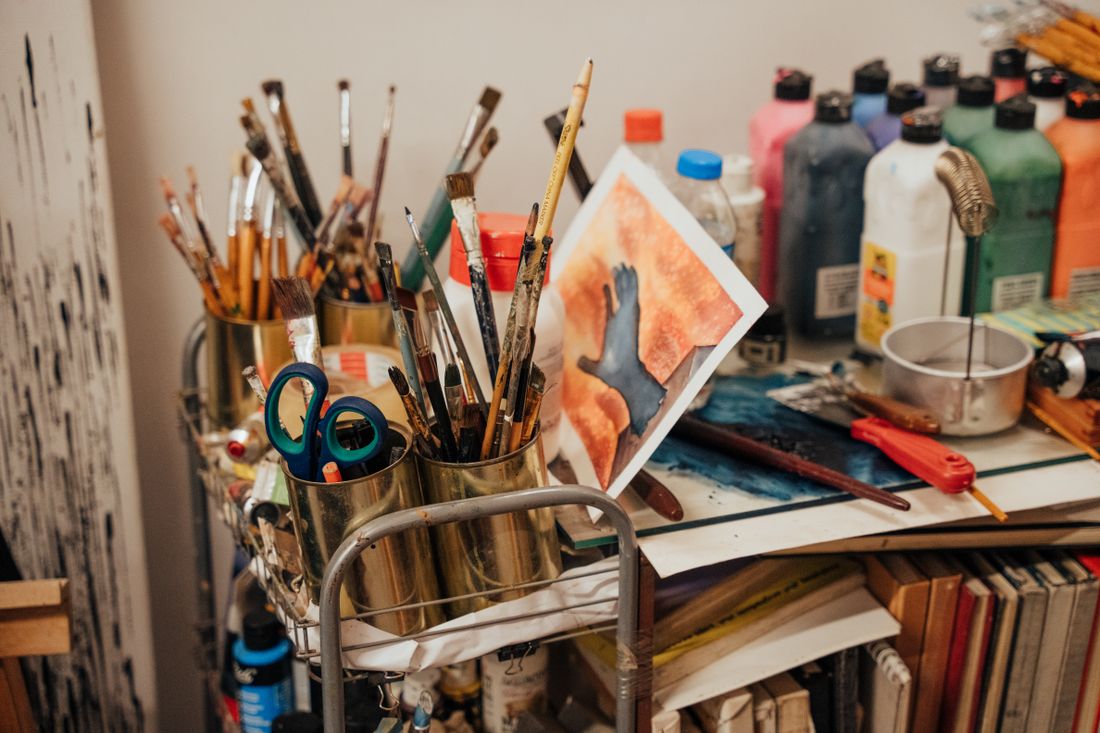
A common request that comes in as "studio visit photos" turns out, once the brief gets clearer, to mean something closer to a headshot taken in front of a bookshelf of paint tubes. That's not wrong exactly, it's just a much smaller thing than a real studio visit, and it usually leaves the most useful material on the table: the workspace itself, the materials, the half-finished piece leaning against the wall that explains more about the practice than any posed photo could.
A studio visit is closer to a small documentary than a portrait session. The artist working, or having just worked, in a real space, is the actual subject. The portrait is one useful piece inside that larger set, not the entire assignment.
This guide covers what a studio visit shoot should actually include, how to plan the space and the time, and how it's different from both a straight artist portrait and a full documentation session.
Why a studio visit is not just a portrait with props
A portrait answers "what does this person look like." A studio visit answers a bigger question: "what does this person's practice actually look like, in the place it happens." Those overlap, since the artist is present in both, but a studio visit that only produces a good portrait has quietly skipped the part that made it worth visiting the studio in the first place. A portrait alone could have been shot anywhere with good light.
The tell is usually in how the space gets treated. A portrait-first approach treats the studio as a backdrop, something to blur behind the subject's face. A studio-visit approach treats the space as a co-subject, worth its own frames, its own attention to how the light falls across a worktable or a half-mixed palette.
What a studio visit shoot should actually capture
A useful studio visit set usually covers five things: a wide shot that establishes the space itself, a materials or tools detail that shows what the practice physically involves, the artist genuinely working rather than posed, at least one direct portrait with real attention on the camera, and if there's a piece underway, some documentation of the work in progress. Missing any one of these narrows what the final set can actually be used for later.
None of these need to happen in a rigid order or as separate rounds. A well-run session moves between them naturally, working portraits happening in the middle of genuine activity, a materials detail grabbed while the artist resets between tasks, rather than treated as five discrete setups on a checklist.
Preparing the space without sanitizing it
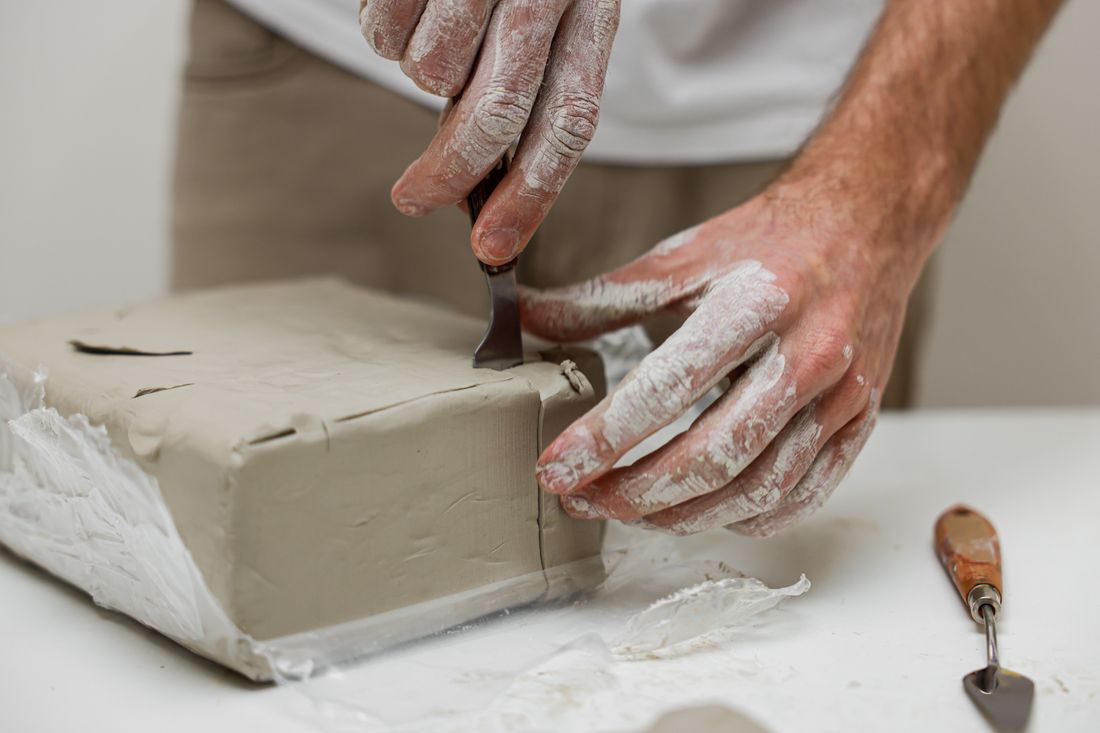
A small amount of tidying helps almost every studio: clearing a genuine walking hazard, moving something distracting out of frame, making sure the piece the visit is meant to feature is actually visible rather than obscured by unrelated clutter. What doesn't help is deep-cleaning the space until it looks unused, since a spotless studio reads as staged in exactly the way a real studio visit is supposed to avoid.
Paint-stained surfaces, a worn chair, tools laid out mid-use, all of that is evidence the space is real, and evidence is the entire value of a studio visit over a portrait shot anywhere else. The goal isn't messiness for its own sake. It's leaving in the details that are true, and only clearing the ones that are genuinely in the way.
Working versus posing during the session
The strongest studio visit sets mix both modes deliberately rather than picking one. Genuine working time, the artist actually mixing paint, adjusting a piece, stepping back to look at something, produces the process shots that make the visit valuable in the first place. A few focused minutes of direct portrait work, attention on the camera, a clear expression, covers the specific uses, a bio photo, a press headshot, that need a clean portrait rather than a candid moment.
Trying to get both at once, asking someone to look natural while working and also occasionally check the camera, usually produces a weaker version of each. It's more efficient to let a working stretch run uninterrupted, then ask for a short dedicated portrait break once the artist has settled into the space and the session.
Why materials and tools carry real weight
A jar of worn brushes, a specific mix of tools on a table, a shelf of paint in whatever order it's actually kept in, these details do more to communicate a specific practice than most people expect from an object photo. They're also often the images that end up getting reused the most, on a website's about section, in a grant application's supporting materials, in a press feature that wants something more textured than a straight portrait.
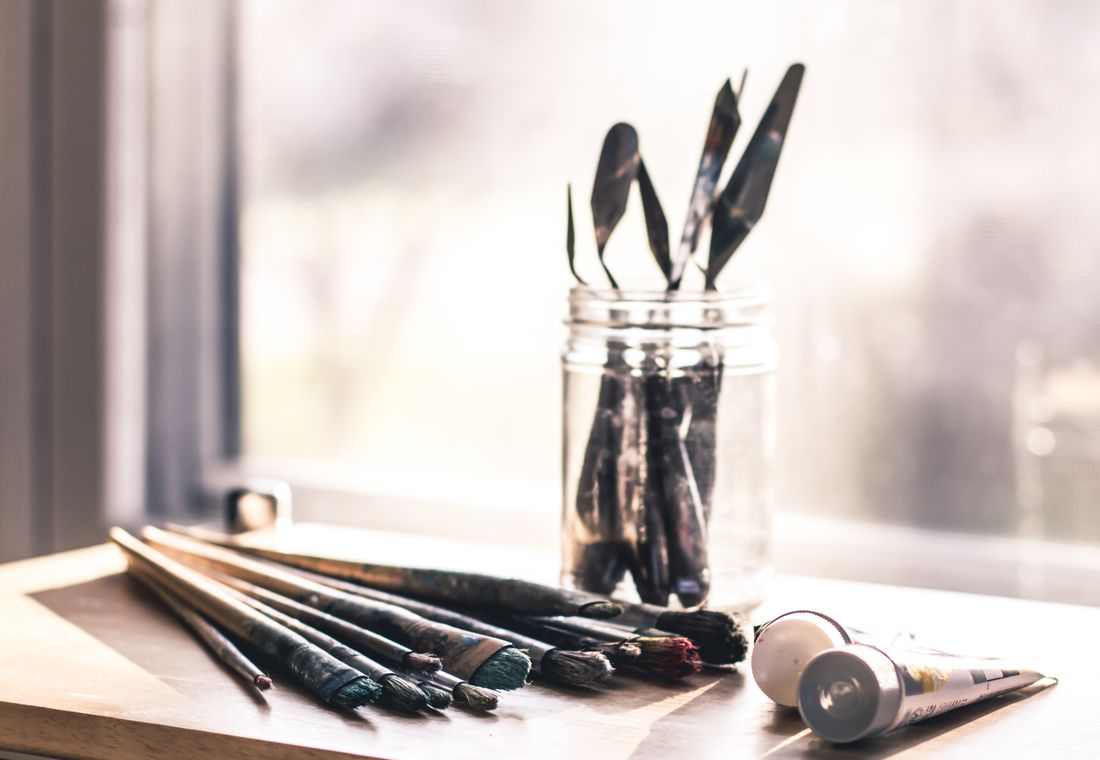
These shots are also usually the easiest and fastest to get well, since they don't require directing a person, just good light and a considered angle on something that's already sitting there. A studio visit that skips them because the schedule ran long is skipping some of the highest-value, lowest-effort material available in the room.
Photographing work that isn't finished yet
Unfinished work is worth photographing carefully, not just glancing at. A piece mid-process, with visible layers, pencil marks, or partial color, tells a different and often more interesting story than the same piece finished and photographed for documentation later. The two aren't competing, a work-in-progress shot from a studio visit and a clean documentation shot of the finished piece serve completely different purposes and audiences.
It's worth checking with the artist before including in-progress work in anything that will circulate publicly, since some practices are private about unfinished pieces for reasons that have nothing to do with the photography, timing, superstition, simply not being ready to share yet. A quick confirmation avoids an awkward conversation after the fact.
Working with the studio's actual light
Most working studios weren't set up with photography in mind, and that's usually fine. A north-facing window that gives a painter consistent, even light to work by tends to make excellent photo light too, without needing much added. The instinct to bring in a full lighting kit and override the room isn't always the right call, since part of what makes a studio visit feel authentic is that it was shot in the actual conditions the artist works in every day.
Where the natural light genuinely isn't enough, a small amount of supplemental light, bounced or diffused rather than direct, can fill in shadows without changing the character of the room. The test worth applying: would the artist recognize this as roughly how their studio actually looks on a normal day. If the answer is no, the lighting has gone further than a studio visit needs it to.
How studio visit photos actually get used
A well-rounded studio visit set tends to outlive any single use. The wide space shot works for a press feature's opening image. The materials detail works for social content and website texture. The working shots work for process-focused posts and grant applications that ask for evidence of an active practice. The portrait covers bios, press requests, and anywhere a clean headshot-style image is specifically needed.
That range is exactly why treating the visit as "just get a good portrait" undersells what the session could produce. A single portrait covers one use well. A full studio visit set covers most of the situations an artist will actually run into over the following year, without needing to schedule another shoot for each one.
It's worth asking, before the shoot, what the images are actually needed for over the next year, a grant cycle, a gallery relationship, a press push, since that answer can shift the balance of the session slightly. An artist heading into open-call season benefits from extra time on works in progress and process detail. An artist about to do press benefits from extra time on the portrait. The five-part structure stays the same either way, it's just a question of where the extra ten minutes go.
Frequently asked questions
What's the difference between a studio visit shoot and a regular artist portrait?
A portrait is built around the artist's face and presence. A studio visit is built around evidence of process, materials, works in progress, tools, and the artist actually working, with the portrait as one part of a larger set rather than the whole point.
Do I need to clean my studio before a studio visit shoot?
A little tidying helps, mainly removing things that are genuinely in the way or distracting rather than making the space look unused. Some real clutter, paint-stained surfaces, works in progress, actually supports the photos rather than undermining them.
How long does a studio visit shoot usually take?
Most run 60 to 90 minutes, enough time to cover the workspace, materials, works in progress, and a set of portraits in and around the space without rushing any single part of it.
Should the artist be working during the shoot or posing?
A mix works best. Genuine working moments produce the most useful process shots, and a few minutes of direct portrait work, with the artist's attention on the camera, covers the uses that specifically need a clear portrait.
What should a studio visit set of photos include at minimum?
A wide shot of the space, a materials or tools detail, the artist genuinely working, a portrait with direct attention on the camera, and if relevant, a work in progress that shows the process rather than only the finished result.
Get a studio visit that shows the real practice.
Space, materials, process, and portrait, covered in one session built around how you actually work.
Explore portraits →