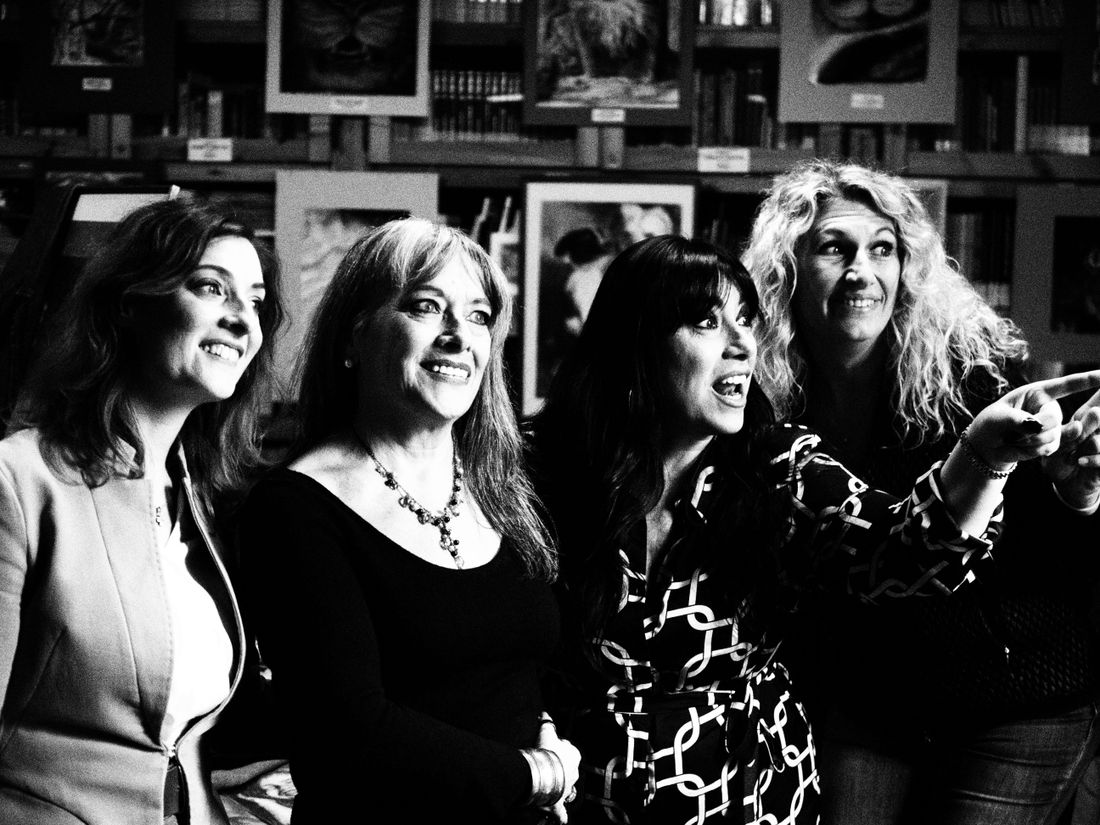
A press preview and a patrons' or members' preview can happen in the exact same gallery, with the exact same work on the walls, sometimes in the exact same week, and still need almost opposite coverage. A press preview exists to produce images a publication will run: clean installation shots, minimal people, nothing that dates the photo or crowds the art. A patrons' or members' preview exists to make donors and members feel personally recognized, which means the photographer's job flips toward faces, greetings, and the room actually being used. Treating them as the same assignment is the fastest way to end up with a folder of pretty, useless photos.
A patrons' or members' preview needs photography built around people, not walls. Where a press preview wants clean installation shots with the room empty, a patrons' preview needs faces, handshakes, and donors seen with the work and with each other, because the photos exist to make people feel recognized, not to illustrate a review.
What Changes When the Room Is the Same but the Audience Isn't?
A patrons' or members' preview and a press preview can share the same gallery, the same lighting, and the same week on the calendar, and still call for opposite documentation. One exists to produce images a publication will run. The other exists to make the people in the room feel seen. Everything downstream of that difference changes.
A press preview is quiet by design. Editors and critics move through the space early, before the crowd arrives, so the photographer can work the walls without people in the frame. The resulting images need to read as clean, professional, and timeless: no wine glasses, no name tags, no clustered conversation blocking a canvas. A patrons' or members' preview is the opposite kind of quiet room. It is lightly attended on purpose, often before the show opens to the public, specifically so donors and members get personal time with the work and with each other. The photography has to capture that closeness, not erase it.
In practice, this means a photographer walking into what looks like an identical event needs a different mental model before the first frame. Ask what the room is actually for. If the goal is press placement, prioritize the art. If the goal is donor and member cultivation, prioritize the people experiencing the art together, because that shared experience, not the art alone, is the actual product the evening is selling.
What Does a Press Preview Ask a Photographer to Prioritize?
A press preview asks a photographer to prioritize clean installation shots a publication can run without further editing: full pieces, even light, no crowding, and almost no visible attendees. The photographer is effectively shooting the show, not the party, because the images need to hold up next to a critic's byline months later.
That priority shapes every choice on site. Wide shots of the gallery capture the hang and the flow between rooms. Straight-on and slightly angled shots of individual works avoid glare and distortion so a piece reads accurately in print or online. Anyone who does appear in a frame is usually there by accident of timing, standing at a respectful distance, not posed and not the subject. A press preview photographer also thinks in terms of what an editor needs later: a detail shot of brushwork, a shot that shows scale next to a doorway or a person's silhouette, a wide establishing shot for a gallery roundup.
The room itself is built to support this. Press previews run early and stay small on purpose, so the photographer has time and space to work methodically rather than reacting to a crowd. There is no rush to catch a specific donor mid-conversation, because donor recognition is not the assignment. The entire session is oriented toward one outcome: images that make the work look its best to people who have never stood in the room.
What Does a Patrons' or Members' Preview Ask For Instead?
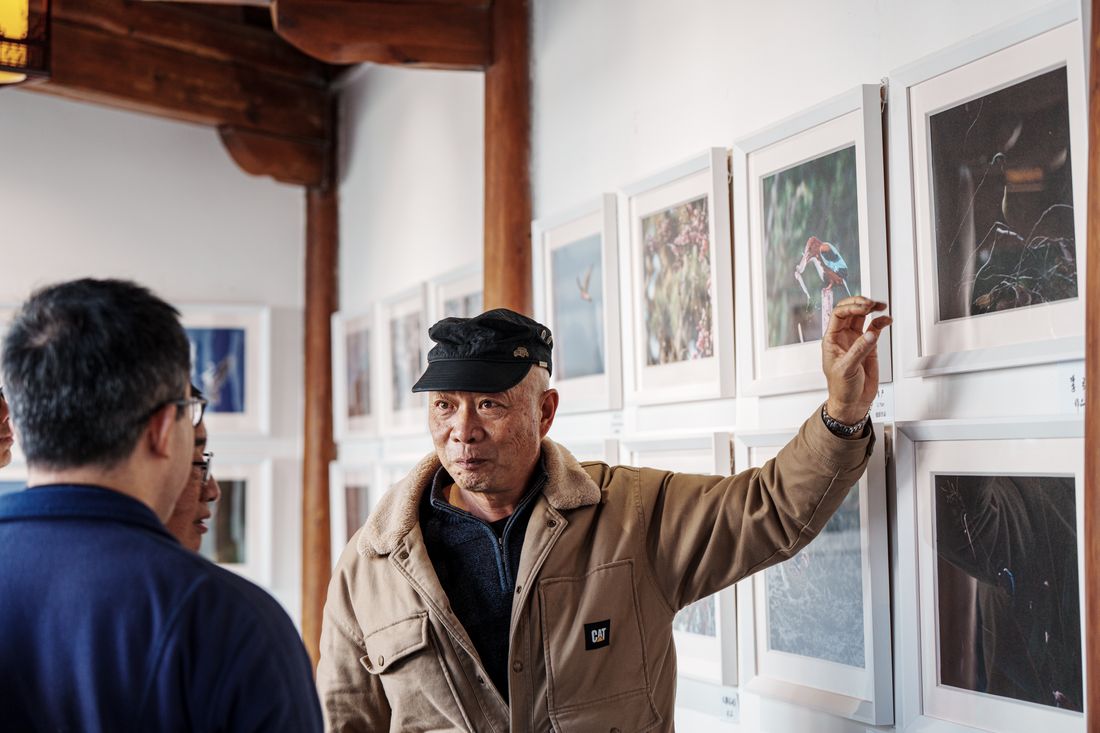
A patrons' or members' preview asks a photographer to prioritize the opposite of a clean installation shot: faces, greetings, small groups in conversation, and donors seen physically near the work and near each other. The art still needs to appear in frame, but as the backdrop to relationships, not as the subject on its own.
This flips the shot list. Instead of an empty gallery wide shot, the useful version includes two or three members clustered in front of a piece, mid-laugh or mid-conversation, with the work clearly visible behind them. Instead of a glare-free straight-on detail shot, the useful version might be a donor gesturing toward a canvas while explaining something to a friend. The photographer is watching for moments of genuine connection: a founding member greeting a newer one, a longtime donor talking with an artist, a small group actually engaging with the work rather than walking past it.
This changes pacing too. A patrons' preview usually has more movement and more overlapping conversations than a press preview's quieter early hour, so the photographer works closer to a documentary rhythm: staying mobile, anticipating who is about to greet whom, and staying ready for a natural moment rather than waiting for the room to clear. Nothing here is staged in the way a formal portrait would be. The goal is coverage that reads as warm and real when a donor sees themselves in it later.
How Does a Photographer Read a Room Built for Cultivation?
A photographer reads a cultivation-focused room by watching relationships instead of watching walls. A press preview rewards scanning the art for the strongest angle. A patrons' or members' preview rewards scanning the crowd for who is talking to whom, who just arrived, and who the staff is quietly steering toward a specific conversation.
Development and membership staff usually build these evenings around specific pairings on purpose: a major donor meeting a curator, a board member catching up with a longtime member, a prospective donor being introduced around by someone who already gives. None of that is announced from a podium. It happens in small clusters near the bar, near the entrance, near a particular piece someone requested to see again. A photographer who only watches the art will miss all of it.
This is why reading the room matters more here than technical polish. The photographer needs to notice body language that signals a meaningful introduction is happening, move close enough to catch it without interrupting, and step back before the moment feels observed. It also means staying aware of who matters to the institution that night, which is a different kind of awareness than knowing which piece is the strongest composition. A press preview photographer studies the show ahead of time. A patrons' preview photographer benefits far more from a short briefing on who is expected and why they matter.
What Board and Donor Recognition Shots Actually Matter?
The recognition shots that matter most are simple ones: a donor or board member with the artist, a donor with a curator or director, small groups of members standing together, and anyone being formally thanked or introduced getting a clean, flattering frame. These are the images most likely to get used again, individually, for that specific person.
Board and donor recognition photography works differently than general event coverage because each frame can get pulled and sent to one specific person rather than used as part of a wider set. A slightly awkward expression or an oddly cropped hand matters more here than in a candid crowd shot, because the recipient will look closely at their own photo. It helps to catch these moments a beat after introductions happen, once people have settled into a natural stance, rather than mid-handshake when expressions are least reliable.
Staff can make this easier by pointing out, quietly and in advance, who the priority pairings are: the honoree, the outgoing board chair, a donor being publicly thanked for a specific gift. A photographer working without that context will still get good candids, but will likely miss the handful of frames that actually get requested afterward. Recognition photography rewards a short list over a long one. Five specific, well-lit, well-composed pairings beat fifty undifferentiated crowd shots when the goal is making individual donors feel seen.
How Does Patrons' Preview Coverage Get Used Afterward?
Patrons' and members' preview coverage gets used one relationship at a time: a photo attached to a thank-you note, a donor report, a membership renewal appeal, or the next ask. A press preview's coverage gets used once, in a publication, and then archived. That difference alone should shape how a photographer shoots and how the studio delivers the files.
A thank-you note that includes a photo of the donor at the event reads as personal attention, and it only works if that photo exists and is easy to find. A donor report benefits from a handful of warm, candid images that show the community the gift supports, not just the art it funds. A membership team building next season's renewal appeal wants images that show people enjoying themselves, because that is what a prospective renewer is actually buying. None of this overlaps with what a press preview needs, which is why the same photo shoot rarely serves both purposes well.
This also changes delivery. Press preview images usually go out fast, in a small curated set, to a handful of editors on a deadline. Patrons' preview images are more useful organized by person or by moment, so development and membership staff can find the photo of a specific donor months later without scrolling through hundreds of frames. Naming and light captioning at delivery save real time on the development side.
How Should Staff Brief a Photographer for a Patrons' Preview?
Staff should brief a patrons' or members' preview photographer with a short list of names and relationships, not just a run-of-show. Who is the honoree. Which board members are attending. Which donor is being quietly cultivated for a larger gift. A press preview briefing is almost entirely about the art; a patrons' preview briefing is almost entirely about the people in the room.
A useful briefing includes who is arriving early and who tends to arrive late, since a photographer who knows this can be ready rather than reactive. It includes any planned remarks or toasts, even informal ones, since those moments usually produce the strongest recognition shots of the night. It includes a heads-up on anyone who prefers not to be photographed, which matters more at a donor event than almost anywhere else, since these are ongoing relationships the institution has to protect over years, not just one evening.
It also helps to name the outcome up front: is this coverage mainly for a donor report, a set of individual thank-you photos, next season's renewal materials, or all three. A photographer shooting toward a known outcome makes better in-the-moment decisions than one guessing at intent on the fly. Five minutes of context before doors open, covering names, priorities, and planned moments, does more for the usefulness of the final set than almost any amount of technical direction given on site once the room has already filled.
What Goes Wrong When the Two Preview Types Get Treated the Same?
Treating a patrons' or members' preview like a press preview produces a set of technically clean, functionally useless photos: an empty-feeling room, no faces staff can identify, and nothing to attach to a thank-you note or a donor report. Treating a press preview like a patrons' preview produces the opposite problem, images too crowded and too candid for any publication to run.
The most common version of this mistake is booking one photographer for one evening and assuming a single shot list covers both goals at once. It rarely does, because the two audiences want opposite things from the exact same room. A press-minded shot list under-documents the people a donor report needs. A patrons-minded shot list under-documents the clean installation views a press placement needs. When both audiences attend the same event, the fix is deciding in advance which goal is primary and briefing the photographer accordingly, or openly accepting that the set will lean toward one use over the other.
The other common gap is timing. Press previews run early and quiet, patrons' previews run once the room fills in and conversation picks up. A photographer who arrives expecting one kind of room and gets the other loses the early minutes making the mental adjustment. Naming the event type clearly when booking, and confirming which shot priorities matter most beforehand, closes this gap before it quietly costs usable frames.
Frequently asked questions
Is a patrons' preview the same thing as a members' preview?
They function the same way for photography purposes, even though the guest list differs. A patrons' preview usually centers on major donors, and a members' preview centers on the broader membership base. Both prioritize personal recognition over press-ready installation shots, and both need a photographer focused on faces, greetings, and people engaging with the work rather than clean, empty-room documentation the way a press preview would.
Can one photographer cover both a press preview and a patrons' preview on the same day?
Yes, if the two events are scheduled separately and the photographer is briefed on the shift between them. Because the shot priorities are nearly opposite, treating the whole day as one continuous shoot usually under-serves one audience or the other. Naming each segment clearly, with its own priorities and its own short shot list, lets the same photographer deliver two genuinely useful sets instead of one blended, less useful one.
Do we need a formal shot list for a patrons' preview, or can it stay candid?
A short list still helps, even for a warm, candid-feeling evening. Naming the honoree, key board members, and any planned remarks in advance means the photographer catches those specific moments cleanly instead of missing them in the flow of the room. Everything outside that short list can stay fully candid. The goal isn't a rigid schedule, it's making sure the handful of recognition moments that matter most don't slip by unnoticed.
What should we do with patrons' preview photos after the event?
Sort them by person or moment rather than leaving them as one undifferentiated batch. Pull individual images for thank-you notes, select a warm group of candids for a donor report, and set aside a few crowd or atmosphere shots for membership renewal materials. Light captioning or naming at delivery makes this much faster than searching hundreds of unsorted frames months later when development staff actually need a specific photo.
How far in advance should we brief a photographer on donor priorities?
A short call or written brief a day or two ahead is usually enough, covering names, relationships, and any planned toasts or remarks. What matters is that the information reaches the photographer before doors open, not how far in advance it's sent. A same-day briefing works perfectly fine too, as long as it happens before the room fills and the first meaningful moments start happening in front of the photographer.
One night, two openings, no dropped coverage.
We plan clustered opening nights before they turn into a scramble, whether that means a split schedule, a second shooter, or an early enough booking that the calendar never becomes the problem.
Explore event coverage →