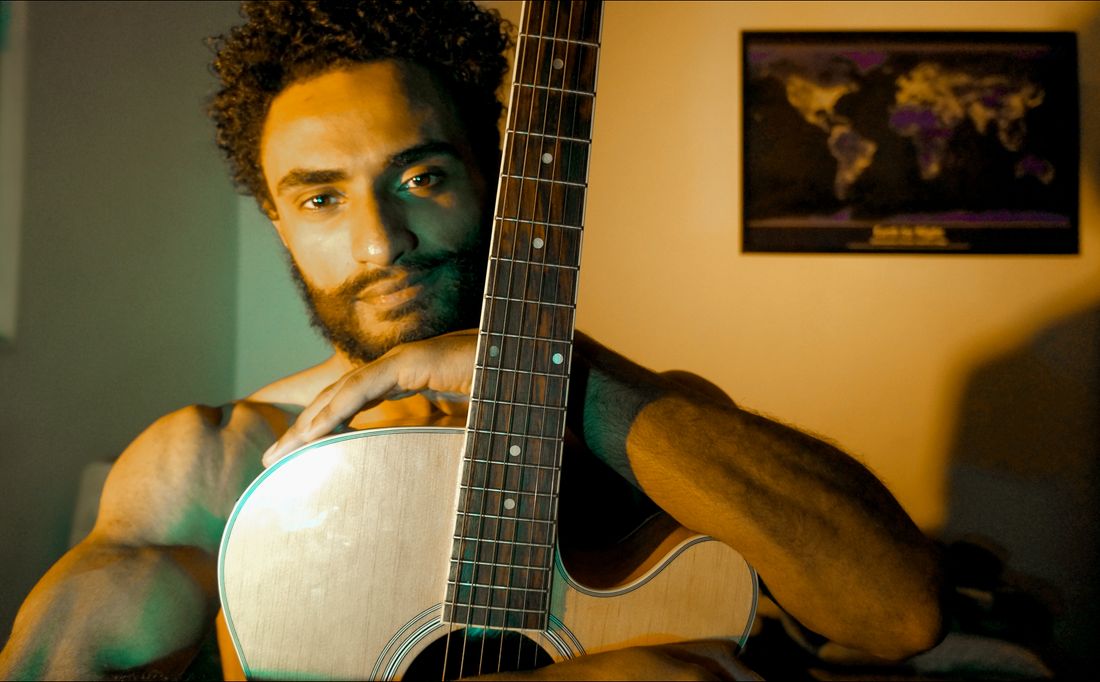
A guitarist who can hold a room for two hours can freeze completely in front of a still camera three feet away. That's not a lack of skill. It's a persona built for a stage trying to survive a very different kind of attention. What gets made from that session depends on one decision nobody usually makes out loud: what is this portrait actually for?
A performer's portrait competes with their stage persona because that persona is part of the work, not a mask to remove. The fix is deciding the photo's register, press or booking, album or release art, or an about page, before the session starts, since each wants a different ratio of person to persona.
Why Does a Performer's Portrait Compete With Their Own Persona?
For most portrait subjects, the goal is finding the person behind the work. For a performer, the persona is part of the work, and photographing around it produces something honest and useless. A performer portrait has to decide how much stage character belongs in the frame, because stripping it out entirely removes the thing people came to see.
That's the tension that makes this kind of session harder than a standard portrait. A painter's studio persona and their private self are usually close enough that finding "the real person" is the whole job. A performer's stage self is a built thing, developed over years of shows, and it's often the version of them a booker, a fan, or a journalist already recognizes. Photographing them as if that self doesn't exist doesn't produce something more true. It produces a stranger.
The opposite failure is just as common. A portrait that leans entirely on the stage persona, full performance energy pointed at a still lens, tends to read as generic promo material rather than a photograph of a specific person. It looks like every other artist's press kit, because the persona was built to work for a crowd, not for one camera three feet away.
The honest version sits between the two. It keeps enough of the performer's built identity that the photo still looks like them, while keeping enough of the unguarded person that it doesn't collapse into a costume. Getting that balance right starts before the camera comes out, with a decision about exactly what the photo needs to do.
What Register Is the Portrait For, and Why Does That Decide Everything?
A musician's portrait needs a register decided before the session starts, because a press or booking photo, an album or release image, and an about-page photo each want a different ratio of persona to person. Deciding the register first tells the photographer how much performance energy to invite and how much to quiet down.
A press or booking photo has one job: read clearly, fast, at a small size, to someone deciding whether to book the act. Promoters and festival programmers crop these square and shrink them into a thumbnail next to a dozen other acts on the same bill. Persona matters here, but only the legible kind. A recognizable expression and a clean silhouette beat a moody, ambiguous frame that photographs beautifully at full size and disappears at 80 pixels wide.
Album or release art has more room to work. It's usually the one photo the artist controls completely, seen at full size, paired with their own music, with time for a viewer to actually look. This is where the built persona can carry more weight, because the image isn't competing with ten other acts on a lineup page. It's the artist's own frame.
An about-page portrait usually wants the opposite of both. It sits next to biography text, gets read slowly, and benefits from the person a fan doesn't usually see: someone thinking, working, or simply still. Naming the register before the shoot, not during it, is what keeps a session from producing a photo that's technically good but wrong for the job it needs to do.
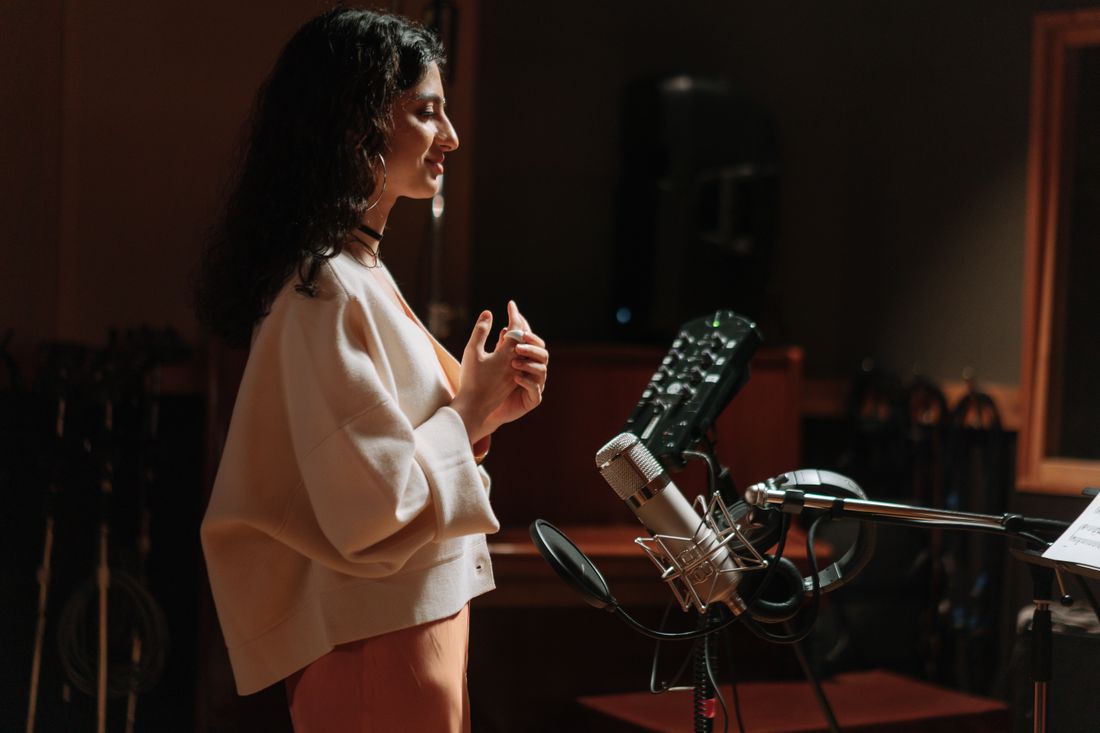
Why Do Performers Over-Perform for a Still Camera?
Performers over-perform for a still camera because a static lens, with no crowd, no music, and no rhythm to react to, removes every cue their stage instincts were built around. The body defaults to the biggest, most familiar gesture instead of a real one. The fix is a rhythm or a task, not an instruction to simply act natural.
On stage, a performer's expressions and posture are calibrated to read from thirty feet back, through stage lighting, to a moving crowd. None of that calibration works three feet from a lens in a quiet room. Without a crowd's energy to bounce off, many performers reach for the only physical vocabulary left: the big performance face, the practiced angle, the same gesture that works from a stage. It reads as effort in a portrait, not presence.
Telling someone to "just be yourself" rarely helps, because a performer's professional self already involves being watched, and standing still under a lens with nothing to do highlights that awkwardness rather than resolving it. A more useful move is reintroducing rhythm: playing a few real bars, humming, tuning an instrument, or repeating a small physical habit from their actual practice. Motion the body already knows how to do settles the over-performing reflex faster than instruction does.
It also helps to shoot through several takes without pausing to check the camera each time. The first frames after "get ready" are usually the most performed. The ones that land come a beat later, once the performer stops monitoring themselves and starts doing something instead.
What Direction Actually Works for a Performer in Front of a Still Camera?
Direction for a performer works better when it borrows from performance itself: give them something to do, not a pose to hold. A task, playing a phrase, adjusting an instrument, reacting to a sound, produces a real expression as a byproduct, while a held pose produces a performed one, because holding still is not a skill most performers' bodies have.
Most portrait direction assumes a subject who can comfortably do nothing: chin down, shoulders back, hold that. Performers are often the worst subjects for that instruction, because their trained instinct under attention is to do something, not to freeze. Fighting that instinct usually produces visible tension in the shoulders and a held, stiff quality around the eyes that reads as discomfort rather than composure.
Working with the instinct instead of against it means building the shot around an action instead of a position. A guitarist adjusting a tuning peg, a vocalist mid-breath before a note, a drummer resetting a stick, all give the body a real reason to be in motion, and the face follows naturally rather than performing an expression on command. The photographer's job becomes catching the right moment inside that motion, not directing a static expression from scratch.
This also solves the over-performing problem from a different angle. A performer given an actual task has somewhere to put their attention besides the lens. That's usually the difference between a portrait that looks caught mid-life and one that looks like it's waiting to be taken.
Is the Instrument a Prop, or Is It Actually Being Played?
An instrument in a portrait is a prop, and like any prop, it flatters no one when it's simply held for the camera. A guitar clutched at the body, a horn propped against a hip with no real grip, reads as a costume piece, not an extension of the person, because a viewer can tell playing apart from displaying.
The tell is almost always in the hands. A musician's actual grip on their instrument, formed by years of muscle memory, looks specific: fingers positioned for a real chord, a bow held at the angle it's actually played, a mouthpiece seated the way it sits mid-performance. A hand arranged by a photographer into a generic "holding" position looks approximate instead, and viewers register that mismatch even without being able to name it.
The instrument works best in a portrait when it's doing something, or was just doing something a second ago. Mid-strum, just after a note, resetting between phrases, all give the hands a reason to be positioned the way they actually would be. Even a completely still instrument reads better when it's resting the way it naturally would after being played, rather than arranged for the frame.
The other option is honesty about what the instrument is for in that shot. If it's there purely as a visual identifier, keep it secondary: partially in frame, out of focus, resting nearby rather than held. An instrument that isn't pretending to be played looks more intentional than one that's held but not played convincingly.
What Do Stage Lighting Habits Translate to a Portrait, and What Doesn't?
Stage lighting habits translate to a portrait only partially: the instinct toward strong, directional, high-contrast light carries over well, but the specific fixtures, distances, and color choices built for a thirty-foot stage don't survive the move to a few feet from a lens. What works from the audience often reads as harsh or unnatural up close.
Performers used to stage rigs often have real instincts about their good angles, since they've watched themselves lit from the same positions for years. That instinct is worth listening to. Where it breaks down is intensity and distance. Stage lighting is built to be seen from far away, through haze, competing with a crowd's ambient light, so it's punchy and saturated in ways that overwhelm skin at portrait distance. The same colored gel that looks dramatic from the back of a venue can look like a filter mistake three feet from a face.
Contrast is the other habit worth keeping, softened. Most performers photograph well under directional light with real shadow, rather than flat studio light, because it matches how they're used to being seen and gives their features more shape. The difference is scale: a portrait needs one strong source, carefully placed, not a full rig recreating a stage.
Color is usually the first thing to leave behind. A performer's stage identity might involve a signature colored wash, but that same color cast in a portrait reads as a lighting choice rather than a personality, and it can make skin tone hard to correct later if the photo gets reused elsewhere.
What Wardrobe Actually Reads on a Small Press Thumbnail?
Wardrobe for a musician's portrait needs to read at thumbnail size, since a large share of these photos end up small: a square festival lineup graphic, a tiny profile photo, a cropped image on a booking site. Fine pattern, busy layering, and low-contrast outfits that look considered at full size often collapse into visual noise once the photo shrinks.
Stage wardrobe is often designed for exactly the opposite conditions: seen from a distance, under changing colored light, meant to catch movement and read big. That same outfit, photographed still and close for a portrait, can look different than intended. Fine texture and pattern that add depth on stage often just look busy in a static, close frame, competing with the face instead of supporting it.
Solid colors and simple silhouettes tend to survive the trip to a small crop better than anything with fine detail. A single strong color block reads clearly even when reduced to a thumbnail, while a patterned jacket that looked sharp at full resolution can turn into a smear of texture once shrunk. This matters more for performers than most portrait subjects, since a much higher share of their photos end up small and cropped rather than displayed full-size.
It's worth asking directly what the photo's smallest expected use will be, since that answer should drive wardrobe more than what looks best on a monitor during the shoot. A jacket that photographs beautifully at full screen size but disappears into mud at 100 pixels wide has failed at the job most of these photos actually need to do.
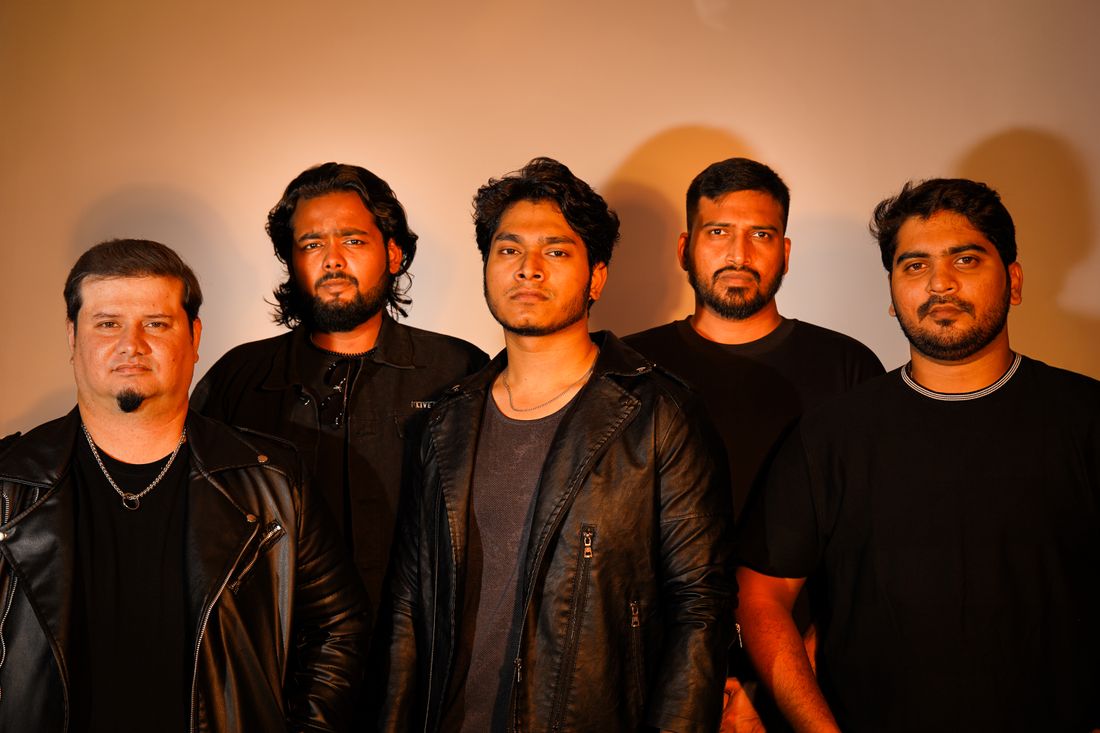
How Do You Handle a Band or Ensemble Portrait Without a Front-Man Problem?
A group portrait of a band or ensemble multiplies the same problem: if one member reads as the clear front of the frame, by position, lighting, or habit, the rest read as background rather than bandmates. That imbalance shows up in the finished photo even when nobody said it out loud during the shoot.
Bands often walk into a session with an existing hierarchy already baked in, a lead singer or a founding member who's used to being the visual focus, and it's easy for a photographer to default to that same arrangement without meaning to. Centering one person, lighting them slightly brighter, or letting them stand a step ahead of the others reinforces a dynamic that may already feel touchy inside the group, even if the difference on camera looks small.
A composition that treats every member as equally worth looking at, similar spacing, similar light, no one person a full step in front, tends to produce a photo the whole group is actually happy to use. That doesn't mean uniform poses. It means giving each person a real position in the frame rather than a supporting one.
It also helps to shoot more than one configuration: a straight-on equal lineup for official use, plus a looser, more dynamic arrangement where the energy shifts naturally between members instead of being fixed by a photographer's setup. Having both gives a band flexibility later, without forcing one version to carry every use the group will eventually need.
Frequently asked questions
Should a musician's portrait always include their instrument?
No. An instrument earns its place when it's doing something, being played, tuned, or just set down, not when it's held purely as a label that says "musician." A portrait can identify someone as a performer through expression, setting, or wardrobe instead. If the available instrument shot looks stiff or arranged, a clean portrait without it usually communicates more than an awkwardly held guitar or horn.
How many outfit changes should a musician bring to a portrait session?
Two or three solid, simply cut pieces usually cover the range better than a large wardrobe of patterned or stage-specific outfits. Since so many musician portraits end up small, cropped, or square, complex texture and layering rarely pay off once the image shrinks. One darker, higher-contrast option and one lighter, softer option give enough range to cover press, release, and about-page uses without overcomplicating the shoot or the wardrobe decisions on the day.
Can the same session produce both a press photo and an album cover image?
Sometimes, but treat them as separate goals within one session rather than one photo doing both jobs. A press photo favors a clean, legible expression that survives a small crop; an album cover has more room for mood and persona. Planning distinct setups, even briefly, for each register inside the same shoot gets both usable images instead of one compromise photo that half-serves each use.
Why does a band portrait feel unbalanced even when everyone was actually photographed?
Balance usually comes down to light and position, not whether everyone appears in frame. If one member is lit brighter, stands a step ahead, or is centered while others flank, the composition reads as a lead-and-background arrangement even with equal screen time. Even spacing, matched light, and treating each person's position as equally intentional produce a group photo that reads as one act, not a soloist with support.
Does a quieter, less performed portrait undersell a performer's stage presence?
Not if the register calls for it. A press or about-page photo isn't meant to replicate the stage; it's meant to be legible and specific to the person. Stage presence still shows up in posture, expression, and setting without full performance energy pointed at the lens. The performer's actual persona can show up fully in the register built for it, like release art, rather than every photo trying to carry it.
A portrait that's aged doesn't always need a full reshoot.
We'll look at what you have and tell you honestly whether a refresh session covers it or the work calls for a new concept.
Explore portrait sessions →