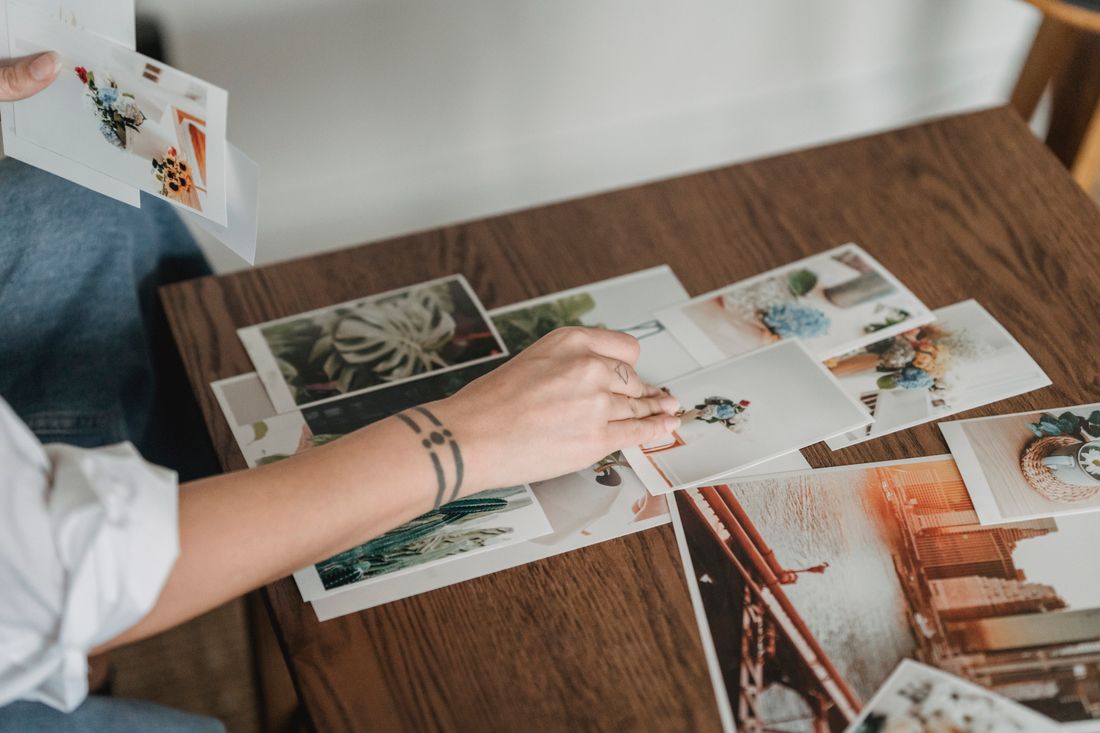
A new gallery director walks into an archive built by three different people over five years: a summer intern who shot on a phone, a freelance photographer who came in twice a year, and whoever grabbed the camera during a busy opening. None of it was built to match, because nobody was ever asked to make it match. The instinct is either to keep posting whatever is closest at hand or to declare the whole thing unusable and start from a blank feed. Neither move is the right one, and the difference matters more in month one than it will in year one.
An inherited content archive rarely needs a full reset. Sort what exists into three buckets: usable as is, usable with a light edit, and not usable, judged on lighting, framing, and subject rather than who shot it or when. Set one simple standard for new content, then let the archive fill in around it instead of racing to replace it.
Where should a new gallery director start with an inconsistent content archive?
Start by sorting the existing archive into three plain buckets, usable now, usable with a quick edit, and not usable, before deciding anything about the future feed. That sort takes a few hours, not a redesign, and it tells you what you actually have before you decide what to change. Most new directors skip straight to a plan and end up planning around guesses instead of the actual material sitting in front of them.
An archive built by three different people over five years was never going to look like one voice, because nobody was ever asked to make it one. A summer intern shooting on a phone, a freelance photographer booked twice a year, and a staff member grabbing shots during a busy opening are three separate sets of habits, equipment, and priorities stacked on top of each other, none of which were ever compared against one another. Judging the whole archive by its least consistent stretch usually means throwing out work that still holds up fine.
The sort matters because it separates two different problems that feel like one. Some of the archive is genuinely unusable, blurry, poorly lit, or cropped in a way nothing can fix after the fact. Some of it is fine and only looks inconsistent sitting next to everything else on the same page. Solving both with the same fix, either mass deletion or a full reshoot, wastes real time on work that never needed either one.
Why does five years of content from three different people rarely agree?
Content from three different people rarely agrees because nobody set a shared standard for any of them to follow, so each person defaulted to whatever equipment, habits, and instincts they already had on hand. A phone camera, a rented lens, and a point-and-shoot grabbed mid-opening will never sit together on a feed as if one person made all three decisions, no matter how skilled each individual person was.
The mismatch usually runs deeper than gear. One person may have leaned on natural window light because that is what they had access to on a given afternoon, while another shot everything under the gallery's overhead lighting because nobody told them otherwise or gave them a reason to do differently. Framing habits drift the same way: a photographer trained to fill the frame with the artwork shoots very differently than someone told to capture the room and the crowd around it. None of these individual choices were wrong for the moment they were made in. They just were never coordinated with each other by anyone.
Turnover compounds the problem further. Every time a gallery brings in someone new, whether a hire, a freelancer, or whoever happens to have a camera that week, the archive inherits one more set of unstated assumptions layered on top of the last. Five years of that layering produces exactly what a new director walks into: a body of work that is individually reasonable and collectively scattered, because consistency was never anyone's actual job in the first place.
Does an inconsistent archive need to be thrown out and rebuilt from scratch?
No. A full reset is rarely the right call, because most inconsistent archives contain a meaningful amount of usable work sitting next to the weaker stretches, and discarding all of it trades a real asset for an empty feed while a reshoot gets scheduled and budgeted. The instinct to start clean is understandable, especially under a new title, but it usually costs more than it actually solves.
An empty archive has its own consequences. A gallery feed or website gallery that suddenly goes quiet, or restarts entirely from a single new photo shoot, reads as a gap to anyone who was already following the work closely. Collectors, artists, and press contacts who scroll back through old posts are looking for continuity, not a clean slate that erases everything that came before their arrival. Wiping the record removes the very thing a new director usually wants to project: that the gallery has been doing this consistently, even before they personally arrived.
The better default is closer to renovation than demolition. Keep what photographs well regardless of who took it or when it was taken. Retire what genuinely does not hold up under a closer look. Build new work forward from a clearer, written-down standard. That approach preserves the archive's real value, the shows it documented, the artists it supported, while fixing the part that was actually broken, which was never the content itself so much as the absence of any shared standard behind it.
How do you actually audit an inherited content archive before deciding anything?
Audit the archive by sorting every piece into usable, fixable, or retire, judged only on lighting, framing, focus, and whether the subject still reads clearly, never on who shot it or how old it happens to be. That single pass, done chronologically or by exhibition, usually takes a few hours and turns a vague sense of "this all looks off" into a concrete, workable list a director can actually act on.
Usable content passes on its own merits: it is sharp, well lit, and clearly shows the work or the room without distraction. Fixable content has a real problem with a cheap solution, a crop that tightens the frame, a color correction, a caption that adds missing context the original post never had. Retire covers the rest, images too blurry, too dark, or too cluttered to save without reshooting the moment entirely, which usually is not possible for a past opening or an installation long since taken down.
Resist judging by source during this pass. A phone photo from a rushed opening can still be sharp and well composed, while a photo taken with better equipment can still be unusable because of bad light or an awkward crop that nothing fixes. The sort should produce a simple count, roughly how much of the archive falls into each bucket, and that number is what actually tells a new director whether they are managing a minor cleanup or a genuine rebuild.
What makes some of the old content still usable even when the style differs?
Old content stays usable when the fundamentals hold up: the subject is sharp, the light is even, the artwork or room reads clearly, and the framing has room to crop without losing the point of the shot. Style differences, warmer tones, a different crop ratio, a slightly different angle, are usually fixable in an edit and rarely disqualify a photo on their own merits.
A gallery feed does not actually need every photo to look like it came from the same shoot. It needs every photo to look intentional and clear, which is a lower and more achievable bar. A well-lit shot of an artwork from three years ago, taken by someone who has since left the gallery, can sit comfortably next to a shot from last month if both are sharp, well cropped, and free of clutter in the background. What breaks the feed is not stylistic variety, it is inconsistency in the basics: some frames crisp and clean, others dark, cluttered, or cropped awkwardly around the edges.
This is also where a light edit earns its keep. Adjusting exposure, straightening a crop, or converting a slightly warm photo toward a more neutral tone can bring an otherwise solid image in line with newer work without reshooting anything at all. The goal is not to erase every trace of who took the photo. It is to make sure the fundamentals are strong enough that the difference stops being distracting to anyone scrolling through.
How do you set a simple content standard going forward without overhauling everything at once?
Set a short, specific standard for new content only, covering light, framing, and a couple of consistent shot types, and apply it to everything shot from this point forward. A workable standard fits on one page: shoot artwork straight on in even light, capture the room wide before it fills with people, and keep a consistent crop ratio across the feed. Nothing about the past has to change for this to start working right away.
The standard does not need to cover every situation a gallery might encounter. It needs to cover the handful of shot types that make up most of a monthly content flow: artwork on the wall, installation views, a few moments from an opening, and the occasional detail shot worth a closer look. Naming those categories once, in writing, does more to fix future inconsistency than any amount of retroactive editing on the existing archive ever will.
Going forward, the archive stops accumulating new inconsistency the moment the standard is in place, even while older, mismatched content is still being sorted through in the background. That separation matters more than it sounds. A director does not have to solve five years of history before the feed can start looking coherent again. New posts built to the standard begin doing that work immediately, while the audit of older material continues at whatever pace actually fits the rest of the job.
Who should be involved in deciding what stays and what gets replaced?
Whoever is accountable for the gallery's public feed and archive, usually the director along with whoever manages social posting day to day, should make the final call on what stays, what gets a light edit, and what gets retired. Anyone who shot part of the original archive can be useful for context but should not hold veto power over a decision that is now the new director's to make going forward.
Context from the people who built the archive is genuinely useful when it is available. A former staff member or freelancer might know why a particular series was shot a certain way, whether an image was ever meant to be public-facing, or whether a stronger alternate frame exists somewhere unlabeled in an old folder. That knowledge speeds up the audit considerably, and it is one good reason to ask around before assuming the worst about an unfamiliar stretch of content.
The decision itself, though, belongs with whoever now owns the feed. A new director inheriting an archive is not obligated to preserve every past contributor's choices out of politeness, and treating the audit as a group negotiation among former photographers usually stalls it indefinitely, sometimes for months. The useful role for past contributors is informational. The decision role belongs to the person who will be answering for the feed going forward, and only that person.
How long does it typically take for an inherited archive to feel consistent again?
Most galleries notice the feed start to feel coherent within a month or two of setting a clear standard, because new content built to that standard quickly outnumbers the inconsistent posts sitting behind it. The full archive does not need to be resolved for the feed to stop feeling scattered. It only needs enough recent, consistent work at the top for a visitor scrolling through to get the right impression right away.
The pace depends mostly on how often new content goes out, not on how fast the old archive gets sorted or edited. A gallery posting a few times a week under the new standard builds a visibly consistent recent stretch faster than one posting occasionally, regardless of how thorough the earlier audit was. This is part of why an ongoing content rhythm matters more than a one-time cleanup project, once the initial sorting pass is actually done.
Older, inconsistent material can keep existing further back in the archive without actively hurting anything, as long as it is not the first thing a visitor sees when they land on the page. A director does not need to finish retiring or fixing every flagged image before the gallery starts to feel like it has one voice again. They need the newest work to be strong and consistent, which is the part actually within their control starting on day one.
Frequently asked questions
Do we need to reshoot the entire archive when a new director starts?
No. Most inherited archives have a meaningful amount of usable work sitting next to weaker stretches. Sort everything into usable, fixable, and retire based on lighting, framing, and clarity, then reshoot only what actually falls into the retire bucket. Treating the whole archive as unusable trades a real asset for an empty feed while a full reshoot gets scheduled, which usually costs more time than the sort itself.
How do you know which old photos are still usable?
Judge each photo on its own fundamentals: sharp focus, even light, a clear subject, and enough room in the frame to crop if needed. Who took it and how long ago rarely matters if those basics hold up. A phone photo from a rushed opening can outperform a better camera's shot taken in poor light or an awkward crop, so judge the result, not the equipment behind it.
Should the archive match a new director's exact personal style from day one?
No. A workable standard covers a few shared basics, light, framing, and consistent shot types, not one person's exact aesthetic preferences. Chasing an exact personal style from the outset usually means retiring far more usable content than necessary, and it slows down the transition considerably. Set the shared basics first, apply them consistently to new work, and let personal taste show up gradually as new content builds up on top.
What if the previous three people used completely different editing styles?
Editing differences are usually the easiest part to fix. A light pass, adjusting exposure, straightening a crop, or nudging color temperature toward neutral, can bring older images in line with newer work without reshooting anything. Editing style rarely disqualifies a photo on its own. The bigger question is always whether the underlying shot is sharp, well lit, and clear, since no edit fixes a genuinely bad frame.
How does ongoing monthly content prevent this problem from happening again?
A written, ongoing content rhythm gives every future contributor the same basic standard to shoot toward, instead of leaving each new hire or freelancer to default to their own habits and equipment. That consistency compounds the same way inconsistency did before, except in the useful direction this time. Pulling from the archive between shoots, on a steady schedule, also keeps quieter months from becoming the next inconsistent stretch to sort through later.
Not every month has an opening, but the feed still needs to run.
We plan content for the ordinary weeks as carefully as the big nights, mixing archive work with what's actually going on in the gallery.
Explore monthly media →