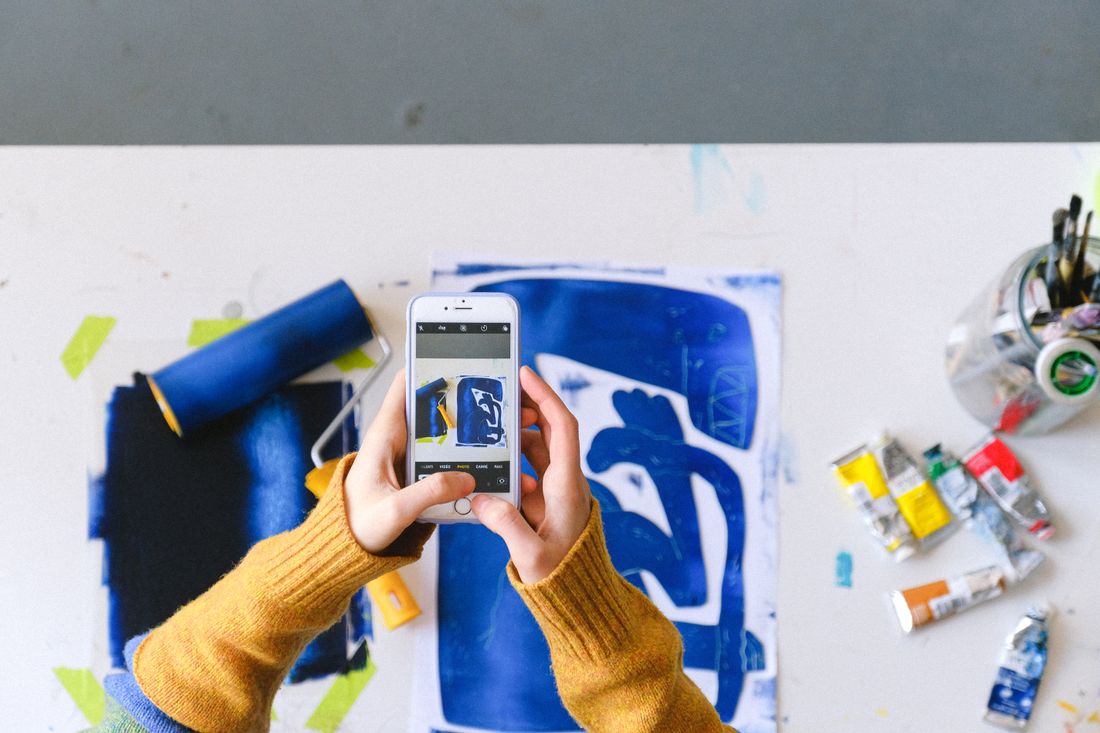
Ask most galleries or independent artists what happened to this month's content calendar and the answer is usually a version of the same story: the first two weeks went fine, then a busy stretch of real work arrived, and content was the thing that got skipped. That's not a discipline problem. A content calendar built as its own separate project has to compete with everything else on the schedule, and it's rarely the thing that wins.
The accounts that keep posting steadily, month after month, without a visible burnout cycle, usually aren't running a bigger calendar or a stricter plan. They've tied the habit to work that was already happening, so documenting it takes minutes instead of becoming a second job layered on top of the real one.
This guide covers why the separate-project version of a content plan tends to collapse, what actually counts as usable material from ordinary production moments, how to build a simple monthly rhythm around them, and when a dedicated shoot day still earns its place.
Why a separate content calendar usually falls apart
A content calendar built in a notes app in January, full of themed weeks and posting streaks, is easy to commit to on the day it's written. The trouble starts the first time a real deadline lands on the same day as a planned post. Client work always wins that trade, which it should, and the calendar quietly stops getting followed a week or two later without anyone deciding to abandon it outright.
The deeper issue is that a separate calendar usually asks someone to invent occasions to shoot: a flat lay of supplies, a quote graphic, a "behind the scenes" photo staged after the fact because nothing was captured during the actual moment. Invented content takes real effort to make look natural, and effort is exactly what a busy month doesn't have spare.
None of this means the instinct to plan is wrong. It means the plan needs to be built around moments that were already going to happen, so posting becomes a five-minute task attached to real work instead of a shoot that has to be scheduled from nothing.
The fix: build content into work that's already scheduled
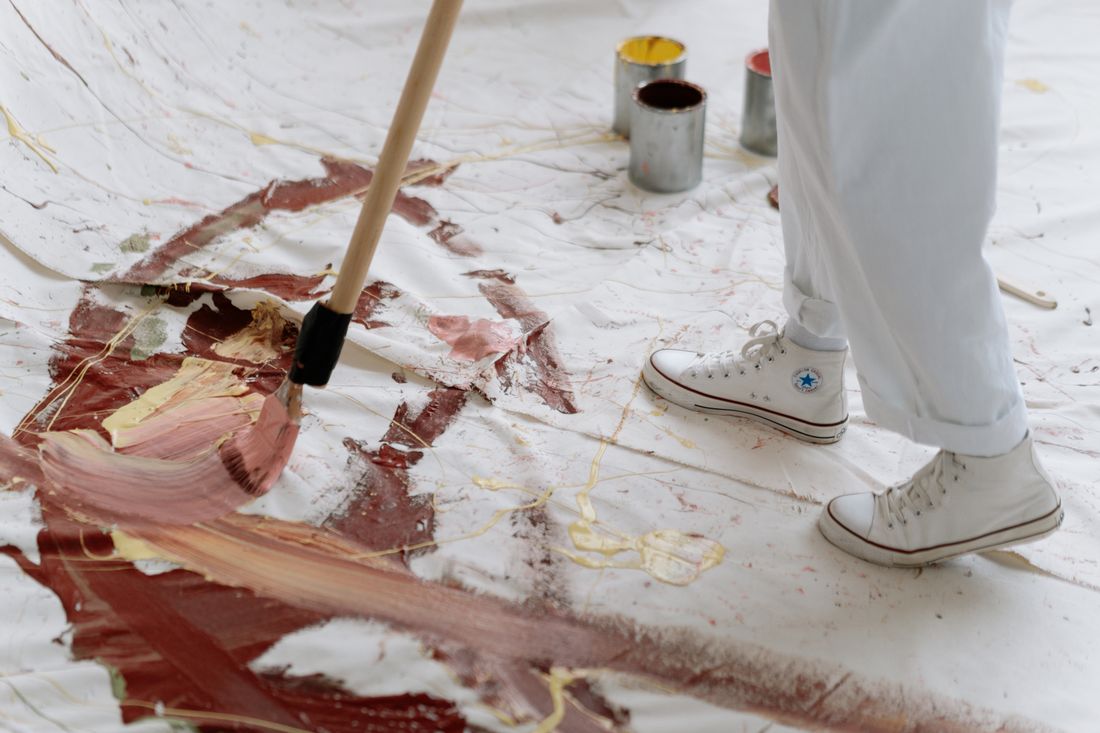
The simplest version of this shift is a small habit change, not a new system: whenever real work is already scheduled, someone has a phone within reach and thirty seconds to use it. A studio session that was already booked, an install that was already planned, a delivery that was already promised, all produce usable material without adding a single new item to the calendar.
This works because the material is honest. A photo taken mid-install shows the actual process, imperfections included, which tends to read as more credible than a polished restage of the same moment shot later for the sake of a post. Audiences that follow galleries and working artists are usually looking for exactly that kind of proof that real work is happening, not a highlight reel that could belong to anyone.
It also solves the burnout problem directly. Nobody has to find the energy for a dedicated content session on top of a full production week, because the documentation happens inside the session that was already going to take that time regardless.
What actually counts as usable material
Almost any moment in a normal production month can produce something worth posting, once the bar for "worth posting" gets set at useful and honest rather than polished. A framed piece being wrapped for delivery, a wall being patched before a hang, a proof sheet spread across a table, a crate being unpacked, a shelf of finished work before it ships to a fair: none of these need staging, and all of them tell a small, true story about the work.
The material doesn't need to feature a finished piece to be useful either. Process shots, half-mixed materials, a workspace mid-project, and quiet in-between moments all carry information a fully resolved image can't: that the work is ongoing, that a real person is behind it, and that the studio or gallery is an active place rather than a static portfolio.
What doesn't count as material is anything invented purely to fill a slot: a staged "coffee and sketchbook" flat lay with no connection to that day's actual work, or a stock-style quote graphic. Those posts are easy to spot as filler, and filler is usually what makes a feed feel like it's running out of ideas even when the studio itself is busy.
A simple monthly rhythm built around three kinds of moments
A workable rhythm usually rests on three recurring moment types rather than a fixed daily schedule. The first is process: whatever's actively being made, mid-progress, unfinished, and visibly in motion. The second is arrival or departure: work coming into the studio, going out to a client, or being installed somewhere new. The third is the result: the finished piece, the hung show, the delivered file, captured once the work is actually done.
Mapping a month against those three types, rather than against specific dates, keeps the rhythm flexible enough to survive a schedule that shifts. If an install gets pushed a week, the "arrival or departure" post simply moves with it instead of leaving a gap that has to be filled with something invented.
This is also where a monthly media relationship earns its keep over a one-off shoot: someone is already present across the month's real sessions, so the three moment types get covered as they happen rather than reconstructed afterward from memory.
What to capture without stopping the work
The goal during a real session is never to interrupt the work for the sake of a photo. A phone photo taken in the ten seconds before or after the actual task, not during it, usually captures the moment just as well without asking anyone to pose or pause.
A few reliable, low-effort captures: the space before work starts for the day, a close detail of the material or surface being worked on, hands mid-task from an angle that doesn't require anyone to look at the camera, and the space again once the day wraps. Together, that small set gives an editor real options without ever asking the person doing the work to break focus.
It's worth naming who's responsible for grabbing these in the moment, even informally. Waiting for "whoever remembers" tends to mean nobody does. A five-minute habit assigned to one person on session days, even loosely, produces far more usable material over a month than an unassigned good intention.
When a dedicated content day is still worth it
None of this argues against ever scheduling a dedicated shoot. A genuine launch, a new body of work debuting, or a rebrand still benefits from planned, considered images that a five-second phone photo mid-session can't replace. The difference is treating that day as the exception that fills a specific, named gap, rather than the entire monthly plan.
A useful test before booking a dedicated day: name exactly what the shoot needs to produce that ordinary sessions this month won't. If the answer is vague, "just some fresh content," the day is likely to produce the same invented-occasion problem the rest of this guide is trying to avoid. If the answer is specific, a portrait to anchor a new bio, a clean set of images for a press kit, the day has a real job to do.
Booking that day around an actual milestone, rather than a calendar gap, also tends to produce material that ages better. A launch shoot still looks like a launch a year later. A generic "let's get some content" day often reads as exactly that.
What to do during a quiet month
Not every month has an opening, a fair, or a launch, and that's the month this whole approach is actually built for. Quiet months still have real, ordinary moments: a studio reorganization, a supply restock, framing work, a slow afternoon of small fixes. None of it feels eventful in the moment, but it's exactly the material that makes a feed feel lived-in rather than performative.
Quiet stretches are also the right time to work back through material already sitting unused: process shots from a past session that never got posted, a detail photo from a past install, an in-progress piece that's since been finished. A monthly rhythm doesn't require everything to be freshly captured that same week.
Treating a quiet month as a content problem, rather than a normal part of the working rhythm, is usually what pushes someone toward the invented-occasion posts this guide is trying to avoid in the first place. The honest answer to a quiet month is often just a quieter month of posting, and that's fine.
Keeping the rhythm going once things get busy
The real test of any content rhythm isn't the calm month, it's the packed one. A rhythm tied to real work tends to survive a busy stretch better than a separate calendar does, because the busier the month, the more actual sessions there are producing raw material, even if nobody has time to think about posting until later.
That's the other advantage of capturing in the moment rather than scheduling a separate shoot: the material exists whether or not there's time to post it that week. A backlog of honest, unposted phone photos from a busy month is a much easier problem to solve later than an empty folder and a missed calendar block.
A rhythm built this way doesn't guarantee a viral post or a growth spike. What it guarantees is that the account keeps showing real, current work through both the quiet months and the packed ones, because the habit lives inside the production schedule instead of running alongside it as one more thing to keep up with.
Frequently asked questions
How often should a gallery or artist actually post?
Less than most people think going in. A steady two to three posts a week built from real sessions tends to outlast a daily plan that depends on finding something new to say every single day.
What if nothing photogenic is happening this month?
Something is almost always happening, even if it doesn't feel eventful: framing, packing for a fair, a studio cleanup, a delivery. The rhythm holds up because it's built on ordinary production moments, not just the exciting ones.
Does this mean we never need a dedicated content shoot?
No. A dedicated day still earns its place around a launch, a new body of work, or a rebrand. The difference is treating it as the exception that fills a specific gap, not the entire plan.
Who should actually be capturing this material?
Whoever is already on site for the real work, using a phone, is usually enough for the raw material. A photographer's job is turning the strongest of those moments into something worth using consistently, not manufacturing new ones from scratch every week.
Let's build a rhythm around the work you're already doing.
Tell us what's already on the calendar this month. We'll build a simple content plan around it instead of asking you to invent one from scratch.
Start a project →