
Nothing is shipping tomorrow. That's exactly why the backlog never gets solved on its own: a fair, an insurance renewal, or a gallery submission creates a date that forces a shoot to happen, and years of finished work with no such date attached just keeps waiting. Clearing it takes treating it as its own project, with its own inventory, its own sequencing, and its own date on the calendar, instead of hoping it eventually rises to the top of the list.
A documentation backlog persists because nothing external forces it to close, unlike a fair deadline or an insurance renewal. Clearing it means building an inventory of every undocumented piece first, then sequencing a high-volume shoot around medium and setup, so years of work get treated as one deliberate project instead of an open-ended list.
Why a Documentation Backlog Never Clears Itself
A documentation backlog persists because nothing external forces it to close. A fair deadline, an insurance renewal, or a gallery submission creates a hard date that gets a shoot booked. A backlog has no such date, so the work waits behind whatever does have one, indefinitely, until someone decides to treat getting it documented as a project of its own.
Every working studio or collection turns up the same pattern. Recent pieces get documented because something is happening around them: a submission, a sale inquiry, a press request. Older pieces get skipped because nothing is currently asking for them. None of those older pieces are less finished or less worth having on record. They're just quieter, and quiet work is easy to keep postponing.
The gap compounds on its own. A year of undocumented work becomes three, then five, and catching up starts to feel bigger than it actually is. A pile of pieces from several years looks like a project that needs its own plan and its own calendar slot, not something that fits into the edge of an afternoon booked for something else entirely.
Treating a backlog as its own booking, with an actual date attached to it, is the only thing that reliably closes it. Nothing else creates the pressure a fair or a submission creates on its own. That pressure has to be built on purpose instead of waited for, because waiting is exactly how the backlog got this large in the first place.
What Actually Counts as an Undocumented Backlog
An undocumented backlog is any finished piece without a proper object-level record: work that was never photographed at all, work only captured in a phone snapshot years ago, or work that only exists in wide installation shots that show a wall, not the individual piece. All three count, and most collections have some mix of all three.
The phone-photo category is easy to underrate. A quick snapshot proves a piece existed at some point, but it usually carries the wrong color, a shadow across part of the surface, or a crop that cuts off an edge. It functions as a memory aid, not a usable file, and treating it as documentation just because an image exists is how gaps stay invisible.
Installation shots have the same blind spot from a different angle. A wide photo from an opening or a studio visit is genuinely useful for showing how work sat in a room, but it was framed for the room, not the object. Color, scale, and surface detail all get compressed or distorted at that distance, which means even a well-lit opening photo doesn't substitute for a dedicated object shot.
Naming the actual scope this way, rather than a vague sense of "some older stuff," is what turns a backlog from a source of quiet guilt into a countable list. Once every piece is sorted into documented, partially documented, or undocumented, the size of the real project stops being a feeling and becomes a number that can be scheduled around.
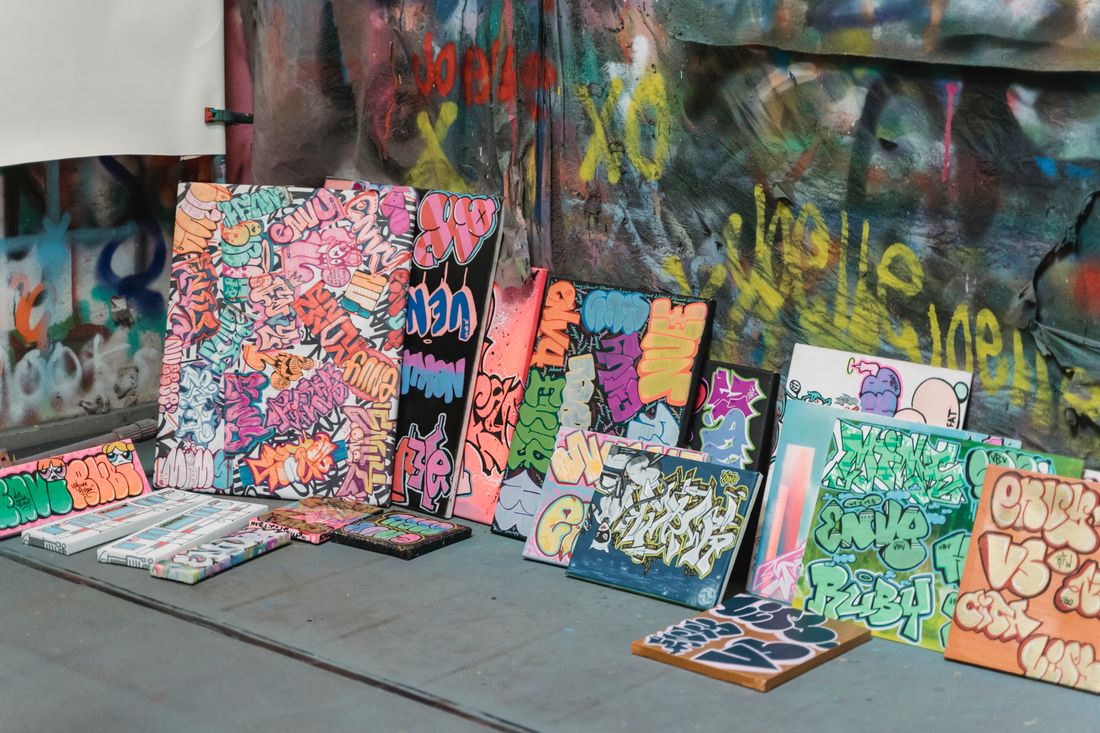
Why a Backlog Push Is a Different Job Than a Pre-Fair Shoot
A backlog push and a pre-fair documentation shoot solve different problems even though both involve photographing a body of work. A pre-fair shoot documents a specific, bounded selection against a hard external date. A backlog push documents whatever accumulated over years with no external date at all, which changes the planning, the pacing, and the order pieces get shot in.
A deadline-driven shoot is naturally scoped: the fair, the submission, or the show tells everyone exactly which pieces need files and by when, so the list of work is already decided before anyone picks up a camera. A backlog push starts with the opposite problem. The list has to be built first, because the whole reason the backlog exists is that no external process ever forced anyone to make that list.
The pacing differs too. A pre-fair shoot is usually planned around a single defined selection, sized to whatever ships. A backlog session is planned around volume: getting through years of pieces means longer days, tighter per-piece setup time, and a sequence built for consistency across dozens of works rather than polish on a small, curated handful.
Understanding that difference up front changes how a backlog gets booked. It isn't a smaller version of a pre-fair shoot squeezed into open time on the calendar. It's its own kind of session, with its own inventory step, its own pacing, and its own definition of finished: every piece accounted for, not just the ones a deadline happened to flag.
Building an Inventory Before You Book a Backlog Day
An inventory before a backlog shoot means a simple list of every undocumented or partially documented piece, sorted by size, medium, and current condition, built before a single date gets booked. That list is what turns a vague sense of "a lot of older work" into a number of pieces per hour a shoot day can actually absorb.
Building it doesn't require anything elaborate. A walkthrough of the studio, storage racks, or a collector's home with a notebook or a phone, noting piece, medium, approximate size, and whether any usable image already exists, is usually enough. The goal isn't a finished catalog yet. It's a count accurate enough to plan around, and a first pass at which pieces need special handling.
That inventory step also surfaces problems worth solving before shoot day rather than during it: pieces stored somewhere hard to access, work that needs cleaning or minor repair first, or framed pieces behind glass that will need extra setup time per piece. Finding those issues on a walkthrough is far cheaper than finding them mid-shoot, when the day's pacing is already committed.
Once the list exists, sequencing and pricing both get easier, because both depend on an actual piece count rather than an estimate. A studio with forty undocumented pieces and one with four hundred need very different plans, and neither plan can get built honestly until someone has actually counted.
How a High-Volume Backlog Day Gets Sequenced
A high-volume backlog day gets sequenced by grouping pieces that share a setup: same lighting angle, same background, similar size, or the same medium, so the camera and lights move as few times as possible. Reconfiguring lighting for every individual piece is what turns a large backlog into an unreasonably long shoot; grouping by setup is what keeps the pace realistic.
Medium groupings matter more than most people expect going in. Flat work on paper or canvas shares one lighting logic; dimensional pieces like ceramics or sculpture share a different one, usually needing more angle changes per piece. Mixing the two constantly throughout a day means resetting the whole lighting setup over and over, which is the single biggest time cost in a high-volume session.
Order within a group also matters. Working largest to smallest inside a medium group, or most fragile to sturdiest, keeps handling risk low early in a long day, before fatigue sets in on both sides of the camera. A backlog day that starts with the pieces needing the most careful handling, while everyone is freshest, tends to move faster overall than one that saves them for the end.
None of this is about rushing through the work. It's about spending the setup time once per group instead of once per piece, so a genuinely large backlog becomes a day, or a short sequence of days, instead of a project that never gets scheduled because it looks too big to start.

What Gets Prioritized When Everything Is Technically Overdue
When every piece in a backlog is technically overdue, priority goes to whatever carries the most practical risk if it stays undocumented longer: fragile or deteriorating pieces, pieces most often requested for a sale, loan, or submission, and any work that might travel or change hands before the next backlog push happens.
Fragile or slowly changing materials come first because the risk compounds with time in a way sturdier work doesn't. A piece made from a material that shifts, fades, or degrades benefits from an accurate record sooner rather than later, since it may look meaningfully different a year or two from now than it does today.
Frequently requested pieces come next, for a practical reason: they're the ones most likely to get pulled out again before the rest of the backlog gets its turn. Documenting the pieces that keep coming up in conversation first means fewer emergency one-off requests slipping in ahead of the plan.
Everything else follows in whatever order the sequencing plan already set by medium and setup. The point of prioritizing isn't ranking pieces by importance. It's an honest acknowledgment that a large backlog may take more than one session to finish, and the order should protect against loss, not just move down a list alphabetically.
This is also where the earlier inventory pays off. Without a list, prioritizing collapses into guessing which pieces feel most urgent, favoring whatever is easiest to reach over whatever actually carries the most risk. A short conversation about which pieces would be hardest to replace usually settles the order first.
Organizing Years of Files Without Creating a Second Mess
Organizing files after a backlog push means matching every finished file back to the inventory list from before the shoot, using one consistent naming convention across the batch, so a session that just resolved one backlog doesn't quietly create a second, digital one made of hundreds of unsorted files.
The naming convention matters more here than for a single small shoot, purely because of volume. A handful of files from a small session can survive loose, generic names without much cost. Hundreds of files from a backlog push cannot; a folder of unlabeled sequential filenames with no piece-level naming is a new backlog in everything but name.
Matching finished files back to the pre-shoot inventory closes the loop the inventory step opened. Every piece on that list should end the process linked to a specific, named file, and any piece that didn't make it into the session, because of a scheduling limit or a handling issue, should be flagged rather than silently dropped.
Done this way, the backlog push produces two things at once: a finished set of usable files, and an accurate, current record of what's documented and what isn't. That second part is what keeps the next gap from growing unnoticed the same way this one did.
It's worth resisting the urge to sort files later, once the pressure is off. Files left unsorted after a shoot day tend to stay that way for months, the same way the original pieces sat undocumented for years. Building naming into the shoot day itself, rather than as separate follow-up work, keeps the backlog actually closed.
Keeping a Backlog From Reforming After the Push
Keeping a backlog from reforming means setting a light, recurring check-in, rather than assuming a single big push fixes the problem permanently. New work keeps getting finished after the push ends, and without some ongoing rhythm, the same slow accumulation that created the first backlog starts again immediately, just at a smaller scale.
The check-in doesn't need to be heavy to work. A quarterly or twice-yearly look at what's been finished since the last documentation pass, compared against the same inventory list built for the original push, catches new work early, while it's still a handful of pieces rather than another multi-year pile.
This is also where the original inventory earns its keep a second time. A living list that gets updated as new pieces finish, rather than a one-time count that gets forgotten once the backlog is cleared, is what makes the next check-in fast. There's no need to rebuild the list from scratch if it never actually stopped being maintained.
The honest goal isn't zero gap, ever. It's keeping the gap small enough that it never again turns into a project that feels too big to start. A backlog that gets caught every few months stays a quick session. A backlog that gets ignored for years turns back into exactly the push this piece describes.
Tying the check-in to something that already happens regularly, a studio's own end-of-quarter review or a gallery's own inventory pass, makes it more likely to occur. A reminder someone has to schedule from scratch is easy to skip. One folded into an existing habit tends to survive busy stretches.
Frequently asked questions
How long does it take to clear a documentation backlog?
It depends entirely on how many pieces are involved and how varied the mediums are, since flat work and dimensional work need different lighting setups. A studio with a few dozen undocumented pieces might clear in a single long day. A larger collection spanning many years and mediums usually needs a short sequence of sessions, sized around the actual inventory count rather than guessed at in advance, which is why counting comes before booking.
Do you need to document every single piece in a backlog, or just some?
Ideally every piece, but a full backlog rarely gets cleared in one pass if it's genuinely large. Prioritizing fragile, deteriorating, or frequently requested pieces first, then working through the rest across planned follow-up sessions, is a realistic way to close a large gap without treating the whole project as all-or-nothing, or letting the sheer size of the backlog delay starting on any of it at all.
What's the difference between a backlog session and documenting a body of work before a fair?
A pre-fair shoot documents a specific, bounded selection against a hard external deadline that decides which pieces get shot and by when the finished files are due. A backlog push has no such deadline and no pre-set list at all. It starts with building an inventory of everything undocumented, then works through it by volume and priority rather than by whatever a fair happens to require.
How is a backlog documentation day priced?
Pricing for a backlog project typically follows the same per-piece or day-rate structure used for any documentation work, applied to whatever the inventory count turns out to be once it's actually built. Because volume varies so much between collections and studios, an accurate quote depends on that inventory list existing first, rather than a rough guess at how much work is really involved before anyone counts it.
What should I have ready before a backlog documentation day?
A basic inventory list, even a rough one, of what needs documenting, sorted loosely by medium and approximate size. Clear physical access to where the pieces are stored, whether that's a studio, a storage unit, or a home, also matters, since a shoot day spent retrieving pieces from awkward storage loses time that should go toward actually photographing the work in front of the camera.
Make sure your archive means something when someone asks for proof.
We photograph the work the way an insurer or gallery registrar wants it documented, straight views, correct color, and condition callouts you can actually point to later.
Explore artwork documentation →