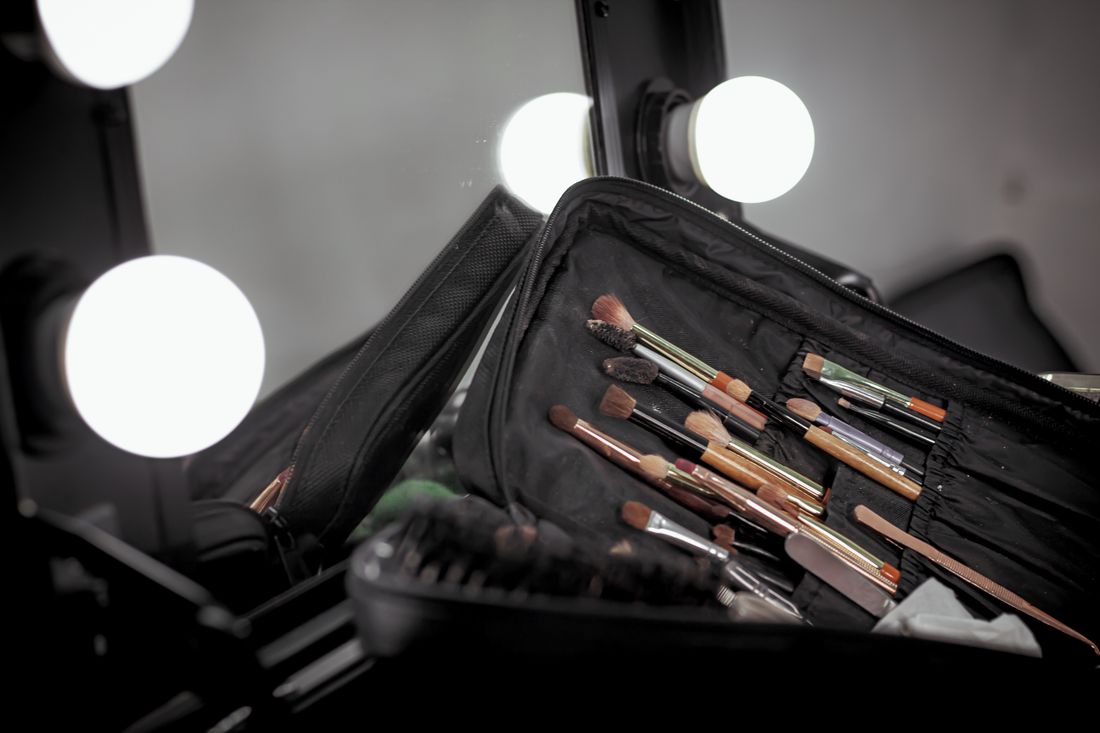
Hair and makeup is a separate booking from the photography, with its own artist, its own timeline, and its own decisions about how far to take it. This is a guide to deciding whether a shoot actually needs it, when grooming-only or nothing is the more honest answer, how the schedule changes once hair and makeup is added, who books and confirms it, and what happens when nobody owns the handoff between the artist and the photographer.
A shoot needs hair and makeup when the image will be printed, enlarged, or compared against other polished photos, like press or campaign work. It's a separate booking with its own timeline, one that starts before the first frame is shot, and it needs one clear person to book it, confirm it, and own the handoff to the photographer.
When does a shoot actually need full hair and makeup?
A shoot needs full hair and makeup when the final image gets blown up, printed, or placed next to other people's polished portraits: a press photo, a campaign image, a magazine spread, a website hero sitting next to competitors. In that setting, skin tone, hair definition, and finish have to hold up under direct comparison.
A press photo often runs next to a dozen other subjects' press photos on the same page or the same scroll. A campaign image sits inside a body of work that was lit, retouched, and art-directed as a set. Neither leaves much room for the small unevenness a phone camera or a casual portrait would forgive. Skin that looks fine across a room can read blotchy under studio lighting at full resolution, and hair that looks normal in person can go flat under strobes.
Full hair and makeup addresses that gap directly. A makeup artist builds a base that evens tone and controls shine under hot lights, not the light in a bathroom mirror. A hairstylist gives shape and finish enough hold to survive multiple looks and however long the shoot runs. None of this changes who the subject is. It makes sure the camera sees what a person actually looks like on a good day, rather than a camera's harsher rendering of skin and hair.
The real test isn't the occasion, it's the exposure the image will get. A founder headshot for a website gets less scrutiny than a founder photo running in a national outlet next to other founders' headshots. Same subject, different answer.
When is grooming-only, or nothing, the more honest answer?
Grooming-only, or no hair and makeup at all, is usually the honest answer for artist portraits, studio-practice images, and anything where an unpolished, working register is the actual point. A working artist photographed in their studio should look like they work there. Full glam on that same subject reads as a costume, not a portrait.
An artist portrait is trying to document a person doing real work, not present a finished, camera-ready version of them. Paint on the hands, a smudge near the hairline, clothes that have clearly been worked in, that's evidence the image is honest, not evidence it needs fixing. Full hair and makeup on that subject can start to read as staged the moment a viewer clocks the mismatch between a flawless face and a working studio around it.
Grooming-only sits between the two extremes. Someone smooths flyaway hair, checks that a collar sits right, and makes sure nothing distracting is happening on camera, without changing the subject's actual skin or features. It solves the problems that would otherwise pull focus, a stray hair, an obviously chapped lip, without manufacturing a different face. Many portrait sessions land here by default: enough attention that nothing distracts, not so much that the subject looks like someone else.
The decision comes down to what the image is claiming. An image claiming “this is a working artist” earns more trust unpolished. An image claiming “this is a professional ready for press” earns more trust polished. Matching the register to the claim is the actual job, not defaulting to more.
What does hair and makeup do on camera that retouching can't fix later?
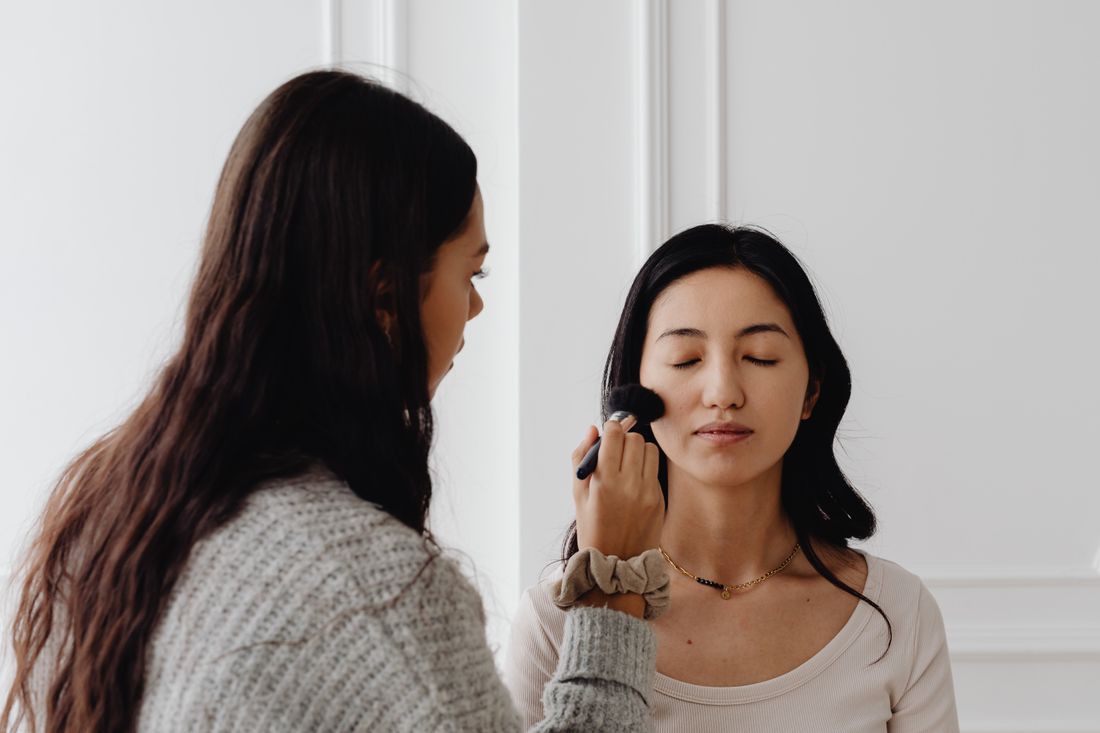
Hair and makeup on the day controls how light behaves on skin and hair in real time: shine, texture, flyaways, uneven tone under hot studio lights. Retouching afterward can smooth some of that in a single still frame, but it can't recover natural movement, consistent color across every shot, or a hairline that held its shape through the session.
The biggest gap is texture. A makeup artist builds a base that still looks like skin, pores intact, under lighting that would otherwise flatten or blow out a bare face. Retouching after the fact tends to smooth skin in a way that reads as processed, because it's correcting a problem the lighting already created. A stylist similarly manages frizz and shape as the subject moves between poses, where a retoucher working from a single still can only patch the frame in front of them, not the other frames from the session.
Doing it on the day also protects consistency. When makeup and hair are handled once, before the first frame, every image from that session shares the same tone, finish, and hairline. Fixing each image afterward tends to drift, a slightly different skin tone in one photo compared to another from the same day, which becomes obvious once two images run side by side.
In practice, this is also the more efficient path. Solving a shine or flyaway problem once, before shooting starts, takes less total time than fixing it across every selected image afterward, and leaves a session that looks like one continuous shoot rather than a set of patched photos.
Why does a shoot with hair and makeup start earlier than one without?
Hair and makeup happens before the first frame, not alongside it, because a finished look takes real time to build and can't be rushed once the shoot is already running. A session that includes hair and makeup has to start earlier than one that doesn't, often by an hour or more before anyone touches a camera.
Makeup for one subject typically runs through several stages: skin prep, base, contour and color, then setting so it holds under hot lights and movement. Hair follows a similar arc, prep, styling, finishing. None of this happens quickly, and none of it can run alongside the photography, because the artist and the photographer both need the subject's full attention and stillness at different points in the morning.
The arithmetic is straightforward once it's laid out. A session with no hair and makeup can often start shooting close to when the subject walks in. A session with hair and makeup needs that block of prep time first, then the photographer's block after. Stack them back to back and the shoot's actual start time moves earlier by however long hair and makeup honestly takes, not by a rough guess at it.
This is the detail that breaks schedules when it's left unspoken. If a call sheet lists one start time for everyone, the subject, the photographer, and the hair and makeup artist, without building in the prep block first, someone ends up standing around and someone else ends up rushing a job that shouldn't be rushed.
Who books hair and makeup, and who owns the handoff to the photographer?
Hair and makeup is a separate booking from the photography, usually arranged directly with the artist or through whoever is coordinating the shoot, and someone specific needs to own confirming the time, the look, and the handoff to the photographer. Left implicit, this is the single most common thing that breaks a schedule.
Because hair and makeup is its own booking, with its own timeline and its own person showing up, it needs its own confirmation: date, arrival time, the look, and where the subject goes once hair and makeup wraps. None of that happens automatically because a photography date is locked in.
The phrase that shows up when this goes wrong is some version of “I assumed the studio was bringing someone.” A photography studio coordinates production and can work alongside a hair and makeup artist, but doesn't automatically supply one with every booking. If a subject wants hair and makeup, that's a decision to raise early, with a clear owner for booking the artist and confirming their arrival against the shoot's start.
The handoff itself deserves a specific person too, whether that's the subject, a producer, or whoever is running point on the day. Once hair and makeup wraps, someone needs to walk the subject to the photographer, confirm the look reads the way it was meant to under the shoot's actual lighting, and flag anything that needs a quick touch-up before the first frame. Leaving that step to chance is how a good look built in the chair doesn't survive the walk to set.
How many people can a hair and makeup artist turn around in a morning?
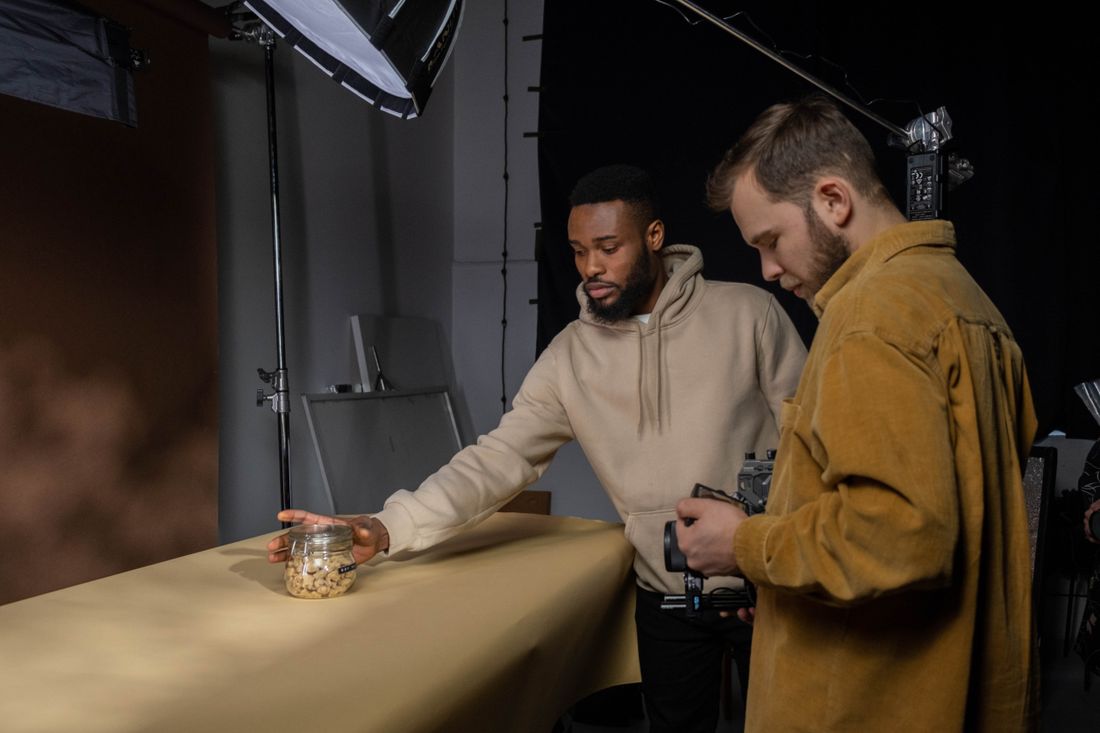
One hair and makeup artist typically works through subjects one at a time, and a single full look, both hair and makeup, from a fresh face reasonably takes close to an hour once prep, application, and finishing are counted. A morning block realistically fits a handful of people before quality or timing starts to suffer.
That number drops fast once a shoot involves more than one or two people. A group shoot, several founders, a full artist collective, a wedding party, multiplies the prep time directly, because hair and makeup can't usually be done on two people at once by one artist. What was a comfortable morning for one subject becomes a tight, sequential relay for four or five, with each person's start time pushed later than the last.
This is where a second artist earns its place in the plan, not as an upgrade, but as the only way to keep a group shoot's timeline honest. Splitting the group across two artists working in parallel roughly halves the total prep time, instead of asking one artist to compress each look to fit a schedule that assumes speed the work doesn't actually allow.
Knowing this number ahead of time changes how a shoot gets planned. A group booking that assumes one artist can turn around six people before a fixed call time is setting up the last two or three subjects to get a rushed, thinner version of hair and makeup than the first ones, through no fault of the artist.
What should a subject arrive with for a hair and makeup session?
Most hair and makeup artists want hair arriving clean and completely dry, skin arriving bare or close to it, and no fresh haircuts, color, or heavy treatments the night before. Reference photos of a look the subject likes are useful. Showing up already styled or made up usually means undoing work before the real work can start.
Clean, dry hair gives a stylist an actual blank surface to work from, product buildup or damp hair changes how everything holds and how long styling takes. The same logic applies to skin: arriving without makeup, or with only the lightest coverage, means the artist starts from the subject's real skin rather than building on top of someone else's product choices from earlier that morning.
The night before matters more than people expect. A new haircut or color the day before hasn't settled yet, and heavy skincare treatments, exfoliation, a new product, or anything that leaves skin reactive can show up as redness or texture under studio lighting the next day. The safest move is to keep the night before boring: normal skincare, nothing new, and enough sleep that skin looks rested rather than tired.
Reference photos help more than a verbal description. A specific picture of hair or makeup the subject actually likes gives the artist a shared target, rather than a guess at what “natural” or “polished” means to that particular person. It also shortens the conversation at the start of the session, leaving more of the booked time for the actual work.
How does hair and makeup get matched to the person instead of a generic look?
Matching hair and makeup to the person means building toward how that specific subject actually looks on a good day, not toward a generic idea of “camera-ready.” The register conversation, how much, what kind, how far from their everyday look, has to happen before application starts, or the artist ends up guessing.
“Camera-ready” isn’t one fixed look. It means something different for an artist who wants to still look like themselves on a slightly better day than for someone stepping into a press photo who wants a more finished, editorial face. Without that conversation up front, a skilled artist can still miss the mark, not from lack of skill, but from applying a default rather than the register this subject and this shoot actually call for.
This is where someone ends up not looking like themselves. Heavier contouring, a stronger brow, a dramatically different hair texture, all can look excellent in isolation and still feel wrong on the actual person, especially to people who know them. The photographer, the subject, and the hair and makeup artist benefit from agreeing on the target register before the chair, not discovering the mismatch once the subject sees themselves on a monitor mid-shoot.
The simplest version of this conversation is a short one: reference photos, a plain description of how polished the final image should feel, and a direct answer to whether the goal is still recognizably them or a more finished version for a specific use. That one conversation, had early, protects the final image more than any amount of skill applied without it.
Frequently asked questions
Does every professional photoshoot need hair and makeup?
No. Full hair and makeup makes the most sense for images that will be printed, enlarged, or compared against other polished photos, like press or campaign work. Many portrait and artist sessions do better with grooming-only, or nothing at all, especially when an unpolished, working register is the actual point of the image. The right call depends on what the image is claiming, not the occasion alone.
Does the studio provide a hair and makeup artist automatically?
No. A photography studio coordinates production and can work alongside hair and makeup artists, but booking one is a separate decision and a separate booking, not something automatically included with a photoshoot. If a subject wants hair and makeup, that needs to be raised early enough for someone to book the artist directly, confirm the look, and confirm their arrival time against the shoot's actual start.
How much earlier does hair and makeup make a shoot start?
Often by an hour or more, depending on the look and how many people need it. Hair and makeup happens before the first frame, not during the shoot, so its prep time gets added to the front of the schedule rather than absorbed into it. A session with several subjects needing full looks pushes the start time earlier still, since one artist usually works through people one at a time.
Should hair be washed before a hair and makeup appointment?
Most artists prefer hair arriving clean and completely dry, without fresh product, so they are working from a blank surface rather than undoing yesterday's styling first. The same goes for skin: bare or close to it works better than arriving already made up. New haircuts, color, or heavy skincare treatments are best done a few days out, not the night before, so nothing is still settling or reactive on camera.
What happens if the hair and makeup artist and photographer aren't coordinated?
The handoff between them tends to break: the look built in the chair doesn't get confirmed under the actual shoot lighting, timing runs long, or the photographer starts before hair and makeup has actually wrapped. Assigning one specific person to own booking, confirming timing, and walking the subject from the chair to set is what keeps that handoff from being left to chance or guesswork on the day.
Wardrobe should point back to the work, not away from it.
We plan styling for artist portraits the same way we plan the rest of the shoot, around who you are and what you make, not around looking photographed.
Explore styling services →