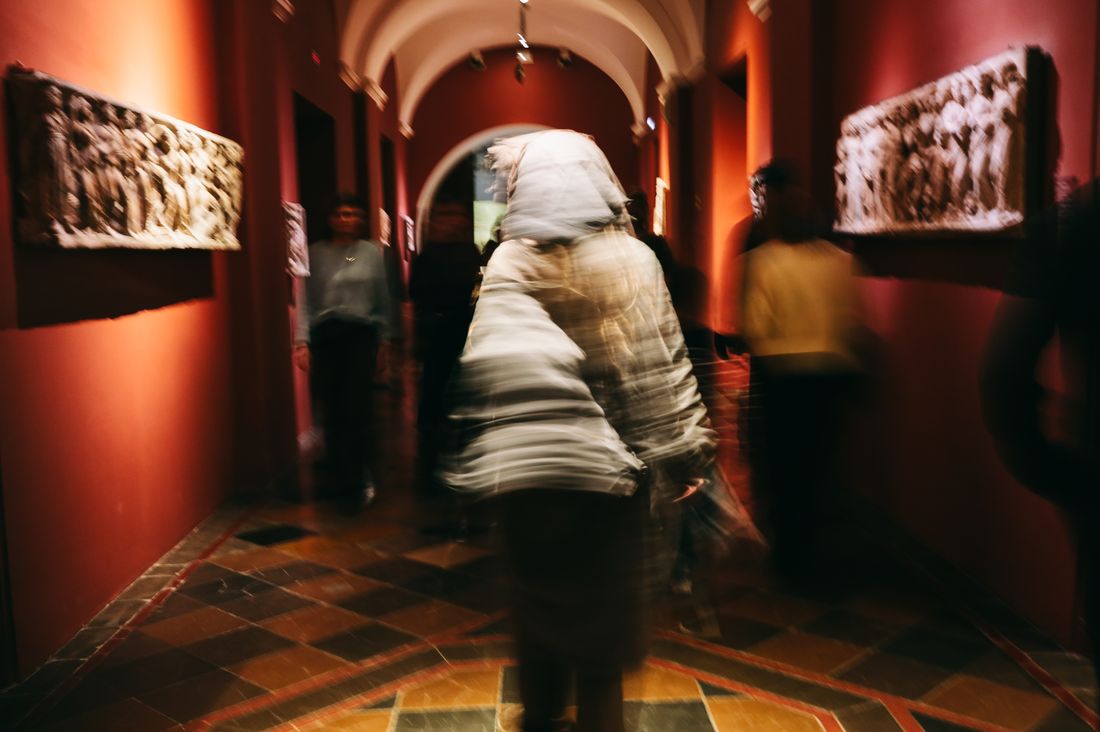
A thesis show opening looks like one event: hung work, a crowd, low evening light. Underneath that, it's thirty artists who each need their own usable set out of the same night, which changes the shot list, the timing, and who the photographer is actually working for.
An MFA thesis show needs a floor-plan-built shot list, clean installation views shot before the doors open, and a small guaranteed set per artist, because the deliverable is one set for each graduate, not one gallery for the whole room.
What makes an MFA thesis show different from a regular gallery opening?
An MFA thesis show is not one event to document, it's thirty separate events happening in the same room on the same night. A regular gallery opening produces one gallery of images shared across everyone who attended. A thesis show has to produce a usable set for each graduating artist, because each one needs their own record for portfolios, applications, and the first round of outreach to galleries. That difference changes almost everything about how the night gets planned.
The room looks the same either way: hung work, a crowd, low evening light, faculty moving through. What's invisible from the floor is the delivery structure underneath it. A commercial gallery opening can be shot the way most people picture event photography, moving through the room, following energy, catching conversations near the work. A thesis show needs that same coverage plus a second, quieter job running the whole time: making sure every one of thirty artists ends up with images that are actually theirs, not just a few frames where they happen to be standing near their own painting.
That second job gets missed when a program books coverage the way it would book any other opening. Without planning for it, the natural result of "cover the room" is that the loudest pieces get photographed heavily and the artist tucked in a back corner gets two usable frames if they're lucky. A thesis show only works as coverage if every graduate gets treated as a client, even though the program is paying for one photographer and one evening.
How do you build a shot list for a room with thirty artists?
The shot list for a thesis show gets built from the floor plan before the night starts, not improvised once the doors open. With thirty artists sharing one room and one evening, there isn't enough time to discover the layout in real time and still reach everyone. A floor plan turns the night into a route: which wall belongs to which artist, where the pinch points will be, and in what order the room can realistically be covered.
Working from a plan also protects against the room's own bias. Crowds gather near the entrance, near the bar table, near whichever piece draws a reaction first. A photographer following the crowd naturally overshoots those spots and undershoots everything past the halfway point of the space. A floor plan corrects for that by setting the route ahead of time, independent of where people happen to be standing at any given moment.
In practice, the plan usually comes from whoever installed the show, a printed diagram or even a photo of the wall assignments taped near the entrance. Cross-referencing that against the artist roster before the opening lets the photographer walk the space early, note which pieces are hardest to shoot cleanly (glare, low light, an awkward alcove) and adjust the route so those problem walls get handled with time to spare instead of being rushed near closing. The floor plan is the actual production plan. The crowd is what happens on top of it, not the thing that generates it.
What's the minimum usable set each artist actually needs?
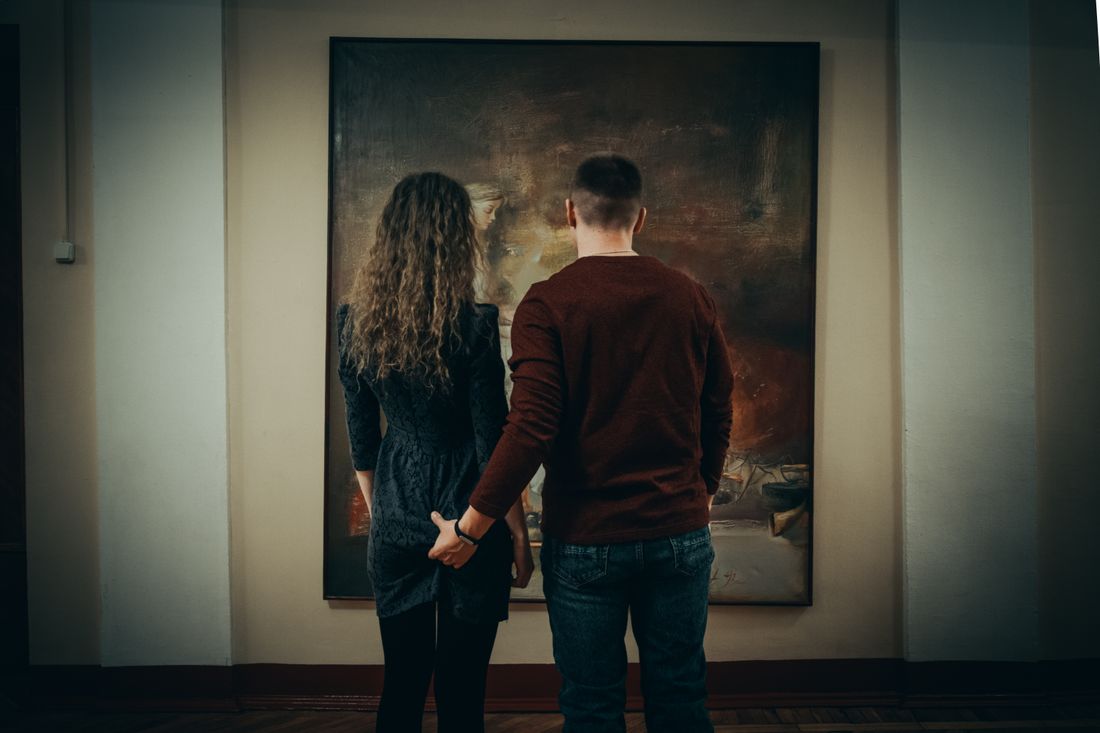
A usable per-artist set is small on purpose: a clean installation view of their piece or wall, one or two detail shots if the work has texture or material worth showing up close, and one or two candid frames of the artist near their own work. That minimum is what makes a portfolio update, an application, or a first gallery outreach email possible without waiting for anything more.
The reason the set stays small is math, not preference. Thirty artists in one evening means the average time available per artist is short, and any set that requires ten frames each simply won't happen across the whole room. A tight minimum, held consistently, is what lets every artist get something instead of a handful of artists getting a lot and the rest getting nothing.
What that minimum leaves out matters as much as what it includes. It usually doesn't include posed portraits, since there isn't time to direct thirty separate sittings in one night, and it usually doesn't chase every candid moment near a given wall, since that's what a general room gallery is for. The per-artist set is documentation first: proof of what the work looked like, installed, on the night it was shown. Anything past that minimum, an artist can request separately, but the baseline has to be something every graduate actually receives, not an aspiration that only the artists near the door get in full.
Why do installation views usually happen before the doors open?
Clean installation views usually have to happen before the doors open, because a packed room makes it nearly impossible to get an unobstructed shot of the work itself. Once guests arrive, most walls have someone standing in front of them for the rest of the night, and waiting for a clear moment on thirty separate pieces isn't a realistic plan for one evening.
Shooting the empty room first also solves a lighting problem, not just a crowd problem. Reception lighting tends to shift once a room fills, warmer accent lights get turned up, house lights sometimes get dimmed for atmosphere, and a wall that reads true before the crowd arrives can shift color or contrast once the room is full and moving. Capturing the work under consistent, predictable light in the empty room protects the documentation half of the set from whatever the reception lighting ends up doing later.
This means the photographer's night effectively starts before the show does. An early walkthrough with the artist roster and floor plan in hand, shooting each wall clean while the room is still quiet, produces the documentation half of every set. The reception hours that follow are for the second half: candids, artists near their work, faculty and family in the room. Splitting the night this way is what makes both halves possible instead of trading one for the other.
How do you handle families and faculty in the frame?
Families and faculty are part of the coverage, not a distraction from it, because they're part of what the night actually looked like for each artist. A frame of a parent seeing the work for the first time or an advisor stopping at a student's wall says something a clean installation shot can't, and many artists want at least one of those images in their set alongside the documentation frames.
The practical challenge is that these moments are unscheduled and happen at different times for each of thirty artists, so they can't be planned into the route the way installation views can. The approach that works is staying alert to them while moving through the general room coverage rather than treating them as a separate task. If a family group is clearly gathered at a specific wall, that's worth a frame in passing, without stopping the route to wait for a better moment or direct the interaction.
Crowd density is the other variable here, and it behaves the same way it does at any packed opening: distance and quick framing beat trying to get close in a full room. What changes once a gallery opening actually fills up covers the technical side of shooting in a crowd. On a thesis show night, that same crowd technique gets applied thirty times over, once per wall, instead of once across a single show.
Who is the actual client on a thesis show, and why does it matter?
The client on a thesis show is the program, the department or MFA office booking and paying for coverage, not the individual graduating artists, even though the artists are who actually uses the images. That distinction changes who signs off on the shoot, who the invoice goes to, and how delivery gets organized once the images are ready.
It also changes permissions. The program can authorize general coverage of the room, the reception, and the installed work as a whole. What it usually can't do on its own is guarantee that every artist wants their candid photo distributed, or agree to usage terms on an individual artist's behalf. Sorting that out cleanly, before the shoot, means confirming with the program up front whether artists have already consented to being photographed as part of the show, and treating each per-artist set as belonging to that artist once it's delivered.
Delivery follows the same split. The program typically gets the full gallery for its own archive and promotion, while each artist gets their individual set, organized by name or wall number so nobody has to dig through thirty artists' worth of images to find their own six frames. Setting up that folder structure before the shoot, not after, is what keeps delivery from becoming its own multi-day project once the event is already behind everyone, and it's a detail worth confirming with the program at the booking stage rather than assuming.
How many artists can one photographer realistically cover in one night?
One photographer working alone can realistically give focused coverage to somewhere around a dozen to fifteen artists in a single evening, once installation views, candids, and the family and faculty moments are all accounted for. Past that range, either the per-artist minimum has to shrink, the evening has to run longer than a typical reception, or a second photographer needs to split the room.
That limit isn't about speed so much as attention. Photographing an installed piece cleanly, catching a genuine candid near it, and staying aware of who's already been covered and who hasn't takes a certain amount of working memory across the whole night. Push the artist count too high for one person and the easiest thing to lose isn't image quality, it's coverage of the artists who are quieter, further from the entrance, or simply less visible in the room once the crowd thickens.
For shows with a larger graduating class, splitting the floor plan between two photographers, each responsible for a defined section of the room, keeps the per-artist minimum intact instead of stretching thinner across everyone. That decision is worth making at the booking stage, once the program shares the artist count and floor plan, rather than discovering mid-shoot that one photographer can't reach everyone the way the show needs. Knowing the realistic ceiling in advance is what keeps the plan honest instead of optimistic.
What happens after the show, once there are thirty sets to deliver?
After the opening, the job shifts to sorting thirty overlapping sets out of one shoot instead of one gallery out of one shoot. Every frame gets tagged to the artist or wall it belongs to, using the same floor plan that built the shot list, so nothing has to be identified by memory once the night is a few days behind everyone.
That tagging step is what makes fast, individual delivery possible. Once frames are sorted by artist, each graduate's set can go out as its own small folder or gallery link, rather than making thirty people search a single shared gallery of hundreds of images for the handful that are theirs. For a group this size, that difference is the difference between a set someone actually uses for a portfolio and one that quietly never gets downloaded, because finding it felt like too much work on a busy week.
The program's full gallery gets delivered separately, organized for its own archive and for whatever the department wants to post or promote afterward. Keeping the two deliveries distinct, the program's complete record and each artist's individual set, from the start of the edit rather than trying to split them apart later is what keeps a thirty-artist show from turning into a delivery backlog on top of an already long shoot night, weeks after everyone involved has moved on to the next thing.
Frequently asked questions
Does every graduating artist get individually photographed at a thesis show opening?
Not as a separate posed sitting. Each artist gets a documentation set built from installation views of their own wall or piece plus candid frames from the reception, not a formal portrait session. With thirty artists sharing one evening, that's what keeps a usable set achievable for everyone instead of only the artists who happen to get extra time or attention during the night, or whose work sits closest to the entrance.
When should a photographer walk the space before an MFA thesis show opens?
Before the doors open, while the room is still empty. That window is used to shoot clean installation views of every wall under consistent light and to confirm the floor plan against the actual artist roster. Doing this early protects the documentation half of each set from crowd obstruction and from whatever the reception lighting does once the room fills up and the evening actually gets underway.
Can an individual artist request extra shots beyond the standard set?
Usually yes, but as an addition on top of the guaranteed minimum, not a replacement for it. The baseline set exists so every graduate gets something regardless of where their wall sits in the room. Extra requests, an additional angle, a specific detail shot, get handled after the minimum is covered for everyone, or arranged separately from the group booking entirely, ideally raised with the program before the shoot rather than on the night.
Who owns the images from a thesis show, the program or the artists?
That depends on what's agreed before the shoot, since the program is typically the paying client while the artists are the ones actually using the images. In practice, most arrangements give the program its full archive for institutional use and give each artist their own set for personal and professional use, with usage terms worth confirming explicitly before booking rather than simply assuming they're already settled.
How soon can artists expect to receive their photos after the opening?
It depends on how the shoot was sorted, but tagging every frame by artist or wall during the shoot itself is what makes fast delivery realistic afterward. When that sorting happens up front, individual sets can go out within a normal turnaround window. When it doesn't, delivery slows down because someone has to sort thirty overlapping sets out of one shared gallery after the fact.
Two openings on the same night doesn't have to mean a scramble.
We plan around clustered opening nights ahead of time, a split schedule, a second shooter, or booking early enough that the calendar stops being the risk.
Explore event coverage →