An open house lets visitors wander a building on their own schedule, stopping wherever something catches their eye. A final presentation night runs on a fixed program instead, remarks, each artist presenting, a reception tail, because the residency is proving to its funders and its own board that the program actually produced something. Photographing it like a casual walkthrough misses the one thing the night is actually built to show.
A residency's final presentation night needs coverage built around its fixed program, not the free-roam approach that works for an open house, because the images have to serve a funder's report, the next cycle's open call, and each artist's own file at the same time. That means planned per-artist minimum coverage, a plan for shooting work in progress under low or projected light, and clear consent handling before the night starts.
What Makes a Final Presentation Night Different From an Open House
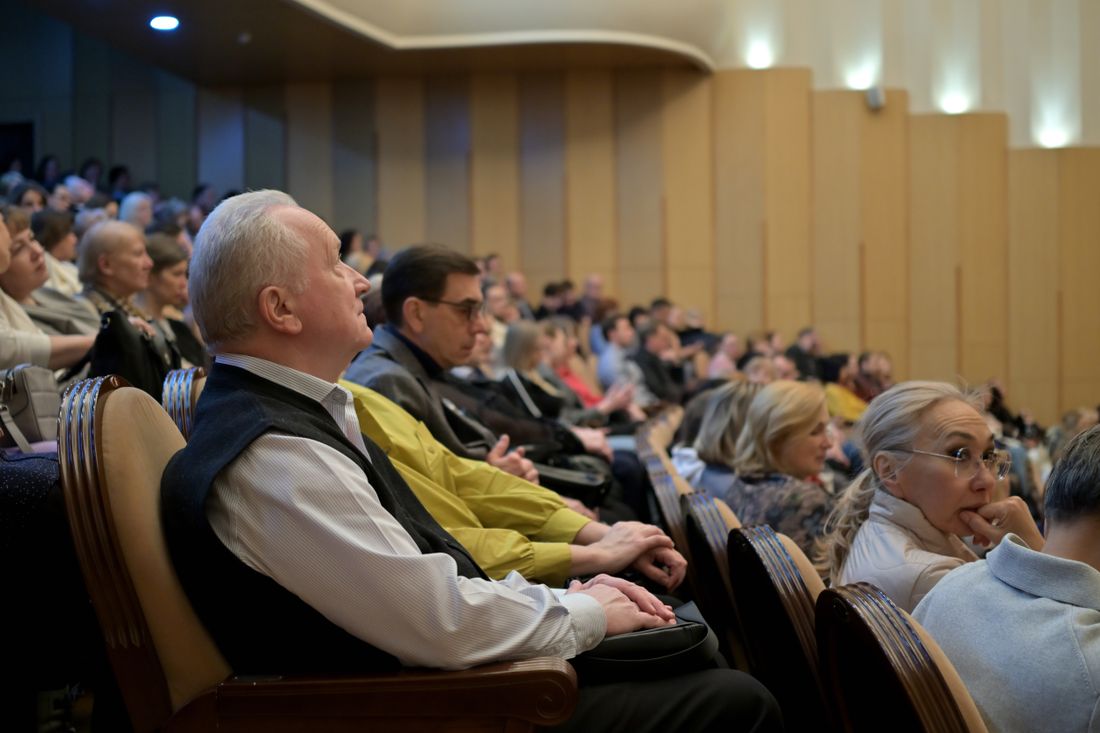
A final presentation night runs on a fixed program set by the residency, remarks, each artist presenting their work, then a reception, while an open house lets visitors move through a building freely on their own schedule with no set order to follow.
That structural difference changes what the camera needs to catch. An open house rewards wandering coverage, a hallway here, a studio door there, whatever a visitor happens to notice. A presentation night rewards planned coverage, because a fixed sequence of remarks and presentations only happens once and cannot be recreated after the fact.
The audience is different too. An open house draws a general public wandering in off the street. A presentation night draws funders, board members, staff from the presenting institution, and sometimes press, people whose presence at the event is itself part of the record the residency needs.
Treating the two events the same way is the most common mistake. A photographer who shows up expecting an open house's loose, exploratory pace will miss the fixed moments, a specific artist's turn at the podium, a funder shaking a director's hand, that the night was actually organized to produce.
The stakes are different as well. An open house that runs a little loosely still succeeds if visitors had a good time wandering through. A presentation night that runs loosely can leave the residency without proof that its own program did what it was funded to do.
The Fixed Program vs the Open House's Free Roam
A presentation night's program usually breaks into three parts, opening remarks, each artist's individual presentation, and a reception at the end, and each part needs its own coverage approach rather than one continuous roaming take carried through the whole evening.
Opening remarks call for steady, straightforward coverage: the speaker at a podium or in front of the room, wide shots that show the full audience, and a few reaction frames of people listening. This part is short and predictable, which makes it the easiest to plan for in advance.
Each artist's presentation is the part that actually needs a shot list. With several artists presenting in sequence, it helps to know ahead of time who is speaking when, so coverage of one artist's few minutes at the front of the room does not get missed while chasing a better angle on the previous one.
The reception at the end is the one moment that resembles an open house, people circulating, looking at work, talking in small groups. Treating only this last portion with a looser, more roaming approach, after the fixed program is fully covered, is what actually respects the difference between the two event types.
Building the shot plan around these three parts, rather than one general sense of the evening, is what keeps a presentation night's most important minutes from being treated as interchangeable with its most relaxed ones.

Who the Images Are Actually For
The images from a presentation night usually serve three different end users at once: the funder's annual report, the next cycle's open call materials, and each artist's own portfolio file, and each one wants a different kind of frame from the same evening.
A funder's report wants proof that the program happened as promised, wide shots of a full room, a name-check of the sponsor's presence if they attended, and images that read as credible documentation rather than a party recap.
The next cycle's open call wants aspirational frames, a candidate artist presenting confidently, a work in progress catching real attention, the kind of image that makes someone considering next year's application picture themselves standing at that same podium.
Each individual artist wants something narrower still: clean images of their own presentation and their own work, useful for a résumé or a future application, regardless of what happened elsewhere in the room that night.
Planning the shot list around these three audiences from the start, rather than shooting generally and hoping the right frames turn up, is what keeps one evening's coverage from quietly failing two of its three intended uses.
It helps to ask the residency directly which of the three uses matters most for this particular night, since that answer can shift the balance of coverage even when all three still get served by the end of the evening.
Per-Artist Minimum Coverage So No One Is Left Out
A per-artist minimum means deciding in advance that every artist in the cohort gets at least one usable frame of themselves presenting and one usable frame of their own work, regardless of how the room's energy shifts during the night.
Without that minimum, coverage tends to drift toward whoever presents most dynamically or whichever project photographs most easily, leaving quieter artists or harder-to-shoot work with thin or nonexistent coverage by the time the reception starts.
Building the minimum starts with a simple list, checked off in real time. Confirm who has presented, whether both frames were captured, and who is still coming up, so a gap in coverage gets noticed while there is still time to fix it, not the next morning during the edit.
A cohort of six or eight artists usually only needs a few minutes of dedicated attention per person to hit this minimum. It is a small planning cost that prevents the most common and most avoidable complaint from a residency's final night: one artist quietly ending up with nothing.
Getting the artist list and the presentation order from the residency ahead of time makes this far easier to manage than trying to track it from memory once the room fills up and the program is already underway.
It also helps to agree in advance on what counts as usable, since a wide crowd shot that happens to include an artist in the background does not satisfy the minimum the same way a dedicated frame of them presenting does.
Photographing a Presentation in Progress When the Room Goes Dark
Many presentations dim the room for a projection or slow the pace for a performance, which turns a bright reception space into a low-light challenge the moment the actual presenting starts, right when the coverage matters most for the night's record.
The projected or performed work itself is usually the wrong exposure target. Metering for the artist's face instead of the bright screen behind them keeps the presenter visible and readable, even if it means the projected image behind them reads a little hot in the frame.
A quiet, non-disruptive position matters more here than almost anywhere else in the night. Moving around during someone's presentation to chase a better angle draws attention away from the artist and toward the photographer, which is the opposite of what the coverage is supposed to do.
Scouting the room before the program starts, noting where the light falls once it dims and where a clear sightline to the podium exists, turns the dark-room problem into a solved one rather than something worked out in the moment while an artist is already speaking.
A second, brighter frame taken just before or after the dim portion, while the artist is still near the podium, gives a usable backup for anyone who needs a clean, well-lit image rather than the moodier presentation frame.
Checking the room's actual lighting behavior during setup, rather than assuming it will match a previous event in the same space, catches surprises like a dimmer that drops further than expected once the projector actually turns on.
Capturing Work That's Only Installed for One Night
Some residency work only exists in its finished, installed form for the single night of the presentation, taken down the next morning, which means the coverage of the work itself is often the only record that installation will ever have.
That makes a brief, separate pass at each piece worth planning for, ideally before guests arrive and crowd the space, when the work can be photographed cleanly without people standing in front of it or reflections from the room's lighting crossing the surface.
If a clean before-crowd pass is not possible, a second option is arranging a few quiet minutes with each artist near their piece once presentations wrap and before the reception gets loud, giving both the work and the artist a usable frame together.
Either approach requires knowing in advance that this coverage exists as its own task, separate from covering the program itself, since a piece installed for one night rarely gets a second chance the way a permanent gallery hang would.
Confirming with the residency ahead of time whether any piece is scheduled to be struck immediately after the presentation, rather than left up through the reception, helps decide whether the before-crowd pass is worth prioritizing over other coverage that evening.
A short list of which pieces count as one-night-only, gathered from the artists themselves before the event, turns this from a guessing game on the night into a straightforward checklist worked through calmly before the doors even open.
Consent and Credit When Not Everyone Wants to Be Photographed
A residency cohort can include artists who, for personal, professional, or safety reasons, do not want their face photographed even while their work and their presentation are fully part of the record the night is meant to produce for the funder and the program itself.
The practical fix is asking the residency to confirm any restrictions before the night starts, rather than discovering them mid-event, so coverage can lean on frames of the work, the presentation from behind, or hands and gesture rather than a clear face for anyone who has opted out.
Credit lines matter just as much as consent. Every artist's name should be spelled correctly and attached accurately to their own work in the delivery, since a mismatched credit on a final report or an open call page is its own kind of harm to someone's record.
None of this needs to be complicated. A short list from the residency ahead of time, confirming who is comfortable being photographed and how each artist's name should be credited, resolves nearly every consent question before the camera is even in the room.
Sharing that list with anyone else shooting or filming the night, not just the lead photographer, keeps the restriction consistent across the whole record rather than protected in one set of images and missed in another.
The same list is worth revisiting quietly at the reception, since a quieter opening remarks section and a livelier reception sometimes bring different people, and a restriction agreed on beforehand should hold the same way through both parts of the night.
What to Send Each Artist and Each Funder Afterward
The delivery after a presentation night works best split into pieces built for its different audiences, the funder, the residency, and each individual artist, rather than one large folder everyone has to search through for the frames that actually apply to them.
The funder gets the wide room shots, the remarks, and a representative spread across the full cohort, images built to prove the program ran as described and drew the room it was meant to draw.
Each artist gets their own smaller set: their presentation, their work, and any reception frames they appear in, so they can pull from it for a future application without wading through images of every other artist in the cohort.
The residency itself usually wants both, plus a few open-call-ready frames set aside for next year's recruiting materials, images that read as aspirational rather than purely documentary, distinct from the report-focused set the funder receives.
Splitting the delivery this way takes little extra time during the edit and saves real time for everyone on the receiving end, who no longer has to dig through one long gallery to find the handful of frames that are actually theirs.
A short note naming what each set contains, sent along with the files, makes it clear at a glance which folder answers which need, instead of leaving that sorting work for the residency's staff to figure out later.
Frequently asked questions
Is a final presentation night the same as a residency open house?
No. An open house lets visitors wander a building at their own pace with no fixed order. A presentation night runs on a set program, remarks, each artist presenting, then a reception, because the residency is using the night to show funders and its board what the program actually produced. Covering it like a casual walkthrough misses the fixed moments the event was built around.
Who actually uses the photos from a final presentation night?
Usually three different audiences at once. A funder's annual report wants proof the program happened and drew a real room. The next cycle's open call wants aspirational frames that help a future applicant picture themselves there. Each artist wants clean images of their own presentation and work for their own file, separate from everyone else's coverage that night, ready to reuse on their own timeline.
How do I make sure every artist in the cohort gets covered?
Set a per-artist minimum before the night starts, at least one usable frame of each artist presenting and one of their own work, and check it off in real time as the program moves along. Without that minimum, coverage tends to drift toward whoever presents most dynamically, leaving quieter artists with thin coverage by the time the reception begins and the room finally loosens up.
What should I do when the room goes dark for a projection or performance?
Meter for the artist's face rather than the bright screen or performance lighting behind them, so the presenter stays visible even if the projected image reads a little hot. Scout the room before the program starts to find a sightline that does not require moving during someone's presentation, since movement during a dark-room moment draws attention away from the work itself and the person presenting it.
What if some artists in the cohort don't want to be photographed?
Ask the residency to confirm any restrictions before the night starts rather than finding out mid-event. For anyone who has opted out of being photographed directly, coverage can lean on their work, their presentation from behind, or their hands and gesture instead of a clear face, while still keeping their presentation and their work fully part of the night's overall record for the funder to review.
Two openings on the same night doesn't have to mean a scramble.
We plan around clustered opening nights ahead of time, a split schedule, a second shooter, or booking early enough that the calendar stops being the risk.
Explore event coverage →