
A single speaker at a podium is one of the more straightforward things to cover: one face, one angle, and a rhythm that barely shifts for the whole talk. A panel of three or four speakers is a different job. Multiple faces need tracking, the conversation jumps without warning, a moderator hands questions back and forth, and someone in the audience passes a microphone down a row mid-thought. The two formats book through the same event rate, but the coverage plan underneath has to change to match, or a panel ends up looking like several portraits stapled together instead of one conversation.
A solo artist talk is a portrait problem: one face, one angle, and a plan that holds steady for the whole run time, with the real challenge being variety rather than coverage. A panel discussion is choreography: three or four faces to track, cross-talk, moderator handoffs, and mic passes, shot from a wider, off-axis position with a plan built to survive constant recomposition instead of one setup.
What Actually Changes When You Go From a Solo Talk to a Panel?
A solo artist talk is close to a portrait problem: one face, one angle, and a rhythm that stays fairly steady for the whole run time. A panel of three or four speakers turns that into choreography, with multiple faces to track, unpredictable cross-talk, and a frame that has to read as a conversation instead of a row of separate portraits.
The solo format rewards preparation over reaction. Once a speaker's habits are clear, mostly standing at a lectern, occasionally stepping to one side, a shot list can hold for the entire talk with only small adjustments. A panel doesn't offer that stability. Four people means four sets of habits: who leans forward, who talks with their hands, who goes quiet and lets someone else answer first.
This is why a panel coverage plan starts differently from the ground up. A solo talk can be covered well from one strong position, because the geometry in the room barely moves. A panel forces a wider base frame that includes everyone at the table, plus a plan for cutting into individual reactions without the footage feeling like a security camera pointed at a row of chairs.
Both bookings run on the same event rate, $350 an hour with a two-hour minimum, editing included. What changes isn't the price, it's how much of that time gets spent tracking one subject versus several.
Panel Discussion vs Solo Artist Talk: The Coverage Plan Side by Side
The differences are easiest to see next to each other. Nothing in this table is a guess, it's the same set of decisions we make on site for either format.
| What changes | Solo Artist Talk | Panel Discussion |
|---|---|---|
| Subjects to track | One face, one podium | Three or four faces plus a moderator |
| Photographer position | Centered, facing the podium | Off-axis, near the moderator's end of the table |
| Lens setup | One lens or a modest zoom range | A wider lens for the group, a longer lens ready for reactions |
| Coverage rhythm | Fixed shot list, small adjustments | Constant recomposition between group, individual, and reaction shots |
| Main risk | The same frame repeated for the whole talk | A flat lineup where every panelist reads at the same distance |
| Typical booking length | Often fits the two-hour minimum | Frequently runs past it once Q&A and mic passes are added |
The lens and position rows are the two that surprise people booking coverage for the first time. A panel isn't a bigger solo talk, it asks the camera to do two different jobs in the same room, and it usually asks for a second body on site to cover both at once.
None of these differences change what a booking costs on paper, since both formats run through the same hourly rate. What changes is how much of that time gets used on setup, repositioning, and the extra shot categories a panel adds that a solo talk never needs.
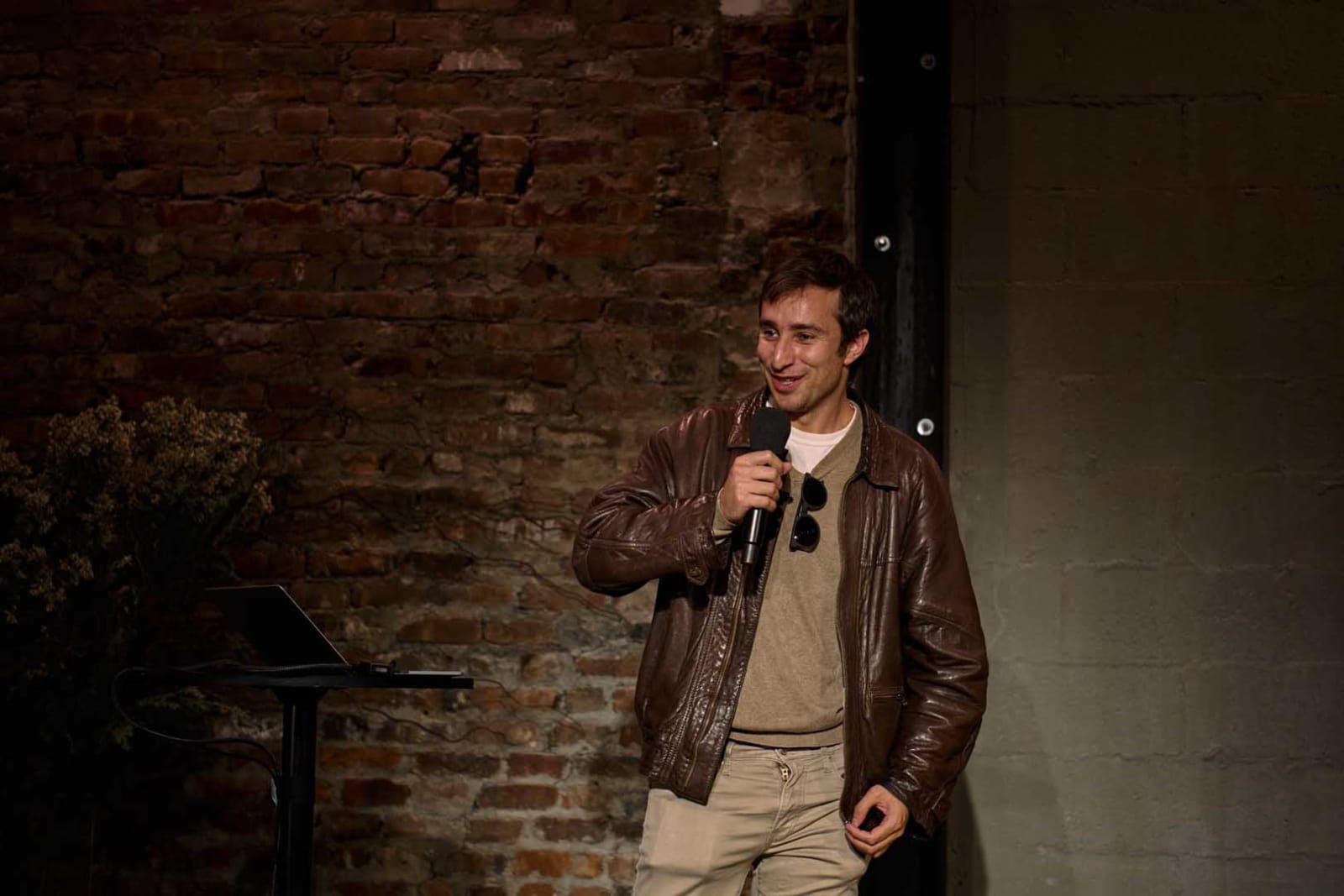
Where Should You Stand to Shoot a Panel Discussion?
A solo talk usually works from one central position facing the podium. A panel works better from an angled position off to one side, close enough to the moderator's end of the table to catch the natural flow of who's speaking next, and wide enough to keep every panelist visible without constant repositioning mid-conversation.
Standing dead center in front of a panel table creates a flat, lineup-style frame where every face reads at the same distance and the same angle, which is exactly the look a panel coverage plan should avoid. Moving off-axis, even by 20 or 30 degrees, adds depth: panelists in the foreground and background instead of a flat row, and a frame where body language between speakers becomes visible instead of hidden behind shoulders.
Positioning near the moderator's end also has a practical payoff. Moderators tend to be the person turning the conversation toward the next speaker, so a position close to that end gives an earlier read on who's about to talk, which matters more for a panel than it ever does for a solo talk, where the next moment is always the same person.
A solo speaker rarely punishes a fixed position, since the subject stays in roughly the same place for the whole talk. A panel does punish it. Staying locked to one spot for the full discussion usually means missing the moment a quiet panelist finally leans into the microphone.
What Lens Choice Changes Between a Panel and a Solo Talk?
A solo talk usually works with a longer lens held on one subject, since the frame doesn't need to hold much beyond the speaker and the podium. A panel needs a shorter, wider lens for the group shot, plus a longer lens ready for individual reactions, because one focal length rarely covers both jobs well.
A solo speaker's frame is a fairly simple decision: tight enough to read facial expression, wide enough to include a hand gesture or a step away from the podium. That range doesn't move much once it's set, so a single lens or a modest zoom range usually covers the whole talk without much adjustment.
A panel asks the same lens to do two different jobs in the same event. The group shot needs enough width to hold three or four people comfortably without distorting the ones at the edges of the frame. Individual reaction shots need the opposite: enough reach to isolate one face from several feet further back than a solo talk's tighter framing would require.
This is the main reason panel coverage often benefits from a second camera or a lens swap mid-event, where a solo talk usually doesn't. Running one lens on the wide group shot and a second, longer lens ready for reactions covers both jobs without asking a single focal length to compromise on either.
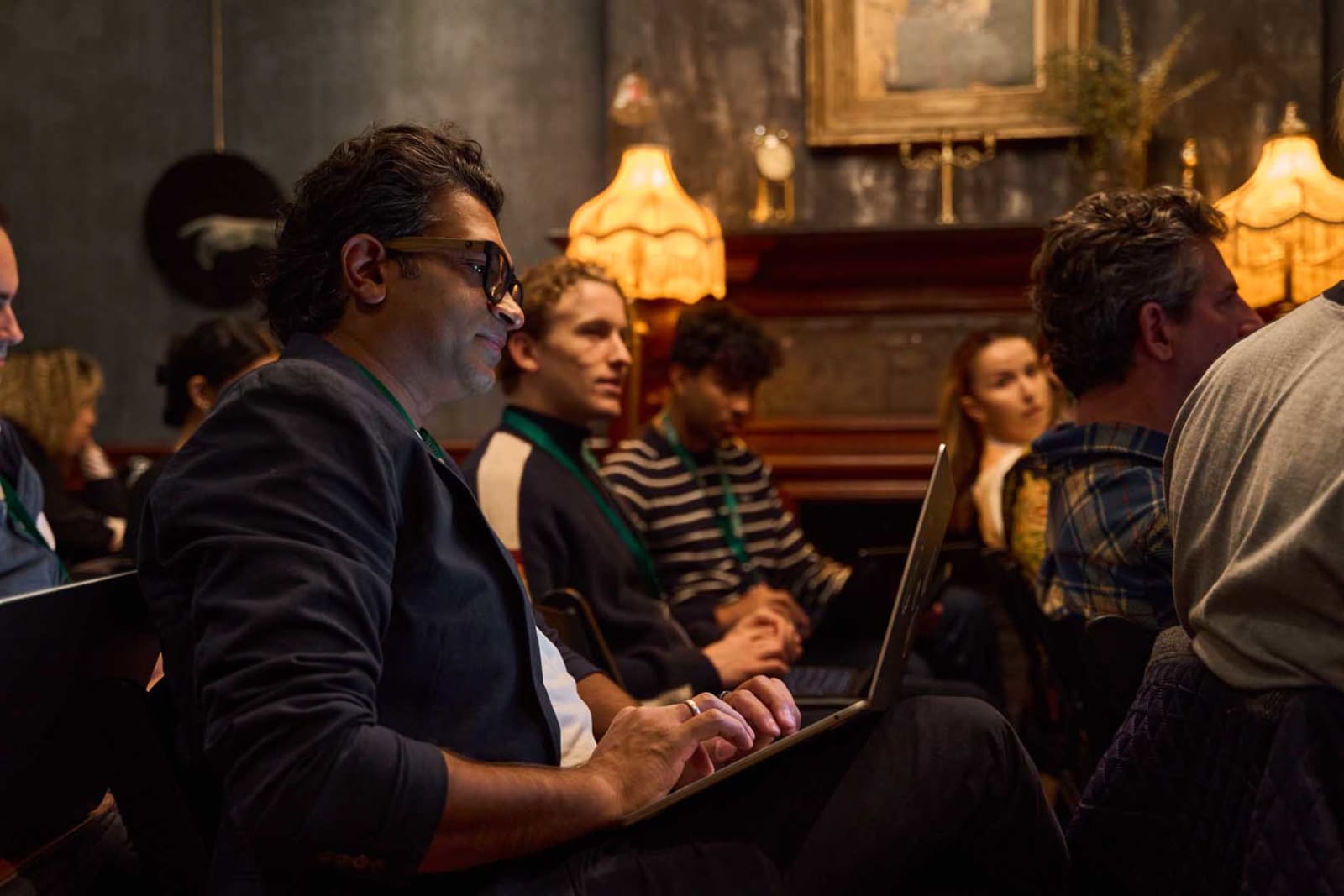
How Do You Cover Moderator Handoffs and Cross-Talk?
Moderator handoffs are the clearest cue a panel gives before the conversation shifts, so watching the moderator, not just whoever's currently talking, is what keeps coverage from lagging a beat behind. Cross-talk is harder: when two panelists speak over each other, the frame usually needs to widen rather than guess which one to isolate.
A solo talk has no handoff to track, since there's only ever one speaker to follow. A panel runs on handoffs constantly, a moderator naming the next panelist, gesturing toward one end of the table, or simply pausing in a way that signals someone else should jump in.
Cross-talk is the moment a panel coverage plan gets tested the most. Two panelists talking over each other doesn't give a clean single subject to isolate. Widening out to the group shot in that moment usually reads better than cutting rapidly between two overlapping voices.
None of this happens on a fixed schedule, which is the real difference from a solo talk. A solo speaker's rhythm can be anticipated well in advance. A panel's handoffs and cross-talk moments happen on their own timeline, and the coverage plan has to be built around staying ready for them.
What Changes About Covering Audience Q&A and Mic Passes?
Audience Q&A adds a second location to track: the panel table and wherever the question is coming from. A solo talk's Q&A is usually simple, one standing mic or a host repeating the question. A panel's Q&A often involves a mic being physically passed down a row, which needs its own coverage plan rather than a quick glance sideways.
A solo artist talk's Q&A segment tends to stay contained near the stage, since there's only one speaker to answer. A panel's Q&A frequently spreads further into the room, especially when there's no roaming mic and the audience member has to wait for one to reach them.
Covering this well means holding a wider frame during the actual question, since a tight shot on the panel table misses the person asking, then tightening back onto the panelist actually answering. That two-step matters more for a panel than for a solo talk, where the answer is always coming from the one person the frame is already on.
The mic itself is part of a bigger audio picture that changes with the format, more sources, more handoffs, more chances for one channel to run hot or quiet. We cover what that side of the job actually requires on site in Event Audio Setup: What Video Coverage Actually Requires On Site.
How Do You Keep a Panel From Looking Like a Lineup, and a Solo Talk From Looking Repetitive?
A panel starts looking like a lineup when every panelist is framed the same way, at the same distance, from the same flat angle, with no sense of who's actually talking to whom. A solo talk has the opposite version of the same problem: one face, one lectern, one light, for an hour, which can leave a set that looks like the same frame copied over and over.
The panel fix is deliberate variation: mixing the full-group wide with individual shots, reaction cutaways, and angles that show panelists actually looking at each other, instead of resting on the safest shot, the wide frame that includes everyone equally.
The solo fix is the same instinct applied differently, since there's only one subject to vary. That means changing distance and angle across the run time, working in the screen or slides when there's one, and using the moments a speaker steps away from the podium as a break from the default frame instead of an interruption to wait out.
The payoff either way is coverage that reads as what the room actually felt like, not four portraits that happen to share a table, and not forty near-identical frames of one person talking.
Frequently asked questions
Do you need a second camera to cover a panel discussion?
A second camera isn't required, but it solves the panel's central problem faster than a single camera can: holding the group wide while also catching individual reactions. One camera can cover a panel well by cutting between a wide and a tighter frame over time, but a second camera lets that happen live, on site, instead of trading one shot for the other all discussion long.
How many panelists does it take before coverage really needs to change?
Two speakers having a conversation can often still be covered close to how a solo talk is covered, since there's usually a clear back-and-forth to follow and only one relationship to track. Three or four speakers is where the plan genuinely needs to change, since tracking that many faces, plus a moderator, plus audience questions, is too much for one steady camera position to hold well for a full run time.
Does the venue's stage or table layout affect how a panel should be covered?
It affects positioning directly. A straight table facing the audience calls for an angled position off to one side to avoid a flat lineup look. A curved or angled seating arrangement, where panelists already face each other, gives more natural depth and reaction shots for free, since the panelists' own body language toward one another does part of the work before a single frame is even chosen for the event.
Two openings on the same night doesn't have to mean a scramble.
We plan around clustered opening nights ahead of time, a split schedule, a second shooter, or booking early enough that the calendar stops being the risk.
Explore event coverage →