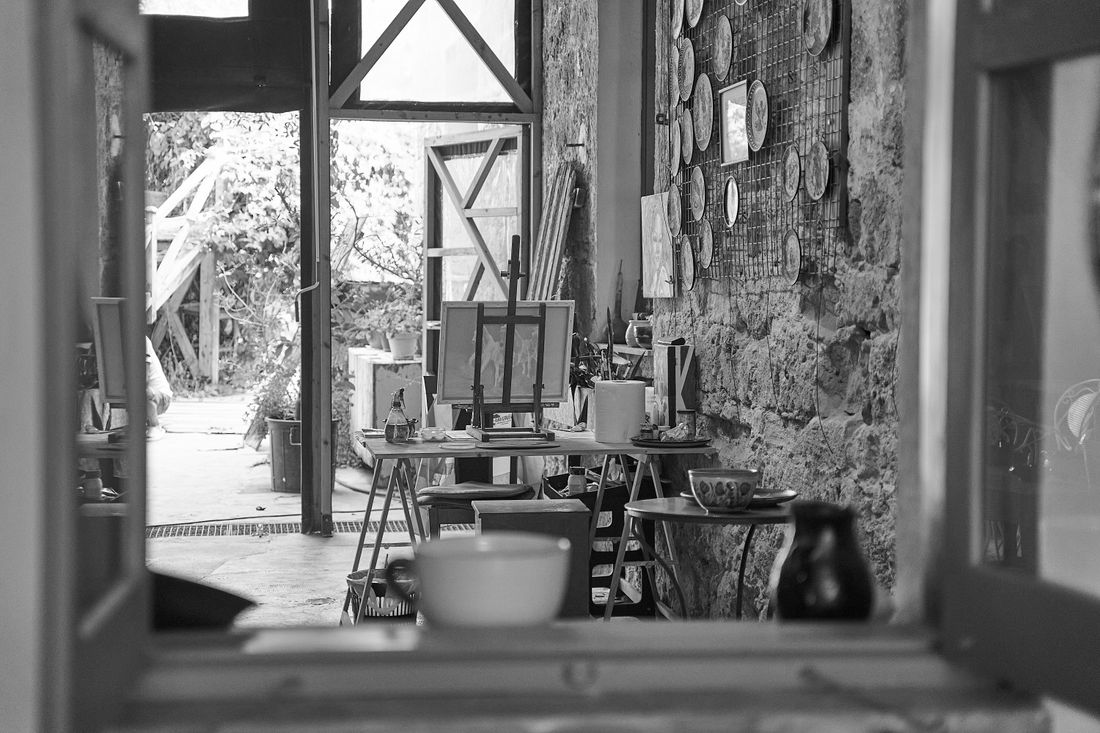
An opening happens in a room built to show finished work. A residency open house happens in the room where the work is still being made, to visitors who came as much to meet the artists as to see what's on the walls. That's not a smaller version of the same assignment, it's a different one, with a different set of people who actually need the photos afterward, and a studio full of work nobody has agreed is ready to be seen yet.
Covering a residency open house well means treating it as two audiences, not one: the funder who needs evidence the program works, and the artists who need usable images of their own practice. Ask about off-limits work beforehand, let each studio's framing vary, and prioritize institutional evidence when it's the only shoot of the year.
How Is a Residency Open House Different From a Gallery Opening?
An opening presents finished work in a room built to show it well: track lighting, clean walls, work already sequenced and hung. A residency open house presents work still being made, in the room where it's being made, to visitors who came partly to look at art and partly to meet the person making it. That difference changes what the photography needs to do before a single frame gets taken.
A gallery opening photographer walks into a space designed for viewing. A residency open house photographer walks into someone's workspace mid-process, arranged for working rather than for looking. The lighting is whatever the artist actually uses, the walls hold reference material next to finished pieces, and the floor probably has supplies on it. None of that is a problem to fix. It's the actual subject.
The visitors are different too. An opening crowd came to see the show. An open house crowd came partly for that and partly for the studios themselves, and partly to talk to the artists, ask what they're working on, hear how a piece got made. That conversational, curious energy is worth documenting on its own, not just as a backdrop to the art.
None of this makes an open house harder to shoot than an opening. It makes it a different assignment with a different brief. The work isn't finished, the room wasn't designed for photographs, and the people in front of the camera are as much a part of the story as what's on their walls or worktables.
Who Is This Coverage Actually For?
Residency open house coverage almost always serves two audiences at once: the funder or board that needs evidence the program is doing what it claims, and the artists who need images of their own current practice to use afterward. Those two audiences overlap in what gets photographed, but they're not the same audience, and treating them as identical is where coverage starts to miss both.
A funder or board wants proof of the program in action: full studios, visitors engaged, a range of practices represented, the residency clearly functioning as advertised. That's institutional evidence, closer to documentation than to a personal record, and it usually needs to show breadth across the whole cohort rather than depth on any one artist.
An individual artist wants something narrower and more personal: an image of themselves in their own space, doing their own work, that they can use on a website, a grant application, or a social post next year. That photo doesn't need the rest of the cohort in it, and it often works better without the crowd that a funder's evidence shot wants included.
The overlap is real. A good photo of an artist mid-conversation in their studio can serve both the recap and the artist's own use. But the divergence is real too, and it's worth naming before the evening starts: which shots are for the institution's record, and which are for the artist standing in front of the camera. Planning for both, rather than assuming one produces the other, keeps either audience from walking away with less than they needed.
How Do You Cover Many Studios Without Every Photo Looking the Same?
Shooting a dozen or more studios in one evening naturally produces a rhythm, and that rhythm is the risk: the same distance, the same angle, the same doorway shot repeated door after door until the sequence reads as one long corridor instead of a dozen distinct practices. Breaking that rhythm on purpose is what keeps the set from flattening into filler.
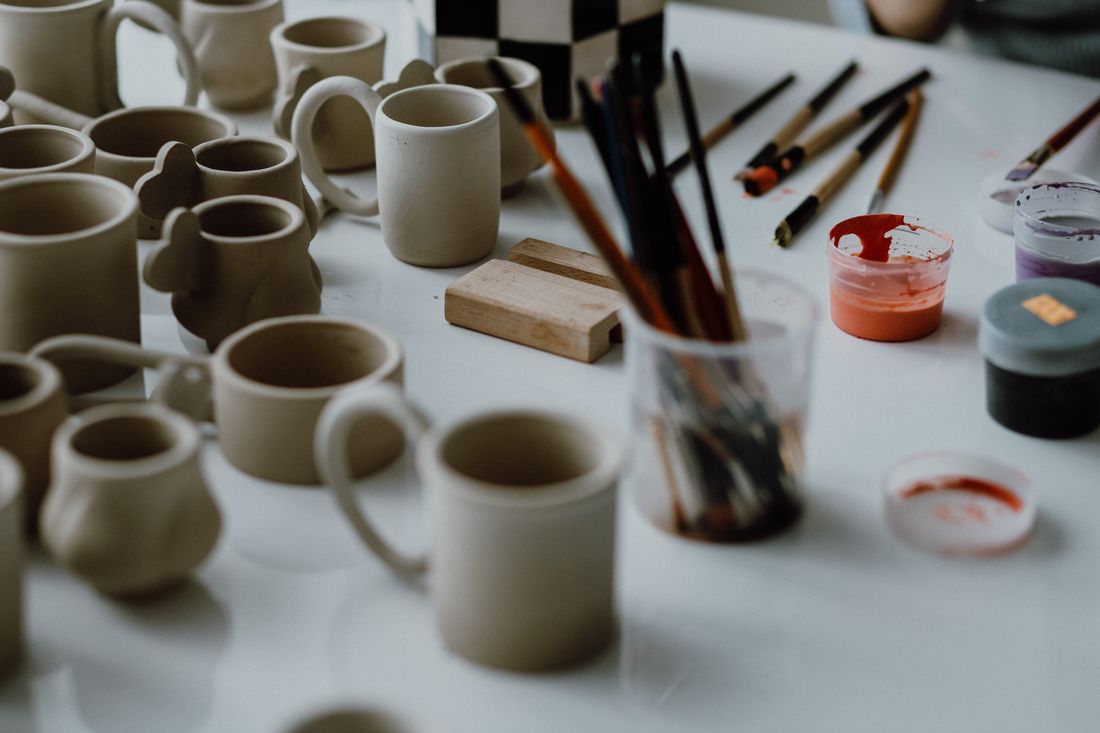
The easiest fix is to let each room dictate its own shot instead of applying one formula to all of them. A painter's studio might be worth a wide shot that takes in the whole wall of work. A jeweler's bench might need a tight, close frame on the materials themselves. A sculptor's space might be entirely about scale, which a doorway shot can't show. Varying distance and framing room to room isn't extra effort, it's just responding to what's actually different about each space.
It also helps to vary what's in the frame beyond the room itself: a hand mid-motion, a detail on a worktable, a conversation between an artist and a visitor, not only the wide establishing shot of the space. A sequence built entirely from doorway-and-easel photos will feel repetitive even if every individual photo is technically fine.
The route through the building still matters, the way it does for any multi-stop evening, but the framing decisions matter more here than the schedule does. A tight schedule that produces a dozen identical compositions has still failed the assignment, even if every studio got visited on time.
What About Work the Artist Doesn't Want Photographed?
Work in progress is often exactly that: unfinished, unresolved, and not something the artist is ready to have documented and circulated. The right time to find out what's off-limits is before the open house, in a short conversation or a quick note to each artist, not at the studio door with visitors already arriving and the artist mid-greeting.
Asking ahead of time does two things a doorway conversation can't. It gives the artist a real moment to think it through, rather than answering on the spot while distracted, and it gives the photographer a clear boundary to work inside for the whole evening instead of guessing room by room. A piece that's still being worked out, a technique the artist doesn't want copied, or simply a version of the work they're not proud of yet are all reasonable things to keep off camera, and none of them are unusual to ask for.
This is different from a gallery shoot, where everything on the wall has already been decided as finished and shareable. An open house is showing process on purpose, and process includes pieces that aren't ready for their own photograph yet. Respecting that isn't a limitation on the coverage, it's part of what makes an open house honest instead of staged.
A short pre-visit message to the full cohort, asking whether anything in the room should stay out of frame, usually surfaces everything that matters. It costs the organizer a few minutes and saves the evening from an awkward conversation happening in front of visitors.
What Should Get Photographed During the Crit or Discussion Segment?
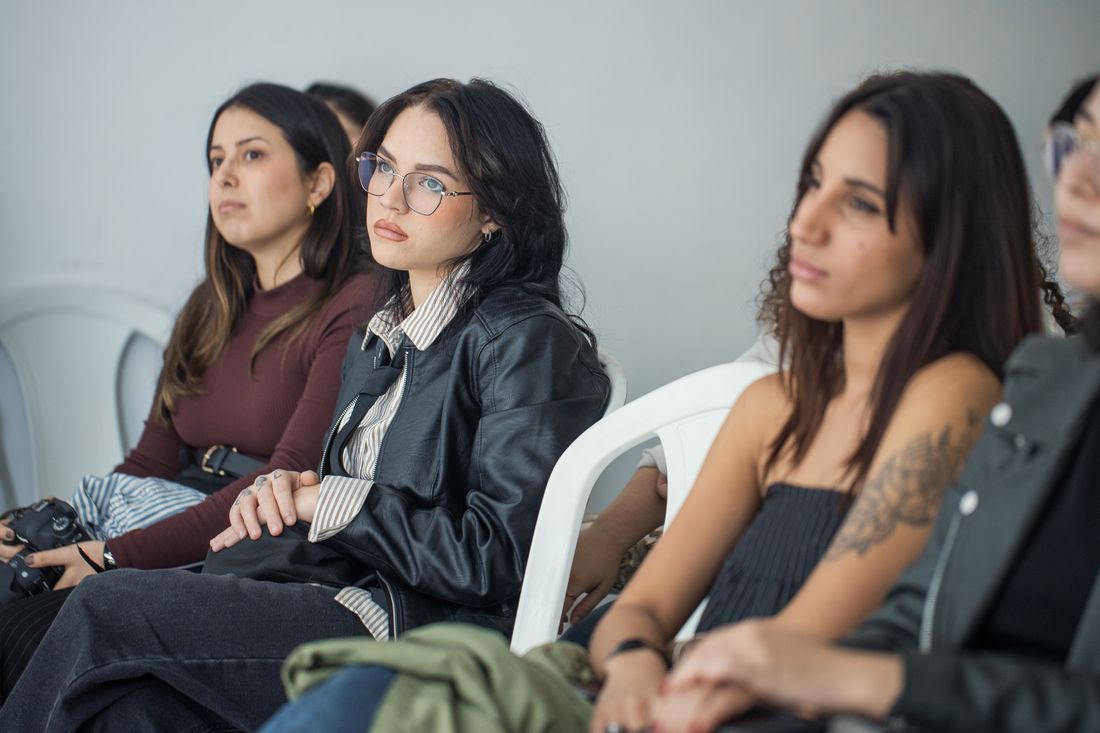
The useful frames during a crit or open discussion are the listening faces, not the person talking. A speaker mid-sentence is one photo repeated with a different mouth open; a room actually paying attention, leaning in, taking notes, reacting to what's being said, tells the real story of the evening far better.
This means positioning matters more than timing here. Shooting from beside or slightly behind the speaker, facing the group, captures genuine attention and reaction instead of a stage photo. It also means resisting the instinct to center the person presenting, since that's the shot every other kind of event coverage already defaults to, and it's usually the least interesting frame in the room during a discussion.
The crit segment is also where restraint matters. Moving around a quiet, seated audience with a shutter going off is disruptive in a way that walking through a studio isn't, so this is a good moment to work from a fixed position, use a longer lens if the room allows it, and take fewer, more deliberate frames rather than shooting continuously through the whole discussion.
What this produces, done well, is evidence that people actually engaged with the work, not just that a discussion happened on schedule. That distinction matters most to the funder audience from earlier: a room of attentive faces is a stronger record of a program working than a photo of someone standing at the front of it.
What Should Each Artist Walk Away With?
Every artist on the route should leave the evening with at least one usable image of themselves in their own space, doing their own work, that they can actually use afterward: a bio photo, a website update, a grant application image. That's not automatic just because a photographer moved through the building; it has to be planned as a deliverable, the same way the funder's recap set gets planned.
The reason it needs planning is the same reason the corridor problem needs planning: a tight evening naturally produces coverage weighted toward whichever studios happen to be busiest, closest to the entrance, or easiest to shoot, not toward giving every artist an equal outcome. Without a deliberate baseline, the artists at the end of a long route, or in a quieter, less trafficked room, are the ones most likely to end up with nothing usable.
A simple standard works here: one frame of the artist in their space, made without a crowd of visitors in the way, taken at some point during the evening even if it means a brief pause in the busier flow. It doesn't need a separate setup or extra time, just an intentional moment carved out of the route for each artist rather than left to whatever happens to be in frame when the photographer passes through.
That one frame is small on its own, but it's the difference between an artist experiencing the open house as something photographed around them and something that gave them a little something back.
What Does It Mean to Be a Guest in a Working Studio?
A studio is personal in a way most photographed spaces aren't. It holds an artist's process, their false starts, their supplies, and often their actual mess, and a photographer moving through a dozen of them in one evening is a guest in each one, not a documentarian with automatic access to everything in the room.
Half of any real studio is unglamorous by design: materials stacked wherever there was room, reference images taped up without regard for how they'll photograph, a corner that never quite gets organized because organizing it isn't the job. None of that needs hiding, since it's honest evidence of a working space rather than a staged one, but it does mean asking before opening a closed sketchbook, moving a piece to get a cleaner angle, or photographing anything that looks more personal than professional.
The practical version of this is simple courtesy: a quick word with the artist on entering each room, rather than walking straight to the best light and starting to shoot. Most artists will say yes to almost anything asked directly and feel differently about the same photo taken without being asked first.
This matters beyond politeness. An open house's whole value is that it shows real working spaces instead of curated ones, and that only works if the artists trust the person photographing their room enough to leave it looking like itself. Guest behavior is what keeps that trust intact evening after evening, cohort after cohort.
What Should a Once-a-Year Shoot Actually Prioritize?
If a residency only budgets one photographer for one evening a year, that coverage should prioritize what the funder or board needs to see: the program working, full studios, visitors engaged, breadth across the cohort, over polished individual artist portraits. Portraits can be scheduled separately, in better light, without a crowd, and usually come out better for it.
This isn't a knock on the artists' need for their own images, covered earlier as one of the two real audiences. It's a practical ordering of priorities when the evening itself is the only shoot the budget allows. A rushed portrait taken between studio visits, competing with foot traffic and changing light, is rarely as good as a portrait made on its own terms, with the artist's full attention and no schedule pressure from twenty other rooms.
The honest move is naming this trade-off before the evening, rather than promising every artist a full portrait session that a single roaming photographer genuinely can't deliver alongside institutional coverage. One usable frame per artist, from the earlier standard, still happens. A separate, better portrait session, scheduled on its own for artists who want one, is a realistic follow-up rather than something squeezed into an already full night.
A program that runs this shoot once a year is making a real resourcing choice, and the coverage plan should reflect that honestly: protect the evidence the institution needs first, then treat individual portraits as a worthwhile second project instead of an afterthought crammed into the same three hours.
Frequently asked questions
What's the single most important thing to plan before a residency open house shoot?
Ask each artist ahead of time whether anything in their studio is off-limits to photograph, not at the door once visitors have already arrived. A short pre-visit note covers unfinished pieces, techniques someone isn't ready to show, or work they're not proud of yet. That one conversation protects the artist's comfort for the whole evening and gives the photographer a clear boundary to work inside instead of guessing room by room.
Should photos be taken during the crowd or in a quieter moment?
Both, for different reasons. A quiet moment, before visitors arrive or in a lull, is when the clean shot of the artist in their own space gets made, since a crowd fills that frame with bags and backs. Once visitors are in the room, that's the moment to document the event itself: conversation, engagement, the space actually being used, which is what a funder's recap set genuinely needs.
How do you keep a dozen studio photos from all looking the same?
Let each room set its own framing instead of repeating one formula at every door. A painter's wall might call for a wide shot; a jeweler's bench might need a tight frame on materials. Vary distance, angle, and what's included, hands, details, conversations, not only the doorway-and-easel view. A tight schedule that produces identical compositions in every room has still missed the point of the assignment.
Should I ask an artist before photographing their unfinished work?
Yes, and ideally before the open house rather than at the studio door. A quick pre-visit message asking whether anything should stay out of frame usually covers it. Unlike a gallery show, where everything on view is already finished and approved for photographs, an open house shows process on purpose, and some of that process isn't ready to be documented yet, which is a reasonable thing for any artist to say.
Who actually uses the photos from a residency open house afterward?
Usually two different audiences with different needs. The funder or board wants full-cohort evidence that the program is working: studios in use, visitors engaged, breadth across the group. Each artist wants a narrower, personal set, usually one usable image of themselves in their own space for a bio, website, or application. Planning for both from the start keeps either audience from ending up with less than they needed.
Got overlapping openings already on the calendar?
We work out the coverage plan well before the night gets close, whether that's two shooters, a tight schedule, or simply booking early enough to avoid the conflict entirely.
Explore event coverage →