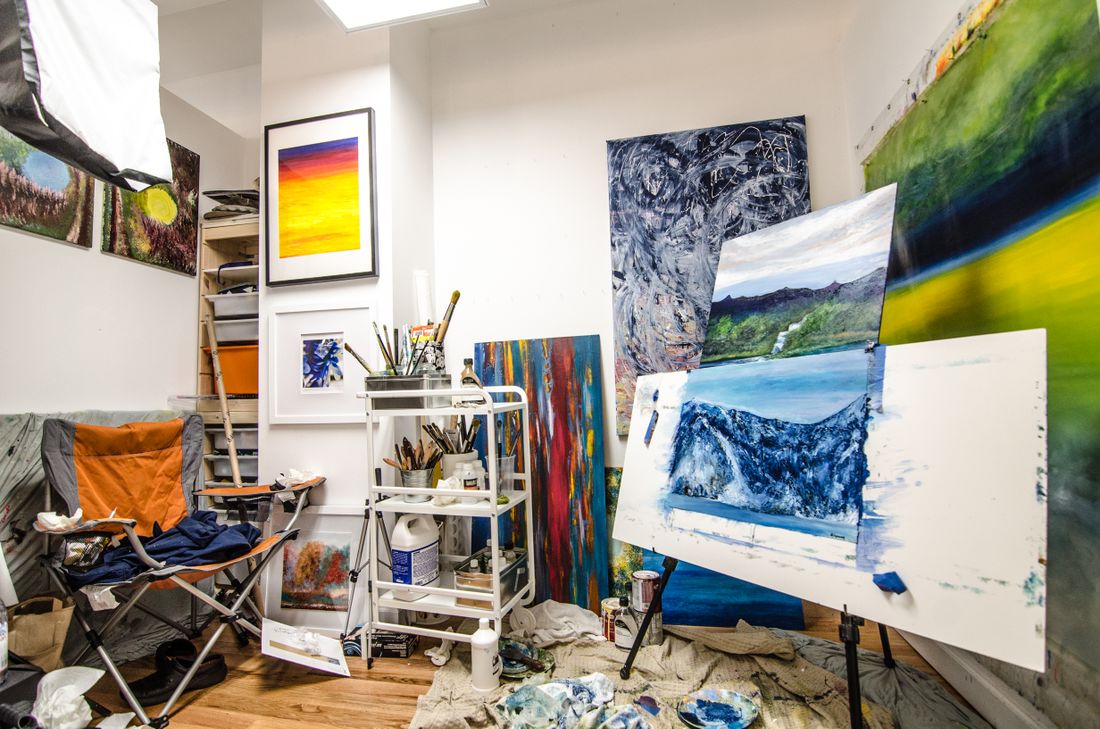
Most galleries and studios book a documentation shoot expecting the photographer to solve whatever the room throws at them. In practice, the room is often the biggest cost on the clock: a piece that's been moved and needs finding, hardware still screwed to the back of a frame, glass that's collected a season of dust, a wall that isn't actually clear, one outlet that works. None of it requires special skill to prevent, just a week of ordinary attention before the crew shows up. An hour of prep buys an hour of shooting, and it's the cheaper hour to spend.
An hour spent clearing a wall, pulling pieces in advance, wiping dust off glass, and confirming a working outlet is an hour a photographer doesn't spend solving those same problems live. The week before handles the slow fixes, the night before catches what changed, and the morning of is just a two-minute walk-through.
What actually costs time on a documentation shoot day?
The time that disappears on a documentation shoot rarely comes from the camera. It comes from hunting for a piece that got moved, prying hardware off the back of a canvas, wiping dust off glass, and realizing there's no single wall clear enough to shoot against. None of it is expensive to fix in advance.
A photographer working an hourly or day rate is being paid to make images, not to solve problems the space created. Every minute spent looking for a piece that was supposed to be pulled and ready, or working around hardware still screwed to the back of a frame, or repositioning lights because the only open wall has a window behind it, is a minute the shoot doesn't get back. None of these problems require special skill to prevent. They require someone walking through the space a few days ahead and asking a blunt question: if a photographer arrived right now, what would slow them down? A missing piece means a phone call and a wait. A dusty surface means a wipe-down mid-shoot that breaks the lighting setup. A cluttered wall means moving furniture while the crew stands by. Each one is small on its own. Stacked together across a dozen pieces, they add up to real time, and time on a shoot day is the one thing that doesn't stretch. The honest fix isn't a longer shoot. It's a shorter list of surprises.
What should you do the week before a documentation visit?
The week before is when the slow-moving problems get solved: pulling every piece off storage racks and confirming it's the right one, clearing a genuine wall with even light and no obstructions, testing that the outlet near that wall actually works, and sending any building paperwork the shoot needs.
Pulling every piece in advance sounds obvious until it's the thing that gets skipped. A gallery with work spread across a back room, a flat file, and a few pieces still on loan somewhere needs a week, not a morning, to physically locate everything on the shot list and confirm none of it is the wrong version or a duplicate frame with the same label. The wall matters just as much. A wall with a window behind it, a light switch at eye level, or a radiator jutting out isn't a wall a photographer can actually use, and finding that out on shoot day means improvising a setup instead of using one. The outlet is a small thing that ruins a morning when it's wrong: an outlet that trips a breaker under a full lighting kit, or one that's simply dead, is worth testing with something more demanding than a phone charger before the shoot, not during it. And if the building requires a certificate of insurance or a freight reservation, that paperwork has its own slower timeline entirely, separate from anything the gallery controls directly, so it needs to start now, not the week of.
What's worth doing the night before the shoot?
The night before is for the checks that take five minutes each but ruin an hour if skipped: confirming every piece on the shot list is out and accessible, running a cloth over glass and frames that will actually appear in the frame, and clearing whatever wall the shoot is using of anything not meant to be photographed.
None of this takes long, which is exactly why it's easy to push to the morning and then not have time for. A quick walk-through with the actual shot list in hand, checking each piece off as it's located rather than assumed to be somewhere, catches the one painting that got moved to a different room weeks ago and never got put back. Glass and frame surfaces don't need a deep clean, just a pass with a dry or barely damp cloth to knock off the dust that shows up under studio lighting in a way it never does under normal room light. The wall is worth a last look too: a chair leaning against it, a stack of boxes waiting to be unpacked, a coat someone hung there that morning, all of it reads as clutter in a photograph and takes real time to notice and move once the crew has already set up lights around it. Doing this the night before means the morning of the shoot starts with the space actually ready, instead of everyone standing around while someone finds a broom.
What should actually happen the morning the photographer arrives?
The morning of the shoot is for confirming, not fixing: walk the space with the photographer for two minutes before anything gets unpacked, point out which piece goes first, where the working outlet is, and whether anyone besides the crew needs access to the room during the shoot.
If the week before and the night before were handled properly, the morning of should be short. That short walk-through still matters, because it's the last chance to catch something that changed overnight: a piece someone moved back to its usual spot out of habit, a delivery that landed in the middle of the clear wall, a staff member who didn't get the memo that the room is off-limits until early afternoon. Pointing out the order pieces will be shot in, rather than leaving the photographer to figure it out room by room, saves real time, especially on a day with more than a handful of pieces to get through. It's also the moment to flag anything the crew needs to know that isn't obvious from looking around: a piece that's more fragile than it appears, a door that needs to stay propped for airflow, a phone that's going to ring at the front desk regardless of what's happening in the back room. None of this requires a formal meeting. It's a two-minute conversation that prevents an hour of the crew guessing.
What actually doesn't need cleaning before a shoot?
Not everything needs attention before a documentation visit. Floors, walls outside the shooting area, storage rooms nobody will see on camera, and the general tidiness of a back office rarely matter, because a documentation shoot is framed tightly around the work itself, not the room it happens to sit in.
This is worth saying plainly, because deep-cleaning an entire gallery or studio in the days before a shoot is a common way to burn time that would matter more spent somewhere else. A documentation shot is typically cropped in on the piece itself, sometimes with a slim margin of wall around it, which means a scuffed floor three feet away, a messy desk in the corner, or a closet door left ajar somewhere off camera has no chance of ending up in the frame. The energy that goes into scrubbing baseboards or reorganizing a supply closet is better spent confirming that the specific wall being used is clear, that the specific pieces on the list are accounted for, and that the specific outlet near the setup actually works. A gallery preparing for its first documentation visit sometimes treats it like preparing for a studio visit or an open house, tidying everything a visitor might see. A documentation shoot has a much narrower field of view than a visitor walking through the door, and prepping for the wrong kind of visit wastes real hours on the wrong rooms.
How should you decide the order pieces get shot in?
Stage the shooting order around what's actually hardest to move or light, not the order pieces happen to be sitting in. Large or fragile work usually goes first, while it's fresh and there's no rush; small or simple pieces that go quickly are better saved for whenever momentum or time starts to run short.
A shot list built purely by catalog number or wall position ignores how differently pieces actually behave in front of a camera. A large canvas or an oversized sculpture takes longer to light evenly and longer to reposition if the first setup doesn't work, so it deserves the early part of the day when the crew is at its most patient and the light in the room hasn't shifted yet. Anything behind glass, anything reflective, or anything with texture that changes with the angle of the light benefits from the same early slot, since those pieces tend to need a few adjustment passes before the shot is right. Small, flat, straightforward pieces, a simple work on paper, a modest canvas with even color, move quickly once the setup is dialed in, which makes them a useful buffer for the middle or end of the day when momentum needs a boost or time is getting tighter than planned. Grouping pieces by required lighting setup rather than by where they happen to be stored also cuts down on the number of times a light has to be moved and re-metered, which is its own quiet source of lost time across a full day.
What changes when the shoot is in a walk-up or a building with its own rules?
NYC adds a layer most prep checklists skip: a walk-up building means gear gets carried up stairs by hand, a freight elevator runs on its own reserved hours, and many buildings require a certificate of insurance before a crew is let in at all. None of it is difficult, but all of it needs a phone call days ahead.
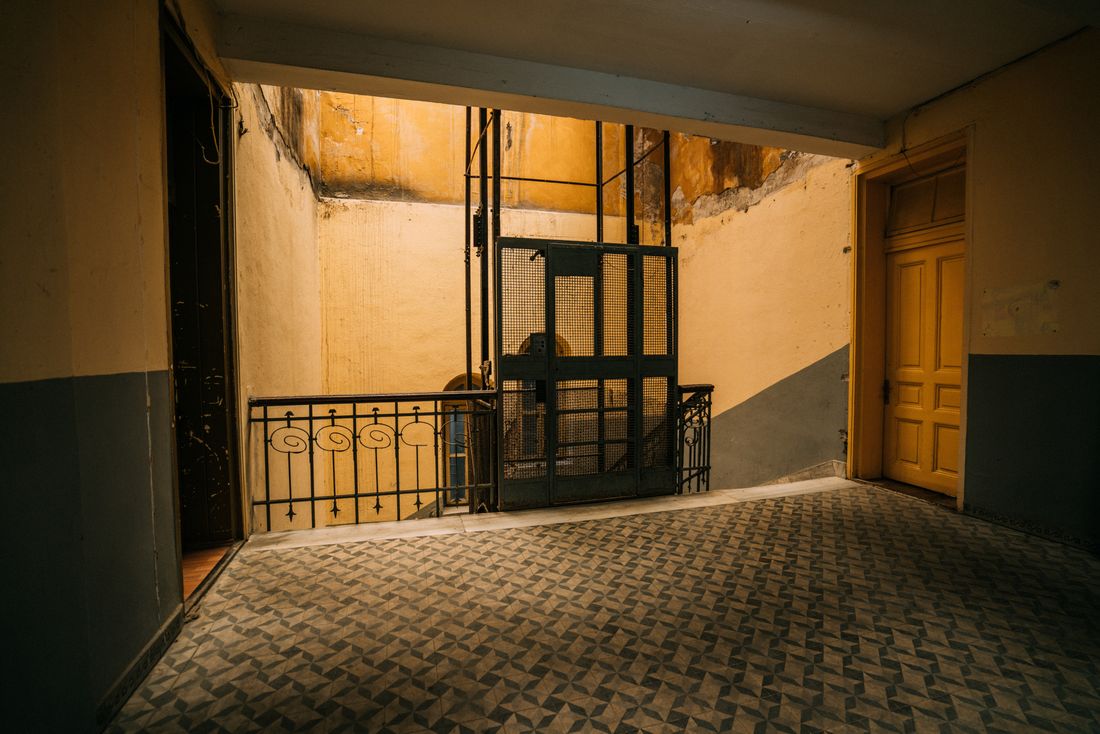
A walk-up gallery or studio changes the math on lighting stands, backdrops, and cases in a way a ground-floor space never has to think about. If there's no elevator, that gear is coming up by hand, flight by flight, which takes real time before a single frame gets shot and is worth planning around rather than discovering at the door. Buildings that do have a freight elevator often run it on a shared schedule across every tenant in the building, so a reservation is worth confirming rather than assumed, since arriving to find the freight already booked for a delivery means waiting in a lobby instead of shooting. Many commercial buildings also ask for a certificate of insurance naming their management company before letting an outside crew and equipment into shared spaces at all, a separate process from whatever the gallery has already approved, and it's worth confirming with the building directly rather than assuming it doesn't apply. Parking for a load-in is its own small planning problem in most NYC neighborhoods, and knowing in advance whether there's a loading zone or a garage nearby changes how much time to build in before the gear reaches the door.
Is an hour of prep really worth an hour of shooting?
Yes, and it's a fair trade more often than not. An hour spent clearing a wall, pulling pieces in advance, and confirming an outlet works is an hour a photographer doesn't spend solving those same problems live, at a slower pace, with a crew standing by and the light changing the whole time.
This isn't a claim about exact timing, since every space and every shot list is different, but the direction of the trade holds regardless of size. A gallery that spends a week doing the slow-moving prep, a night doing the quick checks, and a morning doing the two-minute walk-through has effectively moved most of its problem-solving to a point where it's cheap: before the crew arrives, on a schedule that isn't costing anyone billable time. A gallery that skips all of it moves that same problem-solving into the shoot itself, where it's expensive: a photographer standing in front of a piece that isn't where it's supposed to be, working around hardware that should have come off days ago, or waiting on a freight elevator that was never reserved. The work is the same either way. What changes is who's doing it, and on whose clock. Prep doesn't make a shoot faster than it needs to be. It just moves the ordinary friction of getting a space ready out of the hours a photographer is actually being paid to make images, which is the whole point of doing it in the first place.
Frequently asked questions
How far in advance should a gallery start prepping for a documentation shoot?
A week of real runway is a reasonable target for most spaces. That's enough time to physically locate every piece on the shot list, confirm a genuinely clear wall, test the outlet near it, and start any building paperwork a commercial space might require. Smaller collections or simpler shot lists can move faster, but starting the week before rather than the day before is what keeps small problems from becoming shoot-day delays.
Does a gallery need to deep-clean the whole space before a documentation shoot?
No. A documentation shoot is usually framed tightly on the piece itself, so a scuffed floor across the room or a messy desk well outside the frame won't show up in any photograph. The time that matters goes toward the specific wall being used, the specific pieces on the list, and the outlet near the setup, not a general deep-clean of rooms nobody's camera will ever point at.
What's the biggest mistake galleries make when prepping for a shoot?
Treating the night before or the morning of as the only prep window. The slow-moving problems, a missing piece, an untested outlet, a wall that's never actually clear, need a week to solve properly. Squeezing all of it into the final hours means the photographer ends up solving those same problems live, in front of a crew, instead of walking into a space that's already ready.
Does the shooting order actually matter, or is it fine to go piece by piece as they're stored?
It matters more than most shot lists account for. Large, fragile, or reflective pieces take longer to light and adjust, so they're better handled early, while the crew is fresh and patient. Small, flat, straightforward pieces move quickly once a setup is dialed in, which makes them useful later in the day. Grouping by lighting needs rather than storage location also cuts down on how often a light gets moved and re-metered.
How much lead time does a walk-up building or a freight elevator add to the planning?
Enough that it's worth a phone call the same week a shoot date gets discussed, not the week of. A walk-up means gear moves upstairs by hand, which takes real time before shooting starts. A shared freight elevator usually needs its own reservation, and a building requiring a certificate of insurance needs a few business days to process one correctly. None of it is difficult, but all of it runs on its own clock.
Give your collection a record that holds up.
We document artwork the way an adjuster or appraiser would actually want to see it: full views, accurate color, condition detail, and a system that keeps every file tied to the right record.
Explore artwork documentation →