A paid artist lecture has a slightly awkward photographic burden. It needs to show that a real audience arrived, listened, and shared a room with the speaker, while keeping the private details of that audience private. That is different from simply making the room look attractive, and different again from filming the talk itself. The coverage has to prove attendance without turning check-in into a spreadsheet with faces.
A ticketed artist lecture needs coverage that records more than the speaker. The useful set shows arrival, a credible sense of attendance, the relationship between speaker and audience, and a few frames that partners or funders can understand without exposing personal information. For a series, repeatable framing and delivery organized by event date matter as much as any individual photograph.
What paid attendance changes about the coverage brief
Paid attendance changes the brief because the photographs need to show a real public exchange, not just a well-lit speaker. Arrival, check-in, room density, listening, and the movement between those moments become evidence that the lecture happened as a program people chose to attend. Personal information still stays out of the frame. The room has to read as lived in, not merely prepared. That is the first visual question to settle.
A free gathering can be represented with a few atmosphere images and a strong speaker portrait. A ticketed lecture needs a more legible sequence. Someone should be able to understand that people arrived, entered a room, listened to an artist, and shared the event without seeing an attendee list or a readable ticket screen. That means the photographer is tracking the edges of the program as well as the talk itself. It also means asking what the images have to do afterward. Are they going to a partner, a funder, a recap, or an internal archive? The answer changes which moments deserve time. The lecture is still the center, but the surrounding evidence gives it weight. A room that looks beautiful and empty is not the same record as a room that visibly held an audience. That difference is why the first planning conversation should include the audience and the handoff, not only the speaker's arrival time.
How do you photograph arrival without exposing personal information
Arrival coverage can show that people came without showing who every person was or what their ticket said. Work from the side, keep lists and screens unreadable, and look for gestures, groups, coats, movement, and the transition from entrance to room. The proof is the flow of people, not their private details. It is a production choice, not a missing photograph.
Check-in is visually useful because it gives the event a beginning, but it is also where sensitive information tends to sit in plain view. A photographer should know which surfaces to avoid before guests arrive, including a sign-in sheet, a ticketing laptop, badges, or a posted list. There are plenty of other frames available. A hand opening a door, two people greeting near the entrance, a small group moving toward the talk, or a wide view from behind the audience can all communicate arrival without making a person's name part of the deliverable. The same discipline applies to captions and file notes. A neat photograph can still create an awkward problem if its context identifies someone who expected a quiet evening. The cleanest approach is deciding the boundary during the brief, then letting the photographer work within it without inventing a new rule in the middle of check-in. The organizer can also point out the best arrival window, since a nearly empty entrance and a crush at the door tell different stories about the same program.
How can photographs show room density honestly
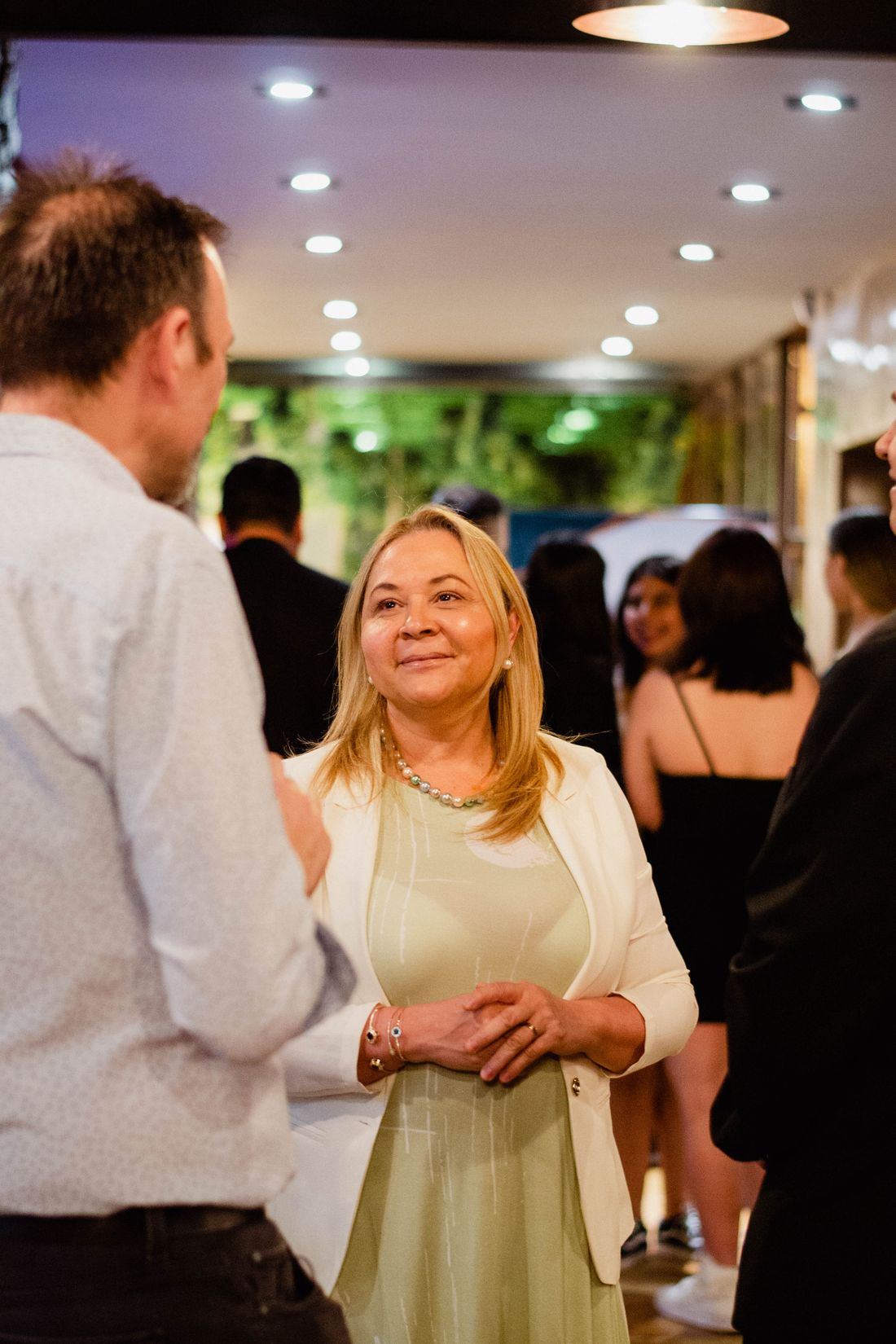
Room density reads honestly when the frame includes enough architecture, chairs, sightlines, and people to show how the audience occupied the space. One tight crowd crop can imply energy, but a wider image usually gives a partner or funder more useful context. The goal is a believable record, not a flattering illusion of fullness. Honest scale is part of the deliverable.
That does not mean reaching for the widest lens and collecting one heroic crowd photograph. A room can feel busy from one angle and sparse from another, especially near the front or beside an empty wall. The photographer should make a small set of complementary frames, a wide view that locates the audience, a medium view that shows people listening, and a detail that gives the room a human rhythm. Timing matters too. Arrival may look scattered, while the moment after the talk begins shows the audience settled in. A question period can reveal attention without requiring every face to be identifiable. The strongest coverage lets the room be the room. It does not quietly crop away the empty seats or manufacture a packed event through camera position. Paid attendance deserves a record that remains credible when someone who was not there looks at it later. If the room is genuinely small, that can still look strong. The frame simply needs to show intimacy and attention instead of pretending the event was built for a crowd it did not have.
Why the speaker and audience need to share the frame
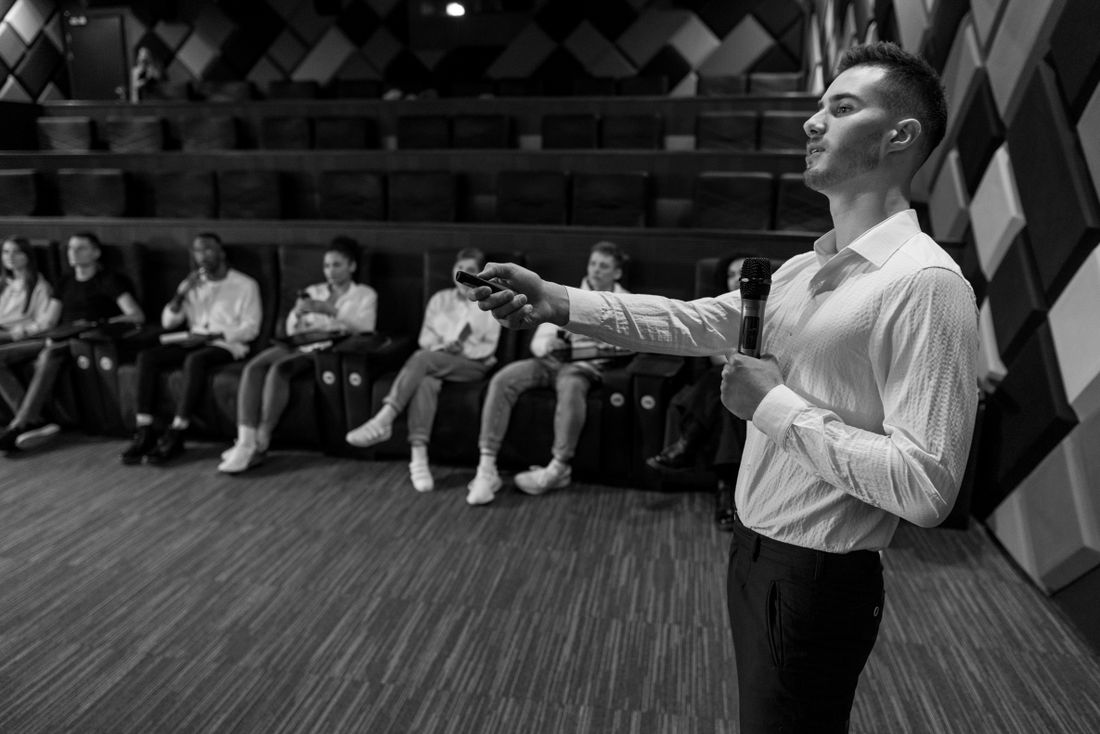
The speaker and audience need to appear together because the relationship is the program. A speaker alone proves that a talk was scheduled. A speaker with visible listeners shows attention, exchange, and the social setting that made the ticket worth buying. That relationship can be shown from the side, from the back of the room, or through a quiet reaction. It gives the evening a human scale.
This is also what separates a paid lecture from a headshot session or a discreet recording assignment. The audience is not decorative background. People looking up, taking notes without readable pages, leaning toward a question, or reacting to a pause give the speaker's presence a scale. The photographer does not need to chase every expression. A few thoughtful connections will carry more meaning than a catalogue of faces. Side angles often work well because they hold the speaker and several listeners in one visual sentence, while a rear wide can show the room without putting anyone's face at the center. If the talk includes projected material, the frame can acknowledge the screen without making its text the subject. The useful picture says, this person spoke and these people were there for it. That is a modest claim, which is exactly why it tends to hold up. It also helps future viewers understand the event as a conversation with an audience, rather than a lecture photographed in isolation for a promotional portrait.
What partner or funder proof should the images make visible
Partner or funder proof should make the program legible without pretending a photograph can answer every reporting question. A useful set shows the speaker, the audience, the room, and the event's public character, with enough variety to demonstrate real participation. It should never rely on invented attendance figures or a caption that claims more than the frame shows. Visual evidence should remain evidence, not decoration dressed up as a conclusion.
The practical question is what someone outside the room needs to understand. A partner may need to see that the lecture had a clear setting and an engaged audience. A funder may need a concise visual record of the program's existence and reach. Those are reasons to include an arrival frame, a room view, a speaker-audience frame, and a few human moments around the talk. They are not permission to photograph a private list or to label every person in the room. Captions should stay factual and modest. The event date, program title, and speaker name may be useful when they are confirmed by the organizer, while assumptions about attendance or impact should stay out. Coverage works best when it gives communications teams honest pieces they can place in a report, recap, or archive without having to explain what the photograph is trying to prove. A small caption file or delivery note can preserve those confirmed facts without asking the images to carry information they cannot establish on their own.
Why does a lecture series need repeatable framing
A lecture series needs a repeatable visual system so each date can stand alone and the full run can be compared later. Keep a consistent approach to the speaker, audience, arrival, and room views while allowing each event's actual character to show. Consistency makes the archive easier to read without making every night look identical. It also makes the next brief less mysterious.
Repeatability begins before the first event. Decide which core frames belong to every date, where the photographer can work, how much audience context is useful, and which details should never be readable. Then leave room for the differences that matter, a different speaker's posture, a different audience arrangement, a different kind of question, or a room that opens into another space. A rigid checklist can produce a tidy but lifeless series. A completely improvised approach makes the dates hard to compare. The useful middle is a stable skeleton with a little breathing room. We think about that as a production problem, not a branding exercise. The series should feel like one program because the coverage decisions are related, while each lecture still gets to be the particular evening it was. That is how a collection becomes more useful than a folder of unrelated event photographs. It also means a partner reviewing several dates can recognize the program's continuity without needing a long explanation of why every set was photographed from a different visual planet.
Why delivery should be organized by event date
Delivery organized by event date keeps a paid talk series usable after the photographer leaves. Give each lecture its own folder or clearly named set, with the speaker, audience, arrival, and contextual frames together. A series-level overview can come later, but the first handoff should answer which images belong to which night. That clarity is part of the coverage, not an administrative extra.
This sounds like a filing preference until someone needs to find the photographs from one specific talk. A single undifferentiated gallery forces the organizer to remember which speaker wore what, or to scroll through several events before finding the image needed for a recap. Date-first organization makes the handoff calmer for everyone. It also protects the integrity of captions and credits, because a frame is less likely to be paired with the wrong program when its event context travels with it. The file structure can stay simple. Use the date and a confirmed short event label, then separate selects from broader coverage if that helps the team work faster. For a recurring series, this small piece of order compounds. The archive becomes a record of the program, not just a long gallery that happens to contain several evenings. It also gives a future editor or communications teammate a clean starting point when the original organizer is no longer the person assembling the recap.
When a paid lecture does not need a large coverage package
A paid lecture does not automatically need a large crew or a complete event package. A small, contained talk may only need a clean speaker image, a credible room view, a few audience connections, and arrival details that avoid personal information. The right scale follows the intended use, not the fact that tickets were sold. Paid does not automatically mean elaborate.
This is the honest negative case. If the organizer only needs one image for an event page and a small internal record, a staff member with a phone may cover the basics, provided they can work without exposing check-in details and are not needed elsewhere. Professional coverage earns its place when the series needs consistent evidence across dates, images for partners or funders, speaker and audience relationships that feel considered, or a handoff someone can use without sorting the entire evening. The Lightroom Studio already treats event work as a choice between photo, video, or both, with the coverage shaped around the moments that matter. A ticketed lecture can use that same restraint. The best brief is not the one with the most deliverables. It is the one that leaves the organizer with a truthful, repeatable record and no unnecessary production circus. Sometimes the smartest production decision is a smaller assignment with a clearer purpose, which gives the person hosting the talk one less thing to manage.
Frequently asked questions
What should be photographed at a ticketed artist lecture?
Cover arrival, check-in without readable personal information, room density, the speaker, the speaker and audience together, a few audience reactions, and the room before or after the talk. The set should show that a real program happened and people attended without turning the deliverable into an attendee list. For a series, repeat those core views at every date so the archive remains comparable. Add contextual details only when they help explain the evening.
How do you show paid attendance without photographing private attendee information?
Show the flow of arrival and the occupied room rather than names, ticket screens, sign-in sheets, or readable badges. Side angles, rear room views, gestures, groups greeting, and people listening can all communicate attendance without exposing personal information. Decide those boundaries before check-in begins, then keep captions and file notes equally modest and factual. The room can provide the evidence without making any one attendee the evidence.
Why should a lecture series use the same shot list for every date?
A repeatable shot list makes each date understandable on its own and lets the full series be compared later. Keep a consistent core of arrival, room, speaker, audience, and speaker-audience frames, then leave room for each evening's actual character. The result is a coherent archive without forcing every lecture to look like the same event. It also makes partner and internal reviews much easier to handle.
What images can a partner or funder use from an artist lecture?
A partner or funder can usually make good use of a varied, factual set showing the speaker, audience, room, arrival, and visible engagement. Include enough context that the program is clear, but avoid invented attendance claims or photographs that expose private details. Confirm the event date, program title, and speaker name before adding them to captions or delivery notes. Let the images stay within what they can honestly show.
Does every ticketed artist lecture need professional photography?
No. A small talk that only needs one event-page image and a basic internal record may be covered by a staff phone, if the person documenting it can work within the privacy boundary. Professional coverage becomes useful when a series needs consistent evidence across dates, partner or funder-ready images, speaker-audience relationships, and delivery organized so the files can be used without a long sorting session.
Two openings on the same night doesn't have to mean a scramble.
We plan around clustered opening nights ahead of time, a split schedule, a second shooter, or booking early enough that the calendar stops being the risk.
Explore event coverage →