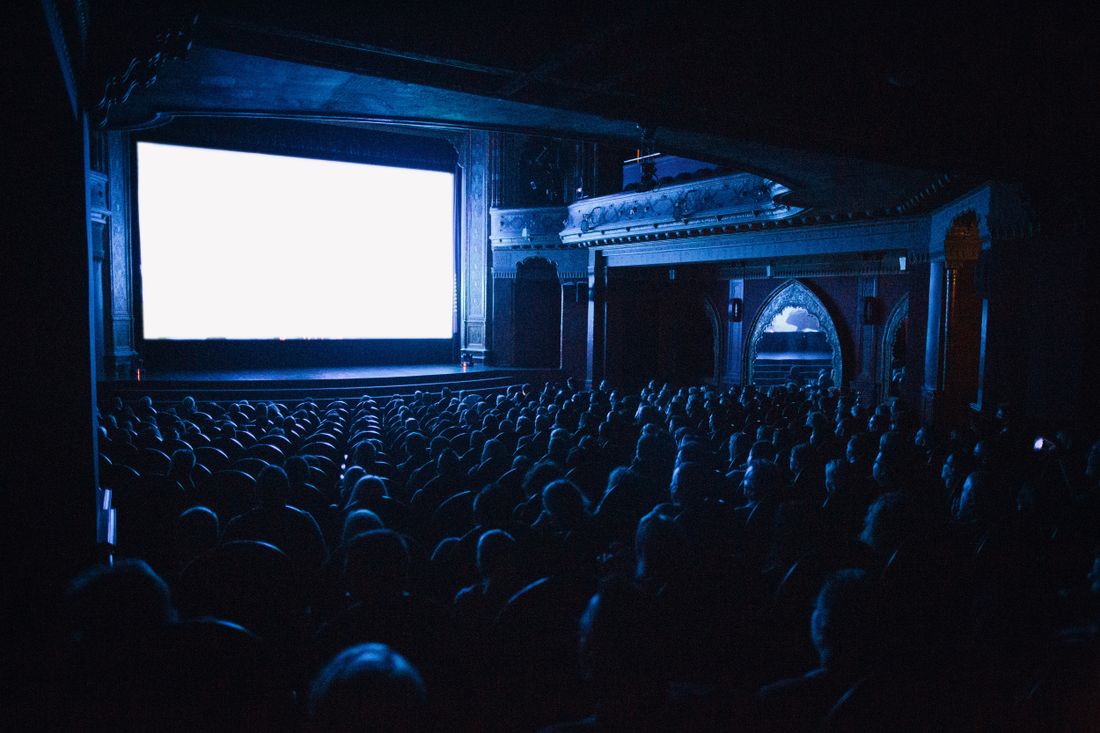
A screening asks a photographer to solve two exposure problems at once: a bright screen and a dark room full of people watching it. Here's how coverage handles both without losing either one, from the last lit minutes before the program starts to the Q&A once the lights come back up.
A screening in a dark room needs coverage built around two opposite exposure needs at once, a bright screen and a dark audience, plus a no-flash policy once the program starts. The practical approach separates before-the-lights-down moments from during-playback moments, and treats the audience, not just the screen, as the real subject.
Why does a screening need a different exposure plan than any other gallery event?
A screening puts two subjects with opposite exposure needs inside the same frame: a bright projected screen and a dark room full of people watching it. Expose for the screen and the audience disappears into silhouette. Expose for the audience and the screen blows out into a flat white rectangle. No single setting solves both at once.
Most gallery events don't create this problem. An opening has even light across the whole room, so one exposure covers the crowd, the work, and the conversation happening in front of it. A walkthrough moves through lit galleries with the art visible on the walls the whole time. A screening is built the opposite way. The room gets darkened on purpose so the video reads clearly, which means the thing making the light and the people receiving it become two different exposure problems in the same shot.
Coverage that treats a screening like a slightly darker version of a normal event usually comes back with one of two failures: audience shots where nobody's face is visible, or screen shots that look like a blown-out square with no detail left in it. The plan has to separate the two goals from the start, and decide in advance which moments belong to the audience and which belong to the screen. Naming that split ahead of time, rather than discovering it mid-program, is what keeps a screening's coverage from splitting the difference and satisfying neither the screen nor the room.
What actually changes about coverage once the room goes dark?
Once the lights go down, flash and any added continuous light are both off the table, so coverage shifts entirely to available light: the glow off the screen, any aisle or exit lighting, and whatever ambient spill exists in the room. That single change reshapes framing, working distance, and how often the shutter fires for the rest of the program.
Working in available light means accepting a narrower set of usable moments instead of forcing every frame to look like a fully lit event. Wider apertures and higher sensitivity settings pull in enough light to keep faces readable, but they also mean shallower focus and a visibly different texture than the crisp, evenly lit frames from an opening. That difference is expected, not a flaw to fight against.
Distance changes too. In a lit room, a photographer can work from almost anywhere and still get a clean, well-exposed frame. In the dark, staying close enough to catch expression without needing extra light becomes part of the plan, which usually means fewer sweeping wide shots and more considered, closer framing chosen ahead of time rather than found on the fly once the program is already running. None of this needs to look like a mistake. A gallery expecting a screening's photos to look identical to an opening's is the real source of most disappointment here, and setting that expectation before the event avoids it entirely.
What should coverage capture before the program actually starts?
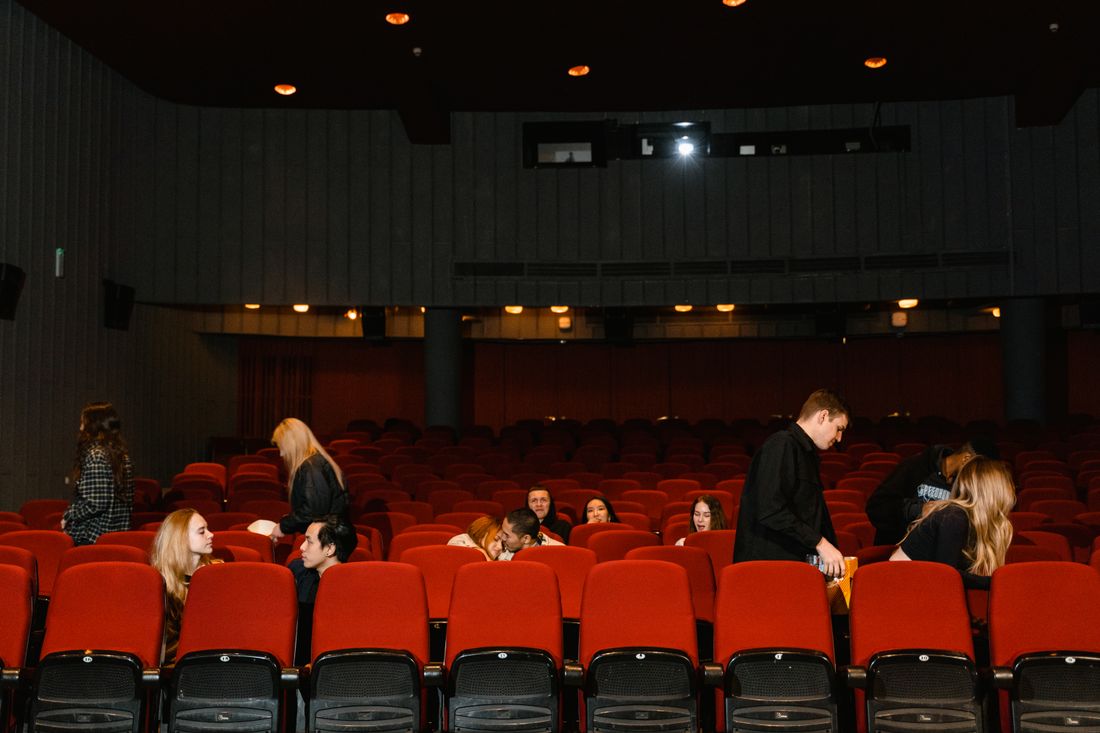
The minutes before a screening starts are the last fully lit moments of the event, and they're worth covering deliberately: people arriving and finding seats, any program note or intro signage, a host or curator setting up, and the room filling in. Once the lights drop, none of that is available again for the rest of the night.
This window also does double duty for context. A shot of the seating fanning out, or the screen still lit with a title card before playback starts, gives the eventual set of images a sense of place that pure dark-room frames can't provide on their own. It shows what kind of program this was and roughly how full the room got, which matters for a gallery's own record of the event later.
A short host or curator introduction, if there is one, is usually the last moment anyone is speaking in normal light before the room goes quiet. It's worth treating that introduction as its own small window rather than rushing through it to get positioned for the screening itself, since it won't come around again once playback begins. It's also the point in the evening when a photographer can still ask quick, practical questions, like where a host wants to stand for the introduction or whether a row up front is reserved, without interrupting anything already in motion. Those small confirmations get much harder to make once the room goes dark and everyone stops talking.
What does the audience actually add to coverage of a screening?
The audience is often the more useful subject during a screening, because a photo of a projected screen mostly repeats what the screen already shows anyone in the room. Faces caught in the glow of the projection, someone leaning forward, a row of profiles lit from one side, tell the story of the room watching, not just the work being shown on the wall.
Side and profile angles tend to work better here than head-on shots, because they use the screen's own light without pointing a lens straight into it. A photographer positioned along a side wall or near the front, facing back toward the crowd, can catch faces lit by the projection itself rather than needing any additional light source in a room built to have none.
Restraint matters here too. A handful of well-chosen audience frames reads as documentation of a real, attentive room settled into the work. A large volume of similar shots taken every few minutes reads as someone working the room during a program that's supposed to hold quiet attention, which undercuts the very thing being covered. A wider shot from the back of the room, taken early while some ambient light still lingers, can anchor the rest of the set, showing how full the room got and how people arranged themselves around the screen before the darkest, quietest stretch of the program begins.
Can coverage actually show what's playing on the screen?
Coverage can show that a screen is playing and give a general sense of its look, tone, and color, without functioning as a full copy of the work itself. Legible, complete frames of someone else's video are a rights question for the gallery and the artist to settle in advance, not something a photographer should default to during a live event.
In practice, that usually means the screen shows up in the frame as part of the room, glowing light on the wall or across the audience's faces, rather than as the entire subject of a shot. A wide shot with the screen visible in context does more for event coverage anyway, since the point is documenting the program and the room, not reproducing the work frame by frame.
If a gallery specifically wants stills of the work itself for a program page or an artist's own record, that's worth confirming with the curator or artist beforehand, so the photographer knows what's expected going in rather than guessing mid-program in a dark, moving room. This isn't a hard rule so much as a professional default: treat the video as belonging to someone else until told otherwise, the same way a photographer wouldn't reproduce a painting's exact colors and detail for a specific use without the artist's sign-off. Treating the screen as part of the room's atmosphere, rather than as free-standing content to capture in full, keeps the coverage useful without creating a file nobody asked for.

How does a photographer move through a dark room without becoming part of the show?
During playback, the room is quiet and everyone's attention faces one direction, so a photographer's movement, footsteps, and shutter sound become noticeable in a way they aren't at a louder, more social event. The practical answer is fewer working positions, fewer moves between them, and a shutter kept as unobtrusive as the room allows for the length of the program.
Most of the useful coverage during the program itself comes from two or three fixed positions worked quietly rather than constant repositioning around the room. Moving along a side aisle mid-screening pulls attention toward the person with the camera and away from the screen, which is the opposite of what event coverage is supposed to do for the gallery hosting it.
This is also where planning from the well-lit minutes before the program pays off. A photographer who already knows where the good angles are doesn't need to hunt for them once the room goes dark and quiet. The work of finding the right spot happens before the lights go down, not during the film itself. A useful habit is treating the room like a stakeout rather than an active shoot: settle into a position, let the eyes adjust, and wait for a moment worth taking instead of shooting continuously and hoping something usable turns up. Fewer, more deliberate frames also mean less chance of a shutter click landing during a quiet pause in the film, which is exactly the moment the room notices it most.
What changes once the lights come up for a Q&A or discussion?
The lights coming back up after a screening usually means a fast return to normal event coverage: a panel or host up front, an audience turning to face them, and a room that's suddenly workable with regular framing again. The transition itself, house lights rising while people are still settled from the film, is worth a frame or two on its own.
A post-screening discussion behaves like any other panel or talk: coverage should favor the speakers when they're making a point and the audience when a question comes from the floor, rather than splitting attention evenly between the two for the whole discussion. The room's energy right after a screening also tends to be quieter and more settled than the start of the night, and that's worth reflecting honestly instead of forcing an upbeat tone that doesn't match the moment.
If there's applause or a visible reaction at the end of the film before the lights fully come up, that's often one of the more genuine moments in the whole program, and it happens fast. Being ready for it means staying in position through the closing credits rather than already packing up gear. Framing the discussion afterward also benefits from a wider view every so often, showing the panel and the audience together rather than only tight shots of whoever is speaking. That wider frame is often the one that ends up representing the whole program later, since it shows the actual size and shape of the conversation.
How is covering a screening different from documenting the video work itself?
Covering a screening as an event means capturing the room, the audience, and the occasion of people gathering to watch something together on one specific night. Documenting the video work itself, for a grant application, an archive, or a portfolio, means producing a clean, accurate file of the work with no room, no audience, and no event around it at all.
The two get confused because they can happen around the same piece of work, sometimes even the same week. But a screening's coverage is judged by whether it captures the atmosphere of that particular night, while file documentation of the video is judged by whether it represents the work accurately outside of any single showing, in a form that still holds up months or years later.
Knowing which one a gallery actually needs before the event avoids a mismatch, where the client expected a clean file of the work and got event photography instead, or expected coverage of the night and got a technically accurate but atmosphere-free capture of the video. The two are worth booking, and briefing, separately from the start. This distinction also affects how files get delivered afterward. Event coverage typically comes back as a curated set built around the arc of the evening, while documentation of the work is usually a small number of clean, consistent files meant to sit in an archive or an application folder without any editorial sequencing at all.
Frequently asked questions
Does a screening need different equipment than a regular gallery opening?
Not fundamentally different equipment, but different settings and expectations. The same gear works, but a screening asks it to perform without flash or added light, relying on the room's own available light instead. That usually means faster lenses, higher sensitivity settings, and more selective framing than an evenly lit opening requires. The gear list stays close to normal; what changes is how conservatively it gets used once the room goes dark and quiet for the program.
Is flash ever appropriate during a screening?
No. Flash during playback interrupts the program for everyone in the room, not just the person being photographed, and it ruins the exposure the screen is relying on to read correctly. Flash is fine, if it's used at all, only in the fully lit minutes before the program starts or after the lights come back up. Once the room goes dark for the screening itself, coverage should rely entirely on available light.
How do you photograph a room this dark without the images looking grainy or blurry?
Some grain is a normal, honest tradeoff for working in near-darkness without disrupting the program, and a slightly textured image usually reads better than a flash-lit one that broke the room's mood. Blur is the bigger risk, and it's managed through steadier holding technique, closer positioning, and choosing moments when subjects are relatively still, since a slower shutter speed can't freeze fast movement in low light.
Should the photographer capture the actual video content playing on the screen?
In general frames, not as the main subject. A wide shot with the screen glowing in the room documents that a screening happened; a full, legible frame of someone else's video functions more like a copy of the work, which is a rights question for the gallery and artist to settle, not a default the photographer should assume. If detailed stills of the work are wanted, that's worth confirming beforehand.
How does covering a live screening differ from documenting a video work for a grant application or portfolio?
Event coverage captures the room and the audience watching together on one specific night, judged by whether it feels like that occasion. Documenting the work itself for an application or portfolio produces a clean file of the video with no room or audience around it, judged by accuracy rather than atmosphere. They can relate to the same piece of work without being the same deliverable, and usually need booking separately.
Got overlapping openings already on the calendar?
We work out the coverage plan well before the night gets close, whether that's two shooters, a tight schedule, or simply booking early enough to avoid the conflict entirely.
Explore event coverage →