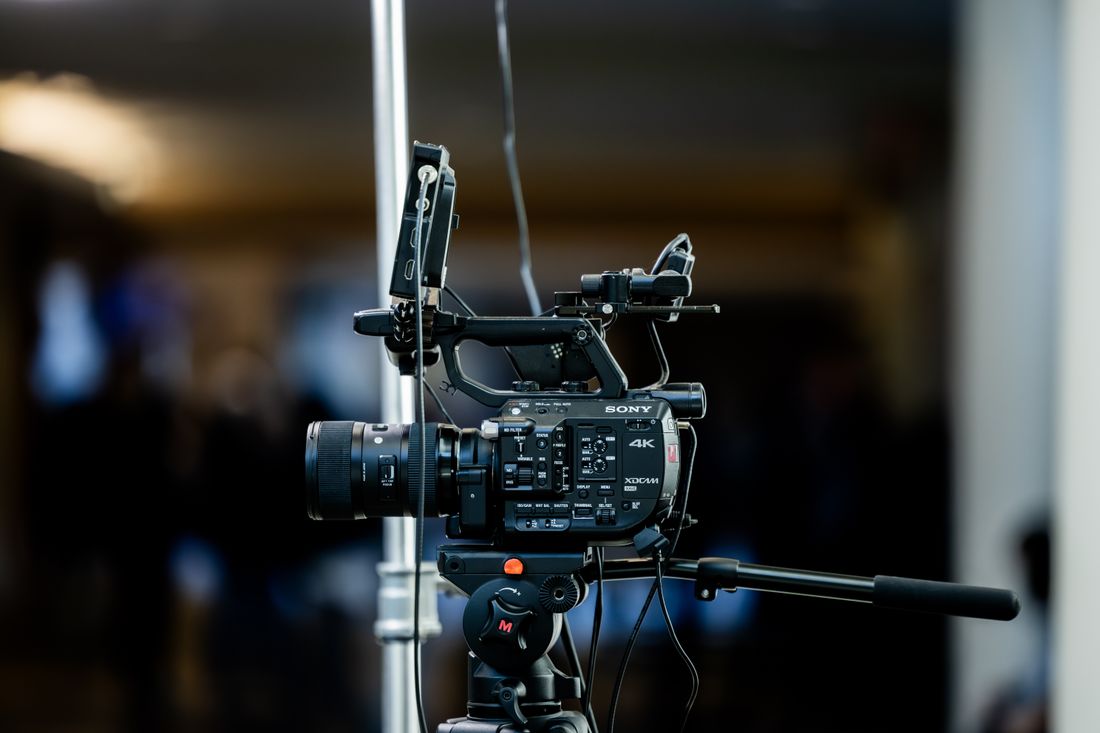
A recording asks people to care later. A livestream asks them to care now, which is a much bigger ask and occasionally a much better one. The decision is not really about video. It is about whether anyone outside the room has a reason to be there at the same time as everyone inside it.
Livestreaming makes sense when an art event has a genuine remote audience with a reason to attend in real time (a distributed membership, a ticketed talk, a performance that cannot travel). Recording alone is the better choice for openings and receptions, where the value is in the edited record rather than in simultaneous access.
The Question Is Not Video, It Is Simultaneity
Both a livestream and a recording produce video of an event. The difference is that a stream commits to a specific hour and a remote audience arriving during it, while a recording commits only to producing something watchable afterward. Everything else (cost, crew, risk, what the room feels like) follows from that one difference.
That makes the first useful question about people rather than equipment. Is there an identifiable group who cannot be in the room and who would genuinely show up at eight o'clock on a Thursday to watch? Members in another city, a school group, collectors abroad, an artist's community that does not overlap with the gallery's geography. If that group exists and can be named, streaming has something to do.
If the honest answer is that the stream would mostly be watched by people who could have attended, or by nobody at all until it becomes a recording anyway, then the money is better spent on a well-shot record. That is not a lesser outcome. A good recording of a talk outlives the evening by years, while a stream watched by four people is an expensive way to produce the same file.
The Events Where Streaming Genuinely Earns Its Place
Talks, panels, and artist conversations are the strongest candidates. They have a clear focal point, they are structured around speech rather than atmosphere, and the value transfers almost entirely through a screen. Someone watching remotely gets close to the same thing an attendee gets, which is rarely true of a reception.
Ticketed or membership programming is the second case. When an institution has paying members spread across a region, a stream is a straightforward way of delivering something they already have a claim on, and it converts a local evening into a benefit that justifies a membership fee. That is a business reason rather than an editorial one, and it is usually the strongest argument in the room.
The third is work that cannot travel: a performance, a site-specific piece, a one-night installation. Where the event is the artwork rather than a presentation of artworks, a stream extends the only chance anyone will get. It also generates a record that may end up being the exhibitable artifact, which raises the stakes on capture quality considerably.
Accessibility is a fourth case, and it is a stronger argument than it usually gets credit for. People who cannot easily attend a physical space (because of distance, cost, mobility, caring responsibilities, or an evening schedule that does not bend) are a real audience with a real reason to be there at the actual hour rather than later. Programming that takes that seriously tends to treat the stream as part of the event rather than as an add-on.
Where a Stream Reliably Disappoints
Openings and receptions are the classic mismatch. The value of an opening is spatial and social (moving through a room, standing in front of work, overhearing a conversation), and a single fixed camera pointed at a crowd conveys almost none of it. Remote viewers see a shaky room of strangers and leave within a minute.
Exhibition walkthroughs sit in an awkward middle. They can work when someone knowledgeable is talking and the camera follows deliberately, and they fail when the plan is to wander with a phone. The difference is whether the walkthrough has been treated as a piece of programming with a script, a route, and a camera operator, or as an afterthought with a gimbal.
The other quiet failure is a stream that nobody was told about. Streaming requires promotion on a schedule (announcement, reminder, a link that works), and events that add a stream late usually skip that entirely, then conclude that remote audiences do not exist. The audience was real, the invitation never arrived.
What Streaming Actually Requires On Site
A stream needs a reliable internet connection, and this is where more art-space streams fail than anywhere else. Gallery wifi is generally built for a card reader and a laptop, not for sustained upload, and a room full of phones makes it worse. A wired connection or a dedicated cellular uplink is the difference between a stream and an apology.
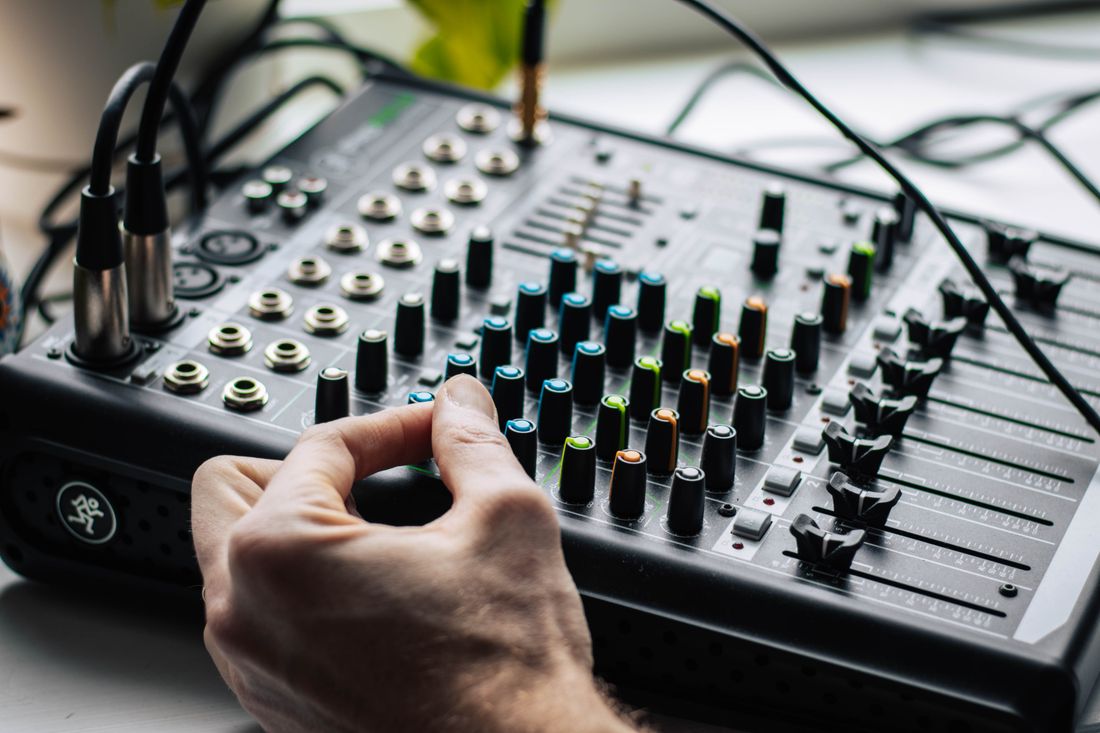
It needs audio that stands on its own, because a remote viewer has no room tone to fill the gaps. That means feeding from a proper microphone or a house sound desk rather than relying on a camera's onboard mic, and it means someone monitoring levels during the event rather than discovering a problem in the archive afterward.
It also needs someone whose entire job is the stream. A photographer covering the room cannot simultaneously watch a bitrate, and a videographer shooting for an edit is making different decisions than one feeding a live output. This is the cost people underestimate: streaming is usually an additional person, not an additional setting.
Lighting deserves a mention too, because rooms designed for looking at art are frequently designed against video. Gallery lighting is often directional, dim between the works, and colour-shifted toward the pieces on the walls. A speaker standing in a spot that reads beautifully to the eye can be badly underexposed on a stream, and the fix is either a small amount of added light or a deliberate choice about where the speaker stands.
Someone also has to own the platform side: where the stream lives, whether it is public or ticketed, who is watching the chat if there is one, and what happens if a question comes in from a remote viewer. A stream with no plan for remote participation is a broadcast, which is fine, but it should be described that way rather than promising an interaction nobody is staffing.
The Hybrid Most Events Should Actually Consider
There is a middle position that suits a lot of art programming: stream only the structured portion, and record the rest. A talk goes out live for the remote audience; the reception before and after is covered as stills and short clips for later use. The stream stays short, focused, and defensible, and the evening is not built around a camera.
This has a practical benefit for the room as well. A stream that runs for forty minutes and then ends releases everyone (the speakers, the crew, the audience) into a normal evening. A stream that runs for three hours turns a gallery into a broadcast set, which changes how people behave in it, usually for the worse.
It also produces two clean deliverables rather than one compromised one. The talk exists as a recorded stream that can be posted afterward, and the event exists as photographs and edited clips. Neither is trying to be the other, which is generally when both come out better.
Making the Case for Recording Alone
Recording without streaming buys editorial control, and that is worth more than it sounds. An edited talk can lose the ten minutes of technical setup, the false start, the question nobody could hear, and the section where the projector failed. A live stream keeps all of it permanently, in front of the exact audience you were trying to impress.
It also removes an entire category of risk. Nothing about a recording depends on a venue's upload speed, a platform's behavior, or a link being circulated correctly. If something goes wrong, it goes wrong privately and is usually fixable in the edit rather than being witnessed.
And a recording tends to be used more. A well-edited twenty-minute version of a talk gets posted, embedded, sent to a funder, and shown at the next event. A three-hour unedited stream sits on a platform, technically available, watched by almost nobody. Availability is not the same as use, and most art organizations need the second one.
There is a quieter argument for recording as well, which is what it does to the room. A stream makes everyone in the space aware that they are in a broadcast, and it changes how an audience asks questions. People are more cautious when they know they are being published live. A recording that will be edited leaves more room for a conversation to be genuinely unguarded.
What the Difference Costs, Honestly
The cost gap is mostly people and contingency, not gear. A recorded talk can be covered competently by one operator with a locked camera and a good audio feed. A stream generally wants a second person, a backup connection, and enough setup time before doors to test the whole chain end to end while there is still time to fix it.
Setup time is the part that surprises organizers. A stream needs to be tested against the actual platform, from the actual room, on the actual connection, an hour or more before anyone arrives. That is not padding. It is the only window in which a problem can be solved rather than survived.
Where the budget is genuinely tight, the honest recommendation is usually to record properly rather than stream badly. A clean recording of a good talk is an asset. A stream that buffers through the first twenty minutes is a memory nobody wants, and it produces a worse archive file than the recording would have.
It is worth being specific about what a second person buys, because it is not simply redundancy. One person cannot simultaneously monitor a live output, adjust a camera, and respond to a room, and the moments when all three are needed at once tend to be the moments that matter most. On a small budget, the honest choice is usually a locked camera and one person, rather than a moving camera and one person stretched across three jobs.
Where an organisation streams regularly, the economics change substantially. A repeatable setup in a familiar room (the same camera position, the same audio path, the same tested connection) removes most of the per-event cost and most of the risk. The first three streams are expensive, the tenth is close to routine. That is a reason to either commit to the format properly or skip it, rather than attempting it occasionally.
A Short Way to Decide
Three questions settle most cases. Can you name the remote audience and say why they would watch live rather than later? Does the event have a structured, speech-led portion that survives a screen? Is there a connection in the building you would bet the evening on?
Three yeses point to streaming, probably of the structured portion only. Any no points to recording, and specifically to recording well (good audio, a considered camera position, and an edit afterward rather than a raw file dumped on a platform).
The one answer to avoid is streaming because it seems like what organizations do now. A stream is a promise to an audience about a specific hour, and promises are worth making only when someone is waiting on the other end. When they are, it is genuinely powerful. When they are not, a recording does the same work with less risk and more use.
Frequently asked questions
Should a gallery livestream its openings?
Usually not. The value of an opening is spatial and social (moving through a room, standing in front of work, overhearing conversation), and almost none of that survives a fixed camera pointed at a crowd. Remote viewers tend to leave within a minute. Openings are better served by strong photography and short edited clips, with streaming reserved for structured, speech-led programming.
What is the most common reason an art livestream fails?
The internet connection. Gallery wifi is generally provisioned for a card reader and a laptop rather than sustained upload, and a room full of phones makes it worse. A wired connection or a dedicated cellular uplink, tested from the actual room well before doors, is what separates a working stream from an apology. Audio is the second most common failure point.
Does livestreaming cost more than recording an event?
Generally yes, though the difference is people and contingency rather than equipment. A recorded talk can be covered by one operator with a locked camera and a good audio feed. A stream usually wants a second person whose only job is the live output, a backup connection, and an hour or more of setup to test the chain end to end before anyone arrives.
Can you livestream part of an event and record the rest?
That hybrid suits most art programming better than streaming the whole evening. Stream the structured portion (the talk, the panel, the performance) and cover the reception as stills and short clips for later. The stream stays focused, the room returns to being a room afterward, and you end up with two clean deliverables instead of one compromised recording.
Is a livestream recording good enough to use afterward?
It is usable but rarely ideal, because a stream keeps everything: the setup, the false start, the inaudible question, the projector failure. A recording made for editing lets you cut those and post a tighter version that people actually watch. If the archive matters, it is worth capturing a clean recording alongside the stream rather than relying on the stream file.
Programming worth more than one evening.
We cover talks, openings, and performances for the room that is there and the audience that is not, with audio that holds up and an edit people actually watch.
Explore event coverage →