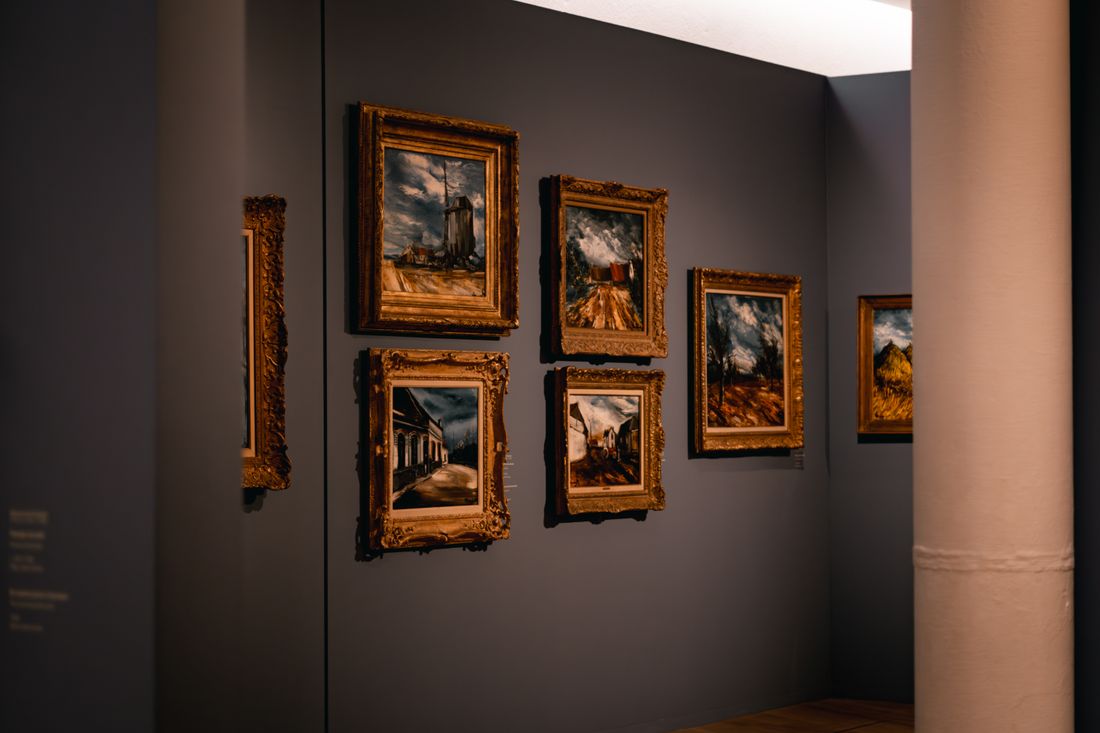
A gallery's brand film runs into a problem a maker's film never has to solve: there's no protagonist built into the subject. A potter has hands and clay and a pot that gets more finished by the minute. A gallery has none of that. Its actual product is judgment, the accumulated taste behind what gets a wall and what doesn't, and judgment has no shape a lens can hold. That absence isn't a flaw in the assignment. It's the actual brief: find something a camera can follow that still tells the truth about a program, a room, and the people whose calls built both.
A gallery's brand film works by replacing the arc a maker's film gets for free, hands, material, a finished piece, with the room itself as a recurring character, one installation from empty wall to opening, or the audience a gallery has built, plus the people whose taste actually decided what belongs on the walls.
Why Doesn't a Gallery's Brand Film Work Like a Maker's?
A gallery's brand film doesn't work like a maker's because it has none of the built-in pieces that make a maker's film easy: no hands, no material, no single object getting finished on camera. A gallery's actual product is judgment, what gets shown, who gets represented, what belongs on the wall. Judgment doesn't photograph, so a gallery film has to build a structure that doesn't depend on watching something get made.
A maker's film borrows its shape from the work itself. Clay goes from wet to fired, a plank goes from rough to finished, and the camera just follows along. That arc does most of the storytelling before a single editorial decision gets made. A gallery has no equivalent object. A show opens and closes, sales happen off camera, and the decisions that actually define the place, this artist and not that one, this wall and not that one, happened in conversations nobody filmed.
That absence isn't a flaw to work around. It's the actual subject. A gallery film that borrows a maker's arc, by leaning on one artist's process or turning an install into a finishing sequence, ends up describing someone else's work instead of the gallery's own. The film that works starts by naming what a gallery is: an ongoing set of choices about what deserves a room, made by people whose names rarely appear on a label.
Once that's the starting point, the question changes. Instead of what to follow, it becomes who explains the choosing, and what stands in for the arc a maker's film gets for free.
What Does a Gallery Actually Sell, and How Do You Film It?
A gallery's product is the judgment behind what ends up in the room: the taste that decided this artist gets a show and that one doesn't, this piece hangs at eye level and that one sits in the back. A camera can't film judgment directly, so the film has to film the people making it, explaining one specific choice instead of a general philosophy.
That's a narrower ask than it sounds. A director or curator talking about the gallery's mission in general terms produces nothing a viewer can hold onto, because it could describe almost any gallery. The same person talking about why one artist got the fall slot, or why a piece that seemed like an obvious sale got passed over, produces something specific enough to actually mean something. Specificity is the whole trick, the same way it is for a maker explaining one material choice instead of describing craft in the abstract.
A preparator is worth including for the same reason, and often gets left out. The person who decides where a nail goes, how far a sculpture sits from the corner, or whether a piece needs its own wall is making judgment calls too, just physical ones instead of curatorial ones. Their reasoning is concrete and easy to film without anyone performing for the camera.
The through-line across these roles is the same: ask someone to talk about a real decision they made, not the values they'd like the gallery to be known for. The first produces a film. The second produces a mission statement with better lighting.
Can the Room Itself Be the Film's Recurring Character?
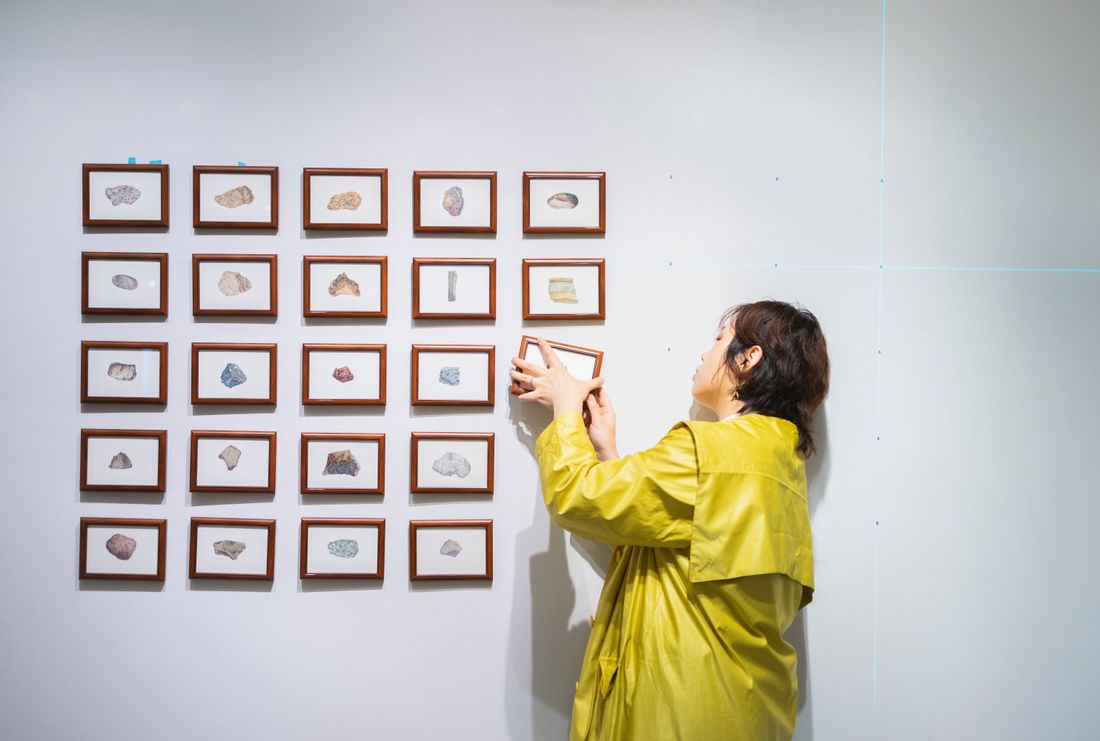
Yes, and it's usually the most reliable stand-in for the protagonist a gallery's film doesn't have. A room that recurs across the film, empty, mid-install, full on opening night, quiet again after, gives a viewer something continuous to track even though nothing about a gallery's work looks the same from shot to shot. The room becomes the thread a maker's hands would otherwise provide.
What makes this work is repetition from a fixed vantage. Returning to the same corner, the same wall, the same sightline down the main gallery, several times lets the space carry the arc: bare walls, tape lines on the floor, crates half-open, then the finished hang, then a room full of people who came because of what's on those walls. None of that requires anyone to perform. The room simply changes, and the camera is there each time to notice.
This also solves a problem specific to galleries, which is that the actual working spaces, storage, the office, the loading area, rarely look like anything worth filming on their own. A room used as a recurring device doesn't need every space to be photogenic. It needs one or two spaces the gallery actually inhabits, shown often enough that a viewer starts to recognize them the way they'd recognize a maker's hands.
The risk is treating the room as scenery instead of a character. A room shot once, beautifully, and never returned to is a real estate photo. A room returned to across the runtime, showing what happened inside it, is closer to what the film needs.
Should the Film Follow One Installation From Empty Wall to Opening Night?
It can, and a single install is one of the strongest structural options a gallery has, because it gives the film a real timeline: an empty wall, work arriving in crates, a hang that shifts as people argue about spacing, then a room full of guests looking at what took weeks to decide. The limitation is that it represents one show, not a program, so it works best paired with something that gestures at the wider pattern.
The appeal is obvious once you compare it to the alternatives. A single install gives a gallery something close to the arc a maker's film gets automatically: a beginning, real stakes, a visible before and after. Crates get opened, walls get patched, a piece gets hung, taken down, and hung again three inches over, and none of that has to be manufactured, because it's exactly what happens before any show opens.
The tradeoff is scope. One install shows how this gallery handles this show, and a viewer has no way of knowing whether what they're watching is typical or exceptional. A gallery that installs the same way every time can lean into that and let the specificity stand for the whole. A gallery whose program varies quite a bit from show to show risks a film that implies more consistency than really exists.
A useful fix is a short coda: a few seconds acknowledging this was one show among several, maybe a glimpse of a different room from a different season, so the single-install structure reads as an example rather than the entire claim.
What Happens When the Film Is Built Around the Artists Instead of the Gallery?
Built around its represented artists, a gallery's film gets instant warmth and faces the audience already recognizes, but it also risks becoming a film about those artists instead of about the gallery that represents them. Whatever screen time an artist gets tends to read as their film, because the artist is the more compelling on-camera presence almost every time, and viewers naturally follow the person, not the business behind them.
The pull toward this structure makes sense. Artists are already telling their own stories in interviews, studio visits, and their own social feeds, and borrowing that momentum feels efficient. A gallery that pulls together compelling footage of three or four artists it represents will end up with something watchable almost by default, because the material is inherently more filmable than a director explaining a program.
The fix isn't avoiding artists on camera, since that would just recreate the room-with-no-people problem from a different angle. It's making sure the gallery's own reasoning stays audible alongside them. An artist explaining their process is one layer. A curator explaining why that artist's work belongs in this specific program, next to these other artists, in this specific season, is the layer that actually makes the film about the gallery rather than a highlight reel of its roster.
A rough test for a cut built this way: if every artist interview could be dropped into a different gallery's film with no editing beyond the location shots, the gallery's own voice hasn't earned enough of the runtime yet.

Can a Film Be Built Around the Audience a Gallery Has Made?
Yes, and it's the least tried of the three structural options, which is part of why it can feel fresh: a film built around who actually shows up, the regulars, the collectors, the neighborhood people who wander in during an opening, treats the audience itself as evidence of what the gallery has built over time, rather than treating any single show or artist as the whole story.
This works because a gallery's audience is genuinely something it makes, slowly, through years of programming choices, not something that arrives on its own. Who actually turns up to a given gallery's openings, and who keeps coming back season after season, says something specific about the taste behind the program that no single artist interview can say on its own. A room full of the same familiar faces across several different shows is its own kind of evidence.
The footage this structure needs looks different from the other two. Less crate-opening and wall-hanging, more people actually looking at work, talking to each other, returning to a piece a second time across a night. Overheard conversation, if it can be captured honestly rather than staged, tends to be some of the most persuasive material a gallery can put in a film, because nobody plans what a stranger says about a painting they didn't expect to like.
The risk is thinness. A crowd alone, without any sense of why it gathered, reads as a party video. It needs the room and the choices behind the room still present underneath it.
What Actually Breaks a Gallery's Brand Film?
Three things reliably break a gallery's brand film: an interview that recites the mission statement instead of describing a real decision, artwork treated as background texture instead of the actual point, and a film that flatters the space so hard it starts to look like a real estate listing. All three come from the same instinct, reaching for something safe and general when the film needed something specific and true.
The mission-statement interview is the most common failure, because it's the easiest thing to say on camera without preparation. Ask a director what the gallery stands for and most people default to language they've used in a press release before, words like vision and community and voice, that could describe almost any program in the city. The fix from earlier sections still applies: ask about one decision, not a philosophy, and the interview stops sounding like every other gallery's interview.
Artwork as texture shows up when pieces appear only as blurred background behind a talking head or as quick cutaway shots with no context, present but never actually looked at. That treats the work the gallery represents as set dressing for its own promotional film, which undercuts the entire premise of a gallery being a place that takes the work seriously.
The real-estate-listing problem comes from lighting and lensing the room the way a broker would, wide, bright, empty of anyone actually using it. A gallery film needs the room to look lived in, mid-use, with people and work and a little mess, not staged for a viewing appointment nobody's coming to.
Whose Consent Does a Gallery's Brand Film Actually Need?
A gallery's brand film needs consent from every represented artist whose work or likeness appears in it, not just from the gallery commissioning the shoot, because a maker's film only ever features one person's work while a gallery's film almost always features several artists' work in a single frame. That difference changes the paperwork before a single shot gets planned.
This is easy to underestimate going in, since the gallery is the client paying for the film and the artist may not be in the room during production planning. But the artwork itself, its image on screen, usually still belongs to the artist under whatever agreement they have with the gallery, and a brand film is a use of that image the original representation agreement may or may not already cover. Assuming it's covered because the work happens to be hanging in the gallery's own space is the kind of assumption that causes problems later.
In practice, this means checking, early, what each artist's existing agreement says about promotional use of images of their work, and getting explicit sign-off for anything it doesn't clearly cover. It also means giving artists who appear on camera themselves a real chance to see how they're represented before a cut is final, the same courtesy a maker's own film would get as a matter of course.
None of this has to slow a production down if it starts early. It becomes a real problem only when consent gets treated as a formality chased after the film is already cut and everyone involved has moved on.
Frequently asked questions
Does a gallery's brand film need one artist to be its face?
No. Making one artist the face of a gallery's film tends to produce a film about that artist, not the gallery's program. A stronger approach spreads screen time across several artists from different points in the gallery's history, alongside the people who work at the gallery itself, so the throughline stays the program's taste rather than any one artist's presence, no matter how compelling that artist happens to be on camera.
What's the biggest risk in building a gallery's film around one installation?
The biggest risk is scope. One install shows how a gallery handles one show, and a viewer has no way of knowing whether that's typical of the whole program or an exception. A gallery whose approach is genuinely consistent can lean into that. A gallery whose program varies more from show to show should pair the install with a short coda acknowledging it's one example, not the entire program in miniature.
Why does treating artwork as B-roll actually hurt a gallery's brand film?
Artwork used only as blurred background or a quick cutaway behind a talking head treats the work as set dressing for the gallery's own promotional film, which undercuts the premise of a gallery being a place that takes the work seriously. The work needs at least a few unhurried moments where it's actually the subject of the shot, not scenery behind someone explaining why it matters.
Whose approval does a gallery's brand film need before it's used publicly?
Every represented artist whose work or likeness appears on screen, not only the gallery commissioning the film. Artwork shown in the film usually still belongs to the artist under their existing representation agreement, and that agreement may not automatically cover promotional video use. Checking what it does and doesn't cover, and getting explicit sign-off for anything unclear, has to happen before production, not after the film is cut.
Should the gallery director be the one talking on camera?
Not necessarily, and forcing it can backfire if the director isn't a comfortable, natural talker. What matters more than title is whether the person on camera can describe one real decision specifically, why this artist, why this wall, why this season, rather than reciting general language about the gallery's mission. A curator or preparator who talks naturally about a specific choice often makes a stronger interview than a stiff director reading talking points.
Not sure if you need a refresh or a whole new concept?
We shoot both, and we'll say plainly which one fits your portrait before anything gets booked, not after the invoice.
Explore portrait sessions →