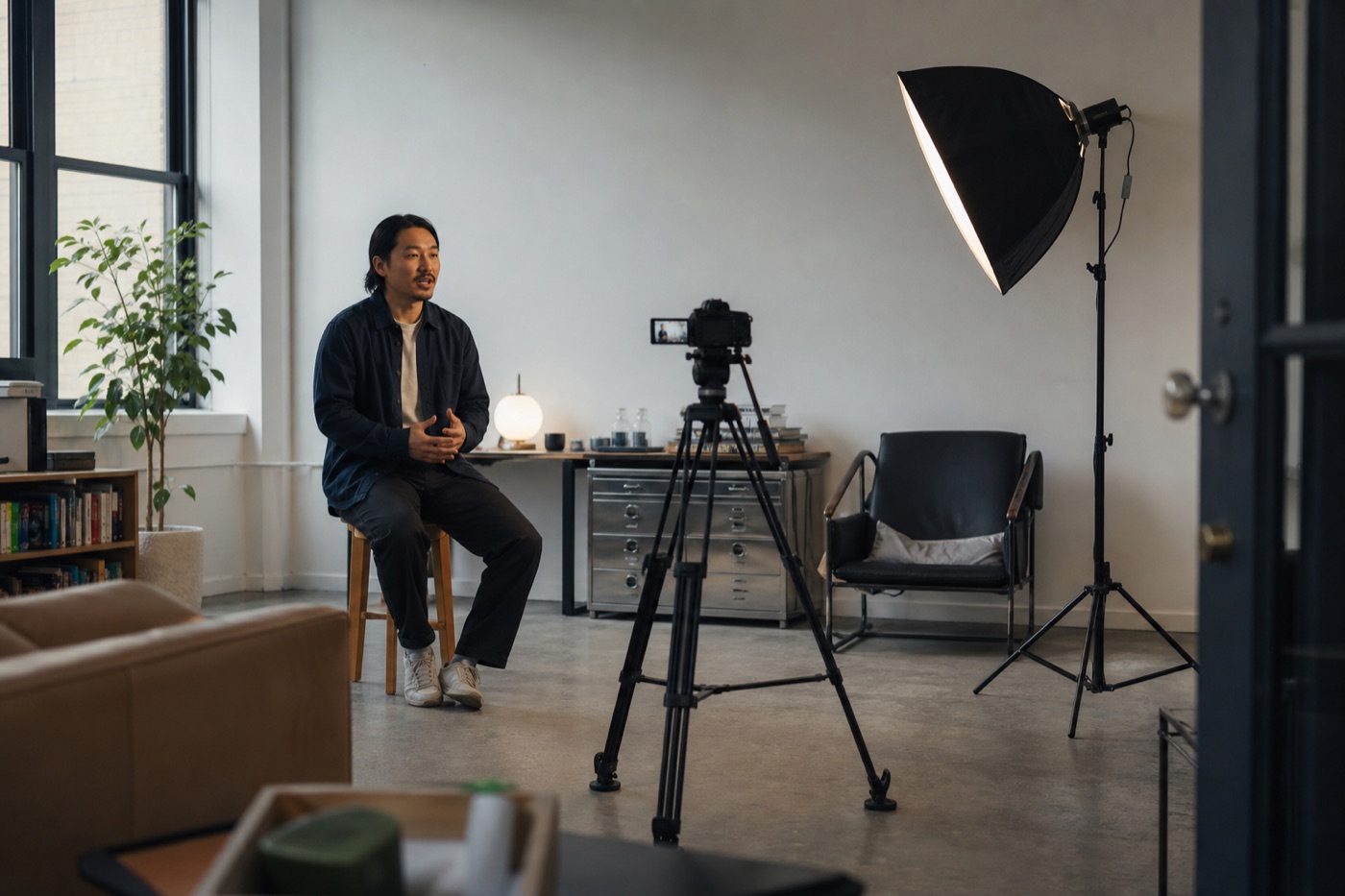
A short brand film does not need a giant production. It does need one clear idea. Without that, even beautiful footage starts wandering around looking for employment.
This guide separates the practical decisions so you can see what actually changes, what can be planned, and what is simply part of working with real images in real places. For related production support, explore our portraits and brand films.
A simple brand film starts with one useful sentence
A simple brand film needs one clear message, one believable voice, and enough visual evidence to make that message feel true. It may include an interview, scenes of the work, a client space, a process, a product, or a day in motion. The film can be short. The thinking cannot be absent.
Before planning cameras, write the sentence the viewer should understand at the end. Perhaps the artist wants people to see how material and place shape the work. Perhaps a founder needs to explain a service that feels confusing in still images. Perhaps a creative business wants the person behind the work to feel approachable.
That sentence becomes the filter. Every interview answer and visual either helps it or politely leaves the room. This is how a small production stays focused instead of trying to become an origin story, service menu, manifesto, recruitment film, and atmospheric montage all before lunch.
Decide what the film needs to do
The same business can need several different videos. A homepage film introduces the feeling and point of view. A service explainer answers a practical question. A founder film builds familiarity. A studio process film shows how the work is made. A social cut captures one idea quickly.
Choose one primary job. Secondary uses can shape the edit, but they should not take over the concept. If the film is for a homepage, it needs to work beside page copy and may be watched without sound. If it is for outreach, the opening needs context quickly. If it is for social media, vertical framing and short cutdowns may matter from the start.
Knowing the placement also controls length. The useful length is the time required to make one point clearly and leave before the film starts repeating itself. A short film with a complete thought feels substantial. A longer film with six partial thoughts feels like a meeting with excellent lighting.
Build a small story instead of a list
A service list tells the viewer what exists. A story shows why it matters. Even a simple brand film benefits from movement between a beginning, a complication, and a resolution.
The beginning establishes the person, work, or situation. The middle shows the question, process, pressure, or decision that gives the work meaning. The end lands on the value for the client, audience, or community. This does not need artificial drama. A real creative process already contains choices, uncertainty, and change.
For an artist, the story may move from source material to studio decisions to the finished piece. For a small business, it may move from the client's need to the team's approach to the feeling of the final experience. The camera follows the idea, not the other way around.
Keep the interview conversational
Many simple brand films use an interview because a real voice carries nuance efficiently. The interview does not need to feel like a speech. In fact, it usually works better when the person answers specific questions in their normal language.
Prepare themes rather than a script when authenticity matters. Ask for examples, decisions, memories, and details. What changed the way you work. What does a client usually misunderstand before the process begins. What do you notice that other people pass by. Concrete answers give the editor something to build with.
If exact language matters, a short scripted line can still work. Keep it speakable. Written sentences often arrive with furniture that the mouth did not order. Reading aloud during preparation reveals what feels natural long before the camera begins preserving the struggle.
Film the evidence around the words
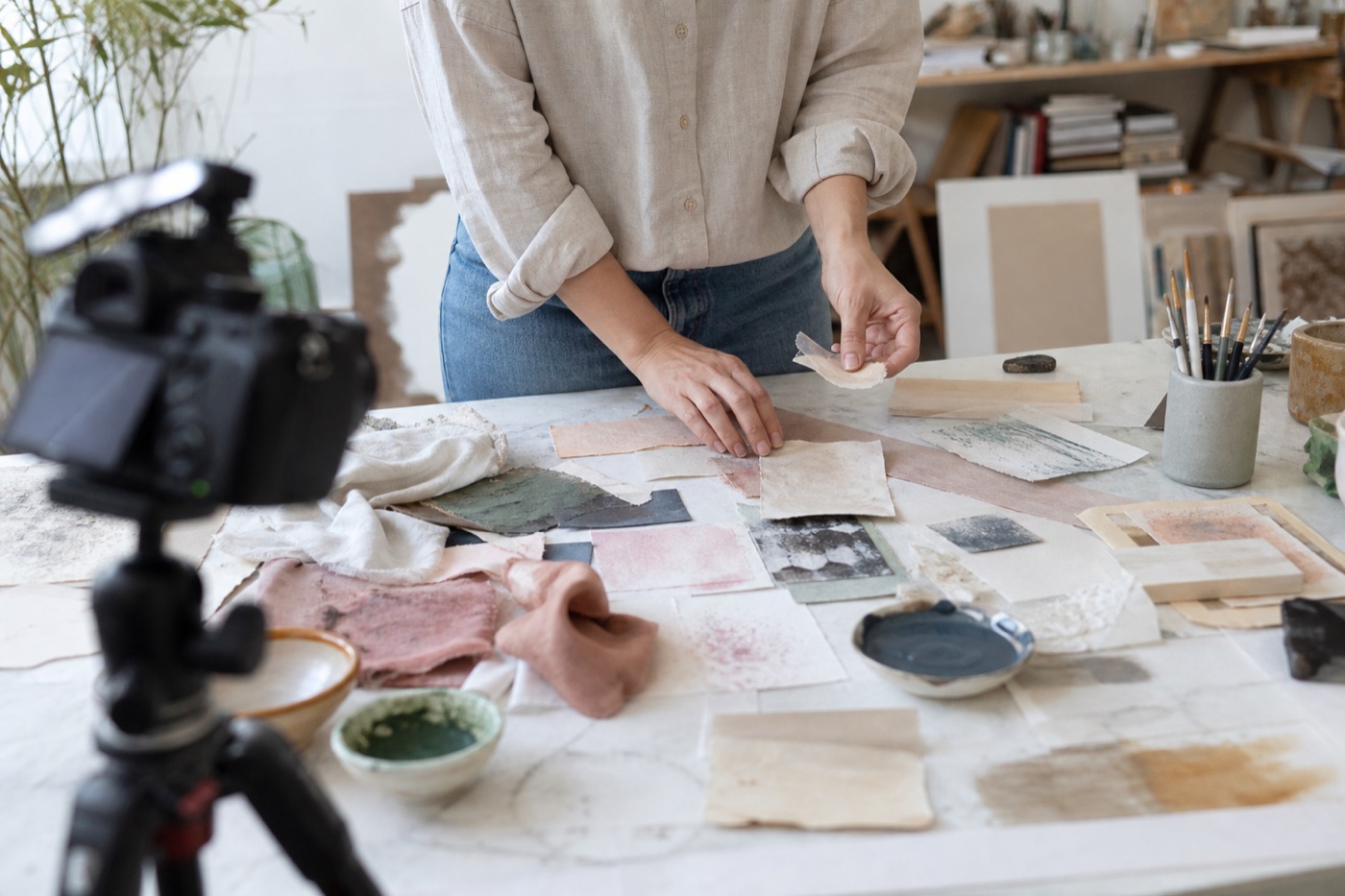
Interview audio can provide the spine, but the visuals should prove what is being said. Show the hands, materials, room, tools, gestures, decisions, interactions, and small transitions that make the work specific.
A useful shot list grows from the message. If care is central, film the checks and adjustments. If collaboration matters, film people responding to each other. If material is the point, move close enough to see the surface. Generic walking, typing, and smiling can help with transitions, but they cannot carry a film by themselves. The laptop has done enough acting.
Plan a mix of wide, medium, and close frames. Wide images establish place. Medium images show action. Close details give the editor rhythm and let the viewer feel texture. The combination makes a small production feel intentional without making the day heavy.
Sound gives the film its emotional scale
Clear voice recording is the foundation when the film depends on an interview. The microphone should be close, the room should be reasonably controlled, and a backup should be running. A beautiful portrait with distant echo still feels distant.
Natural sound adds life. Fabric moving, brushes on a surface, doors, tools, footsteps, room tone, and quiet conversation can make the edit feel physically present. Music then supports the pace and tone instead of covering an empty soundscape.
Choose music for the brand, not for the temporary mood of the edit. A restrained track can leave room for language. A strong rhythmic track can help a process film move. The license should match where the film will be used. This is a practical detail until an automated copyright notice arrives and develops a personality.
A light production still needs preparation
A small crew can move quickly when the location, schedule, message, and visual moments are clear. Preparation may include a short creative brief, interview themes, a practical shot list, wardrobe guidance, location check, and a plan for sound and available light.
Keep the day centered on real activity when possible. An artist can continue a genuine part of the process. A founder can walk through the space and explain decisions. A team can work through a real interaction. The goal is not to stage a fake day. It is to make the real day legible to the camera.
Allow enough time for small resets. A room may need one distracting object moved. A process may need to be repeated from another angle. The interview may need a pause after the first answer, when everyone stops performing the idea of an interview and begins speaking normally.
Plan the useful versions before filming
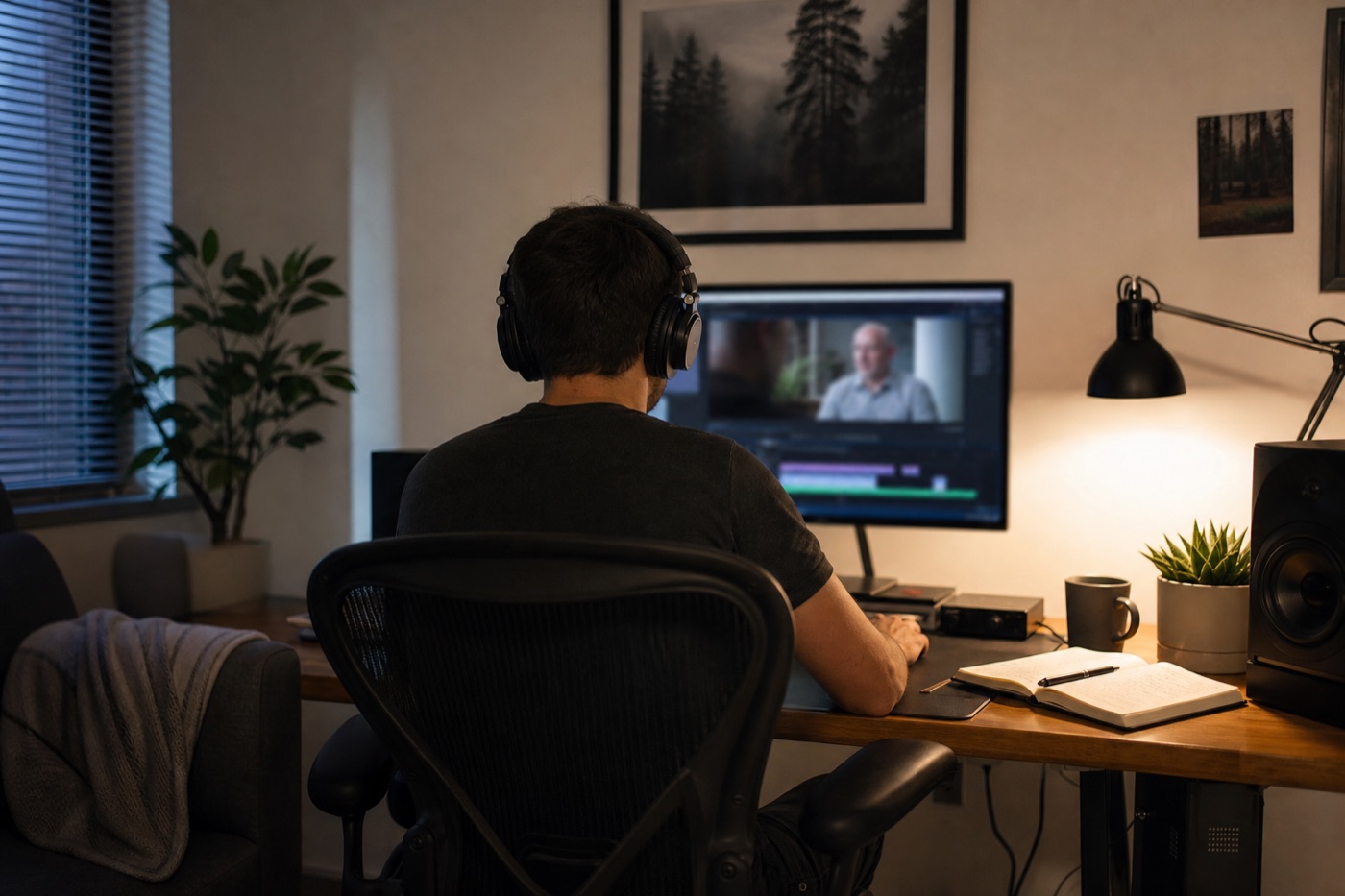
The main film is only one part of the delivery. A business may also need a short homepage loop, a vertical social cut, a captioned version, clean interview clips, or still frames. These versions work best when they are considered during production.
Vertical and horizontal frames do not always share space gracefully. Captions need room. A website header may place text over one side of the image. A social opening needs to establish context quickly. Planning these uses affects composition and coverage long before export.
Do not order every possible version because versions exist. Choose the placements that are real. A thoughtful main film and two useful cutdowns will do more than fourteen exports sitting in a folder like a very organized form of uncertainty.
When a simple brand film is enough
A simple brand film is enough when one person, place, process, or service can carry the message. It works well for an artist introduction, founder story, studio process, creative service, or focused homepage piece.
A larger production may be useful when the concept needs multiple locations, actors, elaborate lighting, extensive art direction, product builds, animation, or a broad campaign with many deliverables. Scale should follow the idea and the distribution plan.
The simplest useful film is not the one with the least equipment. It is the one where every production choice has a reason. One clear sentence, a believable voice, and images that prove the point can carry a surprising amount of brand. The rest is editing with manners.
A simple film also benefits from a clear approval path. Decide who is giving one consolidated round of notes and which facts must be checked before delivery. Feedback is most useful when it connects to the original purpose. Does the message read clearly. Does the person sound like themselves. Does the visual evidence support the words. A new preference introduced at the end can reshape the whole film, so the brief remains the fairest reference point for both client and editor.
What to prepare before the shoot
Bring the message, not a finished film in your head. Share the audience, placement, useful action, and the one idea the viewer should carry away. Gather existing brand language, website copy, visual references, and examples of your own work so the production can see what is already true.
Choose a location that belongs to the story and can support clear sound. Prepare the parts of the space that will appear, but leave enough reality that the film still feels lived in. If a process will be filmed, plan a genuine stage that can continue for more than one take and does not depend on an irreversible moment.
Wardrobe should feel like the person and sit comfortably inside the location. Small patterns, reflective accessories, visible logos, or colors that merge with the background may need adjustment. Options are useful. A complete reinvention usually is not.
For the interview, think through examples rather than memorizing sentences. Names, specific moments, client questions, material choices, and turning points create useful language. The production team can shape these ideas into a clean conversation. The person on camera only needs to know the work and leave a little room between thoughts for the edit.
FAQ
How long should a simple brand film be?
The film should be long enough to make one complete point without repeating it. Placement matters. A homepage introduction, service explainer, founder story, and social cut have different viewing contexts, so decide where the film will live before choosing a target length.
Do I need a script for a brand film?
Not always. Interview-led films often feel more natural with prepared themes and specific questions. A script is useful when exact wording, timing, or legal language matters. In either case, read the language aloud and keep it close to how the person actually speaks.
What should be filmed besides the interview?
Film visual evidence of the message. This may include the space, process, materials, tools, gestures, client interaction, products, artwork, and transitions through the day. Use wide, medium, and close views so the editor can build place, action, and detail.
Can one shoot create horizontal and vertical videos?
Yes, if both formats are planned. The camera may need separate compositions, extra space for captions, and repeated actions framed for each use. Simply cropping every horizontal shot into a vertical frame can remove important context.
Have one clear thing your business needs to say?
We make portraits and small brand films for artists, founders, and creative businesses in NYC. We can help shape the idea, keep the production light, and build a film that feels like a real extension of the work.
Explore portraits and brand films →