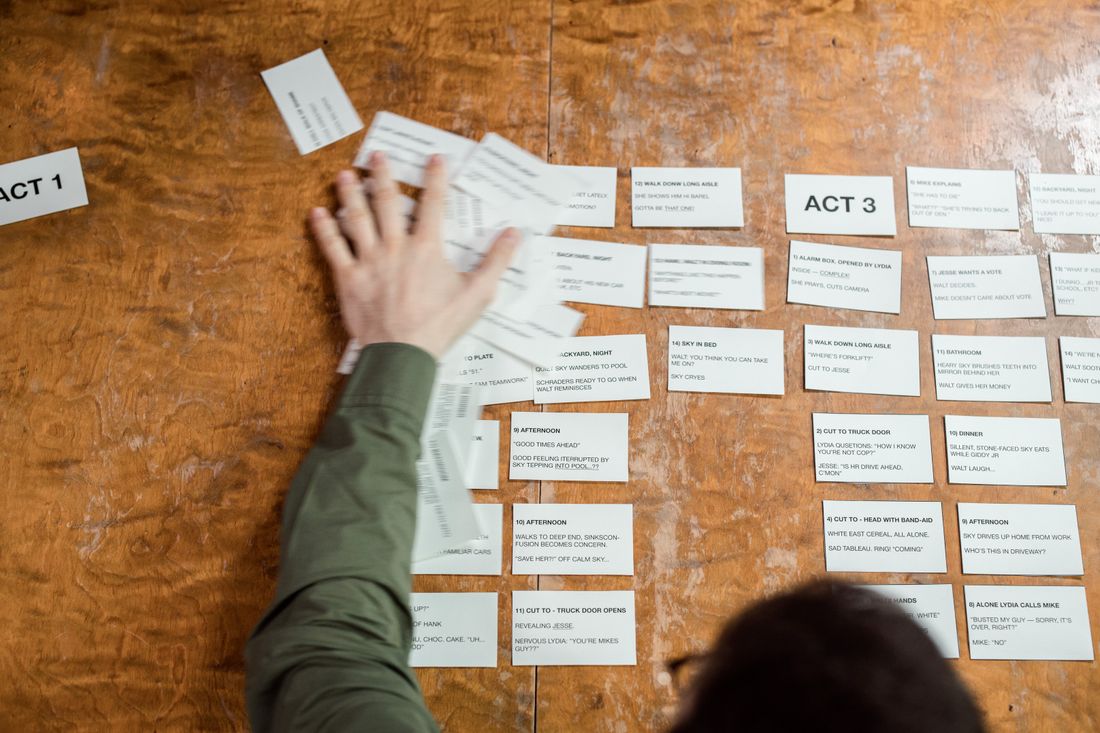
A brand film and a reel can use the same footage and still end up saying completely different things, and the difference gets decided before the camera turns on, in the briefing conversation. A reel brief is a list of moments to capture. A brand film brief is an argument the whole video makes from first frame to last. Skip that argument and even a well-shot, well-lit video plays like a longer reel with no reason to keep watching past the first thirty seconds.
A brand film brief needs a single point of view and a narrative arc decided before the shoot, not assembled afterward in the edit. A reel brief only needs a list of moments. Without a point of view, a brand film has nowhere to arrive, so it plays like a reel padded out with better lighting.
What's the real difference between briefing a brand film and briefing a reel?
A reel brief is a list of moments worth capturing. A brand film brief is a single point of view the entire video argues for, in a specific order, from open to close. Leave the point of view out and the shoot still happens, the footage still looks fine, and the video plays like a longer reel.
The gap shows up in the questions each brief answers. A reel brief answers what to capture: the process shot, the product in hand, the team at work. A brand film brief answers what the video needs to say, and in what order it needs to say it. Order is the part that gets skipped most often, because it feels like an editing decision rather than a briefing one, something to sort out later instead of something to settle first, before the crew ever arrives.
In practice, a brand film that skips this step usually gets edited the same way a reel does: strongest clips first, loosely grouped by theme, cut to a length that feels reasonable. That approach makes a fine reel. It rarely makes a brand film anyone finishes watching, because nothing in the sequence is building toward anything. The footage has no throughline to organize itself around, so every clip ends up carrying equal weight, and equal weight on screen reads as no weight at all. It also means a later request to trim the video has no clear starting point, since nothing in the brief marked which clips actually carry the argument.
What should a brand film make someone feel by the last frame?
A brand film should leave the viewer with one clear understanding of what the business does and why it matters to them, arrived at gradually rather than stated in the first ten seconds. That destination is the single most useful thing to define in a briefing conversation, because everything else in the film gets built to earn it.
This is different from a reel, which usually just needs to hold attention for fifteen to thirty seconds and move someone toward a follow or a save. A brand film has more time and a bigger job: it needs someone to feel differently about the business at the end than they did at the start. That could mean trust where there was uncertainty, clarity where there was confusion, or interest where there was indifference, and each of those endings calls for a genuinely different film to plan for.
Naming the ending first, before any of the shooting logic gets discussed, changes what gets asked in the rest of the briefing conversation. Instead of asking what looks good on camera, the question becomes what actually earns that shift in feeling. Sometimes that's a founder explaining a decision in their own words, unhurried. Sometimes it's watching a process happen instead of being told about it. The ending decides the ingredients, not the other way around, and it's worth naming before anyone reaches for a camera.

What's the one sentence a brand film brief needs before anything else?
A brand film brief needs a single sentence stating what the video is actually about, written in plain language, before shots, locations, or interview questions get discussed. If that sentence can't be written in one line, the video doesn't have a point of view yet, and shooting on schedule anyway is how a brand film quietly turns into a reel.
The sentence isn't a tagline and it isn't a list. "This video shows how the studio thinks about material choices" is a point of view. "This video shows our team, our space, and our process" is a list of topics wearing a sentence's clothing, and it won't hold a video together the way an actual point of view does, no matter how well each of those topics gets shot on the day.
Getting to that sentence is usually the client's job, and usually the hardest part of the briefing conversation, because it forces a choice. A business can be many things, and a brand film can only argue for one of them at a time. When a client struggles to land on the sentence, that struggle is useful information: it means the film needs a shorter list of topics and a longer conversation before the shoot date gets set, not a bigger shot list built to compensate for the focus that's still missing from the conversation. A shoot date set before that sentence exists tends to produce a full day of coverage and no way to know afterward which parts of it the video actually needed.
How does a narrative arc change what actually gets filmed?
A narrative arc gives a brand film a beginning, a turn, and a resolution, which changes what gets filmed because footage now has a job to do inside that structure, not just a nice moment on its own. A reel can be built from a pile of good clips. A brand film can't, because a pile has no shape.
Once an arc exists, the shot list stops being a wish list and starts being a set of specific answers. What establishes the starting point. What shows the turn, the moment where the video's point of view becomes clear. What resolves it, so the ending actually lands instead of just running out of footage to cut to. Each of those beats usually needs its own visual idea, not a variation on the same shot repeated at a slightly different angle each time.
This is where a brand film brief earns its extra planning time over a reel brief. A reel can survive a loose shoot day because the edit reorders and trims until something works well enough. A brand film shot without an arc in mind often can't be rescued in the edit at all, because the missing piece isn't a better cut, it's footage that was never captured in the first place, because nobody involved knew in advance that it needed to exist at all. A brand film missing its turning-point shot, for instance, can't be patched with a title card or a piece of stock footage the way a reel can absorb a weak clip.
What questions should we ask that a client wouldn't think to answer on their own?
The most useful briefing questions are the ones that ask what the video should leave out, who it needs to convince, and what happens if someone stops watching halfway through, because clients default to describing everything the business does instead of the one thing this specific video needs to prove. Drawing that out is the studio's job, not the client's.
"What should this video not try to cover" usually gets further than "what should this video cover," because it forces a decision instead of inviting a list. "Who is this actually for" matters more than it sounds, since a film aimed at a new customer and a film aimed at a potential investor need different evidence, even if the underlying business is identical. "What's the one thing someone should remember tomorrow" is a good final check, because if the answer takes more than a sentence, the point of view isn't settled yet, and the briefing conversation isn't done.
These questions work because they replace a general brief with a specific one. A client asked to describe their business will describe their business. A client asked what this particular video needs to prove, to a particular person, in a particular amount of time, gives an answer that can actually be filmed and edited toward, which is the whole point of asking the question in the first place. A general answer produces a competent video that says a little about everything the business does, instead of one true thing said well enough to remember the next day.
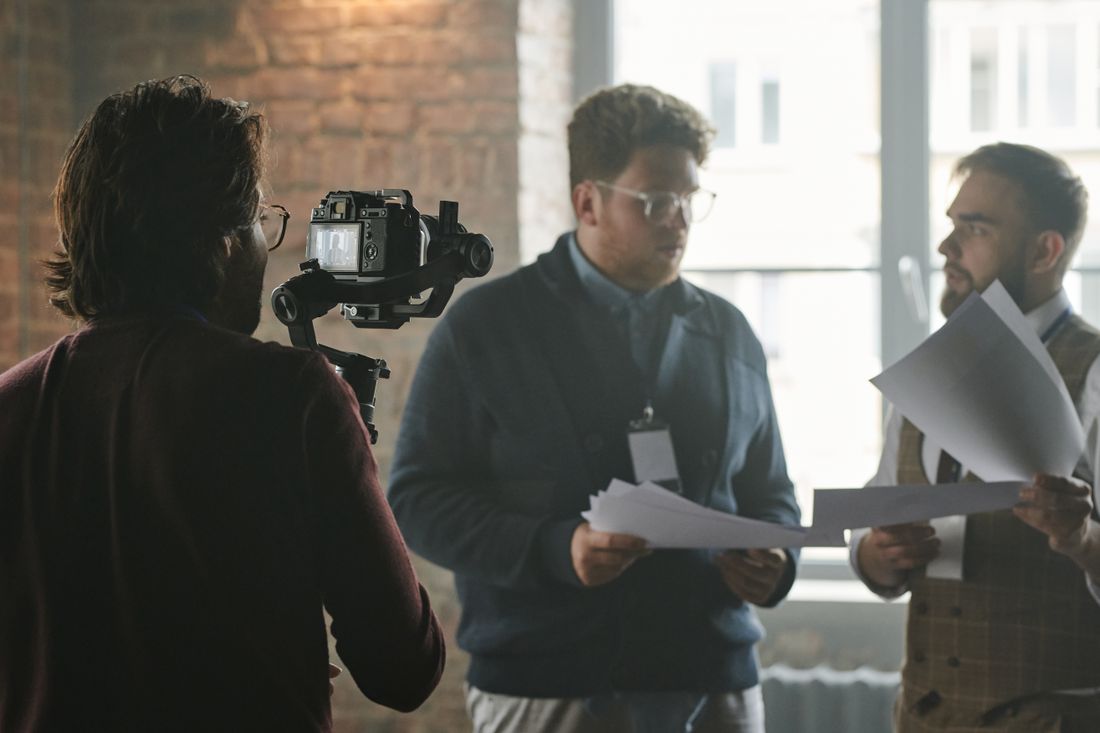
How does pacing in a brand film brief differ from pacing in a reel brief?
A brand film brief needs to plan for scenes that breathe, moments that hold longer than a quick cut would allow so the viewer can settle into a feeling. A reel brief plans almost entirely around fast, frequent cuts built to survive a scroll. Mixing the two loses the arc a brief just spent an hour defining. A slow-building interview answer cut down to reel length halfway through often loses its actual point, since the sentence that matters usually lands in the final few seconds, not the first.
In practice, this means the briefing conversation should name a few moments meant to sit still: an unhurried answer in an interview, a process shown at its own real speed, a pause before the resolution the video is building toward. Those moments feel like risks on paper, because slower footage always reads as less exciting when it's just a line item on a shot list next to faster ones. On screen, inside a story with an arc, that same slower moment is often what makes the ending land, because it gives the viewer somewhere to rest before the payoff arrives.
This doesn't mean a brand film should feel slow throughout, and most shouldn't. Pacing can and should vary across the piece, speeding up and slowing down as the arc demands it. It means the brief should be specific about where the pacing gets to relax and why, instead of defaulting to reel-speed editing out of habit because that's the rhythm most raw footage gets cut to by default.
What should a client actually bring into the briefing conversation?
A client gets more out of a briefing conversation by bringing a short list of reference videos they respond to, a plain description of who needs to watch this and why, and examples of past content that missed the mark. The studio can build shot lists on its own. Only the client can supply the point of view underneath one.
Reference videos are useful less for their visual style and more for what they reveal about pacing and tone the client actually wants, even when they can't name either directly. Watching a reference together and asking "what do you like about this" often surfaces the point of view faster than asking the client to describe it cold, sitting across a table with nothing specific to react to yet, since that's not something a studio can hand a client to invent alone.
Examples of content that missed the mark are just as valuable, sometimes more. A client who says "this felt generic" or "this didn't sound like us" about a past video is handing over real information about what to avoid, which narrows the brief considerably before a single shot gets planned. None of this requires formal preparation. A handful of saved links and a clear sense of the audience is enough raw material for a strong briefing conversation to work with, from the first question to the last.
How do we know a brief is strong enough to start shooting?
A brief is ready to shoot once the one-sentence point of view is settled, the beginning-turn-resolution arc is sketched even loosely, and everyone involved can say in a few words what the video needs someone to feel by the end. If any of those three is still vague on shoot day, the gap won't close itself during filming.
A useful gut check: ask what happens if half the planned footage doesn't come together as expected, which happens often enough on a real shoot day. A brief with a clear point of view survives that kind of disruption, because the missing piece can be replaced with something else that still serves the same idea. A brief without one just has fewer clips to sort through in the edit, and sorting more or fewer clips without a throughline produces the same unfocused result either way.
This isn't a demand for a rigid script. Plenty of strong brand films come from loose, conversational shoots. The looseness works because the point of view and arc are locked ahead of time, which is what leaves the room to be loose about everything else. A shoot with no fixed point of view and no fixed structure isn't flexible, it's just adrift, and adrift is what quietly turns a brand film into a longer reel by the time it reaches the edit. A crew with a locked point of view can improvise a new shot and still know whether it belongs. A crew without one is just filming and hoping the edit sorts it out.
Frequently asked questions
Does a brand film brief need to include a written script?
Not always. Many brand films work better with prepared themes and specific interview questions than a word-for-word script, especially when the goal is a natural, unscripted feel. What the brief always needs, script or not, is the point of view and arc decided in advance. Without those, a script only locks in wording, not direction, and direction is what actually keeps the film from drifting into reel territory.
Who should be in the briefing conversation for a brand film?
Whoever can actually answer what the business wants someone to feel by the end, which is usually a founder or the person closest to the decision, not necessarily the most senior person available. A briefing conversation with someone who can only describe logistics, not intent, tends to produce a brief full of scenes and light on a point of view, which is exactly the gap that turns a brand film into a longer reel.
Can a brand film brief change once the shoot day arrives?
The point of view and arc should hold steady, since changing those mid-shoot usually means restarting the planning from scratch. Specific scenes and shots can and often should flex around what actually happens on location. A brief that's specific about intent but loose about exact shots tends to handle a changing shoot day better than one that's rigid about shots but vague about what the video is actually arguing for.
How long should the briefing conversation take before a brand film shoot?
Long enough to land the one-sentence point of view and sketch the arc, which is usually a single focused conversation rather than a quick email exchange. Rushing this step to save time on the front end tends to cost more time later, either in a reshoot or in an edit trying to invent a throughline that was never planned for during production, after the footage already exists.
What's the biggest sign a brand film brief is actually just a reel brief in disguise?
A shot list with no order attached is the clearest sign. If the brief reads as a set of scenes that could be filmed and cut together in any sequence without changing what the video says, there's no arc underneath it yet. A real brand film brief can explain why one scene needs to come before another. A reel brief usually can't, because a reel was never built to need one.
Let's find out which one you actually need.
We shoot both refresh sessions and full new concepts, and we'll tell you honestly which one your portrait needs before we book anything, not after.
Explore portrait sessions →