
An artist portrait almost never gets booked with a clear answer to one question: whoever pays, who gets to say yes to the final image? Galleries pay for portraits that serve a program. Artists pay for portraits they fully own. Splits sound like the fair option and are usually the arrangement most likely to end in a disagreement, because a shared invoice rarely comes with a shared answer about who holds the final no.
Approval tends to follow whoever pays, by default, whether or not that was ever agreed out loud. A gallery-paid portrait usually serves the gallery's program and press needs first. An artist-paid portrait gives the artist ownership and approval, at a moment the calendar is often already expensive. A split needs its own separate agreement about who has final say, because splitting the bill does not automatically split the decision.
Why Does Whoever Pays for a Portrait Usually Get the Final Approval?
Whoever pays for an artist portrait usually ends up deciding which image gets used, whether or not that arrangement was ever said out loud before the session. Approval tends to follow the invoice by default, and by the time anyone notices the assumption, the shoot is already booked and underway.
This default is not written down anywhere. It just happens, the way most quiet assumptions do. A gallery books and pays for a portrait to run in a press kit, and naturally treats the selects as theirs to choose. An artist books and pays out of their own pocket, and naturally expects the same. Neither side is being unreasonable. Each is applying a normal, ordinary logic to a situation the other side is applying a different, equally normal logic to.
The trouble is timing, not fairness. This question is easiest to answer before a booking exists, when nobody has a stake in a particular outcome yet. Once a date is on the calendar, a hair and wardrobe plan is set, and a location is confirmed, the same conversation feels heavier than it should, like a negotiation instead of a housekeeping detail. That shift in tone is exactly why the topic gets skipped so often, and exactly why it is worth raising early, gently, and as a matter of course rather than as a point of friction between two people who otherwise agree on almost everything about the portrait itself.
What Happens When the Gallery Pays for the Portrait?
When a gallery pays for an artist's portrait, the image tends to serve the gallery's program first: press kits, the roster page, an announcement, a catalog. That is a reasonable use of the gallery's own money, and it usually means the gallery, not the artist, controls where the portrait appears and for how long it stays in circulation.
In practice, this arrangement often works fine for both sides, because a gallery-commissioned portrait is usually built around a real need: a signing announcement, a show opening, a press cycle with a deadline attached. The artist gets a professional portrait they did not have to pay for, and the gallery gets an image built for exactly the purpose it needed. Many galleries handle this well and keep the artist informed about where the image is going.
Where it gets uncomfortable is later, after the immediate need has passed. The artist may not have a copy of the master file. The artist may not know whether the portrait is still being used somewhere, or whether a new portrait needs commissioning if the relationship with that gallery changes. None of this makes the gallery the villain of the arrangement. It just means the portrait was built to answer the gallery's question, not the artist's, and an artist who wants personal use of the same image, a website, a personal press kit, an application, has to ask for that separately rather than assume it came bundled in.
What Happens When the Artist Pays for Their Own Portrait?
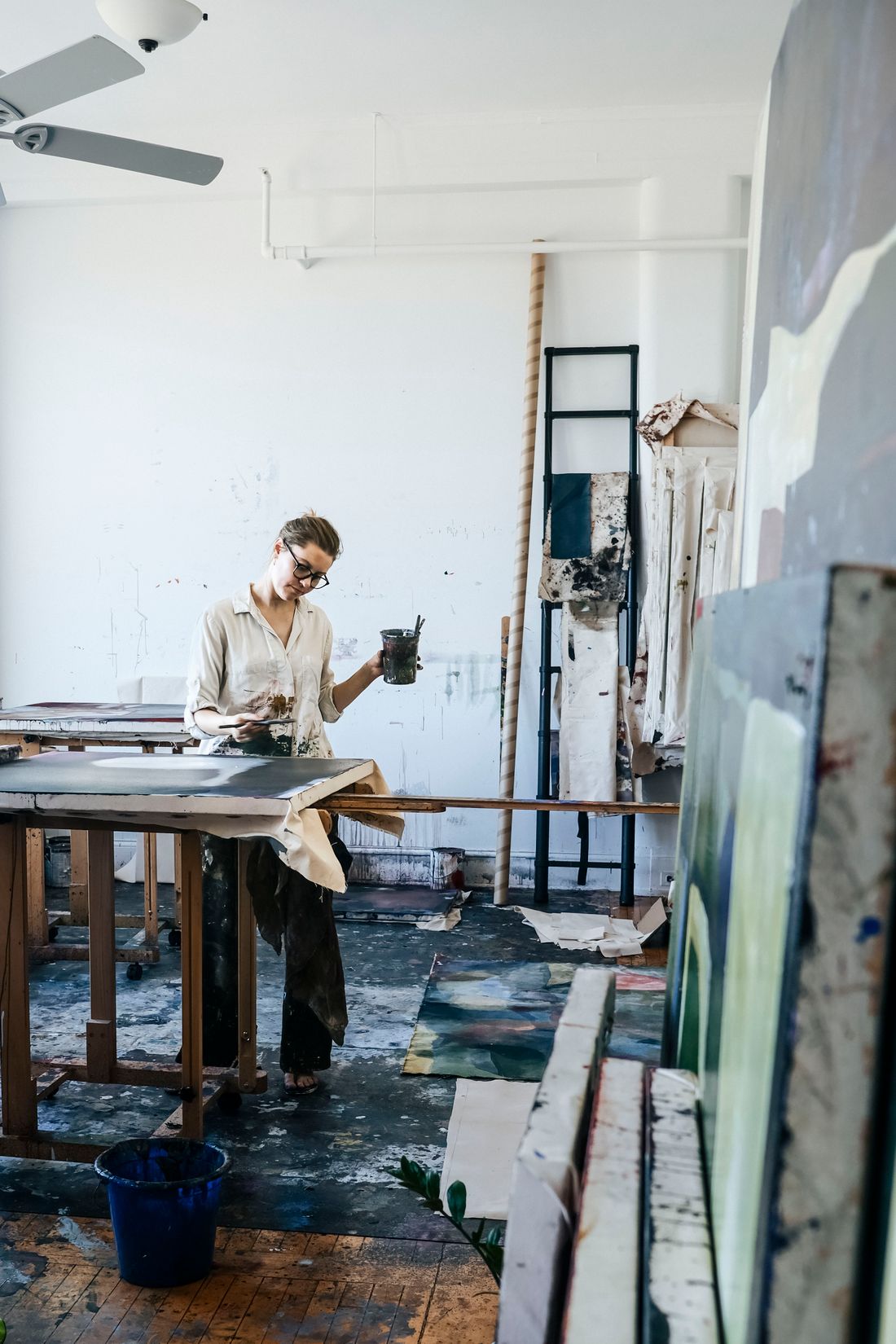
When an artist pays for their own portrait, they typically own the file and control the approval, which is the clean version of this arrangement. The tradeoff is timing: an artist paying out of pocket is often doing so at the exact moment a signing or a show has already made the calendar expensive in every other direction.
An artist-commissioned portrait solves the ownership question cleanly because there is only one decision-maker in the room. There is no press office to satisfy, no roster consistency to match, no program schedule to fit around. The artist can use the resulting image on a personal website, in an application, on a book jacket, or nowhere at all if it does not turn out how they hoped. That clarity is genuinely valuable, and it is the main reason artists choose to pay for their own portraits even when a gallery might otherwise cover it.
The real cost is not just the fee itself, though this brand does not publish prices here. It is the moment the fee lands. An artist paying for a portrait around a signing or a show is often already covering framing, shipping, printing, and travel, all at once. Adding a portrait to that list is a real ask, even when the portrait itself is worth it. Booking earlier, before the expensive stretch of the calendar arrives, is usually the easiest way to soften that timing problem without changing anything about who pays.
Why Does a Split Arrangement Go Wrong More Often Than Either Side Paying Alone?
A split sounds like the fair choice, and it is often the arrangement most likely to go wrong, because sharing the invoice does not automatically share the decision. Two parties can each pay half and each walk away assuming they hold the final say over the selects, without ever comparing notes.
This tends to happen for an understandable reason. A gallery and an artist splitting a portrait cost usually do so because both genuinely want the portrait to exist and both see value in it. That shared enthusiasm is real, but it quietly papers over a harder question: shared enthusiasm is not the same as a shared decision-making process. Splitting the fee is a financial arrangement. Approving the final image is an editorial one, and the two do not automatically travel together just because they showed up in the same booking.
The disagreement, when it happens, rarely shows up during the session itself. It shows up later, when the gallery wants a certain frame for a press need and the artist prefers a different one for personal use, and neither side remembers agreeing that the other one gets to decide. A split can work well, and often does, but it works because someone named the approval chain in advance, not because splitting the cost quietly settled it. If a split is the plan, treating approval as its own separate line item, worth naming before the session rather than after, is what keeps the arrangement from becoming the exact disagreement it was meant to avoid.
Who Should Approve the Final Selects, Regardless of Who Pays?
Regardless of who pays, the person or party with final approval over the selects should be named before the session, not assumed from who wrote the check. This is the single most useful thing to settle in advance, because it is the decision most likely to feel personal once real images are on the table.
Approval questions get harder once actual photographs exist, because a specific frame can carry real feeling for the person in it. An artist may love an image that shows character and mood but worry it reads as too informal for a gallery's program. A gallery may prefer a cleaner, more neutral frame that photographs well next to the rest of a roster but feels flat to the artist looking at their own face. Both reactions are legitimate, and both are much easier to navigate when everyone already knows whose opinion carries the final decision.
Naming an approver does not mean the other party has no voice. In practice, most approval chains still involve both sides looking at the selects together and talking through a preference before anyone signs off. What naming an approver actually prevents is the awkward moment where two people disagree and neither one knows whether they are allowed to insist. That single piece of clarity, decided once and early, tends to make the actual review conversation calmer and shorter than it would otherwise be, for both sides.
Who Holds the Master Files After the Session?
Who holds the master files after a portrait session, and whether the other party gets a copy, is a separate question from who approved the selects, and it deserves its own answer rather than an assumption. A gallery that paid for the shoot might expect to hold the files. An artist who posed for it might expect the same.
The practical difference between master files and delivered selects matters here. Delivered selects are the finished, retouched images handed over for use. Master files are the broader set the session actually produced, which usually holds more range, more expressions, more options than what gets delivered. Whoever holds the master files effectively controls whether a different frame can ever be pulled later, for a different use or a different mood, without booking an entirely new session.
This becomes especially relevant years down the line, when an artist's needs change or a gallery relationship ends and someone wants an alternate frame from that same day rather than starting over. Documenting file custody at the time of booking, not after a request comes in later, is what keeps this from becoming a scramble. It is worth treating this as ordinary production housekeeping rather than a legal question. The point is not a contract clause; it is a clear, shared understanding of where the files live and who can be asked for them if a need comes up later.
Where Can Each Party Use the Portrait, and for How Long?
Where each party can use a portrait, and for how long, is its own decision separate from who paid and who approved it. A gallery might expect ongoing use across its own materials, while an artist might expect the same image to be usable anywhere, indefinitely, once it exists. Those two expectations do not automatically match.
Usage questions worth naming in advance include where the image can appear, a gallery's own materials, an artist's personal website, a third party's press coverage, and how long that use runs. A portrait made for one show's press cycle might reasonably be expected to retire from use once that cycle ends, or it might be expected to stay in circulation indefinitely, and those are two very different agreements that both sound like normal assumptions until someone checks.
None of this needs to be complicated or adversarial to settle. A short, plain conversation before the session, where each party names what they expect to do with the image and for how long, usually resolves the whole question in a few minutes. What causes friction is not a mismatch in expectations, mismatches are normal and easy to fix once spoken. What causes friction is discovering the mismatch after the image is already circulating somewhere one party did not expect, at which point a conversation that would have taken five minutes beforehand becomes a harder one after the fact.
What Happens to the Portrait If the Relationship Ends, and How Do You Raise This Before Booking?
What happens to a portrait if the gallery relationship ends is worth deciding before the session, because a portrait made for one chapter of an artist's career often outlives that chapter. Without an answer already in place, the artist, the former gallery, or both can end up unsure whether the image is still fair to use.
A portrait commissioned during a gallery relationship was often built with that gallery's program in mind, its layout, its roster style, its press format. If the relationship ends, does the gallery keep using the image on an archived page. Does the artist keep using it personally. Does either side expect the image to be retired entirely. These are ordinary, practical questions, not adversarial ones, and they are far easier to answer while both parties are still on friendly terms than after a change has already happened.
Raising all of this before booking does not have to feel like a negotiation. The simplest way in is treating it as routine paperwork rather than a discussion about trust: ask, in the same message that confirms the date and the concept, who is approving selects, who is holding the master files, where the image can run and for how long, and what happens to it later. Framed that way, as a short list of production details rather than a difficult conversation, it reads as competence, not suspicion, and most galleries and artists answer it in a sentence or two without any friction at all.
Frequently asked questions
Who usually pays for an artist's portrait, the gallery or the artist?
It varies by relationship and moment. Galleries often pay when the portrait serves a program need, like a press kit or a signing announcement, and treat the resulting image as part of that program. Artists often pay when they want an image they personally own and fully control. Neither arrangement is the default, and both are common in practice. What matters more than who pays is agreeing early on exactly what that payment buys in approval and ongoing use.
Does paying for a portrait automatically mean you control approval?
In practice, approval tends to follow whoever pays, but that is a habit, not a rule anyone actually agreed to. It is worth stating plainly rather than assuming, especially in a split arrangement where two parties share the cost but may never have discussed who holds the final say over the selects. A short, early conversation before booking settles this cleanly, before real images make it feel personal.
What is the difference between master files and the delivered selects?
Delivered selects are the finished, retouched images handed over for use after a portrait session. Master files are the broader set the session actually produced, usually holding more range, more expressions, and more options than what gets delivered as finals. Whoever holds the master files can pull an alternate frame later, for a different use, without booking an entirely new session, which is why file custody is worth naming at booking.
Can an artist use a gallery-paid portrait on their own website?
Sometimes, but it should not be assumed either way. A gallery-commissioned portrait is usually built for the gallery's own program, its press needs and roster style, and personal use by the artist is a separate permission that needs its own agreement. Many galleries are happy to allow it once asked directly. The mistake most people make is assuming that use came bundled in automatically, without ever checking first.
Is it awkward to ask about approval and file ownership before booking a portrait?
It does not have to be. Framing it as a short, routine list, alongside the date, the concept, and the location, rather than as a standalone negotiation, keeps the tone practical instead of tense. Most galleries and artists answer these questions quickly and without friction, because they are ordinary production details worth documenting in advance, not a difficult discussion about trust between two people who already agree on the portrait itself.
A portrait that's aged doesn't always need a full reshoot.
We'll look at what you have and tell you honestly whether a refresh session covers it or the work calls for a new concept.
Explore portrait sessions →