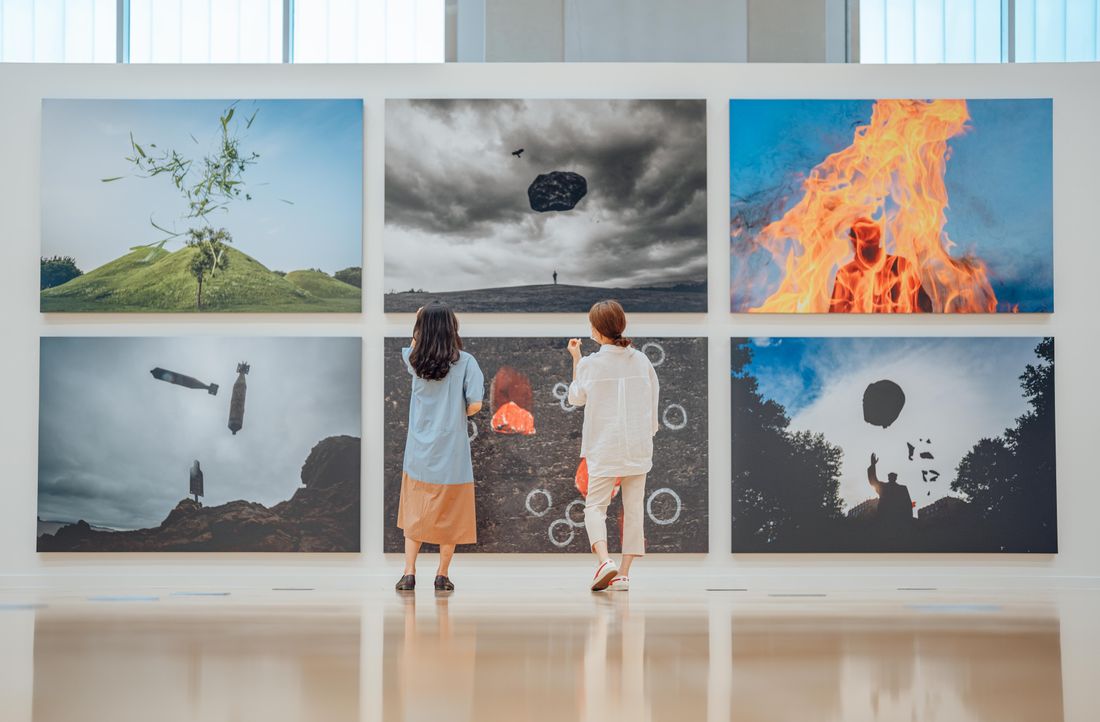
A serious buyer moves fast. They ask for the file, forward it to a designer or an advisor, or drop it into a deck, and if the image is a phone photo with a color cast and a reflection, they notice before they say anything. A gallery that has to answer with let me get you a better photo has already lost some of the momentum that made the sale possible in the first place. The gap is fixable, but only if it gets fixed before that moment shows up.
A gallery loses momentum, not just time. A buyer moving quickly reads a delayed or poor-quality image as uncertainty about the work itself, not the paperwork. The fix is documenting inventory before it's needed: a shoot-ahead policy, and a triage method for whatever is still undocumented, so no request stalls on a photo that doesn't exist yet.
What happens when a follow-up email goes out with the wrong image?
A follow-up email carries the image that decides whether a buyer keeps thinking about a piece or moves on. When the attachment is a dim phone photo instead of a clean, color-accurate file, the email reads as unfinished, and an unfinished-looking piece is easy to set aside for something that already looks resolved.
The email itself is rarely the problem. Most galleries write a good follow-up: warm, specific, timed well. What breaks the momentum is the attachment. A buyer who asked a question and got an answer wrapped around a compromised photo now has two things to weigh instead of one, whether to buy the work, and whether the gallery can represent it properly. That second question wasn't part of the conversation before the email arrived, and it rarely helps close anything.
Forwarding makes this worse. A serious buyer rarely decides alone. They send the image to a partner, a designer, an advisor, or a hanging committee, and none of those people have the context the gallery has. They just see the photo. A shadow across a corner, a warped edge from an angled shot, a color cast that turns a warm painting cool, all of it reads as the condition of the work to someone seeing it for the first time. By the time the gallery hears back, the conversation has often moved from wanting the piece to asking for another angle, and that second round costs days a fast buyer doesn't always wait through.
Why does a shared viewing room stall on weak photography?
A shared viewing room stalls when its images can't hold up to close inspection. Buyers browsing a room compare pieces side by side and expect to read surface, edge, and color the way they would standing in front of the work, and a soft or poorly lit photo makes a strong piece look like the weakest option here.
A viewing room is self-serve by design. Nobody is standing next to the buyer explaining that the photo doesn't do the piece justice, or that the color is off because of the light in the room where it was shot. The image has to do that work alone. When it can't, buyers do the only reasonable thing available to them: they assume the photo is accurate and move to the next piece, one that happened to photograph better.
This shows up most on new or recently reworked pieces, the ones added to a room quickly to keep it current. A gallery under time pressure will sometimes drop in a placeholder photo meaning to swap it later, and the swap doesn't happen before a buyer opens the room. A room with a dozen strong images and one weak one doesn't read as mostly solid. It reads as inconsistent. The fix isn't better placement or a stronger description next to the thumbnail. It's having the real photo ready before the piece goes into rotation, so nothing in the room is quietly working against the sale it's supposed to support.

What happens when press asks for an image you don't have?
A press request usually arrives with almost no lead time, sometimes same-day, and it asks for a specific kind of file: high resolution, clean crop, no watermark, ready to run. A gallery that has to say it needs a day or two to get that file has, in practice, already missed the window most editors work inside.
Press coverage rarely waits. An editor building a roundup or a review has other pieces from other galleries that are already documented and ready to drop in. A gallery that can't supply an image fast enough is easy to leave out, not because the work wasn't a fit, but because the logistics didn't clear in time. The story runs anyway, just without that piece, and the coverage that would have driven a buyer to the room never happens. Nobody calls to explain the omission; the piece is simply absent from the finished article.
This is the moment where a documentation gap has a cost that's visible from the outside, because the absence shows up in a published article rather than in a private email thread. It also compounds: a gallery that misses one request because the file wasn't ready gets treated as slower to work with on the next one, and editors build habits around who they call first. Having current, high-resolution files on hand for anything in active rotation is the difference between being in that first call and being an afterthought.
Why does art-fair pre-sale move faster than most inventories are documented?
Art-fair pre-sale often closes before the fair opens its doors, built entirely from a PDF or deck sent to collectors and advisors weeks ahead. If a piece isn't documented by the time that deck goes out, it usually isn't in it, and a piece left out of the deck doesn't get pre-sold no matter how strong the work is.
Fair timelines compress everything. Booth walls, shipping, insurance, and the pre-sale packet all land in the same few weeks, and photography competes with all of it for attention. New work finished close to the deadline is the most likely to get left off the packet, which is a real problem because new work is often what a gallery most wants in front of serious buyers before the booth gets crowded. A consultant flipping through a deck the week before a fair has no way to ask about a piece that was never included.
The galleries that avoid this treat documentation as part of the production schedule for the fair, not a task that happens after everything else is settled. New pieces get shot as they're finished, not batched for a shoot the week before shipping. That timing difference is the whole story: a piece photographed the day it's ready can be in a pre-sale deck within days, while a piece waiting on a batch shoot might miss the window entirely, even if it would have sold first. By the time the batch shoot happens, the deck has often already gone out without it.
Why does a phone photo read as doubt about the work itself?
A phone photo signals casualness, and a buyer moving fast reads casualness as doubt about the work, not as a scheduling problem behind the scenes. They have no way to know a better photo is coming next week. All they have is the image in front of them now, and it reads as a rushed opinion of the piece.
Buyers can't see a gallery's internal priorities. They don't know that the piece was just finished, that the photographer is booked through the week, or that a proper shoot is already scheduled. All of that context lives inside the gallery, invisible to the person on the other end of the email. What reaches the buyer is a single image, and a rushed one implies a rushed opinion of the work, whether or not that's true.
This matters more for higher-consideration purchases, where a buyer is already looking for reasons to trust the decision. A collector spending real money on a piece is primed to notice small signals of care or its absence, and photography is one of the few signals available before the piece physically arrives. A clean, considered image says the gallery treats the work as something worth representing well. A phone snap, even an honest and temporary one, quietly suggests the opposite, and that impression is hard to undo once it forms. It rarely gets corrected by the good photo that follows a week later.
What does a shoot-ahead policy actually change?
A shoot-ahead policy means documenting new work on a fixed schedule as it's finished, before any specific buyer, fair, or press request creates urgency. It removes the need to choose between delaying a response and sending a photo that isn't good enough, because the good photo already exists by the time anyone asks.
The shift is mostly about sequencing, not about doing more work overall. A gallery still needs the same number of pieces documented in a given season. The difference is whether that documentation happens on a predictable cadence tied to when work is finished, or reactively, triggered by whichever request happens to land first. Reactive documentation always runs a step behind whatever is currently urgent, which means it stays permanently behind the gallery's own momentum instead of ahead of it, no matter how skilled the photographer or how fast the turnaround.
In practice this looks like a standing shoot day, weekly or biweekly depending on how much new work moves through the space, where anything finished since the last session gets photographed regardless of whether a buyer has asked yet. It costs a predictable amount of time on a predictable schedule instead of an unpredictable scramble under a deadline. The payoff shows up exactly in the moments this article covers: the follow-up email, the viewing room, the press call, the pre-sale deck. None of them require a special exception once the photo already exists.
How do you triage a collection that's only partly documented?
Triage means ranking undocumented pieces by how soon they're likely to be needed, not by when they were made or how they sit in storage. Pieces in active conversations, headed to a fair, or likely to draw press go first. Older inventory that isn't moving can wait, even if it's been undocumented the longest.
Most galleries with a backlog default to chronological order, working through pieces in the sequence they arrived, because it feels fair and it's easy to track. That approach quietly punishes the gallery, because the piece a buyer asks about next week might be near the back of that line. A better first pass sorts by current demand: what's in an active conversation, what's shortlisted for a fair, what a consultant has already flagged, and what's simply been sitting the longest without any interest attached to it. Ask each staff member for their own short list rather than relying on one person's memory of what's pending.
A short list beats a long plan here. Rather than trying to schedule the entire backlog at once, pull the pieces most likely to be needed in the next month, get those documented first, and treat the rest as an ongoing background project rather than a deadline. This keeps the gallery covered for whatever comes up next without requiring the backlog to be fully cleared before anything gets used, which is usually the assumption that stalls triage before it even starts.
How do you keep new work from falling behind again?
New work stays current by folding documentation into intake instead of treating it as a separate project scheduled later. The moment a piece is finished, framed, or ready for the floor is the moment it goes on the shoot list, so the backlog that prompted the triage in the first place doesn't quietly rebuild itself.
A backlog rarely comes from one bad month. It comes from documentation being the thing that gets pushed whenever something more urgent shows up, which is most weeks in a working gallery. Fixing the current backlog without changing that pattern just buys time until the next one forms, usually right before the next fair or the next wave of new work arrives. The same emails, viewing rooms, and press requests that stalled the first time will stall again on the next batch of undocumented pieces.
Attaching documentation to a specific, recurring trigger, like intake, or a fixed weekly slot, is what keeps it from sliding again. It doesn't need to be elaborate, and it doesn't need a large budget or a dedicated staff role to run. What matters is that it happens on a schedule the gallery controls, rather than in response to whichever buyer, editor, or fair deadline happens to ask first. A gallery that documents on its own timeline is never the one explaining why the photo isn't ready yet, and that's the difference this whole piece has been pointing at.
Frequently asked questions
How fast does a gallery need to turn around a photo after a buyer asks?
There's no fixed industry number, but a serious buyer's attention window is short, often measured in the same day or two the conversation is happening. If a gallery has to say a proper photo is a week out, momentum is already fading. The way around this isn't rushing a bad shoot after the request lands. It's documenting new work on a standing schedule so a usable file already exists before any buyer asks for it.
Is a phone photo ever good enough to send a buyer?
For a quick first look inside an ongoing conversation, a decent phone photo can hold a place. It's a poor substitute once a buyer is seriously considering the piece, forwarding it to a partner or advisor, or comparing it to other work that was shot properly. At that stage the image is doing real selling work, and a casual photo can read as a lack of confidence in the piece rather than a scheduling gap.
What should a gallery document first if only some of the inventory is photographed?
Start with whatever is most likely to be asked about soon: pieces in active conversations, anything headed to a fair, and work a consultant or advisor has already flagged. Chronological order feels fair but usually documents the wrong pieces first. A short, demand-ranked list gets a gallery covered for near-term requests faster than trying to clear the entire backlog at once, which tends to stall before it starts.
Does a shoot-ahead policy cost more than documenting reactively?
Not in total volume of work, since the same pieces eventually need photographing either way. What changes is timing: documentation happens on a predictable schedule tied to when work is finished, instead of in a scramble triggered by whichever request lands first. That predictability is what actually prevents the stalled follow-up, the weak viewing room image, and the missed press deadline this article describes throughout.
How does documentation actually affect an art-fair pre-sale?
Pre-sale decks are usually built from a PDF sent to collectors and advisors before the fair opens, and a piece generally has to be documented to be included. Work finished close to the shipping deadline is the most likely to get left out simply because the photo isn't ready in time, not because the piece is weaker. Shooting new work as it's finished, rather than batching it before shipping, keeps pre-sale decks current and complete.
Build a paper trail your insurer can't argue with.
We shoot artwork documentation the way an appraiser or adjuster actually reads it, full views, true color, condition notes, and files that stay tied to the right piece.
Explore artwork documentation →