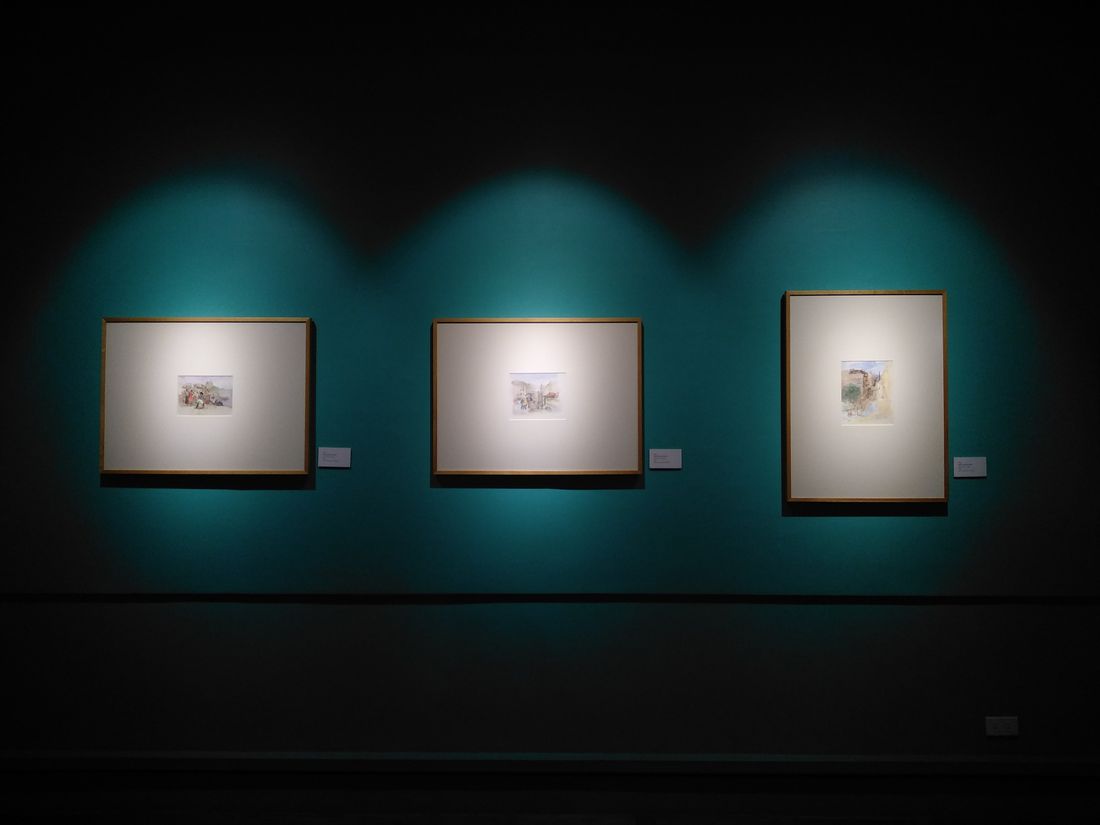
Art documentation pricing gets confusing fast because most published guides describe the market in general rather than one studio's actual rate card. This guide does the opposite: it lays out exactly what The Lightroom Studio charges for art documentation in NYC, tier by tier, plus the booking minimum, volume pricing, add-ons, turnaround, and how the numbers change for a private collection outside the city. Every figure below traces to our published rate card, not an industry average.
The Lightroom Studio prices art documentation per piece: $50 for Essential (one hero shot), $85 for Standard (hero plus two detail shots), and $150 for Gallery (that coverage plus a short video clip). Every NYC booking carries a $500 minimum. Volume pricing, add-ons like glass setup and rush turnaround, and a separate fixed-quote model for collections outside NYC are covered in the table and sections below.
What Art Documentation Costs at The Lightroom Studio
Art documentation at The Lightroom Studio prices on three published per-piece tiers: Essential at $50 for one color-accurate hero shot, Standard at $85 for a hero shot plus two detail shots, and Gallery at $150 for that same coverage plus a short video clip. Every NYC documentation booking carries a $500 minimum, and that minimum is what decides the real cost on a small job, not the per-piece rate. Bringing in one piece or five pieces on the same visit still means paying the same $500 floor, so the practical move on a small job is bringing a few more pieces to the same session rather than booking twice.
The table below lays out exactly what each tier delivers. After that, this guide covers how the minimum and volume pricing interact, which add-ons change the total, what turnaround and travel actually cost, and how documentation prices differently for private collections outside NYC. Every number here comes from our own published rate card, not an industry average.
Per-Piece Pricing by Tier
All three tiers are color-corrected and delivered print-ready. The difference between them is how many angles of the piece you get, and whether a video clip is included.
| Tier | What's included | Rate |
|---|---|---|
| Essential | One color-accurate hero shot, color-corrected, print-ready | $50 |
| Standard | Hero shot plus two separate hi-res detail shots, color-corrected, print-ready | $85 |
| Gallery | Hero shot plus two separate hi-res detail shots plus a 15 to 30 second video clip, color-corrected, print-ready | $150 |
Every tier delivers a full-resolution file, print-ready rather than compressed for a screen only, so the same file that works for a website post also holds up for a catalog page or an insurance record. Essential works for a single clean record of a piece, a submission portal, or a website listing. Standard adds the two detail shots that show texture, brushwork, or condition, which is what most galleries and working artists actually book. Gallery adds a short video clip on top of the same stills, useful for a reel or a listing that benefits from movement. A standalone video clip can also be added to the Essential or Standard tier on its own, covered in the add-ons section below.
The $500 Minimum and What Volume Changes
Every NYC documentation booking has a $500 minimum. It is not a surcharge on top of the per-piece rate, it is a floor: if the per-piece total for what you bring in comes out under $500, the booking is still $500. If it comes out over $500, you pay the per-piece total. It is positioned this way on purpose. The minimum means bring a few more pieces to the same session, not pay extra for a small one.
Volume changes the math once a booking clears that floor by a real margin. One to nine pieces bill at the standard per-piece rate for whichever tier you choose. Ten to nineteen pieces get a ten percent discount off the per-piece rate. Twenty pieces or more move to a custom quote, since a job that size usually has enough variation in scale, framing, and surface that a flat per-piece number stops being the right way to price it.
The discount applies to per-piece work only. The glass and anti-reflective setup fee is flat and does not discount at volume, and a rush surcharge applies to the whole total, not just the per-piece portion. Twenty or more pieces is where a fixed per-piece structure genuinely stops fitting the job, since collections that size tend to mix framed and unframed work, several sizes, and sometimes glass, all in the same visit.
Add-Ons That Change the Price
Four things push a quote above the base per-piece rate and minimum: a glazed piece, an oversized piece, adding video to a tier that does not already include it, and a rush deadline.
Glass and anti-reflective setup is a flat $200 for the polarized lighting rig any glazed work needs. It is charged once per session, not once per piece, and it does not discount at volume. Oversized work, meaning any piece with a dimension over 72 inches, is priced as a custom quote based on how the piece has to be placed and lit, since no single rig covers every oversized surface the same way.
A standalone video clip can be added to the Essential or Standard tier for $50 per piece, the same clip the Gallery tier already includes. Rush turnaround, meaning delivery in under three business days, adds twenty-five percent to the whole total, not just the per-piece line. Standard turnaround, covered next, is considerably longer and does not carry any surcharge at all. None of these four are hidden fees folded into a vague total. Each one is a clearly stated line on top of the tier and the minimum, so a quote with an add-on still reads as a base rate plus a specific reason for the extra cost.
Turnaround, Travel, and Payment Terms
Standard turnaround is 10 business days from the shoot, with no surcharge attached. Rush turnaround, covered above, is the only way to move faster than that. There is no travel fee for documentation within Manhattan. Deliverables are digital only, and there is no sales tax on digitally delivered photo or video in New York, since files go out by cloud link rather than physical media.
On our side, floor space is what makes the setup efficient: an 8 by 8 foot clear area works, 10 by 10 feet is ideal, for horizontal setups where a piece is laid flat rather than shot on a wall. Before the shoot, the client is responsible for cleaning any glass with a microfiber cloth. It sounds minor, but a smudge that reads as texture under studio lighting is one of the more common reasons a piece needs a reshoot.
Every quote, documentation included, carries the same payment structure: fifty percent deposit at booking, balance due on delivery. That term is stated in the first quote and does not change in a follow-up. Payment defaults to ACH or direct deposit; paying by card instead adds a small processing fee, stated as a dollar amount on the invoice rather than buried in the rate.
On-Location Visits Outside NYC
Everything above describes NYC artist documentation, priced per piece with the $500 booking minimum. Private collections in Fairfield County CT, Westchester NY, and the Hamptons are a different service: a fixed quote per visit, worked out around access, how many pieces are involved, whether it is a full travel day, and how much of the collection is behind glass. There is no published day rate or day minimum for this service. Each visit gets quoted on its own.
The deliverables are the same as NYC documentation: a color-accurate hero shot plus detail shots, delivered print-ready. Pieces are photographed in the home, on the wall or on portable stands, so there is no floor-space requirement the way there is for a horizontal in-studio setup. The glass and anti-reflective fee still applies at $200 flat per session if any of the collection is glazed. One visit generally covers somewhere between 20 and 35 works, depending on how the tiers break down across the collection.
Installation views for a booth or an exhibition opening price differently again, off the hourly event rate rather than per piece, since that work is about capturing a space rather than documenting individual objects. If a collection visit and an installation view end up on the same trip, each is quoted against its own model rather than blended into one number.
Give your collection a record that holds up.
We document artwork the way an adjuster or appraiser would actually want to see it: full views, accurate color, condition detail, and a system that keeps every file tied to the right record.
Explore artwork documentation →