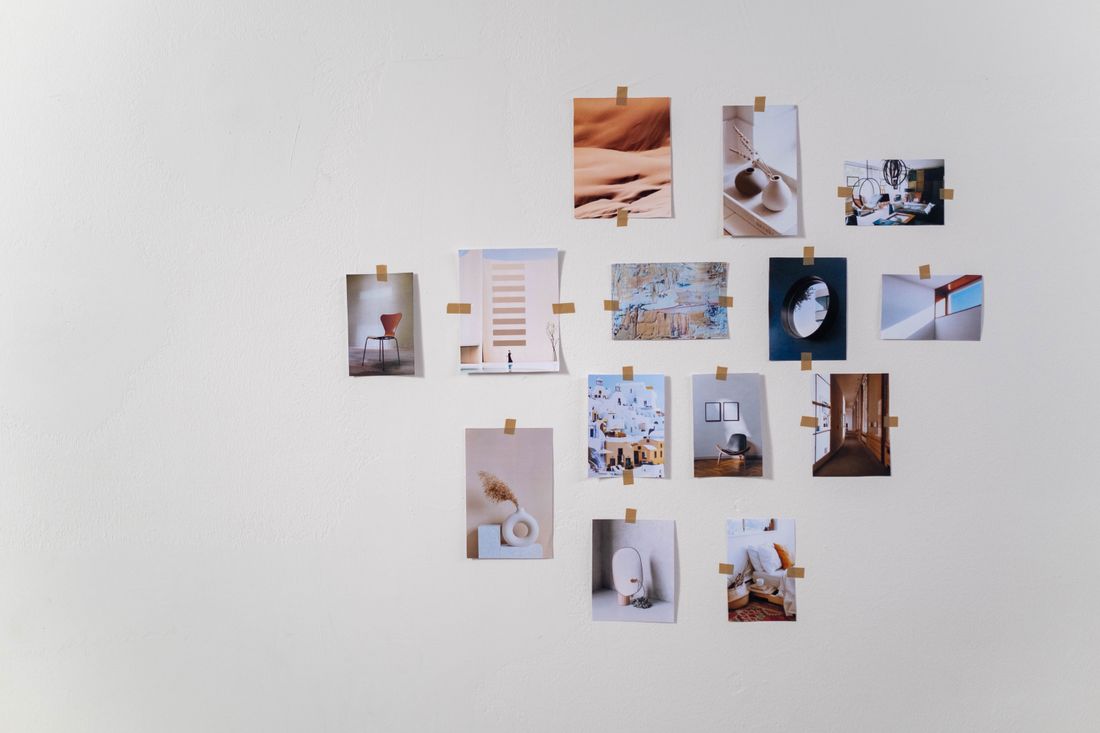
One shoot, five artists, and each one reposting it their own way can turn a gallery's own feed into background noise for its own material. The problem rarely shows up on shoot day. It shows up a week later, when five nearly identical captions land within an hour of each other and nobody planned who goes first.
Resharing works best when it is planned at the content-creation stage, not improvised after delivery. The gallery posts first, each artist gets a staggered day and a caption written in their own voice, and the photo selects can vary by artist so the set does not read as one image copied five times. None of this needs a formal policy. It needs one short conversation before the shoot, not five separate ones after.
Why Does One Shoot on Five Artist Accounts Flatten a Gallery's Own Feed?
When several artists on a roster post the same gallery-produced photos in the same week, a feed built to feel like five distinct voices starts to look like one repeated post. The gallery's own account, which broke the story first, gets buried fast under near-identical versions of the content it made.
This is a volume problem more than a quality problem. Any single repost is fine on its own. The trouble starts when a follower who follows the gallery and three of its artists sees the same install shot, the same caption shape, and the same three hashtags four times in one scroll. That reader does not think "this gallery has a strong roster." They think "I already saw this," and they move on before reading any one version closely.
Group shows and roster-wide announcements are the moments this shows up most, because they are exactly the content a gallery is most motivated to have every artist share. That motivation is reasonable. A gallery wants its artists amplifying its program, and most artists are genuinely glad to help. The fix is not fewer reposts. It is spacing and variation, so five accounts sharing the same real news reads as a roster showing up for its gallery instead of five copies of the same post arriving at once.
Planning for this before the shoot, not after delivery, is what actually solves it. Once files are already out and artists are already excited to post, coordinating five separate people is a much harder conversation than setting expectations once, in advance, while everyone is still listening.
Who Should Post the Shared Content First, the Gallery or an Artist?
The gallery should generally post first, since it is the account with the clearest claim to breaking its own program news, and because every artist reposting afterward reads more naturally as amplification of an existing story rather than five separate first announcements competing for the same attention.
This is not about hierarchy. It is about how a story reads to an outside follower. A group show announcement that starts on the gallery's account and then ripples out across five artist accounts over the following days looks like a program building momentum. The same announcement breaking simultaneously on six accounts, with no clear origin, looks like a coordinated push, which tends to read as less authentic even when the excitement behind it is completely genuine.
There are reasonable exceptions. An artist's individual portrait or process shot from the same shoot might belong on their account first if the content is personal to their work rather than tied to the gallery's program announcement. The distinction worth naming with a roster is simple: program news starts with the gallery, individual artist content starts with the artist, and content that genuinely belongs to both benefits from a quick, low-effort decision about order rather than a race to post first.
Naming this once, as a general default rather than a rule for every single post, removes most of the ambiguity without turning it into a policy document nobody reads.
How Much Time Should Pass Between Each Artist's Repost?
A rough spread of a few days to a week across a roster of reposts is usually enough to keep the same content from landing as a single burst, while still letting every artist share the work while it still feels current and connected to the original announcement.
The exact spacing matters less than the fact that there is spacing at all. A gallery with five artists to coordinate does not need a rigid calendar with assigned dates. A simple rough order, communicated once in the group chat or email that shares the files, gives each artist enough room to post on their own schedule without everyone defaulting to the same day out of habit or urgency.
Staggering also solves a second problem that is easy to miss: it gives each artist's individual post more room to actually be seen. A follower who sees one gallery repost today and a different artist's version three days later is far more likely to engage with both than a follower who sees five versions in one afternoon and mentally files the whole thing as already covered.
This spacing works best when it is suggested rather than mandated. Artists have their own posting rhythms, their own audiences, and their own reasons for choosing a particular day. A gentle suggested order respects that while still solving the clustering problem that comes from nobody thinking about timing at all.
How Do Captions Need to Vary So Five Reposts Don't Read as Spam?
Captions need to say something different each time: a different artist speaking about their own relationship to the work, a different detail about the show, or a different reason the moment mattered to them, rather than five versions of the same generic announcement copy pasted across five accounts.
The easiest way to get real variation is to ask each artist what they actually want to say, rather than handing everyone identical suggested copy. A gallery can absolutely offer a starting caption for its own post, and it should. But asking every artist to just "post this" produces the exact repetition that makes a roster's resharing feel hollow. A short prompt works better: what did this show or shoot mean to you, in one or two sentences, in your own words.
This does not require five polished paragraphs. A single specific line from each artist, something concrete about the piece, the process, or the moment, does more work than a longer caption that reads like it was written by committee. Specificity is what separates a caption that sounds like genuine enthusiasm from one that sounds like an assignment.
Setting this expectation before the shoot, as part of how the content gets shared afterward, means artists know a caption is expected from them personally, not copied from a shared doc, which usually produces better captions with less back and forth after delivery.
What Changes If Resharing Is Planned Before the Shoot Instead of After?
Planning resharing before the shoot means the gallery can shoot with enough variety, in both image selects and framing, that five artists each have a distinct photo to post instead of all reaching for the same single strongest frame, which is usually where the flattening problem actually starts.
Most of the repetition in roster-wide resharing does not come from bad intentions. It comes from a simple, practical fact: if a shoot only produces one obviously best image of a group show or a roster event, every single artist who wants to share it will reach for that same image, because it is the only strong option available. The fix lives upstream of the caption entirely, in the shot list.
A shoot planned with resharing in mind covers the room from more than one angle, catches more than one candid moment, and gives each artist at least one usable frame that feels like theirs rather than a shared default. This is a shot-list decision, made before the shoot day, not a social media fix applied after the files are already delivered.
Raising resharing during the pre-shoot conversation, alongside the usual questions about timing and access, costs almost nothing and changes what actually gets planned during the coverage itself. It is a small addition to a conversation that is already happening, not a new one, and it means the gallery's own team is not scrambling to sort files by artist after the fact, trying to retroactively decide who gets which frame from a set that was never planned with five separate accounts in mind.
Does Each Artist Need a Different Photo, or Is the Same Photo Fine?
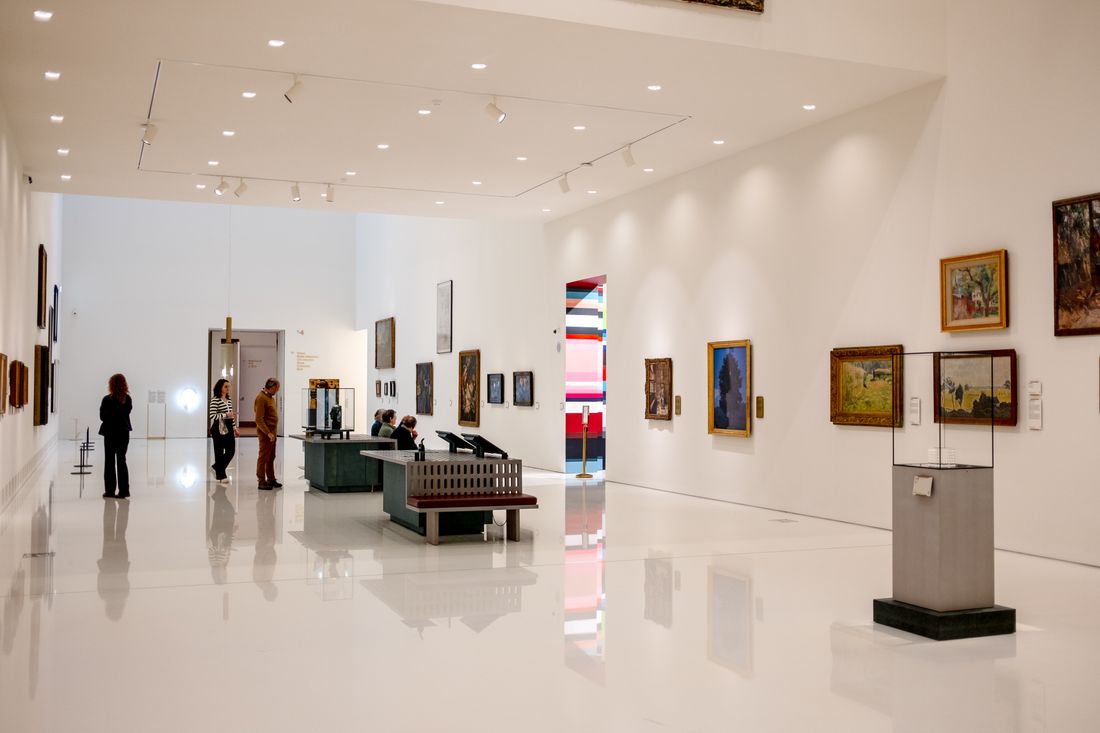
The same photo is fine when the moment genuinely calls for one shared image, an opening-night group shot, for example, but variety helps whenever multiple usable frames exist, since giving each artist a slightly different photo is what actually keeps a roster's combined feed from reading as one post duplicated five times.
Some content is naturally singular. A single strong installation shot of a group show, or one candid frame of the whole roster together at an opening, does not need five variants manufactured just to avoid repetition. Forcing artificial variety onto content that only has one honest version usually looks more strained than the repetition it was meant to solve.
Where variety earns its keep is anywhere a shoot produced more than one usable option: individual artist portraits from the same event, different angles of the same installation, or candid moments captured throughout the evening rather than just the single formal group photo. When those options exist, spreading them across the roster, rather than defaulting everyone to the strongest single image, is what keeps five reposts from reading as identical.
The practical rule is simple: match content to the moment instead of forcing a rule in either direction. A shared image for a shared moment, distinct images wherever the shoot produced them, decided by what was actually captured rather than by habit. A gallery thinking about this before booking the shoot, rather than after the files arrive, is in a much better position to ask for the range of frames a roster-wide reshare actually needs.
How Should an Artist's Caption Differ in Voice From the Gallery's Own Post?
A gallery's caption usually speaks about the program, the show, and the roster as a whole, while an artist's caption works better speaking personally, about their own process, their relationship to the specific piece, or what the moment meant to them, since that difference in voice is what makes two posts about the same event feel like two different perspectives rather than one message twice.
This distinction is easy to state and easy to lose in practice, especially when a gallery offers a suggested caption to make resharing easier for a busy artist. A suggested caption written in the gallery's institutional voice, posted verbatim on an individual artist's account, tends to read slightly off, like a press release wearing a personal account's byline.
The better version of a suggested caption is a set of facts an artist can work from, the show dates, the piece title, the venue, rather than a finished sentence meant to be copied directly. Artists then write in their own voice around those facts, which keeps the accuracy a gallery needs while preserving the personal tone that makes an artist's account worth following in the first place.
This is a small distinction with a real effect: followers can usually tell the difference between an artist's own words and a pasted institutional caption, even when they cannot articulate exactly why one feels more genuine than the other.
How Does a Gallery Set Resharing Expectations With Artists Before the Shoot?
A gallery can set resharing expectations with one short conversation before the shoot: mention that content will be shared with the roster afterward, suggest a rough posting order and spacing, and ask each artist to write their own caption rather than copy a shared one, all in the same message that already confirms the shoot's date and details.
This does not need to be a formal document or a written social media policy, and for most galleries it should not be. A roster of artists responds better to a brief, friendly note than to a set of rules that feels like it was written by a lawyer. The goal is alignment, not enforcement, and alignment usually needs less structure than it seems like it should.
The best moment to raise this is the same message that already confirms who is being photographed, when, and why, since that message is already going out and already has everyone's attention. Adding two or three sentences about how the content will be shared afterward costs nothing extra and prevents the scramble that happens when five excited artists all post the same files on the same afternoon with no coordination at all.
Treated this way, resharing coordination is not a new task added to a gallery's workload. It is a small addition to a conversation that a well-run monthly media plan is already having with its roster.
Frequently asked questions
Does every artist on a roster need to post the same photo the gallery posted?
No. The same photo works for a genuinely shared moment, like a single group shot from an opening, but a shoot that produces several usable frames, individual portraits, different angles, or candid moments, gives each artist something more distinct to share. Matching the content to what the shoot actually captured, rather than defaulting to one image for everyone, is what keeps a roster's combined feed from reading as one post duplicated across five accounts.
How long should an artist wait before reposting content the gallery already posted?
A rough spread of a few days to a week across the roster is usually enough to avoid a single-day cluster, without letting the content feel stale by the time an artist gets to it. The exact number of days matters less than having some spacing at all. A gallery can suggest a loose order in the same message that shares the files, rather than leaving timing to chance.
Should artists tag the gallery when they repost gallery-produced content?
Tagging the gallery is generally worth doing, since it credits the source, connects the artist's post back to the gallery's own account, and helps a shared follower recognize the two posts as part of one story rather than two unrelated announcements arriving on the same day. It is a small habit worth mentioning in the same conversation where resharing timing and caption expectations get raised before the shoot.
Can a gallery ask artists not to repost certain images?
Yes, and it is worth being specific about which images are meant for the gallery's own use only, such as a shot planned for a press kit or a specific campaign, versus which images are open for the whole roster to share freely. Naming this at delivery, rather than after an artist has already posted something meant to stay exclusive, avoids an awkward conversation later.
Does resharing coordination apply to reels and video, not just photos?
Yes, and the same logic applies with a bit more weight, since a shared video reposted verbatim by several accounts on the same day reads as even more repetitive than a shared photo does. Staggering timing and encouraging each artist to add their own short caption or voiceover, rather than reposting the exact same clip cold, keeps video resharing from flattening a feed just as fast as photos can.
The weeks between openings need content too.
We help galleries fill the quiet stretches with real material, pulled from the archive, planned ahead, and honest about what's actually happening that month.
Explore monthly media →