The gallery is thinking about a sales sheet and an art fair application. The artist is thinking about a portfolio site and an open call next spring. Same paintings, same afternoon, same photographer. And two file lists that overlap far less than anyone expects.
A gallery needs consistent, sales-ready images with installation context and fast turnaround for press and fairs. An artist needs an archival master, detail shots, and flexible crops for applications and their own site. Planning one shoot to serve both means agreeing the shared capture standard up front and splitting only at the delivery stage.
Why the Two Lists Diverge in the First Place
A gallery and an artist look at the same photograph and evaluate it against different questions. The gallery asks whether this image will sell the work or place it (in a viewing room, a sales sheet, an art fair application, a press email). The artist asks whether this image will represent the work honestly for the next ten years, in a portfolio, a grant application, a catalogue, an archive.
Those questions are compatible more often than not, but they are not the same question, and they pull on different parts of a shoot. Sales-facing images reward consistency across a body of work and speed of delivery. Archive-facing images reward accuracy, resolution, and detail, and they can wait a week if waiting produces a better file.
The friction usually shows up after the shoot rather than during it. Everyone agreed the documentation was good; then the gallery needs web-sized files by Thursday for a fair application, and the artist wants to know why the detail shots they assumed were included are not in the folder. Neither party was wrong. Nobody had said out loud what the session was for.
The Shared Core: What Both Actually Need
Most of a documentation shoot serves both clients without any conflict at all. The straight-on, color-accurate, full view of each piece (square to the sensor, evenly lit, correct color, cropped to the edge of the work) is the single most important file for everybody, and it is the same file regardless of who is asking.
Consistency across a set is the second shared requirement. Whether the images end up in a viewing room or a portfolio, a group of works shot at slightly different color temperatures or with visibly different framing conventions reads as amateur, and no amount of individual quality rescues it. Locking the setup and shooting the whole set in one session is what protects that.
The third shared item is file naming that survives contact with reality. Artist name, title, year, medium, dimensions (encoded in the filename or in an accompanying sheet) is what stops an image from becoming an anonymous JPEG in someone's downloads folder eighteen months later. Both audiences depend on it, and neither will notice until it is missing.
Colour accuracy sits underneath all of this and is worth naming as a shared requirement rather than a technical detail. A gallery selling a work and an artist submitting it to a jury both depend on the image representing the object honestly, and neither can verify that after the fact if no reference was photographed alongside the work at the time.
The same applies to squareness. Flat work photographed slightly off-axis develops a subtle keystone that no viewer names and every designer notices, and it is equally unusable in a viewing room and in a catalogue. These are not gallery standards or artist standards; they are the floor for the whole shoot.
What a Gallery Specifically Needs
Galleries work to external deadlines set by other people: fair applications, press requests, viewing-room launches, art advisor emails that want a file today. That makes turnaround a genuine deliverable rather than a nicety, and it is often the thing that separates useful documentation from documentation that arrives after the moment passed.
Practically, a gallery wants web-ready derivatives (sized for their platform, correctly compressed, ready to drop into a viewing room or a PDF without further processing). Handing a gallery a folder of 200MB TIFFs and considering the job done creates work for someone who is already handling twelve other things that week.
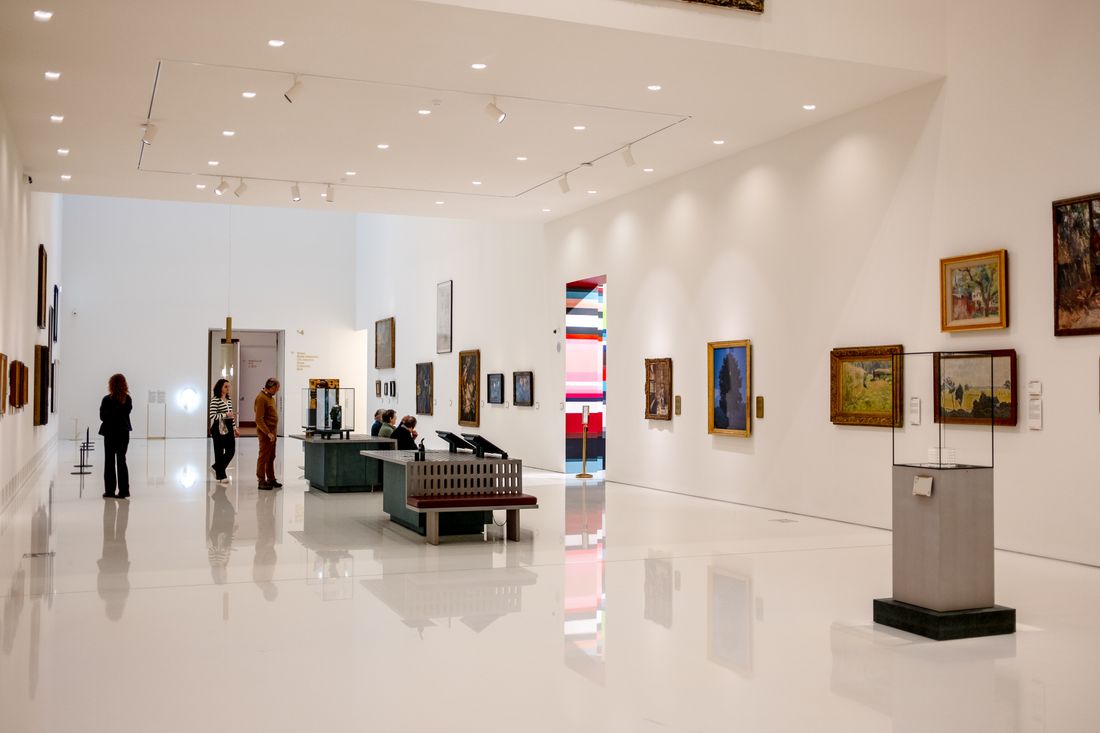
Installation views are the other gallery-specific need, and they are a genuinely different image type from artwork documentation. Where a documentation shot removes the room, an installation view is about the room: the hang, the spacing, the sightline, the scale of a piece against a wall and a doorway. A gallery uses those to sell a show as an experience, and to prove to a fair committee that they can actually mount one.
There is a consistency requirement on the gallery side that is easy to overlook, which is consistency with the gallery's own previous documentation. A programme photographed one way for three years and then differently for one show produces a website where the newest work looks like it came from somewhere else, and that reads as a change in quality rather than a change in photographer.
What an Artist Specifically Needs
An artist's version of the same shoot leans archival. The highest-quality master file, kept uncompressed, is the thing that makes every future request answerable (a print, a catalogue, a museum loan, a reproduction). Derivatives can always be generated from a master; a master cannot be reconstructed from a web JPEG.
Detail shots are the second artist-specific category, and the one most often skipped when a shoot is booked by a gallery. Surface, edge, texture, the built-up passage where the material does something specific. These are what an open call jury or a grant panel uses to understand a work they will never stand in front of. They are also what makes a portfolio site feel like it is about the work rather than about images of the work.
The third is flexibility. Applications specify their own crops, dimensions, and file sizes, often awkwardly, and an artist who only has one tightly cropped derivative of each piece will spend an evening fighting an upload form. Having the full-bleed master plus a couple of standard alternates means the next application takes ten minutes instead of a night.
Artists also need images that survive their own career changes. Documentation made for one gallery gets reused in an application to a residency, a submission to a different gallery, and eventually a catalogue that has nothing to do with the original show. Files that carry no venue-specific framing and no gallery branding remain usable through all of that; files made only for a viewing room often do not.
Who Booked the Shoot Changes the Default
In practice the person who booked the session sets the default priorities, and that is reasonable. A gallery paying for documentation before a show is buying sales-ready images on a deadline; an artist paying for documentation of a new body of work is buying an archive. Neither is entitled to the other's list by default, and pretending otherwise is how expectations get bruised.
What is worth saying out loud, early, is that adding the other party's needs is usually cheap when it happens during the same session and expensive when it happens later. The lighting is already built, the work is already accessible, the color standard is already locked. A second visit to add detail shots costs a call-out, a setup, and a whole afternoon.
This is the conversation we would rather have before a shoot than after one. Not a negotiation about money. A five-minute question about who else will end up using these files, so the session can quietly cover them while everything is still standing.
Rights, Credit, and Who Actually Holds the Files
Two parties using one set of images raises a question that is easy to leave vague and unpleasant to resolve later: who has the right to use these files, for what, and for how long. This is a contractual matter that varies by agreement rather than something a general guide can settle, and it should be written down rather than assumed.
The practical version of the question is simple. If the artist leaves the gallery, does the artist still have usable copies of their own documentation? If the gallery licenses an image to a magazine, does the artist know? If a piece sells, does the collector receive anything? Each of those has a reasonable answer, and each is easier to agree before the shoot than during a separation.
Photo credit belongs in the same conversation. Documentation photography has two authors in a sense (the artist who made the work and the photographer who made the image), and most publications and institutions expect both to be named. Agreeing the credit line early means it travels with the file rather than being reconstructed under deadline.
Planning a Single Session That Serves Both
The efficient structure is one capture standard and two delivery packages. Shoot everything to the archival bar (highest quality, correct color, full frame, detail passes where the work warrants them), then generate the gallery's web-ready set from the same masters afterward. Nothing is shot twice, and nobody receives files they cannot use.
Sequencing helps too. Working through the full-view pass for the entire set first protects consistency, since the setup stays untouched. Detail shots come second, when a piece can be moved or approached without disturbing the standard. Installation views, if the show is hung, are effectively a separate shoot with its own lighting logic and should be scheduled as such rather than squeezed into the end of a documentation day.
The delivery split is where the two clients finally diverge, and it should be explicit: a gallery folder with correctly sized derivatives and installation views, an artist folder with masters, details, and alternates, and a shared naming convention across both so a file can be traced back to the same piece from either side.
Scheduling the session before the hang rather than after it is the single decision that makes the most difference to both parties. Work photographed in a controlled setup, before frames go on and before the room's lighting becomes a factor, produces better files for everyone and takes less time on the day. Once a show is installed, both the gallery's and the artist's images are being made under compromise.
It is also worth agreeing in advance what happens to the pieces that turn out to be difficult. Highly reflective, very large, or unusually dark works often need a second approach, and a session planned with no margin for that either runs long or delivers one weak image in an otherwise strong set. Naming the awkward pieces beforehand is a five-minute conversation that protects the whole day.
When It Is Honestly Better to Book Two Shoots
Sometimes one session genuinely cannot serve both, and it is better to say so. If the gallery needs images before the work is finished or framed, and the artist needs the final documented state, those are two different objects on two different dates. Compressing them produces a compromised record of both.
The same applies when the show is the point. Documenting individual pieces properly usually happens before a hang, in controlled conditions; installation views can only happen after. Trying to do both in one visit to a hung gallery means either fighting the room's lighting for flat work or waiting so long that the install crew has gone home.
The useful test is whether the two needs share a moment in time. If they do, one shoot with a split delivery is almost always the better value. If they do not, two smaller sessions cost less than one session that satisfies neither, and they leave both the gallery and the artist with files they can actually use.
Frequently asked questions
Do galleries and artists need different files from the same artwork shoot?
They need the same core files plus different extras. Both depend on straight-on, color-accurate full views shot consistently across the set. Galleries additionally need web-ready derivatives on a deadline and installation views. Artists additionally need archival masters, detail shots, and flexible crops for applications. Planning one capture standard with two delivery packages covers both without shooting anything twice.
Who should pay for artwork documentation, the gallery or the artist?
That depends entirely on the agreement between them, and both arrangements are common. What matters practically is that whoever books the shoot sets the default priorities, so the other party's needs should be raised before the session rather than after. Adding detail shots or extra crops during the same visit is inexpensive; booking a second visit to add them later is not.
Are installation views part of a documentation shoot?
They are a separate image type with different lighting logic, even when they happen on the same day. Documentation removes the room to represent the work accurately; an installation view is about the room, the hang, the spacing, and the scale. Galleries rely on them heavily for fair applications and show promotion, so they are worth scheduling deliberately rather than adding at the end of a documentation session.
What happens to documentation files if an artist leaves a gallery?
That is a contractual question rather than a general rule, and it varies by agreement, which is exactly why it is worth writing down before a shoot rather than during a separation. The practical version is whether the artist retains usable copies of their own documentation. Agreeing that early, along with the photo credit line, avoids a difficult conversation at the worst possible time.
Can one session cover both a gallery's and an artist's needs?
Usually yes, as long as the two needs share a moment in time. Shoot everything to the archival standard, then generate the gallery's sized derivatives from the same masters. Two shoots make more sense when the timing genuinely differs. For instance when a gallery needs images before framing is finished, or when installation views can only exist after the show is hung.
Documentation that serves everyone who will ask for it.
We shoot to an archival standard and split the delivery: sized files for the gallery, masters and details for the artist, one naming convention across both.
Explore artwork documentation →