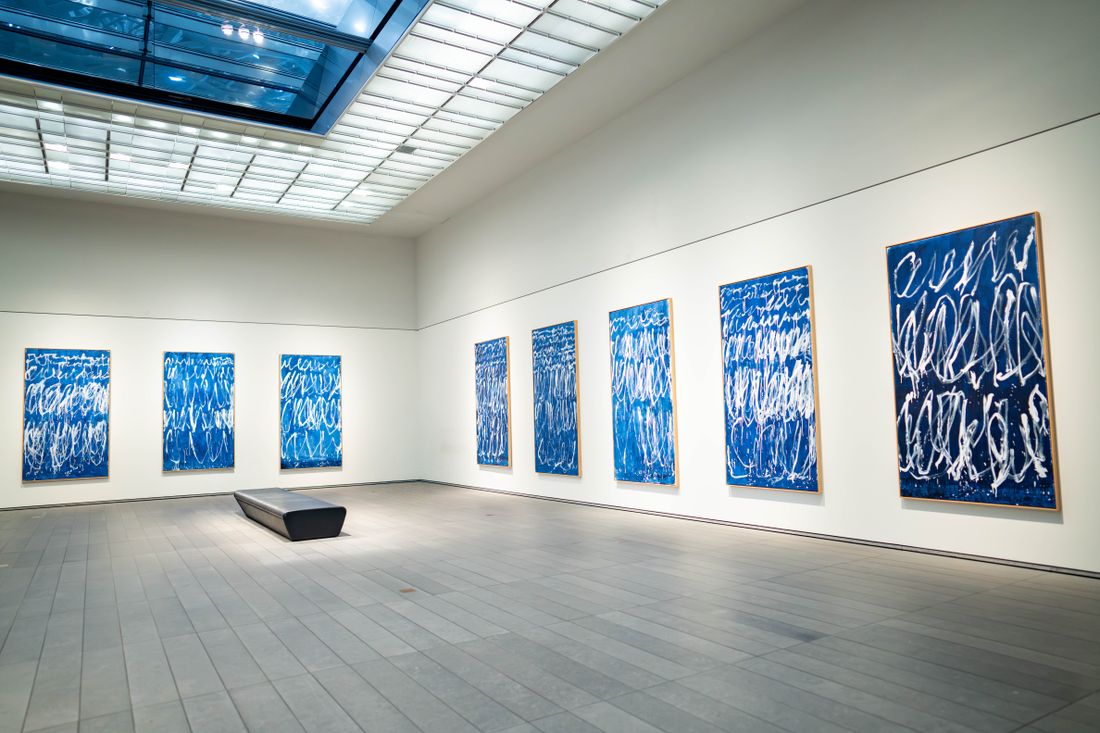
Most artists end up with both kinds of images without ever deciding to collect them. A gallery sends over installation shots after an opening. A photographer delivers documentation files after a studio session. The two folders sit next to each other looking like they cover the same ground, and they don't. An installation view exists to prove a show happened, in a specific room, at a specific scale, next to specific other work. A documentation image exists to represent the artwork itself, accurately enough that someone who never saw the room can still trust what they're looking at.
The confusion rarely causes a problem right away. It shows up later, usually at the exact moment a clean, accurate file was needed for something and only a moody, wide, atmospheric room shot was on hand. This guide covers what each type of image actually shows, what it costs to book, and how a show or a body of work ends up with both instead of just whichever one happened to get taken.
What an installation view actually shows
An installation view answers one question: what did the show look like. It records scale relative to the room, the spacing between pieces, how the gallery's own light fell across the walls, and how a visitor actually moved through the space. That context is the whole point. A curator, a press writer, or a future venue looking at an installation shot isn't judging one painting on its own, they're reading the exhibition as a full event.
Because of that job, installation views are usually shot wide, with the room's existing lighting left mostly intact, and often with people or negotiable framing in the shot to give a real sense of scale. These are the files that go out for a press release, get posted to the gallery's own Instagram the next morning, or anchor a portfolio page about the show itself. A slightly uneven wash of light across a long wall isn't a flaw here, it's often exactly how the room felt on opening night, and the file's job is to preserve that, not correct it.
What artwork documentation actually shows
Documentation answers a different question: what does this specific piece look like on its own, independent of wherever it happened to be hanging. That means even, corrected lighting, a straight-on angle that keeps proportions honest, and enough resolution to trust color and detail without the room's ambient light distorting either one. A documentation image should look roughly the same whether the piece was shot in a gallery, a studio, or a storage unit, because the room isn't part of the story.
This is the version of the work that has to hold up in places the room never travels to: a print run, a grant application, an insurance schedule, a catalogue raisonné entry, a sales page. None of those uses care what the opening looked like. They care whether the file is an accurate stand-in for the object, since a print vendor is matching color from the file, an insurer is valuing the object from the file, and a future scholar working from a catalogue raisonné has only the file to go on.
| Installation view | Artwork documentation | |
|---|---|---|
| What it shows | The room, the hang, the scale of the show | One piece, isolated from its surroundings |
| Lighting | The gallery's own lighting, left mostly intact | Even, corrected lighting built for the piece |
| Framing and angle | Wide, often with people or other work in frame | Straight-on and tight to the piece, no distortion |
| Color accuracy | Reflects the room's actual light and color cast | Corrected to match the object, not the room |
| What it's used for later | Press, social, a portfolio page about the show | Print, insurance, grants, catalogues, sales |
Why the two get confused
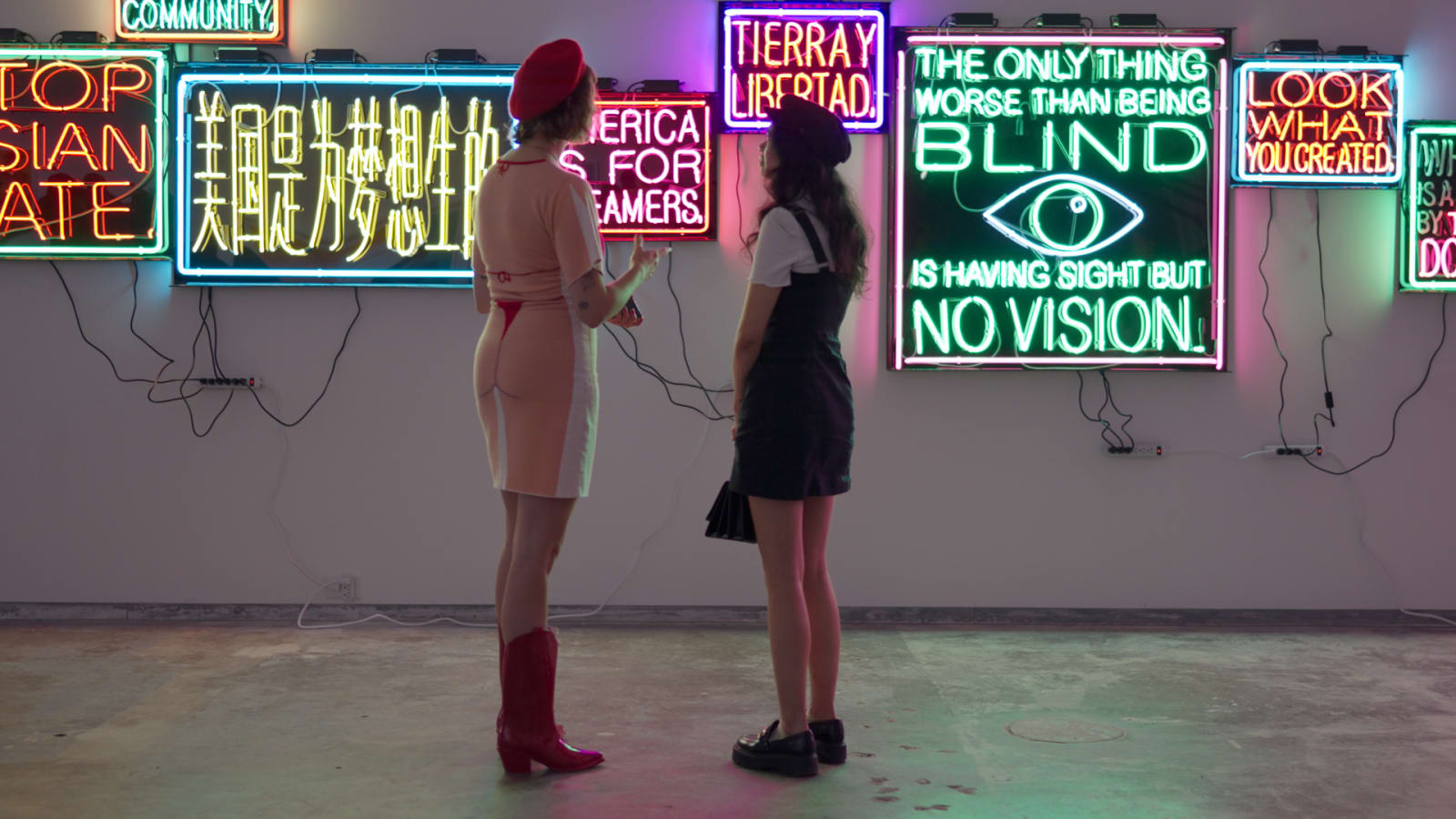
They get confused because they're often produced around the same event and can look similar at a glance. Both are, after all, a photo of art on a wall. A wide installation shot of one strong piece, tightly framed, can look enough like documentation to pass a quick check. It usually isn't. The gallery's ambient lighting, the slight angle needed to avoid glare from an overhead fixture, and the color temperature of whatever bulbs happen to be installed all quietly shift the image away from something that can stand in reliably for the piece.
It's also a scheduling issue as much as a conceptual one. Both kinds of photography often happen around the same opening, so it's easy to assume one shoot covered everything. A photographer hired to cover an opening is thinking about the room and the night. A photographer hired to document the work is thinking about the object. Those are different jobs even when they happen in the same building on the same evening.
Why you can't crop a documentation file out of an installation shot
The most common failure shows up at the worst possible time: a gallery, a press outlet, or an application needs a clean file of one specific piece, and the only thing on hand is a wide room shot with two other paintings in the frame. Cropping in rarely solves it, and it helps to know exactly why.
The lighting was built for the room, not the piece, so a tight crop usually reveals uneven exposure or a color cast from the gallery's own fixtures that a straight-on documentation shoot would have corrected for. The angle is a problem too. A photographer covering an installation view often has to stand off to one side to fit the whole wall in frame, which introduces a slight keystone distortion that a crop can't undo, since the piece was never actually photographed square to the lens. There's a resolution problem on top of both. An installation view is shot to cover a wide field, so any single piece inside that frame is represented by a fraction of the total pixels. Enlarging that fraction for a print, a submission, or even a decent-sized web image usually looks soft in a way that's hard to fix after the fact.
Booking both: what it costs and what you get
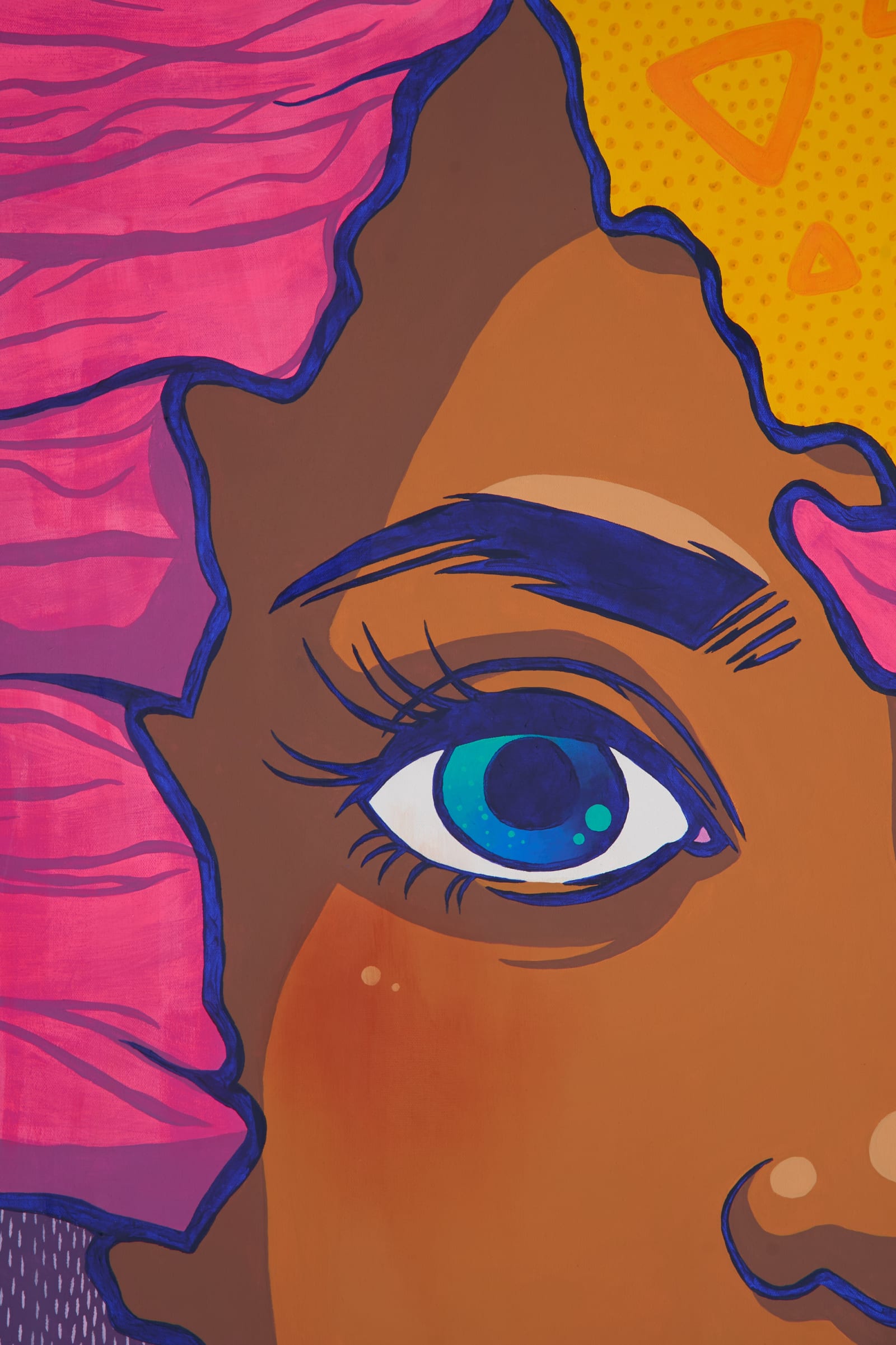
The two are priced and booked differently, which is part of why they're easy to conflate. Documentation runs per piece. An Essential tier ($50) is one color-accurate hero shot, color-corrected and print-ready. Standard ($85) adds two separate hi-res detail shots. Gallery ($150) adds a 15 to 30 second video clip on top of that. Glass or anti-reflective work on a glazed piece is a flat $200 add-on, and rush delivery under three business days adds 25 percent to the total. Standard turnaround for a documentation booking is 10 business days. NYC documentation bookings carry a $500 minimum, which in practice means bringing a few more pieces to the same session rather than paying extra for a small one.
Installation views price differently because the job is different. Coverage of a show or a fair booth prices off the event hourly rate, $350 an hour with a two-hour minimum, editing included, since the deliverable is a set of room and wall shots from one visit rather than files billed per piece. A booking that needs both, documentation before a show goes up and installation coverage once it's live, is usually two line items rather than one blended rate, since the lighting setup, the time on site, and the files themselves are different products even when the same photographer covers both.
Planning for both around a show
The simplest approach is to treat the two as separate line items from the start, not as a single "photos of the show" request. Documentation happens whenever the piece is genuinely accessible, ideally before it ships or gets hung, under controlled light, without the room's constraints. Installation coverage happens once the show is live, capturing the room, the hang, and the relationship between pieces.
It also helps to think about who actually uses each file down the line. Installation views tend to circulate socially: an opening recap, a press mention, a portfolio page about the show itself. Documentation files tend to circulate functionally: attached to an email, a submission form, an insurance claim, a print vendor's upload page. Those are different audiences with different patience for imperfection. A slightly warm-toned installation shot reads as atmosphere. A slightly warm-toned documentation file reads as a wrong answer to someone trying to match paint colors from a screen.
Skipping documentation entirely because installation photos already exist from the opening usually shows up as a gap later: a body of work with real exhibition coverage but nothing that represents any single piece accurately on its own, which matters the moment a print, a grant application, or a future show needs one file that can stand alone.
Frequently asked questions
What is the difference between an installation view and artwork documentation?
An installation view shows the artwork inside the room it was shown in, at the scale it was actually seen, next to whatever else was on the walls. Artwork documentation shows the piece on its own, corrected for color and shape so it can be trusted without the room around it. One favors the exhibition as an event, the other favors the object as something that has to hold up on its own, later, somewhere else entirely.
How much does artwork documentation cost?
Individual piece documentation starts at $50 for one color-corrected hero shot, up to $150 for a hero shot, two detail shots, and a short video clip. NYC bookings carry a $500 minimum, so a single small piece usually means bringing along a few more to the same session. Installation coverage of a show prices differently, off an hourly rate with a two-hour minimum, since the deliverable is the room rather than one file per piece.
Do I need documentation if I already have installation photos from my show?
Yes, if the piece needs to be evaluated on its own, for a print run, an application, insurance, or a sale, an installation photo usually won't hold up. It was built to show the room, not to represent the work at a trustworthy scale and color. A slightly warm-toned installation shot reads as atmosphere. That same warmth in a file meant to represent the piece reads as an inaccurate answer to whoever is relying on it.
Give your collection a record that holds up.
We document artwork the way an adjuster or appraiser would actually want to see it: full views, accurate color, condition detail, and a system that keeps every file tied to the right record.
Explore artwork documentation →