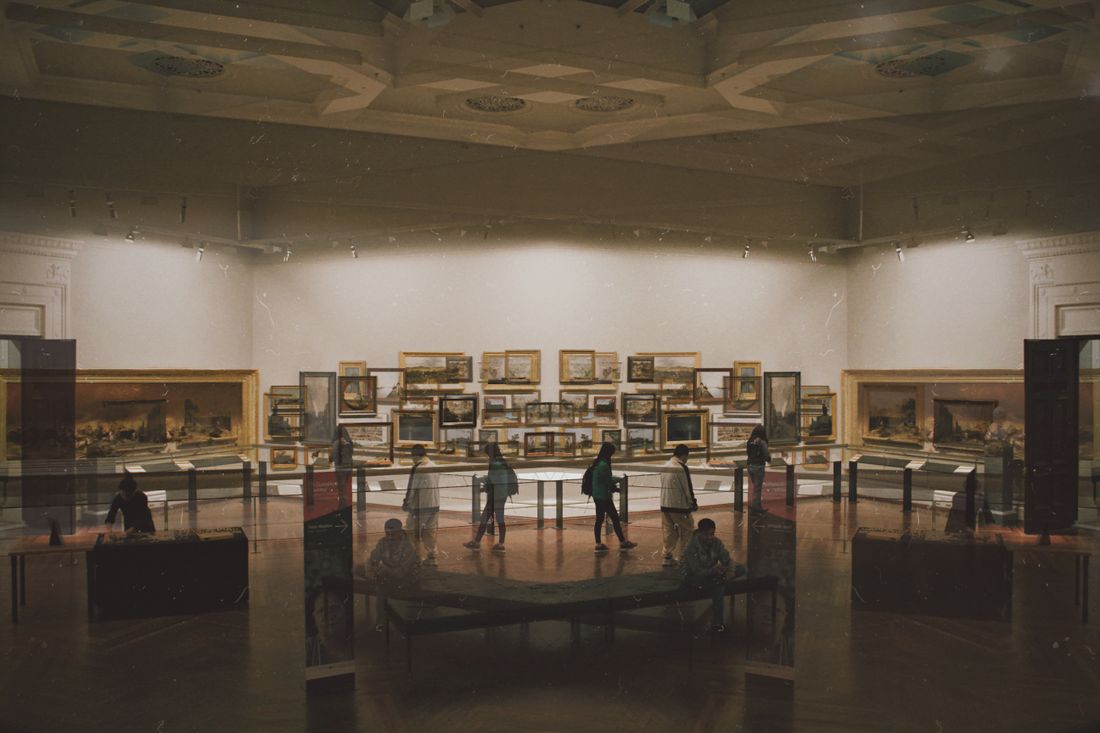
A show that travels gets photographed properly exactly once, usually at the first venue, usually by whoever had budget that month. Every press release, listing, and social post for the next two years then draws on that one afternoon, including at venues that look nothing like the first one.
The first stop of a traveling exhibition should be documented as the tour's master image set, not as one venue's record: full artwork documentation, venue-neutral installation views, detail shots, and a clearly labeled file structure. Later venues then add their own local images rather than re-documenting the entire show.
Why the First Venue Ends Up Speaking for the Whole Tour
Touring exhibitions rarely get a documentation budget at every stop. The first venue is usually the one with the strongest relationship to the project, the largest institutional resources, or simply the earliest deadline, and once good images exist there is little appetite to pay for them again.
What follows is predictable. Venue three writes a press release and reaches for the existing images. A listings editor asks for a photograph and receives one taken in a room eight hundred miles away. Nobody objects, because the images are good and the work is the same work.
That is fine until it is not. The images start doing things they were never made for (representing a differently shaped room, a differently hung show, sometimes a partially different checklist). Planning the first stop as a tour-wide asset rather than a local record is what prevents that drift.
There is a second reason the first stop carries disproportionate weight, which is that it is usually where the show looks most like itself. The organising curator is present, the hang follows the original plan, and the checklist is complete. Later stops adapt to different rooms, lose a work to a loan condition, or reorder the sequence to fit a corridor, and the show gradually drifts from the version everyone agreed on.
Document the Artwork Before You Document the Show
The most durable images from any first stop are the ones with no room in them at all. Straight-on, color-accurate documentation of each individual work travels perfectly, because it carries no venue-specific information. It is usable for every catalogue, every press request, and every later venue regardless of architecture.
This is the pass most likely to be skipped when documentation is booked as event coverage. A photographer briefed to cover an opening will produce a room, a crowd, and some wall views, and none of that answers a request for an image of one specific piece against a clean background. Our guide to documenting an exhibition end to end covers what a full pass actually includes.
Where the works are already hung, this pass is harder but usually still possible, often before doors on a quiet morning, working piece by piece with the room's lights managed rather than fought. Where the tour organizer can arrange documentation before the hang, that is materially better and worth asking for.
Where the works belong to several lenders, this pass has an additional value that has nothing to do with marketing. A complete, consistent record of each piece at the start of a tour is a condition baseline, and it is far easier to establish once at the beginning than to reconstruct after a work has travelled through three venues and two crates.
It is worth being realistic about how long this takes. Documenting twenty pieces properly is a half-day at minimum, and it cannot be compressed into the hour before an opening. Venues that want both the artwork pass and event coverage on the same date usually need to accept two separate calls rather than one long one, and the earlier that is priced the less it hurts.
Installation Views That Do Not Insist on a Venue
Installation views are where the tour question actually bites, because every one of them contains a room. The useful discipline is to shoot a range that runs from venue-specific to venue-neutral, rather than only the wide architectural shots a venue wants for its own marketing.
Venue-neutral in practice means tighter: two or three works in relationship, a wall section, a sightline that shows spacing and scale without the doorway, the ceiling, or the distinctive floor. Those images communicate that the show is installed somewhere serious without claiming which somewhere.
The wide, architecture-forward views are still worth taking. The first venue paid for the shoot and deserves them. The point is that they should not be the only installation images in the set, because they are the ones later venues cannot honestly use.
Details matter here in a way they do not for a single-venue show. Wall colour, label design, and lighting temperature are venue decisions, and an installation view saturated with one venue's identity is legible as that venue's image to anyone in the field. Tighter framing does not hide those choices entirely, but it reduces them from the subject of the photograph to a background condition.
Scale, Detail, and the Frames Applications Ask For
Touring shows generate applications: to funders, to future venues, to press. Those applications ask for things a standard opening-night gallery does not contain (a sense of scale, a detail that shows material quality, an image that demonstrates the show can be mounted well).
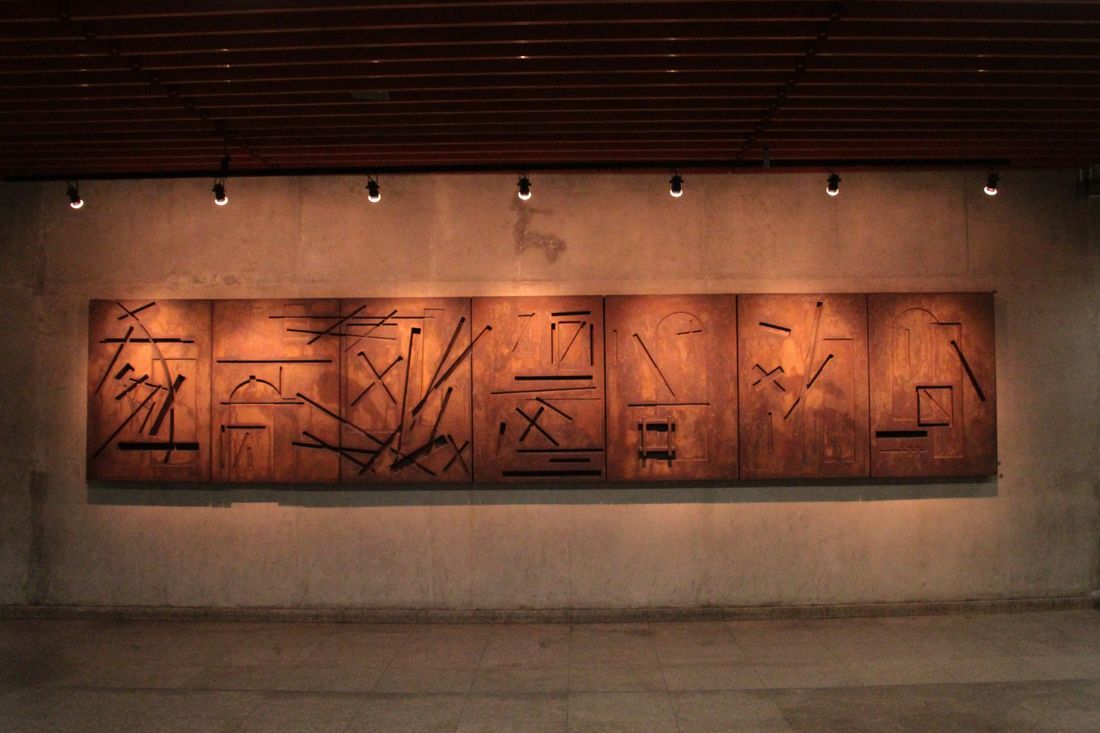
Scale frames are the easiest to miss and the cheapest to add. A person in the room, a doorway, a bench, anything that gives a viewer a reference. A large work photographed alone reads as any size at all, which is exactly the ambiguity a future venue's exhibitions committee is trying to resolve.
Detail shots serve the same audience and the catalogue at once. They are also the images most likely to be reused for social across a two-year tour, because they stay interesting long after the installation views have been posted by four venues in a row.
The People Layer Is the One That Doesn't Travel
Opening-night crowd photographs, local speakers, and community programming are genuinely venue-specific, and they are the part of the coverage each stop should be producing for itself. They date quickly, they identify a place, and they are the least useful images to hand forward.
That is worth saying explicitly, because it changes how a first-stop budget should be split. If money is limited, it should go to the artwork and installation passes rather than to extensive opening coverage, since the opening coverage is the part every later venue will replace anyway.
The exception is anything involving the artist. An artist present at the first opening, speaking or standing with the work, produces images that later venues genuinely cannot recreate, particularly if the artist will not travel to every stop. Those are worth prioritizing within the people layer.
Programming photography is worth treating the same way. A workshop, a talk, or a school visit at the first venue documents that venue's community engagement, not the tour's, and later stops will want their own. Budget accordingly rather than paying twice for the same category of image.
File Structure Is What Makes the Set Reusable
A tour's images pass through more hands than any other kind of documentation: registrars, curators, press officers, marketing staff, and designers at multiple institutions, most of whom were not present at the shoot and have no context.
That makes labeling the difference between an asset and a folder of mystery JPEGs. Each file needs the artist, title, year, medium, and (importantly for a tour) the venue and date of the photograph, so a press officer can tell whether they are about to publish an image of a room they are not in.
It is also worth separating the set explicitly into artwork documentation, venue-neutral installation, venue-specific installation, and event coverage. Those four folders answer almost every request a later venue will make, and the split takes minutes at delivery rather than hours of email later.
What Each Later Venue Should Actually Add
A later stop does not need to repeat the full documentation, and doing so is usually a waste. What it needs is a short, targeted session: its own installation views, its own opening or programming coverage, and any works that are new to that stop or hung significantly differently.
That is often a two- or three-hour engagement rather than a full documentation day, and it is a much easier line item to defend in a venue budget. It also produces exactly what a venue actually wants, which is evidence that the show happened here.
The one thing worth checking at each stop is whether the checklist has changed. Touring shows lose and gain works for practical reasons, and a venue reusing first-stop images that include a piece no longer in the exhibition has published something inaccurate without noticing.
Each venue should also be told what already exists. The most common waste on a tour is a venue commissioning a full documentation shoot because nobody sent them the first stop's folder, which happens far more often than anyone would guess. A single shared link with a plain description of what is in it removes an entire recurring cost.
It also helps to name who at each stop is responsible for adding to the set rather than starting a new one. Tours pass between institutions with different staffing, and without a named person the images accumulate in four separate drives with four naming conventions, which is functionally the same as not having them.
Agreeing This Before the Tour Starts
All of this is easier to arrange before the first install than to negotiate at stop three. That means a conversation between whoever is organizing the tour and the first venue about who is commissioning the documentation, who holds the files, and on what terms later venues can use them.
Rights are the part most likely to be left vague. A photographer's licence, an artist's approval, and an institution's own policies all touch these images, and the terms vary by agreement rather than following a standard. Settling it once, in writing, at the start, is far less work than resolving it repeatedly under press deadlines.
The reward for that conversation is a tour where every venue has usable images on day one, and where the show is represented by photographs that were made deliberately for that job rather than inherited from an afternoon nobody planned as a template.
One more practical item belongs in that early conversation: how long the images need to remain available. Tours run for two or three years, and a file-sharing link that expires after ninety days is a small administrative decision that quietly strands every venue after the second one. Somewhere durable, with someone responsible for it, is the whole requirement.
Frequently asked questions
Why does a traveling exhibition need special documentation at its first stop?
Because touring shows rarely get a documentation budget at every venue, the first stop's images usually end up representing the whole tour by default. Planning that shoot as a tour-wide master set (artwork documentation, venue-neutral installation views, details, and clear labeling) prevents later venues from publishing images of a room they are not in.
What makes an installation view venue-neutral?
Tighter framing that shows two or three works in relationship, a wall section, or a sightline that conveys spacing and scale without including the distinctive doorway, ceiling, or floor. Those images communicate that a show is well installed without claiming which building it is in, which is exactly what later venues need. Wide architectural views are still worth shooting for the host venue.
Should later venues on a tour re-document the whole exhibition?
Generally no. A short, targeted session covering that venue's own installation views, its opening or local programming, and any works new to that stop is usually enough, often two or three hours rather than a full day. The one thing worth checking is whether the checklist has changed, since reusing first-stop images of a work no longer in the show publishes something inaccurate.
What should a first-stop budget prioritize if it is limited?
Artwork documentation first, then venue-neutral installation views and detail shots. Opening-night crowd coverage should come last, because it is venue-specific, dates quickly, and every later stop will produce its own anyway. The exception is anything involving the artist, particularly if they will not travel to every venue. Those frames genuinely cannot be recreated later.
Who owns the images from a touring exhibition's first venue?
That depends on the agreement between the organizer, the host venue, the photographer, and the artist, and it varies rather than following a standard. Because the images will be reused by institutions that were not part of the original commission, it is worth settling in writing before the first install (who holds the files and on what terms later venues may use them).
Documentation built to travel further than the show.
We shoot exhibitions so the images still work at the fourth venue: artwork masters, venue-neutral installation views, and a file structure a stranger can use.
Explore event coverage →